


Silicone Sealant for Windows and Doors: Buyer Specification Checklist

- How to Define the Right Fenestration Sealant Specification
- Start with the joint and substrate schedule
- Match curing chemistry to the construction environment
- Performance Criteria Buyers Should Put in the Tender
- Movement, adhesion, and weathering performance
- Standards, testing, and documentation
- Use a structured product comparison
- Application Controls That Protect Sealant Performance
- Prepare surfaces and control joint geometry
- Control installation, inspection, and maintenance
- Calculate total cost instead of cartridge price
- Why KINGDELI Is a Practical Supply Partner for Fenestration Projects
- Manufacturing scale and quality infrastructure
- Product range for different building interfaces
- OEM, technical service, and responsible procurement
- Frequently Asked Questions
Selecting a silicone sealant for windows and doors requires more than comparing cartridge price or advertised cure speed. Buyers should evaluate substrate compatibility, joint movement, ultraviolet exposure, temperature variation, moisture, adhesion, application conditions, regulatory documentation, packaging stability, and supplier continuity. For most exterior fenestration projects, a neutral-cure or purpose-designed silicone glazing compound is assessed against the joint design and substrate rather than selected as a universal product. Acetic-cure chemistry can be suitable for compatible nonporous surfaces, while neutral silicone is generally preferred where contact with metals, coated profiles, concrete, stone, or sensitive substrates creates a corrosion or adhesion risk. A disciplined specification should also define product standards, test methods, batch traceability, shelf life, color consistency, technical support, and installation controls. This buyer checklist helps developers, window fabricators, façade contractors, distributors, and facility owners reduce premature cracking, debonding, water ingress, staining, and warranty disputes.
How to Define the Right Fenestration Sealant Specification
Start with the joint and substrate schedule
The first purchasing decision should be based on the actual joint, not on the generic label of window sealant. Record whether the material will be used for perimeter weathersealing, glass-to-frame glazing, frame-to-masonry connection, internal trim, expansion joints, or a secondary air seal. Each application imposes different requirements for adhesion, elasticity, tooling, paintability, and exposure resistance.
List every contacting substrate, including anodized aluminum, powder-coated aluminum, uPVC, glass, galvanized steel, stainless steel, ceramic tile, concrete, mortar, natural stone, painted surfaces, and treated timber. Coatings and sealers can change adhesion dramatically, so a laboratory compatibility check and a project-specific adhesion test are more reliable than assuming that two materials are compatible because both are commonly used in construction. Backer rod, bond-breaker tape, insulation membranes, and adjacent coatings must also be included in the compatibility review.
Match curing chemistry to the construction environment
Neutral silicone sealant is commonly considered for façade, glazing, and perimeter applications where low odor, broad substrate compatibility, and reduced risk of acidic interaction are important. It is particularly relevant around many metals, coated profiles, masonry, and sensitive building materials, although the exact grade still requires validation. Acetic silicone sealant releases acetic acid during curing and may offer fast skin formation and strong adhesion on selected glass and nonporous surfaces; it should not be specified indiscriminately around corrosion-sensitive metals, alkaline substrates, or materials affected by acidic by-products.
Do not confuse curing speed with total project readiness. Skin time, tack-free time, through-cure, tooling window, and return-to-service time vary with temperature, humidity, bead geometry, and ventilation. A thick joint may cure more slowly than a thin bead. Procurement documents should request technical data showing application temperature, curing profile, density, extrusion rate, hardness, elongation, tensile strength, and recommended joint dimensions.
Performance Criteria Buyers Should Put in the Tender
Movement, adhesion, and weathering performance
Windows and doors experience thermal expansion, frame deflection, building movement, wind loading, vibration, and differential movement between glass and frame materials. A sealant specification should identify the expected movement class or movement capability and require the supplier to explain how the product accommodates extension and compression. A rigid filler may look acceptable immediately after installation but fail when the joint cycles through seasonal temperature changes.
Look for durable adhesion after exposure to water, heat, ultraviolet radiation, and freeze-thaw conditions where relevant. Resistance to ozone, atmospheric pollution, cleaning agents, and salt-laden air can be important in coastal or industrial locations. For glazing interfaces, confirm that the product does not adversely affect insulating glass edge seals, laminated glass interlayers, coatings, spacers, or protective films. A glazing-grade formulation should be supported by compatibility guidance rather than a broad claim of universal use.
Standards, testing, and documentation
International procurement teams should request the exact standard and test classification applicable to the intended use. ISO 11600 provides a recognized framework for building construction sealants, including classification by application and performance characteristics; buyers should verify the current edition and the supplier's claimed classification. In North American projects, ASTM C920 is widely used for elastomeric joint sealants, with requirements related to properties such as adhesion, movement capability, and durability.
Documentation should include a technical data sheet, safety data sheet, certificate of analysis or conformity where required, batch number, production date, expiry date, storage conditions, color reference, and application instructions. Where a project calls for CE-marked construction products, the buyer should identify the applicable harmonized technical specification and declaration requirements rather than treating CE as a generic quality badge. Quality management expectations can be aligned with ISO 9001, while environmental procurement may require evidence connected to ISO 14001.
Use a structured product comparison
| Buyer checkpoint | What to verify | Procurement risk if omitted |
|---|---|---|
| Cure type | Neutral or acetic chemistry, curing by-products, odor, and substrate limitations | Corrosion, staining, poor adhesion, or complaints during installation |
| Movement capability | Declared movement class, elastic recovery, hardness, and joint design limits | Cracking, cohesive failure, or debonding after thermal cycling |
| Weather resistance | UV, rain, temperature, ozone, pollution, and coastal exposure suitability | Chalking, embrittlement, discoloration, or loss of watertightness |
| Compatibility | Glass, frame coating, insulating glass edge seal, backing materials, and membranes | Adhesion loss, interlayer damage, oil migration, or seal failure |
| Factory control | Batch traceability, automated filling, inspection records, and retained samples | Inconsistent extrusion, color variation, and difficult root-cause analysis |
| Supply program | Capacity, lead time, packaging options, safety stock, and export documentation | Installation delays, line stoppages, and unplanned substitution |
Application Controls That Protect Sealant Performance
Prepare surfaces and control joint geometry
Even a high-performance compound can fail when the substrate is dusty, wet, friable, oily, or contaminated with release agents. The installation method should define cleaning materials, abrasion limits, primer requirements, masking, and the acceptable moisture condition of porous surfaces. Solvent selection must be compatible with the frame finish, glazing coating, and surrounding materials. A small field adhesion test should be completed before large-scale installation and repeated when substrate batches or coating suppliers change.
Joint geometry is equally important. The sealant should bond to the two intended sides of the joint and remain separated from the back of the joint by a suitable backer material or bond breaker where the design requires two-sided adhesion. Excessively deep beads increase cure time and material consumption, while insufficient depth may reduce movement accommodation. The project method statement should specify bead dimensions, tooling sequence, masking removal, surface temperature, ambient conditions, and protection from rain or dust during early cure.
Control installation, inspection, and maintenance
Cartridge and sausage-pack products should be conditioned and stored according to the technical data sheet. Expired or poorly stored material may show altered extrusion, incomplete cure, skinning, or reduced adhesion. Installers should check nozzle cut, bead continuity, voids, bubbles, tool marks, contamination, and contact with incompatible sealants. A sample approval panel can establish the expected color, finish, tooling profile, and adhesion before production work begins.
For commercial buildings and large housing programs, inspection records should connect each installed area to product batch, installer, date, weather conditions, and substrate preparation method. Maintenance teams should periodically inspect perimeter joints for open gaps, cohesive cracks, adhesion loss, biological growth, or changes caused by façade cleaning. Replacement planning should consider removability and substrate damage, not only the original service-life claim.
Calculate total cost instead of cartridge price
Material cost is only one part of the economic decision. Buyers should calculate consumption from actual joint dimensions, wastage, labor productivity, primer and cleaning requirements, packaging disposal, rework probability, warranty exposure, and project delay risk. A product with a lower purchase price can become more expensive if it requires additional preparation, cures slowly, produces high waste, or has inconsistent extrusion.
For distributors and private-label brand owners, total cost also includes artwork, minimum order quantity, color management, regulatory files, pallet configuration, export packaging, and technical complaint handling. A supplier able to provide consistent batches and application support can improve installer productivity and protect the buyer's market reputation.
Why KINGDELI Is a Practical Supply Partner for Fenestration Projects
Manufacturing scale and quality infrastructure
Since its establishment in 1998, KINGDELI has developed into a global supplier of high-performance sealants, adhesives, and coatings. Headquartered in Foshan, China, our 66,000 m² facility uses fully automated production lines and has annual capacity exceeding 100,000 tons. This scale supports stable supply for window manufacturers, façade contractors, distributors, and building-material brands that need repeatable quality across multiple purchase cycles.
As a recognized National High-Tech Enterprise and a contributor to National Standard GB/T 29755-2013, our manufacturing and technical programs combine process control with product development. Our quality framework includes ISO 9001 and ISO 14001 systems, while selected products are developed to meet relevant international requirements including CE and ASTM specifications. Buyers should still confirm the exact product certificate, test report, and intended application for each project rather than relying on portfolio-level claims.
Product range for different building interfaces
Our neutral silicone sealant and silicone glazing sealant options are positioned for applications requiring elastic weathersealing and durable adhesion, subject to substrate and project validation. Our acetic silicone sealant range can serve compatible nonporous applications where its curing chemistry is appropriate. Acrylic Sealant supports selected interior gap-filling and finishing requirements where paintability and lower movement demands are relevant.
Beyond fenestration, KINGDELI supplies Polyurethane Sealant for applications requiring strong adhesion and robust joint performance, MS polymer Sealant for hybrid polymer requirements involving low odor and broad substrate suitability, and No More Nails adhesive for mounting and bonding tasks. RTV Gasket Maker serves formed-in-place gasket applications, while Epoxy Tile Grout and Self-Leveling Sealant address adjacent construction and finishing needs. This broader portfolio allows procurement teams to consolidate compatible products without forcing one chemistry into every installation condition.
OEM, technical service, and responsible procurement
We support OEM and ODM programs covering formulation selection, packaging, labeling, color development, documentation, and supply planning. For international buyers, this can simplify private-label launches and reduce the coordination burden between product engineering, packaging vendors, logistics teams, and local distributors. Our technical service process can help evaluate substrate compatibility, application temperature, joint design, curing behavior, and field-test requirements before commercial release.
Low-VOC formulation options support buyers working toward healthier indoor environments and more responsible building-material specifications, although VOC performance should always be confirmed through the applicable product documentation and test method. With a presence in more than 50 countries and over 27 years of industry expertise, KINGDELI combines export experience with high-volume production and application-oriented support. The strongest procurement decision remains a documented match between product chemistry, joint design, project exposure, standards, and installation practice.
Contact KINGDELI to review your window and door sealant specification, request product documentation, or develop an OEM/ODM supply solution for your market.
Frequently Asked Questions
Is neutral silicone better than acetic silicone for windows and doors?
Neutral silicone is commonly considered where broad substrate compatibility, low odor, and reduced risk of acidic interaction are important. Acetic silicone may suit compatible glass and nonporous surfaces, but it should not be specified indiscriminately around corrosion-sensitive metals, alkaline substrates, or acid-sensitive materials.
What substrates should be tested before approving a glazing sealant?
Buyers should test every contacting substrate, including glass, anodized or powder-coated aluminum, uPVC, concrete, mortar, natural stone, painted surfaces, treated timber, insulating glass edge seals, backing materials, and adjacent membranes or coatings.
Which standards are relevant when purchasing construction sealants?
ISO 11600 provides a recognized framework for classifying building construction sealants, while ASTM C920 is widely used in North American projects for elastomeric joint sealants. The buyer should confirm the current edition, exact classification, and product-specific test evidence.
How can buyers reduce sealant failure during installation?
Control surface cleaning, moisture, primer use, joint dimensions, backer materials, bead continuity, tooling, storage, curing conditions, and protection from early rain or dust. A project-specific adhesion and compatibility test should be completed before full-scale installation.
What supplier documents should be requested for a window and door sealant?
Request the technical data sheet, safety data sheet, certificate of analysis or conformity where required, batch number, production date, expiry date, storage conditions, color reference, application instructions, compatibility guidance, and relevant standard or test reports.
Why should total cost be evaluated instead of cartridge price?
Total cost includes consumption, wastage, labor productivity, primer and cleaning requirements, packaging disposal, rework, warranty exposure, and delay risk. A lower-priced product can be more expensive if it cures slowly, extrudes inconsistently, or requires excessive preparation.
Market Trends: Forecasts and Opportunity in PU Windshield Supply
Case Study: Cost Savings Switching PU Adhesive Suppliers at Scale
Top 10 acrylic sealant Manufacturers and Supplier Brands in Hardware and Building Materials
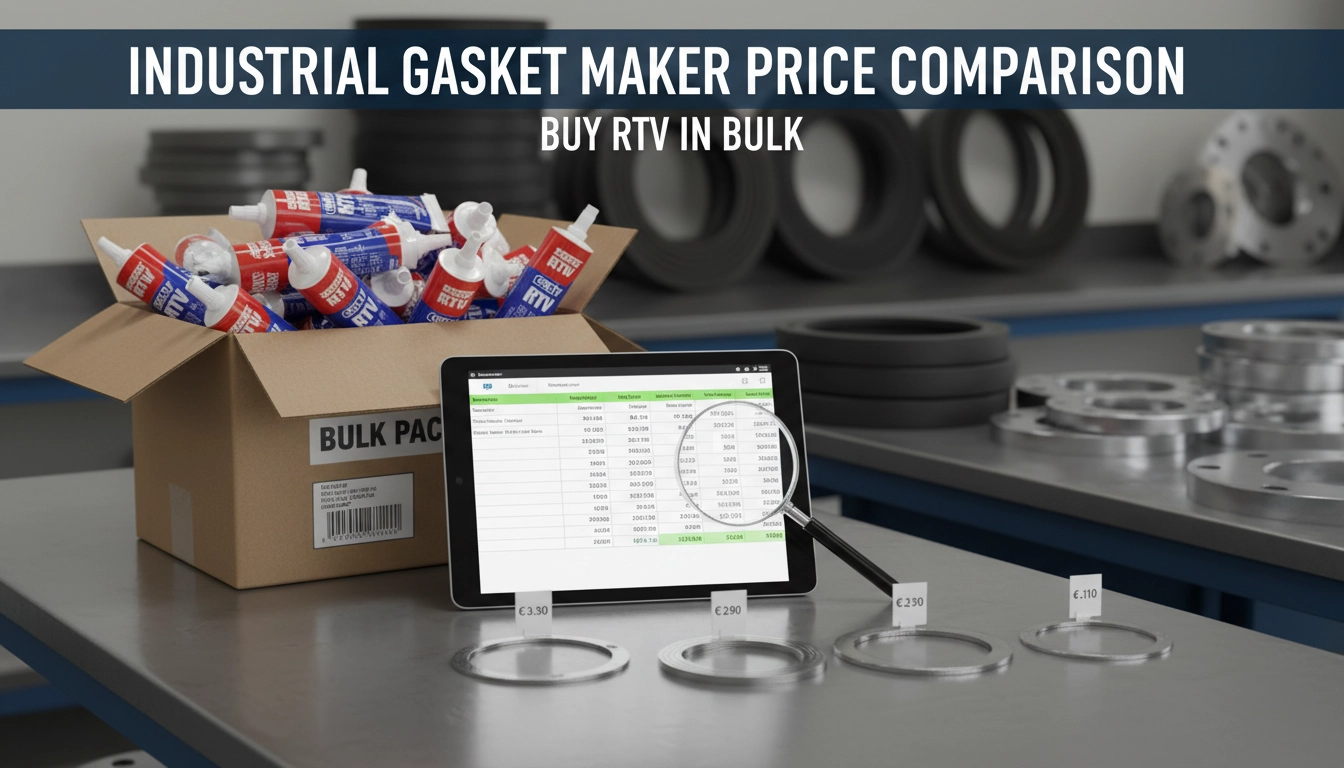
The Ultimate Guide to Buying RTV Gasket Maker Bulk: 7 Secrets to Saving 40% on Industrial Supplies (2026 Edition)

HY992 Modified Polyurethane Construction Sealant
HY992 Modified Polyurethane Sealant is a one-component, moisture-curing construction sealant designed for professional building and structural sealing applications. It provides excellent adhesion, weather resistance, and durable elasticity, making it suitable for a wide range of construction materials.
The formulation delivers strong bonding performance without corrosion or substrate contamination, while maintaining low VOC content for environmentally responsible construction projects.

HY995 Crystal Clear Ms Polymer Adhesive/Sealant
HY995 Crystal Clear Ms Polymer Adhesive/Sealant is a new generation MS Polymer adhesive / sealant formulated for all bonding and sealing applications where long term reliability is required. It has excellent bonding strength on various materials. It will cure to form a durable, flexible, waterproof seal.

HY997 High-Performance Anti-Microbial MS Polymer Sealant
HY997 MS polymer sealant for is is a premium one-component, neutral-curing modified silane sealant engineered for demanding interior applications. It offers a Class 20 movement capability, ensuring long-lasting flexibility and reliable performance under dynamic joint conditions. Curing at room temperature, HY997 delivers superior anti-microbial and mildew-resistant properties, maintaining hygienic and clean environments over time.

KINGDELI HY732 Professional Acetoxy Cure Silicone Sealant
KINGDELI HY732 is a professional-grade, one-component acetoxy cure silicone sealant designed for fast curing, strong adhesion, and long-lasting flexibility. Ideal for aquariums, glass applications, aluminum doors and windows, kitchens, and bathrooms, it provides reliable sealing performance with excellent anti-fungal protection in high-humidity environments.
Let’s Build Stronger Bonds with Quality Adhesives and Sealants
Have questions about the topic or need tailored sealant solutions for your project?
Our team is ready to provide expert guidance, product recommendations, and application support.
Innovating with Integrity, Bonding the World
Since 1998, KINGDELI has delivered trusted, sustainable sealant solutions that connect industries and inspire progress worldwide.

Whatsapp: +8618825946249
Kingdeli
Kingdeli
Kingdeli
Kingdeli
Kingdeli