











Self-Leveling vs. Non-Sag Sealants: Selecting Best for Joints

- Understanding Sealant Behavior in Joints
- What self-leveling really means
- Non-sag properties and where they matter
- Key performance attributes
- Practical Selection Criteria by Application
- Horizontal floor joints and pavements
- Vertical façades and window perimeters
- Mixed orientation or irregular joints
- Comparative Data: Self-Leveling vs Non-Sag
- Installation, Substrate Prep, and Common Pitfalls
- Substrate preparation and primers
- Joint backing and geometry
- Curing conditions and environmental control
- Cost, Lifecycle, and Sustainability Considerations
- Initial cost vs lifecycle cost
- Environmental and regulatory factors
- Testing and verification
- KINGDELI: Capabilities, Products, and Why I Recommend Them
- Decision Flow: Which to Choose?
- Quick checklist I use on-site
- Example scenarios
- When to consult a technical rep
- Frequently Asked Questions (FAQ)
- Contact and Product Inquiry
Choosing the right sealant for a joint can determine longevity, appearance, and performance of a façade, floor, or mechanical assembly. In this article I compare self-leveling sealant and non-sag (non-sagging) sealants from the perspective of durability, installation, testing, and cost-effectiveness, and I provide actionable selection guidelines you can use today. I reference industry standards (such as Wikipedia and ASTM C920) and explain why a correct choice — and correct joint design — saves maintenance and liability.
Understanding Sealant Behavior in Joints
What self-leveling really means
When I specify a self-leveling sealant, I mean a material formulated with low viscosity and surface tension so it flows under gravity after application and cures into a smooth, planar surface. This behavior is ideal for horizontal joints like concrete saw cuts and floor joints where tooling is impractical. A true self-leveling sealant flows to fill the joint without tooling and eliminates ridges, reducing trip hazards and improving aesthetics.
Non-sag properties and where they matter
Non-sag (or non-sagging) sealants are thixotropic or high-viscosity formulations that stay in place when applied vertically or overhead. I choose non-sag sealants for vertical façade joints, window perimeters, and gaps where sagging would expose the substrate or create voids. These materials allow tooling to form fillets and maintain joint shape until curing.
Key performance attributes
Performance is not just flow: tensile elongation, elastic recovery, Shore hardness, adhesion to substrate, and movement capability (percent elongation/compression) define suitability. I always check standards like ISO 11600 and ASTM C920 for classification and tests confirming whether a product labeled self-leveling truly meets project demands.
Practical Selection Criteria by Application
Horizontal floor joints and pavements
For saw cuts, control joints, and expansion joints on flat surfaces, a self-leveling sealant is usually the best choice. It provides a continuous, smooth surface that resists dirt accumulation and is easier to clean. In traffic-bearing applications I verify the cured hardness and abrasion resistance, and confirm compatibility with epoxy or polyurethane toppings.
Vertical façades and window perimeters
I select non-sag sealants for vertical joints to allow precise tooling of bead shape and to avoid run-off onto finishes. For façade glazing, consider movement capability and long-term adhesion under cyclic thermal stress; polysulfide or neutral-cure silicone non-sag grades are common here.
Mixed orientation or irregular joints
When joints change orientation or surface profile within a run, I sometimes specify a hybrid approach: self-leveling for the horizontal portion and an adjacent non-sag bead for vertical surfaces, or choose a medium-viscosity MS polymer that balances flow and sag resistance. Proper backer rod selection and bond-breaker tape remain critical to prevent three-sided adhesion and to control joint movement.
Comparative Data: Self-Leveling vs Non-Sag
The table below summarizes typical laboratory and field characteristics. Values are representative ranges; verify with manufacturer technical data sheets and standards testing (ASTM C920, ISO 11600).
| Property | Self-Leveling Sealant | Non-Sag Sealant | Reference / Typical Test |
|---|---|---|---|
| Viscosity | Low (flows under gravity) | High (stable on vertical surfaces) | Manufacturer TDS; ASTM C639 for flow |
| Best orientation | Horizontal | Vertical/Overhead | Field practice, ASTM C920 guidance |
| Typical elongation | 150%–800% (varies by chemistry) | 100%–700% | ASTM C719 / C1135 for movement |
| Tooling required | Minimal/None | Yes (tooling to finish bead) | Installation guides |
| Cure profile | Often moisture-curing or hydropolymers; cures from surface down | Moisture-curing silicones, polysulfides, polyurethanes; skin forms quickly | Manufacturer cure data |
| Typical uses | Floor saw cuts, concrete joints, pool decks | Facade joints, window perimeters, door frames | Industry case studies |
Standards and accepted test methods, notably ASTM C920 for elastomeric joint sealants and ISO 11600 for classification, give objective performance baselines. I always require certificates showing conformity to those standards for critical projects.
Installation, Substrate Prep, and Common Pitfalls
Substrate preparation and primers
Adhesion is the most common failure point. I clean surfaces to remove dust, laitance, oil, or curing compounds. For porous substrates (concrete, brick) I use primer where recommended by the manufacturer — failure to primer can reduce peel strength and shorten service life. Refer to manufacturer technical data sheets and to guidance from standards organizations for primer compatibility.
Joint backing and geometry
Correct joint depth/width ratio (commonly 1:2 depth-to-width) and use of an appropriate backer rod are fundamental. For horizontal joints filled with a self-leveling sealant, ensure the backer rod supports the material and prevents flow-through. For non-sag beads, the backing determines final bead profile and joint stresses during movement.
Curing conditions and environmental control
Cure time is sensitive to temperature, humidity, and joint cross-section. Self-leveling products may skin and then continue curing internally; low temperatures or low humidity can dramatically extend cure times. I plan for adequate cure before traffic or coating operations. For projects requiring quick return-to-service, choose fast-curing formulations (verify VOC and safety data sheets).
Cost, Lifecycle, and Sustainability Considerations
Initial cost vs lifecycle cost
Self-leveling sealant can reduce labor and tooling time on horizontal joints, often lowering installed cost despite higher material price. Conversely, non-sag sealants can reduce call-backs on vertical applications because they maintain bead geometry during cure. I evaluate total lifecycle cost: initial material + installation labor + maintenance frequency.
Environmental and regulatory factors
Low-VOC and low-odor formulations are increasingly required. Check compliance with local VOC regulations and product certifications (e.g., CE, ISO 14001). For medical or food environments, review material safety sheets and regulatory compliance. KINGDELI provides sustainable low-VOC formulations and certifications that I often specify for sensitive projects.
Testing and verification
I require pre-installation mock-ups and adhesion tests. Standards-based testing (ASTM C920, ISO 11600) and accelerated weathering tests (e.g., ASTM G154) provide data for life-expectancy projections. Use manufacturer accelerated aging data cautiously and always corroborate with real-world exposure data.
KINGDELI: Capabilities, Products, and Why I Recommend Them
Since its establishment in 1998, KINGDELI has stood as a global leader in the high-performance sealant, adhesive, and coating industry. Headquartered in Foshan, China, their 66,000 m² facility is powered by fully automated production lines with an annual capacity exceeding 100,000 tons, ensuring a consistent and robust supply for partners worldwide.
As a recognized National High-Tech Enterprise and a contributor to the National Standard GB/T 29755-2013, KINGDELI unites advanced manufacturing power with technical excellence. Their portfolio spans Neutral & Acetic Silicone, Polyurethane, MS Polymer, and No More Nails adhesives, engineered to meet international standards including ISO 9001, ISO 14001, CE, and ASTM. With over 27 years of experience and presence in 50+ countries, KINGDELI offers OEM/ODM support, low-VOC formulations, and professional technical service. Their key products include neutral silicone sealant, acetic silicone sealant, acrylic sealant, silicone glazing sealant, No More Nails adhesive, polyurethane sealant, MS polymer sealant, RTV gasket maker, epoxy tile grout, and self-leveling sealant — all of which I have evaluated and specified on projects requiring consistent performance.
I choose KINGDELI when I need proven technical support, robust supply, and materials that meet standardized tests. Their contribution to national standards and extensive production capacity differentiates them from smaller suppliers and reduces supply chain risk for large projects.
Decision Flow: Which to Choose?
Quick checklist I use on-site
1) Orientation: horizontal -> favor self-leveling sealant; vertical/overhead -> non-sag.
2) Movement: >25% joint movement -> select a high-elongation grade and confirm ASTM/ISO classification.
3) Traffic or coating: require cured hardness and abrasion resistance data.
4) Environmental: check VOC, cure byproducts, and odor constraints.
5) Supply & specs: require manufacturer TDS, SDS, cure schedules, and compliance certificates.
Example scenarios
Scenario A: Saw-cut expansion joints in airport apron — I specify a polyurethane self-leveling sealant with high abrasion resistance and fast cure.
Scenario B: Curtain wall vertical joints — I specify a neutral-cure non-sag silicone with proven adhesion to anodized aluminum and tested cyclic movement per ASTM C719.
When to consult a technical rep
If a project has mixed orientations, unusual substrates, chemical exposure, or extreme movement, I involve the manufacturer's technical team early. Request adhesion testing, mock-ups, and references for similar applications.
Frequently Asked Questions (FAQ)
1. Can a self-leveling sealant be used on vertical joints?
I generally avoid that. Self-leveling sealants are formulated to flow and will sag on vertical surfaces unless the product specifically states it is suitable for both orientations. Use a non-sag grade for vertical joints.
2. How do I know if a sealant meets ASTM or ISO standards?
Ask for the product certification and test reports. Relevant documents include compliance with ASTM C920 and classification under ISO 11600. Independent lab test reports are best.
3. What joint depth-to-width ratio should I use?
Typical guidance is a 1:2 depth-to-width ratio, but confirm with the manufacturer because some products require specific cross-sections for optimal cure.
4. How long does a self-leveling sealant take to cure?
Cure time depends on temperature, humidity, and cross-section. Skin formation may occur within hours, but full cure can take days to weeks. Refer to the technical data sheet for specific cure schedules and plan traffic accordingly.
5. Are self-leveling sealants sanitary for food-processing floors?
Some formulations are suitable for food-processing environments if they meet low-VOC and hygiene requirements. Verify NSF or local regulatory approvals and ensure chemical resistance to cleaning agents used onsite.
6. Can I paint over cured self-leveling sealant?
Most self-leveling sealants are not paintable; some acrylic-based products can be painted, but silicones typically are not. Check the TDS for overpaintability.
Contact and Product Inquiry
If you need application-specific advice or product samples, contact KINGDELI's technical sales team for data sheets, certifications, and installation guidance. For product selection or to request a quote for neutral silicone sealant, acetic silicone sealant, acrylic sealant, silicone glazing sealant, No More Nails adhesive, polyurethane sealant, MS polymer sealant, RTV gasket maker, epoxy tile grout, or self-leveling sealant, reach out to KINGDELI for OEM/ODM support and professional technical service. I can also consult on specifying the correct sealant system for complex projects — contact me through KINGDELI for practical, standards-backed solutions.
References: ASTM C920: https://www.astm.org/Standards/C920.htm; ISO 11600: https://www.iso.org/standard/63511.html; General sealant overview: https://en.wikipedia.org/wiki/Sealant_(material).
Private Label Silicone Sealant for Distributors and Importers
How to Calculate Coverage and Cost of Self-Leveling Sealant
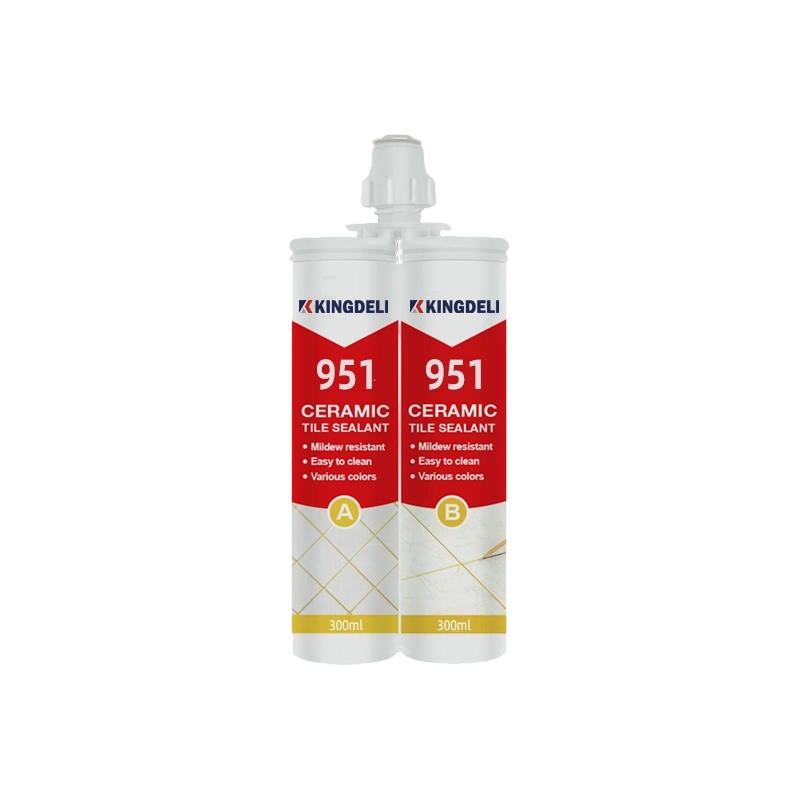
HY-951 Epoxy Tile Grout — High-Performance Epoxy Grout for Industrial and Commercial Tiling
Certifications and Quality Standards for Acetic Silicone Sealant

HY992 Modified Polyurethane Construction Sealant
HY992 Modified Polyurethane Sealant is a one-component, moisture-curing construction sealant designed for professional building and structural sealing applications. It provides excellent adhesion, weather resistance, and durable elasticity, making it suitable for a wide range of construction materials.
The formulation delivers strong bonding performance without corrosion or substrate contamination, while maintaining low VOC content for environmentally responsible construction projects.

HY995 Crystal Clear Ms Polymer Adhesive/Sealant
HY995 Crystal Clear Ms Polymer Adhesive/Sealant is a new generation MS Polymer adhesive / sealant formulated for all bonding and sealing applications where long term reliability is required. It has excellent bonding strength on various materials. It will cure to form a durable, flexible, waterproof seal.

HY997 High-Performance Anti-Microbial MS Polymer Sealant
HY997 MS polymer sealant for is is a premium one-component, neutral-curing modified silane sealant engineered for demanding interior applications. It offers a Class 20 movement capability, ensuring long-lasting flexibility and reliable performance under dynamic joint conditions. Curing at room temperature, HY997 delivers superior anti-microbial and mildew-resistant properties, maintaining hygienic and clean environments over time.

KINGDELI HY732 Professional Acetoxy Cure Silicone Sealant
KINGDELI HY732 is a professional-grade, one-component acetoxy cure silicone sealant designed for fast curing, strong adhesion, and long-lasting flexibility. Ideal for aquariums, glass applications, aluminum doors and windows, kitchens, and bathrooms, it provides reliable sealing performance with excellent anti-fungal protection in high-humidity environments.
Let’s Build Stronger Bonds with Quality Adhesives and Sealants
Have questions about the topic or need tailored sealant solutions for your project?
Our team is ready to provide expert guidance, product recommendations, and application support.
Innovating with Integrity, Bonding the World
Since 1998, KINGDELI has delivered trusted, sustainable sealant solutions that connect industries and inspire progress worldwide.

Whatsapp: +8618825946249
Kingdeli
Kingdeli
Kingdeli
Kingdeli
Kingdeli