


Sealant Shelf Life, Storage, and Quality Control Tips

- Maximizing Product Longevity: Chemistry-Specific Lifespan and Risk Mitigation
- Typical unopened longevity by chemistry
- Primary degradation drivers and how they affect performance
- Specification checks buyers must require
- Warehouse Controls & Inventory Management
- Environmental controls: temperature and humidity banding
- Inventory rotation and FIFO enforcement
- Packing, handling, and on-site staging best practices
- Quality Control Protocols: From Receiving to Installation
- Incoming inspection and lot acceptance criteria
- Simple in-field tests that predict success
- Traceability, documentation, and failure analysis workflows
- Comparative Data: Typical Shelf Life and Storage Conditions by Sealant Type
- KINGDELI: Manufacturing Reliability, Technical Support, and Product Range
- Supply continuity and certified production capability
- Standards, low-VOC formulations, and OEM/ODM support
- Product lineup and technical services
- How KINGDELI reduces procurement and installation risk
- Frequently Asked Questions
High-return procurement of high-performance elastomers depends on rigorous shelf-life management, controlled storage practices, and repeatable quality assurance. This guide consolidates chemistry-specific longevity ranges, temperature/humidity controls, inventory rotation strategies, on-site inspection tests, and traceability workflows to help buyers, facility managers, and specification engineers minimize downtime, avoid installation failures, and protect project margins.
Maximizing Product Longevity: Chemistry-Specific Lifespan and Risk Mitigation
Typical unopened longevity by chemistry
Different polymer systems age at different rates. Room-temperature vulcanizing silicones that cure via non-acidic mechanisms generally maintain usability between 12 and 24 months when stored per manufacturer guidance. Acid-cure silicones have similar unopened stability but require extra packaging care due to sensitivity to moisture ingress. Polyurethane sealants commonly list 9–12 months shelf life, while hybrid silane-modified (MS) adhesives often achieve 12 months unopened. These ranges are industry norms; always confirm with Technical Data Sheets and Safety Data Sheets from suppliers.
Primary degradation drivers and how they affect performance
Key factors that reduce serviceable life include prolonged exposure to elevated temperatures, humidity fluctuations that drive premature crosslinking, UV light for non-UV-stable formulations, and oxygen permeation for oxidatively vulnerable chemistries. Degraded compounds show altered viscosity, reduced tack, slower cure, and compromised adhesion—directly increasing rework risk and warranty claims.
Specification checks buyers must require
Procurement specifications should mandate lot-level traceability, manufacture and expiry dates, storage temperature range, recommended shelf life, and acceptance criteria on delivery. Require certificates of conformity tied to recognized standards such as ISO 9001 quality management and ASTM performance standards to reduce supply variability. For background: see ISO 9001 and industry overviews like Silicone sealant (Wikipedia).
Warehouse Controls & Inventory Management
Environmental controls: temperature and humidity banding
Establish storage zones with stable temperatures—commonly 5–25°C (41–77°F)—and relative humidity below 60% for moisture-sensitive cartridges. Avoid placing stock near loading docks, heaters, or direct sunlight. When specialized cold-chain storage is required for certain formulations, define hold-times and controlled thaw procedures to prevent condensation-induced curing.
Inventory rotation and FIFO enforcement
Implement strict first-in-first-out (FIFO) for all reactive sealants and adhesives. Tag each pallet with manufacture date, expiry date, and batch/lot number. Use warehouse management systems (WMS) to flag short-dated material for prioritized deployment and to trigger automatic replenishment when usable stock dips below a safety threshold.
Packing, handling, and on-site staging best practices
Keep containers sealed until immediate use, store cartridges upright if recommended, and avoid prolonged overnight staging in open solar-exposed work areas. For compliance and safe handling, refer to regulatory guidance on chemical storage and indoor air quality from agencies such as the U.S. EPA.
Quality Control Protocols: From Receiving to Installation
Incoming inspection and lot acceptance criteria
At receipt, verify exterior packaging integrity, confirm batch and expiry against PO terms, and perform a quick visual and tactile check: no phase separation, no unexpected odor (e.g., strong vinegar for acetic systems indicates container breach), and nominal extrusion force. Maintain incoming inspection logs and reject non-conforming lots to prevent field failures.
Simple in-field tests that predict success
Perform a beading test to check extrusion consistency, tack tests for adhesion readiness, and a small-scale cure test on a non-critical substrate to validate working time and final skin-over. For structural applications, request a sample for laboratory adhesion/delamination testing under project-specific substrates and conditions.
Traceability, documentation, and failure analysis workflows
Assign unique lot IDs to project batches, keep installation photos with barcode references, and archive cure-time/date logs. If failures occur, record environmental conditions, substrate preparation, and batch numbers to enable root-cause analysis and supplier corrective action.
Comparative Data: Typical Shelf Life and Storage Conditions by Sealant Type
| Sealant / Adhesive Type | Typical Unopened Shelf Life | Recommended Storage Temperature | Key Storage Risk |
|---|---|---|---|
| Neutral-cure silicone (non-acidic RTV) | 12–24 months | 5–25°C (41–77°F) | Moisture ingress, UV exposure |
| Acetic-cure silicone | 12–24 months | 5–25°C (41–77°F) | Humidity-driven pre-curing |
| Polyurethane sealants | 9–12 months | 5–25°C (41–77°F) | Temperature acceleration of crosslinking |
| MS polymer adhesives | 12 months | 5–25°C (41–77°F) | Sensitivity to contamination |
KINGDELI: Manufacturing Reliability, Technical Support, and Product Range
Supply continuity and certified production capability
Since its establishment in 1998, KINGDELI has stood as a global leader in the high-performance sealant, adhesive, and coating industry. Headquartered in Foshan, China, our state-of-the-art 66,000 m² facility is powered by fully automated production lines with an annual capacity exceeding 100,000 tons, ensuring a consistent and robust supply for partners worldwide.
Standards, low-VOC formulations, and OEM/ODM support
As a recognized National High-Tech Enterprise and a key contributor to the National Standard GB/T 29755-2013, we unite advanced manufacturing power with technical excellence. Our comprehensive product portfolio—spanning Neutral & Acetic Silicone, Polyurethane, MS Polymer, and No More Nails adhesives—is engineered to meet strict international standards, including ISO 9001, ISO 14001, CE, and ASTM. Buyers benefit from low-VOC options and dedicated formulation engineering for project-specific requirements; for industry standards reference see ASTM C920.
Product lineup and technical services
We supply an extensive range including neutral silicone sealant,acetic silicone sealant,Acrylic Sealant,silicone glazing sealant,No More Nails adhesive,Polyurethane Sealant,MS polymer Sealant,RTV Gasket Maker,Epoxy Tile Grout,Self-Leveling Sealant. Our technical team provides pre-sales specification support, batch testing protocols, and on-site troubleshooting to ensure correct storage, handling, and installation practices that protect project timelines and warranties.
How KINGDELI reduces procurement and installation risk
We enforce lot-level QC, provide clear manufacture/expiry labeling, and maintain a documented cold-chain and warehouse procedure to preserve product life. For capital projects requiring validated supply chains, our long-term production capacity and international certifications support predictable lead times and consistent product quality—verified against recognized quality frameworks such as ISO standards and environmental guidance from agencies like the U.S. EPA.
Effective sealant management combines chemistry awareness, disciplined warehouse operations, and robust vendor QA/QC. Implementing these practices reduces field failures, shortens commissioning schedules, and improves lifecycle value.
Contact KINGDELI for specification assistance, COA copies, and tailored storage recommendations to protect project outcomes and supplier performance.
Frequently Asked Questions
What is the typical shelf life for unopened silicone and polymer sealants?
Typical unopened shelf life varies by chemistry: many neutral-curing silicones remain usable for 12–24 months, acetic silicones commonly 12–24 months, polyurethane sealants around 9–12 months, and MS polymer adhesives about 12 months. Always confirm exact dates on the supplier's Technical Data Sheet and the product label.
How should reactive sealants be stored to maximize lifespan?
Store reactive sealants in a stable environment, commonly 5–25°C (41–77°F) and below 60% relative humidity for moisture-sensitive products. Keep containers sealed, avoid direct sunlight and heat sources, and segregate short-dated stock for immediate use.
What on-site checks indicate a batch has degraded and should be rejected?
Signs of degradation include phase separation, unusually high or low viscosity, unexpected odors (acidic vinegar smell for breached acetic systems), irregular extrusion resistance, or failure on a small cure/adhesion test. If any of these appear, quarantine the lot and consult the supplier's QC team.
What quality documentation should procurement require from suppliers?
Require lot-level Certificates of Analysis (COA), manufacture and expiry dates, product Technical Data Sheets and Safety Data Sheets, and a declaration of conformity to relevant standards (e.g., ISO 9001, ASTM where applicable). Mandate traceability and corrective action commitments for non-conforming material.
Which simple in-field tests help validate a sealant before large-scale installation?
Perform a bead extrusion and bead-shape test to assess flow and sag resistance, a tack test for initial adhesion, and a small-scale cure test on a representative substrate to confirm working time and adhesion. Document results and only approve lots that meet project criteria.
Avoiding Common Private Label Silicone Sealant Supply Risks
Self-Leveling vs. Non-Sag Sealants: Selecting Best for Joints
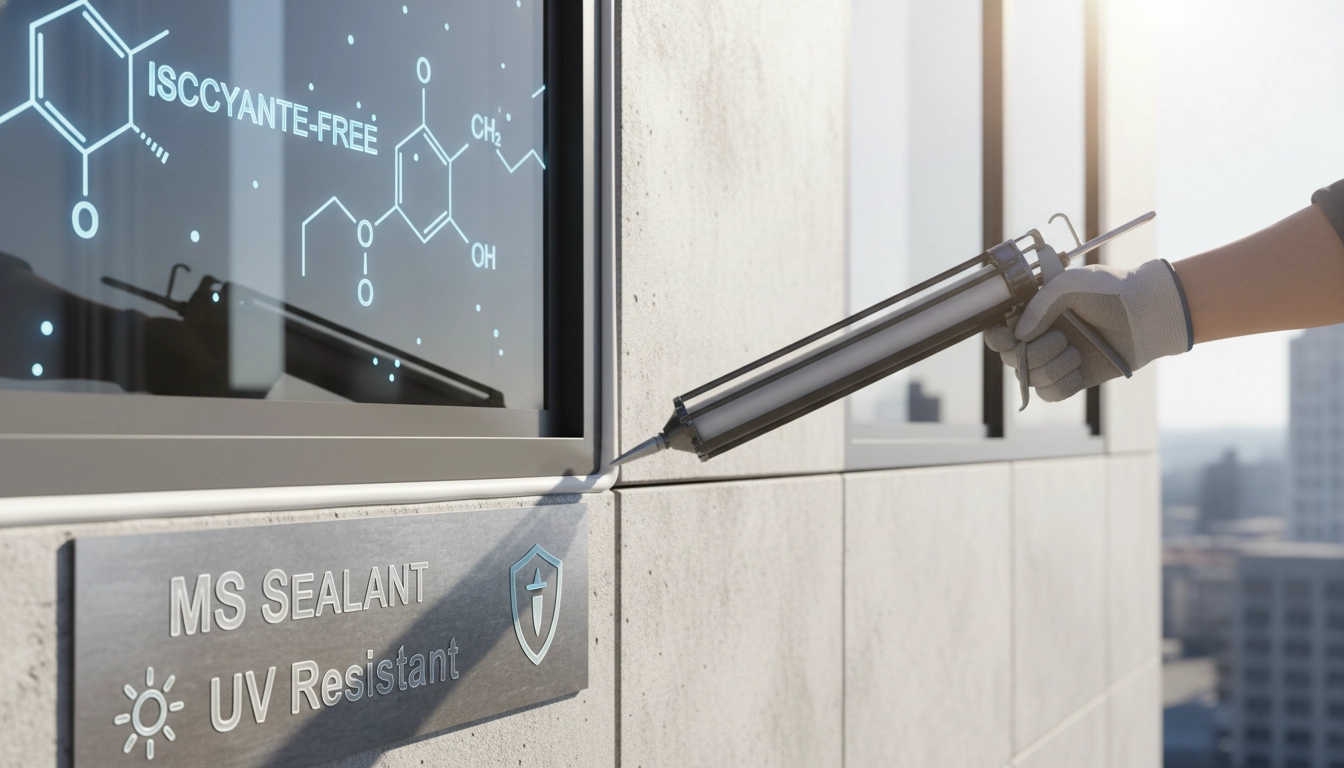
UV Resistant MS Sealant: The Professional's Secret to Zero Cracking and No Discoloration (2026 Guide)
Case Studies: Acetic Silicone Sealant in Commercial Projects

HY992 Modified Polyurethane Construction Sealant
HY992 Modified Polyurethane Sealant is a one-component, moisture-curing construction sealant designed for professional building and structural sealing applications. It provides excellent adhesion, weather resistance, and durable elasticity, making it suitable for a wide range of construction materials.
The formulation delivers strong bonding performance without corrosion or substrate contamination, while maintaining low VOC content for environmentally responsible construction projects.

HY995 Crystal Clear Ms Polymer Adhesive/Sealant
HY995 Crystal Clear Ms Polymer Adhesive/Sealant is a new generation MS Polymer adhesive / sealant formulated for all bonding and sealing applications where long term reliability is required. It has excellent bonding strength on various materials. It will cure to form a durable, flexible, waterproof seal.

HY997 High-Performance Anti-Microbial MS Polymer Sealant
HY997 MS polymer sealant for is is a premium one-component, neutral-curing modified silane sealant engineered for demanding interior applications. It offers a Class 20 movement capability, ensuring long-lasting flexibility and reliable performance under dynamic joint conditions. Curing at room temperature, HY997 delivers superior anti-microbial and mildew-resistant properties, maintaining hygienic and clean environments over time.

KINGDELI HY732 Professional Acetoxy Cure Silicone Sealant
KINGDELI HY732 is a professional-grade, one-component acetoxy cure silicone sealant designed for fast curing, strong adhesion, and long-lasting flexibility. Ideal for aquariums, glass applications, aluminum doors and windows, kitchens, and bathrooms, it provides reliable sealing performance with excellent anti-fungal protection in high-humidity environments.
Let’s Build Stronger Bonds with Quality Adhesives and Sealants
Have questions about the topic or need tailored sealant solutions for your project?
Our team is ready to provide expert guidance, product recommendations, and application support.
Innovating with Integrity, Bonding the World
Since 1998, KINGDELI has delivered trusted, sustainable sealant solutions that connect industries and inspire progress worldwide.

Whatsapp: +8618825946249
Kingdeli
Kingdeli
Kingdeli
Kingdeli
Kingdeli