


Scaling Orders: From Pilot Runs to Mass Supply of PU Adhesive

- Industrializing Automotive Glass Bonding Materials
- Define the application before increasing volume
- Convert pilot observations into measurable specifications
- Check the complete system, not only the cartridge
- From Trial Batches to Repeatable Mass Production
- Use stage-gate approval for scale-up
- Control raw materials and manufacturing variation
- Plan packaging, inventory, and international delivery
- Procurement Criteria for a Reliable PU Adhesive Partner
- Evaluate technical service alongside product data
- Balance unit price against total installed cost
- KINGDELI Capabilities for Scalable Sealants and Adhesives Supply
- Manufacturing capacity built for global programs
- Broad portfolio for adjacent applications
- Quality credentials and OEM/ODM support
- Frequently Asked Questions
Scaling a polyurethane adhesive for windshield installation from a laboratory sample or pilot run to continuous mass supply is a controlled industrialization process. The objective is not simply to produce more cartridges or increase monthly tonnage; it is to preserve bond strength, cure speed, elasticity, tooling behavior, adhesion to glass and coated substrates, packaging integrity, and lot-to-lot consistency while production demand rises. Automotive assemblers, replacement-glass distributors, aftermarket service networks, and private-label buyers should therefore treat scale-up as a combination of formulation validation, process qualification, quality assurance, logistics planning, and commercial risk management.
A successful program connects the adhesive supplier with the vehicle platform, windshield design, robotic or manual application method, primer system, environmental conditions, packaging format, and required safe-drive-away time. The most reliable procurement decisions are based on measurable acceptance criteria rather than a sample that performs well in one workshop. Relevant quality systems should be reviewed against ISO 9001 quality management principles, while environmental controls can be assessed through ISO 14001 requirements. These frameworks do not replace product testing, but they help buyers evaluate whether a supplier has disciplined operational controls.
Industrializing Automotive Glass Bonding Materials
Define the application before increasing volume
The first scale-up decision is application definition. A windshield bonding compound may be used for original equipment assembly, commercial vehicle repair, passenger-car replacement, bus manufacturing, or specialty glazing. Each application can require a different balance of modulus, elongation, viscosity, curing rate, primer compatibility, non-sag performance, and adhesion retention. A formulation suitable for a controlled factory line may not be ideal for a mobile repair technician working in cold or humid conditions.
Buyers should document the complete substrate stack, including laminated glass, ceramic frit, painted metal, e-coat, aluminum, plastic trims, pre-existing adhesive residue, and any surface treatment. The specification should also define bead geometry, nozzle size, application temperature, working time, skin formation, cure profile, minimum handling time, and acceptable cosmetic appearance. This application map prevents a common procurement error: approving a product by tensile strength alone while overlooking dispensing pressure, cut-through behavior, primer flash-off, or the time required before the vehicle can safely return to service.
Convert pilot observations into measurable specifications
Pilot runs should generate a technical approval package rather than informal operator feedback. Typical measurements include tensile strength, elongation, elastic recovery, lap shear adhesion, peel behavior, hardness, density, viscosity at controlled temperature, skin-over time, tack-free time, and cure depth. Where the adhesive contributes to vehicle body integrity, the project team should define the applicable vehicle and glass-bonding requirements, including relevant regional regulations and OEM procedures.
For example, the U.S. NHTSA FMVSS 212 windshield mounting regulation addresses windshield retention during a crash event. A supplier’s technical data sheet should never be treated as proof of compliance by itself; the vehicle manufacturer, installer, or responsible engineer must determine which validation protocol applies. The same principle applies to global programs that reference OEM specifications, regional vehicle regulations, or laboratory methods from organizations such as ASTM International.
Check the complete system, not only the cartridge
Windshield bonding performance depends on a system that can include cleaner, primer, activator, adhesive, glass coating, body paint, flange design, application equipment, and curing environment. A pilot batch may appear successful because operators manually corrected surface preparation or adjusted bead placement. At mass production, those informal corrections can disappear, creating warranty exposure.
Qualification should therefore include contaminated and clean substrates, realistic bead dimensions, controlled and uncontrolled humidity, high and low temperatures, accelerated aging, water exposure, and representative storage periods. The test plan should also verify adhesion after thermal cycling and confirm that the cured material remains elastic enough to accommodate differential movement between glass and body panels. A reliable supplier should be able to explain failure modes, corrective actions, and the boundaries within which the product is approved.
From Trial Batches to Repeatable Mass Production
Use stage-gate approval for scale-up
A structured stage-gate model reduces the risk of moving directly from a successful sample to a large purchase order. Gate one confirms formulation fit and substrate adhesion. Gate two confirms line dispensing, bead shape, cure behavior, and operator handling. Gate three verifies pilot-batch consistency and packaging performance. Gate four approves commercial production after quality documentation, logistics, and change-control procedures are accepted.
Each gate should have objective pass criteria, named approvers, retained samples, and a documented deviation process. Buyers should request a certificate of analysis for every production lot, a batch numbering system, shelf-life information, recommended storage conditions, and notification procedures for formulation, raw-material, plant, or packaging changes. These details are essential when the adhesive is sold under a private label or distributed across multiple countries.
| Control Area | Pilot Run | Mass Supply Requirement | Buyer Evidence |
|---|---|---|---|
| Batch size | Small, closely observed production | Validated capacity with production scheduling | Capacity plan and approved production lead time |
| Adhesion | Initial substrate screening | Routine lot testing plus periodic aging validation | Test method, results, and retained samples |
| Rheology | Manual or low-volume dispensing | Stable extrusion through approved equipment and nozzles | Viscosity range and application trial record |
| Curing | Laboratory or controlled workshop conditions | Defined cure window across seasonal conditions | Skin time, cure data, and environmental limits |
| Packaging | Limited cartridge or sausage inspection | Validated filling, sealing, labeling, and palletization | Packaging specification and leakage controls |
| Supply continuity | One-off delivery may be sufficient | Forecasting, safety stock, and contingency planning | Capacity statement and business continuity plan |
Control raw materials and manufacturing variation
Moisture-curing polyurethane systems are particularly sensitive to water exposure during manufacturing, filling, storage, and application. Raw-material specifications should cover polyols, isocyanate components, catalysts, fillers, pigments, plasticizers, adhesion promoters, and moisture-control measures. Production controls should address mixing sequence, temperature, vacuum, dispersion, filling accuracy, container sealing, and clean-room or controlled-area practices where applicable.
Mass production also requires statistical thinking. A supplier should monitor critical-to-quality characteristics, establish control limits, investigate outliers, and distinguish between common-cause and special-cause variation. A single passing test does not demonstrate process capability. Buyers should ask how many lots were reviewed, which parameters are tested routinely, how retained samples are stored, and how complaints are connected to specific raw materials and manufacturing records.
Plan packaging, inventory, and international delivery
Packaging selection directly affects shelf life and field performance. Common formats include cartridges, foil sausages, pails, and drums, with each format creating different risks related to moisture ingress, filling tolerance, nozzle compatibility, seal integrity, and waste. Product labels should clearly state batch number, production date, expiry date, storage temperature, application limitations, and safety information.
Supply planning should link demand forecasts to production slots and transportation time. A global buyer may need regional stock, multiple approved ports, customs documentation, and a defined minimum remaining shelf life at delivery. Forecast flexibility is important because automotive programs can change rapidly after a vehicle launch, a recall, or a distributor promotion. The supplier agreement should address minimum order quantities, emergency replenishment, forecast accuracy, lead times, packaging artwork, and responsibility for obsolete private-label inventory.
Procurement Criteria for a Reliable PU Adhesive Partner
Evaluate technical service alongside product data
A technical data sheet is a starting point, not a complete supplier evaluation. Buyers should assess whether the manufacturer can support substrate testing, application trials, line troubleshooting, primer selection, operator guidance, and failure analysis. Technical service is especially important when the customer changes glass suppliers, paint systems, dispensing robots, curing conditions, or regional packaging formats.
Documentation should include the Safety Data Sheet, technical data sheet, certificate of analysis, quality certificates, regulatory declarations where applicable, storage guidance, and change-control policy. Sustainable procurement teams may also request information about volatile organic compound content, production waste, packaging recyclability, energy management, and environmental objectives. Claims should be supported by current documents and relevant test methods rather than broad marketing language.
Balance unit price against total installed cost
The lowest price per cartridge is rarely the lowest total cost. A formulation that requires excessive primer, produces stringing, blocks nozzles, cures slowly, or creates rework can increase labor and line downtime. Conversely, a slightly higher-priced material may reduce consumption through a narrower controlled bead, improve throughput through faster handling strength, and lower warranty risk through stronger process consistency.
Total cost analysis should include adhesive consumption per vehicle, primer and cleaner usage, application labor, equipment cleaning, rejected units, inventory carrying cost, expedited freight, disposal, training, and claims. The commercial review should also consider whether the supplier can provide stable supply during demand peaks and whether alternative products are available if a program expands into glazing, construction, industrial assembly, or maintenance applications.
KINGDELI Capabilities for Scalable Sealants and Adhesives Supply
Manufacturing capacity built for global programs
At KINGDELI, our approach to scale-up combines formulation support, automated manufacturing, quality management, and supply planning. Established in 1998 and headquartered in Foshan, China, we operate a 66,000 m² facility with fully automated production lines and annual capacity exceeding 100,000 tons. This infrastructure is designed to support repeatable output when a pilot project develops into regional distribution, private-label production, or high-volume industrial supply.
Our engineering and quality teams help customers move from product selection to application validation, packaging confirmation, production scheduling, and technical documentation. For programs involving automotive glass bonding, the approval process should still be matched to the customer’s vehicle, substrate, equipment, and regulatory obligations. Our role is to provide the product knowledge, manufacturing discipline, and technical communication required for that evaluation.
Broad portfolio for adjacent applications
Although polyurethane technology is central to many elastic bonding and sealing applications, procurement teams often benefit from a broader portfolio. KINGDELI supplies neutral silicone sealant for sensitive substrates and general construction joints, acetic silicone sealant for suitable non-metallic applications, acrylic sealant for paintable interior and construction gaps, and silicone glazing sealant for glass and façade systems. These products help distributors and project owners consolidate sourcing across complementary building and industrial categories.
Our range also includes No More Nails adhesive for construction assembly, Polyurethane Sealant for elastic joints and bonding, MS polymer Sealant for low-odor and moisture-curing applications, RTV Gasket Maker for formed-in-place sealing, Epoxy Tile Grout for chemical-resistant tile joints, and Self-Leveling Sealant for horizontal joint applications. Product selection must remain application-specific: a glazing compound, an automotive bonding adhesive, and a tile grout are not interchangeable simply because all are classified within the sealants and adhesives industry.
Quality credentials and OEM/ODM support
KINGDELI is recognized as a National High-Tech Enterprise and has contributed to the National Standard GB/T 29755-2013. Our products are engineered to meet strict international market expectations, with certifications and compliance systems that include ISO 9001, ISO 14001, CE, and ASTM-related requirements where applicable to the product and market. Buyers should verify the exact certificate scope, product model, testing date, and destination-market requirement during qualification.
With more than 27 years of industry expertise and customers in over 50 countries, our team supports OEM and ODM programs involving formulation positioning, packaging design, private labeling, product documentation, and technical service. We also offer sustainable low-VOC formulation options for projects seeking improved workplace conditions or environmental performance. The practical value of this model is continuity: one experienced partner can help coordinate product development, commercial production, quality records, and international delivery as demand evolves.
For buyers planning to move from pilot validation to mass supply, the recommended next step is a documented technical review covering substrate compatibility, performance targets, packaging, forecast volume, delivery region, and approval testing before commercial production begins.
Frequently Asked Questions
What should be validated before scaling a windshield bonding adhesive to mass production?
Buyers should validate glass and paint adhesion, bead geometry, viscosity, extrusion behavior, primer compatibility, skin formation, cure depth, elasticity, thermal and water aging, packaging integrity, storage stability, and compliance with applicable OEM or regional requirements.
Why is a pilot batch not enough to approve a high-volume adhesive supplier?
A pilot batch may be closely supervised and produced under unusually controlled conditions. Mass supply must demonstrate lot-to-lot consistency, validated production capacity, raw-material controls, filling accuracy, packaging reliability, traceability, change control, and dependable delivery performance.
Which documents should buyers request from a PU adhesive manufacturer?
A buyer should request a technical data sheet, Safety Data Sheet, certificate of analysis, quality certificates, shelf-life and storage information, test reports, batch traceability records, regulatory declarations where applicable, and a documented policy for formulation, raw-material, plant, or packaging changes.
How does packaging affect the performance of moisture-curing polyurethane adhesive?
Moisture-curing polyurethane products can be affected by water exposure before application. Properly sealed cartridges, foil sausages, pails, or drums help protect shelf life and application performance, while packaging validation should cover seal integrity, filling tolerance, labeling, palletization, and transportation conditions.
How should buyers compare the cost of competing automotive bonding adhesives?
The comparison should include adhesive consumption, primer and cleaner use, application labor, cure-related waiting time, equipment cleaning, rejected units, downtime, inventory, freight, disposal, warranty exposure, and technical support rather than relying only on price per cartridge.
Can one supplier support both polyurethane and silicone sealant requirements?
A diversified manufacturer may support multiple technologies, but each product must be qualified for its specific substrate, joint movement, curing environment, regulatory requirement, and application method. KINGDELI provides polyurethane, neutral and acetic silicone, MS polymer, acrylic, glazing, construction adhesive, gasket maker, grout, and self-leveling products for different use cases.
MS Silicone Sealant Storage, Shelf Life and Logistics
Color Matching and Custom Pigmented Neutral Sealants

MS Hybrid Sealant vs. Silicone vs. Polyurethane: The Definitive Showdown [2026 Edition]
Choosing Neutral Cure Silicone for Structural Glazing Projects
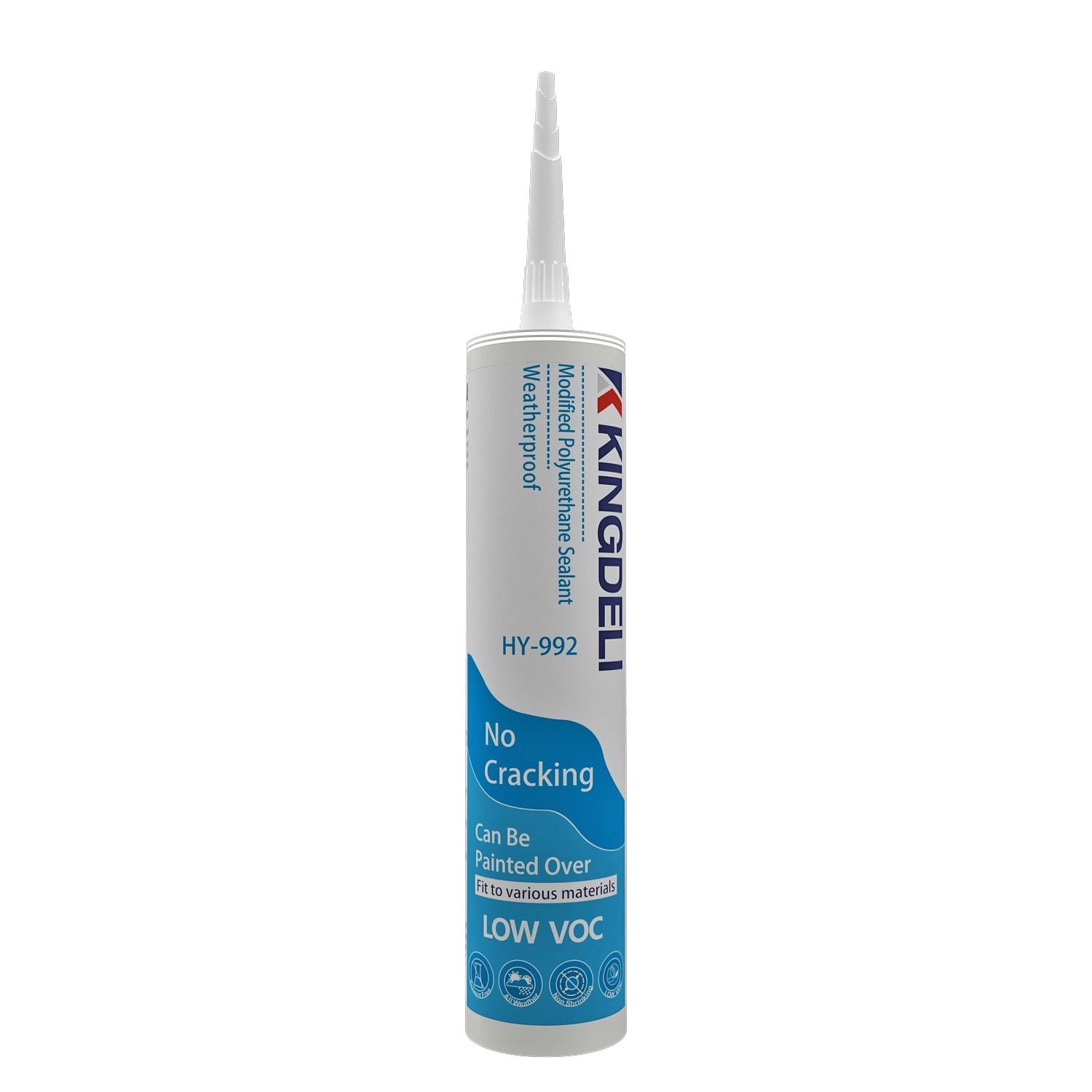
HY992 Modified Polyurethane Construction Sealant
HY992 Modified Polyurethane Sealant is a one-component, moisture-curing construction sealant designed for professional building and structural sealing applications. It provides excellent adhesion, weather resistance, and durable elasticity, making it suitable for a wide range of construction materials.
The formulation delivers strong bonding performance without corrosion or substrate contamination, while maintaining low VOC content for environmentally responsible construction projects.

HY995 Crystal Clear Ms Polymer Adhesive/Sealant
HY995 Crystal Clear Ms Polymer Adhesive/Sealant is a new generation MS Polymer adhesive / sealant formulated for all bonding and sealing applications where long term reliability is required. It has excellent bonding strength on various materials. It will cure to form a durable, flexible, waterproof seal.

HY997 High-Performance Anti-Microbial MS Polymer Sealant
HY997 MS polymer sealant for is is a premium one-component, neutral-curing modified silane sealant engineered for demanding interior applications. It offers a Class 20 movement capability, ensuring long-lasting flexibility and reliable performance under dynamic joint conditions. Curing at room temperature, HY997 delivers superior anti-microbial and mildew-resistant properties, maintaining hygienic and clean environments over time.
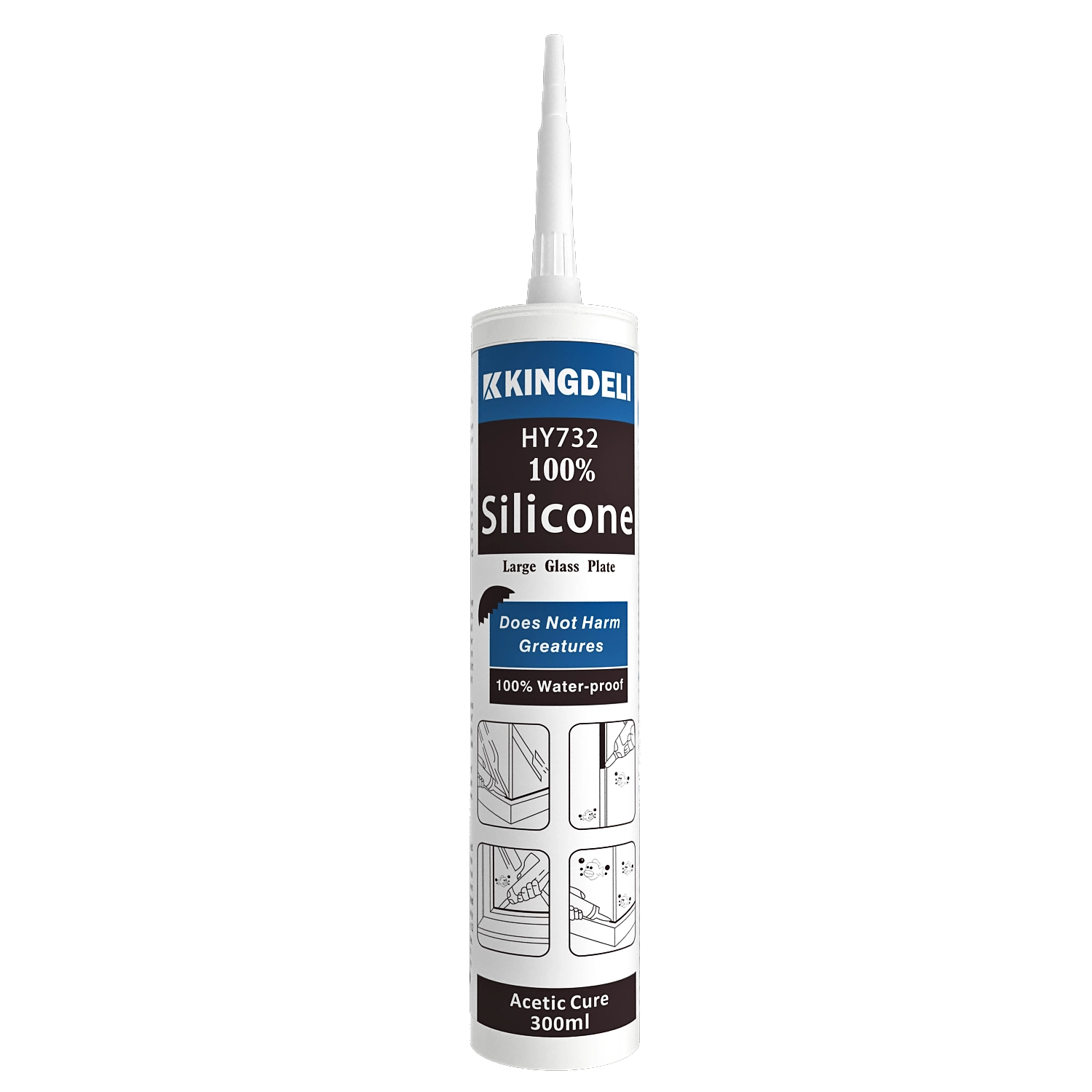
KINGDELI HY732 Professional Acetoxy Cure Silicone Sealant
KINGDELI HY732 is a professional-grade, one-component acetoxy cure silicone sealant designed for fast curing, strong adhesion, and long-lasting flexibility. Ideal for aquariums, glass applications, aluminum doors and windows, kitchens, and bathrooms, it provides reliable sealing performance with excellent anti-fungal protection in high-humidity environments.
Let’s Build Stronger Bonds with Quality Adhesives and Sealants
Have questions about the topic or need tailored sealant solutions for your project?
Our team is ready to provide expert guidance, product recommendations, and application support.
Innovating with Integrity, Bonding the World
Since 1998, KINGDELI has delivered trusted, sustainable sealant solutions that connect industries and inspire progress worldwide.
Whatsapp: +8618825946249
Kingdeli
Kingdeli
Kingdeli
Kingdeli
Kingdeli