


Quality Tests for Silicone Sealant for Windows and Doors Suppliers

- How Fenestration Sealants Are Evaluated Before Project Approval
- Raw-material and incoming-batch inspection
- Application, extrusion, and workability tests
- Curing profile and substrate adhesion
- Performance Tests That Predict Long-Term Window and Door Reliability
- Elasticity, tensile strength, and movement capability
- Weathering, UV, water, and temperature resistance
- Compatibility and staining assessment
- Supplier Qualification, Documentation, and Factory-Control Requirements
- Quality management and production traceability
- Packaging, logistics, and shelf-life verification
- Mock-ups and field validation
- Why KINGDELI Is a Practical Partner for Fenestration Sealant Procurement
- Automated capacity and documented technical capability
- Product selection for different window and door interfaces
- OEM, sustainability, and global project support
- Frequently Asked Questions
Quality testing for silicone sealant for windows and doors determines whether a product can maintain adhesion, weatherproofing, elasticity, and visual performance throughout the service life of a fenestration system. Reliable suppliers evaluate raw materials, viscosity, extrusion, curing speed, tensile strength, elongation, hardness, adhesion to glass and coated aluminum, movement capability, UV and temperature resistance, compatibility, packaging integrity, and batch consistency. Buyers should compare laboratory results with project specifications, applicable standards such as ISO 11600 and ASTM C920, production traceability, and field-support capability before approving a sealant manufacturer.
How Fenestration Sealants Are Evaluated Before Project Approval
Raw-material and incoming-batch inspection
Quality begins before compounding. Silicone polymers, reinforcing fillers, plasticizers, pigments, catalysts, adhesion promoters, and other additives must be checked against defined acceptance criteria. A dependable factory verifies supplier certificates, identity, moisture content where relevant, particle dispersion, viscosity, and storage condition. Contaminated or improperly stored raw materials can cause poor curing, bubbles, color variation, weak adhesion, or premature loss of elasticity.
For buyers, the practical question is not simply whether a supplier has a product specification sheet. The stronger question is whether every production batch is linked to tested incoming materials and a documented release process. A certificate of analysis should identify the batch number, manufacturing date, test parameters, measured values, and approval status. This documentation supports warranty management and makes root-cause analysis possible if a façade or window project later reports adhesion failure.
Application, extrusion, and workability tests
Installers need a compound that extrudes consistently through manual or pneumatic equipment without excessive force, stringing, slumping, or surface tearing. Laboratory checks commonly include density, viscosity or flow behavior, skin-formation time, tack-free time, extrusion rate, tooling behavior, and sag resistance. These characteristics are especially important for vertical joints, narrow glazing rebates, robotic dispensing, and high-volume assembly lines.
Application testing should use the actual cartridge, sausage pack, nozzle, substrate, joint geometry, and tooling method planned for the project. A material that performs well in a laboratory tube may behave differently after storage, under cold weather, or through a high-speed dispensing system. Procurement teams should request storage-life data and application guidance for the expected climatic range rather than relying only on nominal curing claims.
Curing profile and substrate adhesion
Silicone chemistry must cure reliably under the humidity and temperature conditions found on site. Testing should record skin formation, through-cure development, hardness increase, and adhesion after representative conditioning periods. Neutral-curing formulations are often selected for sensitive metals, coated surfaces, concrete, and certain plastics because they generally reduce the risk of acidic by-products reacting with vulnerable substrates. Acetic-curing grades can deliver rapid skin formation and strong adhesion on suitable non-sensitive surfaces, but substrate compatibility must be confirmed.
Adhesion is not a universal product attribute; it is a system result. Glass, anodized aluminum, powder-coated profiles, stainless steel, painted steel, PVC, masonry, and treated wood can require different surface preparation or primers. Suppliers should perform peel, pull, or tensile adhesion evaluations on project-specific materials. The test panels should be conditioned through water immersion, heat aging, freeze-thaw exposure, and ultraviolet exposure when the application warrants it.
Performance Tests That Predict Long-Term Window and Door Reliability
Elasticity, tensile strength, and movement capability
A glazing joint must accommodate thermal expansion, contraction, frame movement, building deflection, vibration, and manufacturing tolerances without losing contact with the substrate. Core mechanical tests include tensile strength, elongation at break, modulus, hardness, and recovery after extension. These values should be considered together. A very high tensile strength does not automatically indicate suitability if the material is too rigid for the joint design.
Specification teams should define joint width, depth, backer-rod arrangement, expected movement, and sealant class before choosing a formulation. ASTM C920 establishes performance classifications for elastomeric joint sealants, while ISO 11600 provides a classification framework for building construction jointing products. These standards do not remove the need for project-specific adhesion and compatibility testing, but they provide a common technical language for supplier comparison.
Weathering, UV, water, and temperature resistance
Exterior window and door joints face sunlight, rain, humidity, airborne pollutants, thermal cycling, and sometimes salt spray. Accelerated weathering tests can reveal cracking, chalking, discoloration, embrittlement, loss of adhesion, and surface degradation before field installation. Water immersion and humidity conditioning help assess whether the cured bead retains cohesive strength and substrate contact after prolonged moisture exposure.
Temperature testing should reflect the project’s geographic conditions, transportation route, warehouse environment, and installation season. A supplier should explain the difference between application temperature, service temperature, and short-term exposure limits. Buyers should also examine performance after repeated heating and cooling rather than accepting a single maximum-temperature number as proof of durability.
Compatibility and staining assessment
Sealant compatibility testing is essential when a joint includes laminated glass, insulating glass units, spacers, gaskets, setting blocks, coatings, membranes, tapes, primers, or backer rods. Incompatible materials may cause migration, staining, loss of adhesion, softening, or failure of the insulating-glass edge seal. A technically responsible supplier evaluates the complete interface instead of testing only silicone against bare glass.
Color stability and non-staining behavior also matter in architectural projects. Dark or porous substrates can expose staining that is not visible during a short initial inspection. Test panels should be reviewed after curing and aging, with records covering visual appearance, adhesion, cohesive failure mode, and any oil or plasticizer migration. ASTM and ISO classifications should be treated as part of a broader validation plan, not as a substitute for mock-up testing.
| Quality checkpoint | What it measures | Why buyers should review it | Typical approval evidence |
|---|---|---|---|
| Extrusion and workability | Dispensing force, flow, sag, tooling, and stringing | Reduces installation defects and production downtime | Application test report and retained sample |
| Adhesion and compatibility | Bond strength and interface stability on actual substrates | Prevents delamination, staining, and warranty claims | Project substrate test, peel or tensile results |
| Mechanical properties | Hardness, modulus, tensile strength, elongation, recovery | Confirms suitability for joint movement and design loads | Technical data sheet and laboratory report |
| Artificial weathering | Resistance to UV, heat, moisture, and visual aging | Indicates durability in exposed façades and openings | Conditioning protocol, before-and-after assessment |
| Batch consistency | Repeatability of color, viscosity, cure, and performance | Supports stable manufacturing and predictable installation | Certificate of analysis and traceability record |
Supplier Qualification, Documentation, and Factory-Control Requirements
Quality management and production traceability
A product can pass a single laboratory test and still create procurement risk if the manufacturing system is unstable. Buyers should audit mixing accuracy, vacuum deaeration, filling control, seal integrity, warehouse rotation, calibration, retained-sample management, and nonconforming-product procedures. Automated dosing and filling can reduce human variation, but automation is effective only when supported by process validation and routine quality checks.
Supplier documentation should include a technical data sheet, safety data sheet, certificate of analysis, shelf-life statement, recommended storage conditions, application instructions, substrate limitations, and relevant compliance declarations. An ISO 9001 quality management system can indicate that documented processes and continual-improvement controls are in place, although buyers should still verify the certificate scope and conduct a technical audit.
Packaging, logistics, and shelf-life verification
Cartridges, foil sausages, pails, and drums must protect the compound from moisture, contamination, pressure damage, and excessive heat. Packaging tests should examine nozzle integrity, piston movement, foil sealing, label durability, barcode readability, and leakage after transport simulation. The label should provide product identity, color, lot number, production date, expiration date, storage requirements, and safety information in the languages required by the destination market.
Logistics planning is part of quality assurance. Extended exposure to high temperatures in containers can shorten usable shelf life or alter extrusion behavior. Buyers should define first-expiry-first-out controls, container loading requirements, pallet protection, and a process for handling temperature excursions. A supplier able to provide retained samples and shipment-level records gives distributors and project owners stronger control over claims.
Mock-ups and field validation
For large façade, curtain-wall, residential window, and door programs, a site or factory mock-up is one of the most valuable approval steps. The mock-up should reproduce cleaning, primer use, joint dimensions, backer-rod placement, glass edge conditions, tooling time, and weather exposure. Pull tests or adhesion checks can then be performed after curing and conditioning.
Installation training should address surface preparation, joint design, masking, tooling, removal of uncured residue, cure protection, and inspection criteria. A technically capable supplier supports the installer with written procedures and responds to deviations through documented corrective action. This approach reduces the gap between laboratory performance and actual building-envelope performance.
Why KINGDELI Is a Practical Partner for Fenestration Sealant Procurement
Automated capacity and documented technical capability
KINGDELI has operated since 1998 as a global manufacturer of high-performance sealants, adhesives, and coatings. Our headquarters and 66,000 m² manufacturing facility are located in Foshan, China, where fully automated production lines support annual capacity exceeding 100,000 tons. This scale helps international distributors, window manufacturers, contractors, and private-label brands plan supply with greater confidence during multi-phase construction programs.
Our quality approach combines process control, laboratory evaluation, batch traceability, and technical service. KINGDELI is recognized as a National High-Tech Enterprise and contributed to the National Standard GB/T 29755-2013. Our manufacturing and management systems support products engineered for international requirements, including ISO 9001, ISO 14001, CE, and ASTM-related specifications where applicable. Buyers should always confirm the precise certificate, product scope, and project applicability for the selected grade.
Product selection for different window and door interfaces
Our portfolio includes neutral silicone sealant for sensitive substrates and general construction joints, acetic silicone sealant for compatible applications requiring rapid skin formation, and silicone glazing sealant for glass-to-frame interfaces. Product selection is matched to substrate chemistry, movement requirements, exposure conditions, color, cure speed, and installation method rather than based on a single universal formulation.
For adjacent construction tasks, KINGDELI also supplies Acrylic Sealant, Polyurethane Sealant, MS polymer Sealant, No More Nails adhesive, RTV Gasket Maker, Epoxy Tile Grout, and Self-Leveling Sealant. These materials serve different functions, including paintable interior joints, resilient bonding, hybrid low-VOC applications, gap filling, gasket formation, tile joint protection, and horizontal joint filling. This broader range can simplify supplier management while preserving the need for application-specific qualification.
OEM, sustainability, and global project support
With more than 27 years of industry expertise and customers in over 50 countries, KINGDELI provides OEM and ODM support for brand owners, distributors, and regional construction-material suppliers. Our team can assist with packaging formats, color development, private-label documentation, product positioning, technical data, and project-specific recommendations. Low-VOC formulation options support sustainability objectives where indoor-air-quality or green-building requirements apply.
Procurement decisions should balance unit price with installed cost, failure exposure, rework risk, supply continuity, and technical response time. KINGDELI’s combination of high-volume manufacturing, diversified chemistry, international service, and application support is designed to help buyers reduce those total-cost risks. A structured qualification process remains essential, and our engineering team can support substrate testing, mock-up evaluation, and product approval before commercial release.
For objective guidance, buyers can also consult the ISO 11600 building-jointing classification reference and review relevant safety and chemical information through the OSHA Hazard Communication Standard when preparing installation and workplace procedures.
Frequently Asked Questions
What tests should buyers require from a window and door sealant supplier?
Buyers should require evidence covering raw-material control, extrusion, curing, adhesion, compatibility, tensile strength, elongation, hardness, movement capability, UV and temperature resistance, water exposure, packaging integrity, and batch consistency.
Is neutral-cure silicone better than acetic-cure silicone for window installation?
Neither chemistry is universally better. Neutral-cure silicone is often preferred for sensitive metals, coated surfaces, concrete, and certain plastics, while acetic-cure silicone can suit compatible non-sensitive substrates. The correct choice requires project-specific adhesion and compatibility testing.
Why is substrate compatibility testing necessary?
Glass, anodized aluminum, powder-coated profiles, PVC, masonry, gaskets, spacers, membranes, and backer rods can react differently with a sealant. Compatibility testing helps identify staining, migration, softening, loss of adhesion, or insulating-glass edge-seal problems before installation.
What do ASTM C920 and ISO 11600 contribute to sealant selection?
ASTM C920 establishes performance classifications for elastomeric joint sealants, while ISO 11600 provides a classification framework for building construction jointing products. Both support consistent supplier comparison, but neither replaces project-specific mock-ups and adhesion tests.
How can buyers verify manufacturing consistency?
Buyers should review certificates of analysis, lot traceability, retained samples, calibration records, nonconforming-product procedures, automated process controls, packaging inspections, and the scope of the supplier’s quality-management certification.
What should be checked during a fenestration mock-up?
The mock-up should reproduce actual cleaning, primer use, joint dimensions, backer-rod placement, substrate conditions, tooling time, and exposure. Adhesion checks or pull tests should be completed after curing and appropriate conditioning.
Can KINGDELI provide products beyond silicone glazing sealant?
Yes. KINGDELI’s portfolio includes neutral and acetic silicone, silicone glazing sealant, Acrylic Sealant, Polyurethane Sealant, MS polymer Sealant, No More Nails adhesive, RTV Gasket Maker, Epoxy Tile Grout, and Self-Leveling Sealant, with OEM/ODM and technical support.
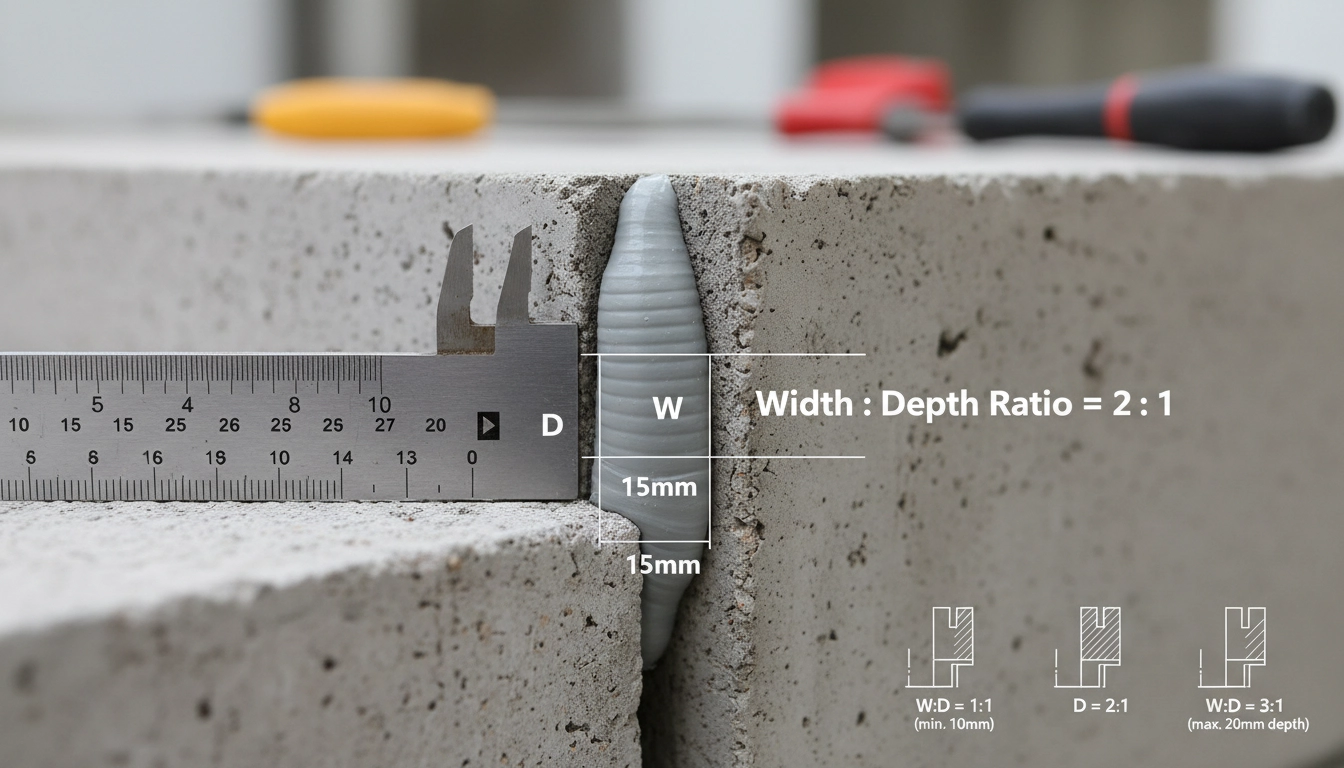
Calculating the Perfect Seal: A Deep Dive into MS Sealant Joint Geometry and Movement (2026 Guide)
Custom Formulations and OEM Options for Acetic Silicone
Acoustic and Thermal Benefits of Silicone Glazing Sealants

HY-4300 Structural Silicone Sealant — High-Strength Silicone for Structural Glazing
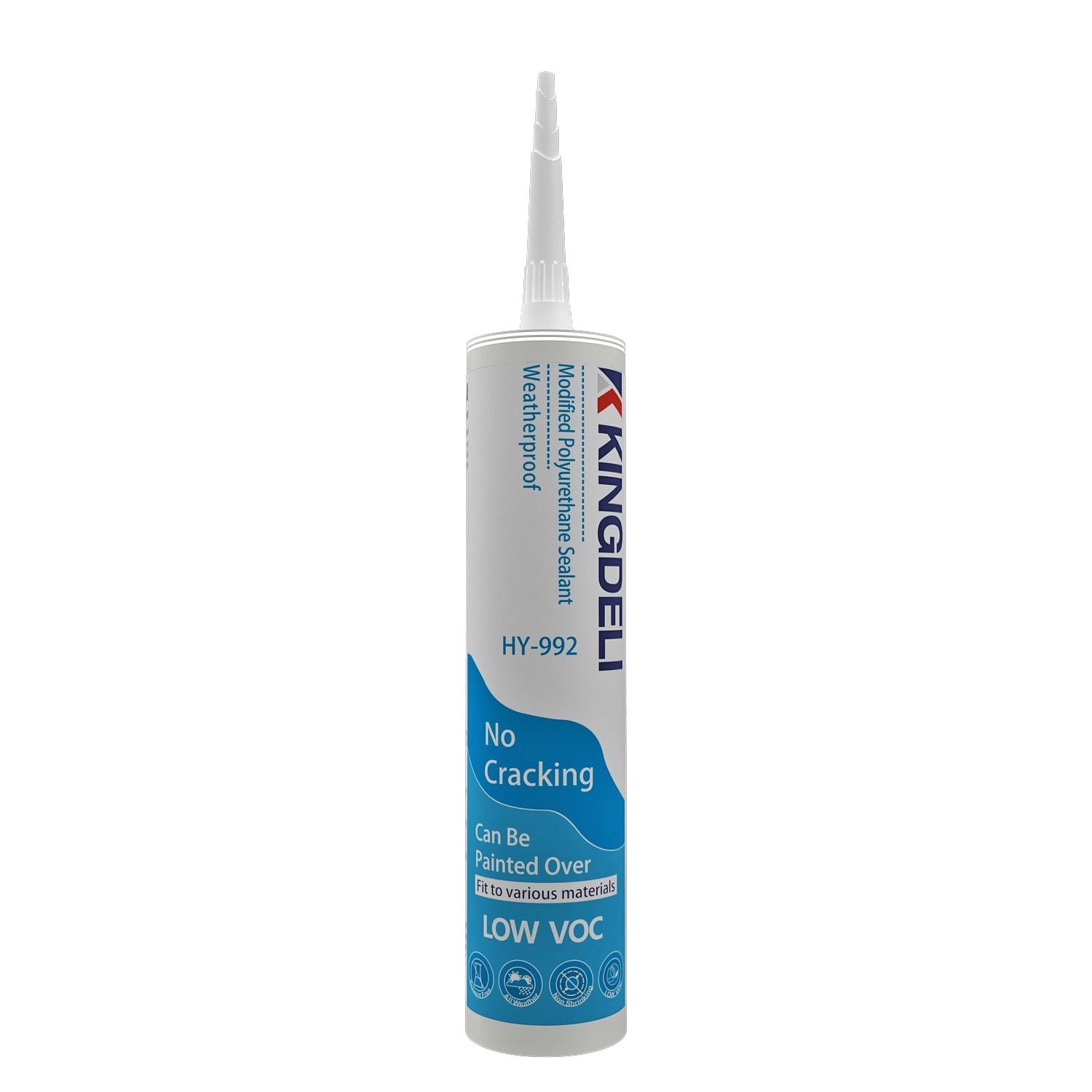
HY992 Modified Polyurethane Construction Sealant
HY992 Modified Polyurethane Sealant is a one-component, moisture-curing construction sealant designed for professional building and structural sealing applications. It provides excellent adhesion, weather resistance, and durable elasticity, making it suitable for a wide range of construction materials.
The formulation delivers strong bonding performance without corrosion or substrate contamination, while maintaining low VOC content for environmentally responsible construction projects.

HY995 Crystal Clear Ms Polymer Adhesive/Sealant
HY995 Crystal Clear Ms Polymer Adhesive/Sealant is a new generation MS Polymer adhesive / sealant formulated for all bonding and sealing applications where long term reliability is required. It has excellent bonding strength on various materials. It will cure to form a durable, flexible, waterproof seal.

HY997 High-Performance Anti-Microbial MS Polymer Sealant
HY997 MS polymer sealant for is is a premium one-component, neutral-curing modified silane sealant engineered for demanding interior applications. It offers a Class 20 movement capability, ensuring long-lasting flexibility and reliable performance under dynamic joint conditions. Curing at room temperature, HY997 delivers superior anti-microbial and mildew-resistant properties, maintaining hygienic and clean environments over time.
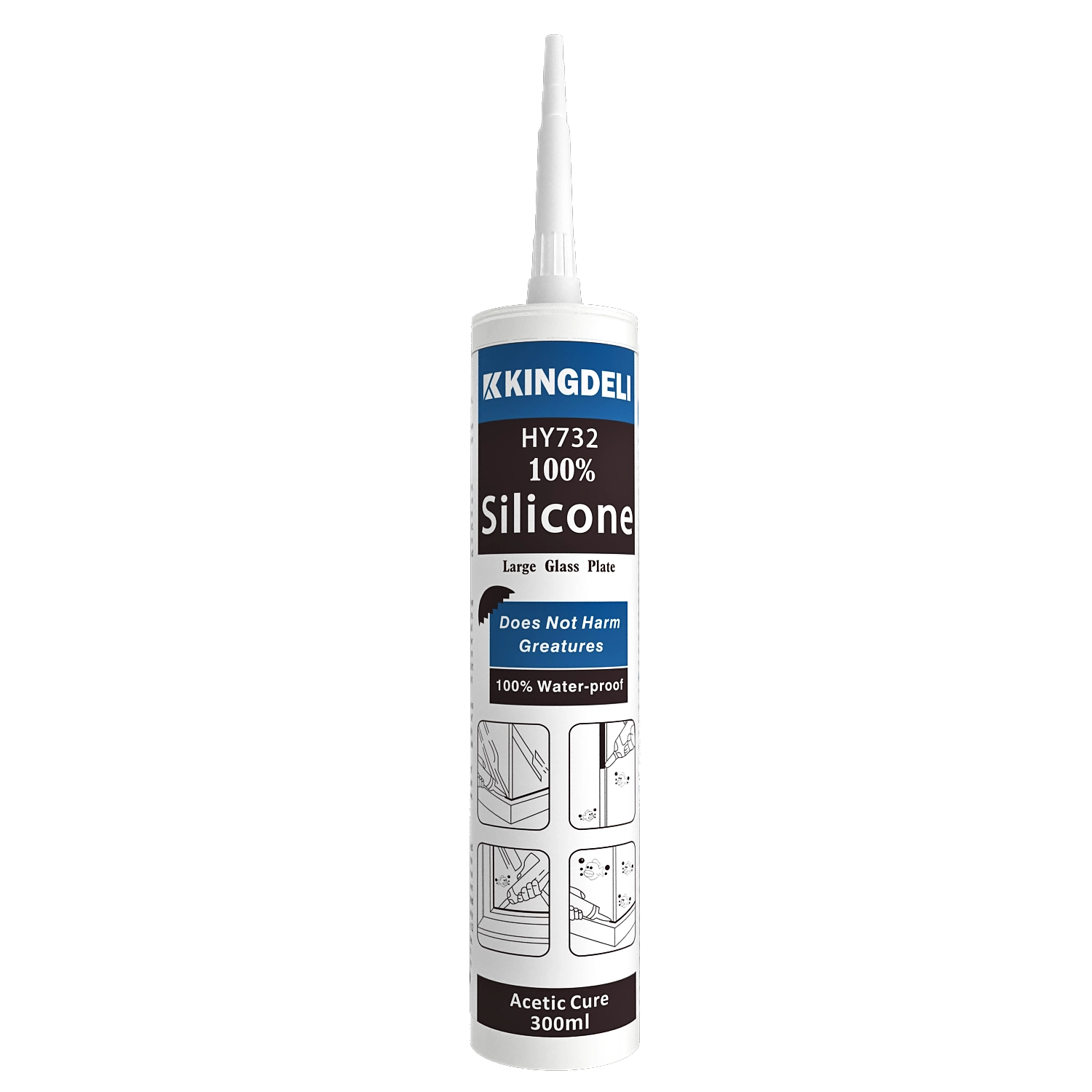
KINGDELI HY732 Professional Acetoxy Cure Silicone Sealant
KINGDELI HY732 is a professional-grade, one-component acetoxy cure silicone sealant designed for fast curing, strong adhesion, and long-lasting flexibility. Ideal for aquariums, glass applications, aluminum doors and windows, kitchens, and bathrooms, it provides reliable sealing performance with excellent anti-fungal protection in high-humidity environments.
Let’s Build Stronger Bonds with Quality Adhesives and Sealants
Have questions about the topic or need tailored sealant solutions for your project?
Our team is ready to provide expert guidance, product recommendations, and application support.
Innovating with Integrity, Bonding the World
Since 1998, KINGDELI has delivered trusted, sustainable sealant solutions that connect industries and inspire progress worldwide.
Whatsapp: +8618825946249
Kingdeli
Kingdeli
Kingdeli
Kingdeli
Kingdeli