


Quality Control and Certifications for Private Label Silicone Sealant

- Building a Reliable Quality System for Branded Silicone Products
- Raw-material control and formulation discipline
- In-process monitoring and batch release
- Testing and Certification Evidence Buyers Should Request
- Performance testing for construction and industrial applications
- Management-system and environmental documentation
- Market access, safety, and technical files
- Supplier Qualification for a Scalable Sealant Brand
- Auditing technical capability and production capacity
- Private branding, packaging, and change management
- KINGDELI Capabilities for Certified OEM and ODM Programs
- Integrated manufacturing and product breadth
- Standards, testing, and market support
- Commercial value for global buyers
- Frequently Asked Questions
Quality control and certification determine whether a branded silicone sealant program can deliver reliable adhesion, predictable curing, regulatory acceptance, and low warranty risk across multiple markets. Buyers should evaluate raw-material traceability, formulation control, production-line consistency, laboratory testing, packaging integrity, technical data sheets, safety documentation, and market-specific conformity requirements before selecting a supplier. A capable manufacturer should provide objective test evidence for neutral silicone sealant, acetic silicone sealant, silicone glazing sealant, and related sealants and adhesives while supporting private branding, color matching, packaging development, and production continuity.
Building a Reliable Quality System for Branded Silicone Products
Raw-material control and formulation discipline
Silicone polymer, crosslinking agents, reinforcing fillers, plasticizers, pigments, adhesion promoters, catalysts, and additives all influence final performance. Small changes in moisture content, filler dispersion, catalyst dosage, or polymer viscosity can affect skin formation, tack-free time, modulus, elongation, extrusion behavior, and long-term adhesion. For this reason, a supplier should qualify each raw-material source, assign approved specifications, and maintain lot-level records from incoming inspection through finished-goods release.
Formulation control is especially important when a distributor wants the same product under different colors, cartridge sizes, or country labels. A controlled recipe-management system should define weighing tolerances, mixing sequence, temperature limits, vacuum conditions, and filling parameters. Any substitution of polymer, filler, pigment, or packaging component should pass documented change control and revalidation. This protects brand owners from unexplained differences between an initial sample and later commercial batches.
In-process monitoring and batch release
Manufacturing quality cannot depend only on final inspection. Operators and automated systems should monitor raw-material dosing, mixing homogeneity, vacuum level, equipment temperature, filling weight, nozzle condition, and package sealing. Typical release checks include appearance, color, density, viscosity or extrusion rate, skin formation time, tack-free time, cure development, and adhesion to representative substrates.
Batch documentation should connect the finished cartridge or sausage pack to a production date, lot number, formulation version, operator record, test results, and release authorization. This traceability enables efficient investigation when a customer reports poor adhesion, slow curing, leakage, or inconsistent color. It also supports targeted recalls instead of broad and expensive market withdrawals.
Testing and Certification Evidence Buyers Should Request
Performance testing for construction and industrial applications
Silicone sealant selection must reflect the end use rather than rely on a generic product label. A glazing compound may need durable adhesion to glass, aluminum, coated metal, or masonry and resistance to movement, ultraviolet exposure, humidity, and temperature cycling. A sanitary or interior product may prioritize low odor, mildew resistance, smooth tooling, and compatibility with ceramic tile. An acetic-cure grade can provide fast skin formation and strong adhesion to selected non-porous materials, while a neutral-cure grade is generally preferred where corrosion sensitivity, odor, or broader substrate compatibility is important.
Relevant test programs may measure tensile strength, elongation, movement capability, hardness, adhesion and peel behavior, sag, volume shrinkage, weathering resistance, accelerated aging, and adhesion after water or heat exposure. Buyers should ask whether test specimens were prepared using the same formulation, color, packaging, and cure conditions as the commercial product. A certificate for a similar product is not equivalent to evidence for the exact SKU being purchased.
For joint sealants, buyers can review the scope of ASTM C920, which establishes standard specifications for elastomeric joint sealants. The applicable class, grade, use, movement capability, and substrate requirements still need to be confirmed for the project. Certification or test conformity should therefore be matched to the intended application, not used as a substitute for technical evaluation.
Management-system and environmental documentation
An ISO certificate demonstrates that an organization operates a management system within a defined scope; it does not automatically certify every product characteristic. Buyers should verify the issuing certification body, certificate validity, covered site, covered activities, and audit scope. ISO 9001 is relevant to quality-management processes such as customer requirements, corrective action, supplier control, documented information, and continual improvement.
Environmental objectives and operational controls can be assessed through ISO 14001. This is valuable when procurement teams assess emissions, waste handling, energy use, packaging materials, and environmental compliance. However, an ISO 14001 certificate should not be presented as proof that a specific sealant is low-VOC or safe for a particular indoor environment. Product-level emissions data and regulatory declarations remain necessary.
Market access, safety, and technical files
Certification requirements vary by destination, product category, and intended use. For products covered by the European construction framework, buyers should review the requirements explained by the European Commission under the Construction Products Regulation. CE marking, where applicable, depends on the relevant harmonized technical specification or European Technical Assessment and requires the correct conformity route.
Safety Data Sheets should identify hazards, handling precautions, storage conditions, first-aid measures, transport information, and disposal guidance in accordance with the destination market. Technical Data Sheets should state cure mechanism, application temperature, service temperature, shelf life, packaging, substrate limitations, and preparation instructions. For products intended for regulated indirect food-contact uses, the applicable legal framework must be checked directly; the U.S. eCFR provision for adhesives used in food-contact applications illustrates why use conditions and formulation scope matter.
| Control area | Evidence to request | Procurement risk reduced |
|---|---|---|
| Raw materials | Approved supplier list, incoming inspection records, lot traceability | Formula drift and inconsistent curing |
| Production | Batch record, dosing controls, mixing parameters, filling inspection | Variation between production lots |
| Performance | Product-specific test report for adhesion, cure, movement, and aging | Application failure and warranty claims |
| Compliance | Valid management certificates, SDS, TDS, declarations, and market files | Import delays and unsupported claims |
| Packaging | Package compatibility test, weight verification, leak test, artwork approval | Returns, leakage, and brand damage |
Supplier Qualification for a Scalable Sealant Brand
Auditing technical capability and production capacity
A supplier audit should examine laboratory equipment, calibration status, retained samples, nonconformance procedures, complaint handling, maintenance records, pest control, warehouse conditions, and employee training. The audit should also establish whether the manufacturer can separate development samples from commercial production and whether it has enough capacity to support seasonal demand without relaxing release criteria.
Capacity claims should be evaluated against actual production assets, storage space, filling equipment, staffing, and raw-material availability. A large annual number is useful only when supported by stable lead times, business-continuity planning, and consistent lot quality. Buyers should request a production trial or pilot order before committing to a national launch. The pilot should include the final packaging, artwork, color, nozzle, carton, pallet configuration, and shipping route.
Private branding, packaging, and change management
A successful OEM or ODM program requires more than printing a customer logo. The supplier should support label review, warning statements, language versions, barcode verification, batch coding, carton strength, pallet stability, and packaging compatibility with the sealant chemistry. Cartridge materials and foil packs must resist chemical interaction, moisture ingress, pressure changes, and prolonged warehouse storage.
Change notification is a central contractual issue. A buyer should define which changes require advance notice and approval, including polymer source, filler grade, pigment, cure system, production site, cartridge supplier, nozzle design, and product name. The agreement should also define retained-sample periods, complaint response time, corrective-action format, and responsibility for regulatory updates. These controls create a defensible quality record for distributors, contractors, and project owners.
KINGDELI Capabilities for Certified OEM and ODM Programs
Integrated manufacturing and product breadth
KINGDELI has operated in the high-performance sealant, adhesive, and coating industry since 1998. Headquartered in Foshan, China, our 66,000 m² facility uses fully automated production lines and has annual capacity exceeding 100,000 tons. This manufacturing base supports dependable supply planning for distributors, construction-material brands, industrial operators, and project-focused procurement teams.
Our product portfolio covers neutral silicone sealant, acetic silicone sealant, silicone glazing sealant, Acrylic Sealant, Polyurethane Sealant, MS polymer Sealant, No More Nails adhesive, RTV Gasket Maker, Epoxy Tile Grout, and Self-Leveling Sealant. This breadth allows buyers to consolidate multiple sealants and adhesives through one technical partner while selecting different chemistries for glazing, façade joints, interior finishing, assembly, flooring, repair, and industrial sealing.
Standards, testing, and market support
KINGDELI is recognized as a National High-Tech Enterprise and contributed to the National Standard GB/T 29755-2013. Our systems and products are engineered to support strict international requirements, including ISO 9001, ISO 14001, CE, and ASTM-related specifications where applicable to the product and destination market. Documentation should always be matched to the exact formulation, application, and regulatory route requested by the buyer.
Our engineering and technical service teams support formulation selection, color development, packaging customization, application guidance, and troubleshooting. Low-VOC formulation options help brand owners address sustainability objectives, indoor-air considerations, and evolving market expectations. Technical support also helps distributors reduce incorrect product substitution, poor substrate preparation, and installation errors that can otherwise be misclassified as manufacturing defects.
Commercial value for global buyers
With more than 27 years of industry expertise and a presence in over 50 countries, KINGDELI provides end-to-end OEM/ODM coordination rather than a single finished cartridge. Buyers can align product specifications, packaging architecture, compliance documentation, delivery schedules, and after-sales support with one accountable manufacturing partner. This approach can reduce qualification duplication, simplify SKU management, and improve launch consistency across regional markets.
The most reliable procurement decision combines documented quality controls, application-specific testing, valid certificates, transparent change management, and practical production capacity. Brand owners should compare suppliers on evidence and repeatability instead of relying only on price, catalog claims, or a one-time sample. A disciplined qualification process protects installation performance, customer trust, and long-term return on investment.
Contact KINGDELI to review OEM/ODM requirements, or explore our sealants and adhesives portfolio for a compliant and scalable branded product program.
Frequently Asked Questions
What quality documents should a buyer request from a silicone sealant manufacturer?
Buyers should request product-specific Technical Data Sheets, Safety Data Sheets, test reports, batch traceability records, packaging specifications, certificates for the relevant management systems, and market-specific declarations or conformity documents.
Does ISO 9001 certify the performance of every sealant product?
No. ISO 9001 relates to the organization’s quality-management system and does not automatically certify every product characteristic. Product-level performance must be demonstrated through relevant tests and technical documentation.
How should buyers verify ASTM compliance for a joint sealant?
Buyers should review the applicable ASTM specification, product scope, movement capability, use classification, substrates, test conditions, and product-specific test evidence rather than relying on a general statement that the manufacturer follows ASTM standards.
Why is batch traceability important for branded sealant programs?
Batch traceability links each finished package to raw-material lots, formulation version, production records, test results, and release authorization. It supports faster complaint investigation, targeted corrective action, and more controlled recalls.
What should be checked before launching an OEM silicone sealant?
The buyer should validate the final formulation, color, cartridge or foil-pack compatibility, artwork, language and warning statements, barcode, shelf life, shipping conditions, technical documents, pilot-order performance, and change-notification responsibilities.
What is the difference between neutral-cure and acetic-cure silicone sealant?
Acetic-cure silicone typically releases acetic acid during curing and is commonly selected for suitable non-porous substrates. Neutral-cure silicone uses a different curing chemistry that can offer lower odor and broader compatibility where corrosion sensitivity or substrate limitations make it more appropriate.
Best Construction Sealants for Distributors, Brands, and Contractors
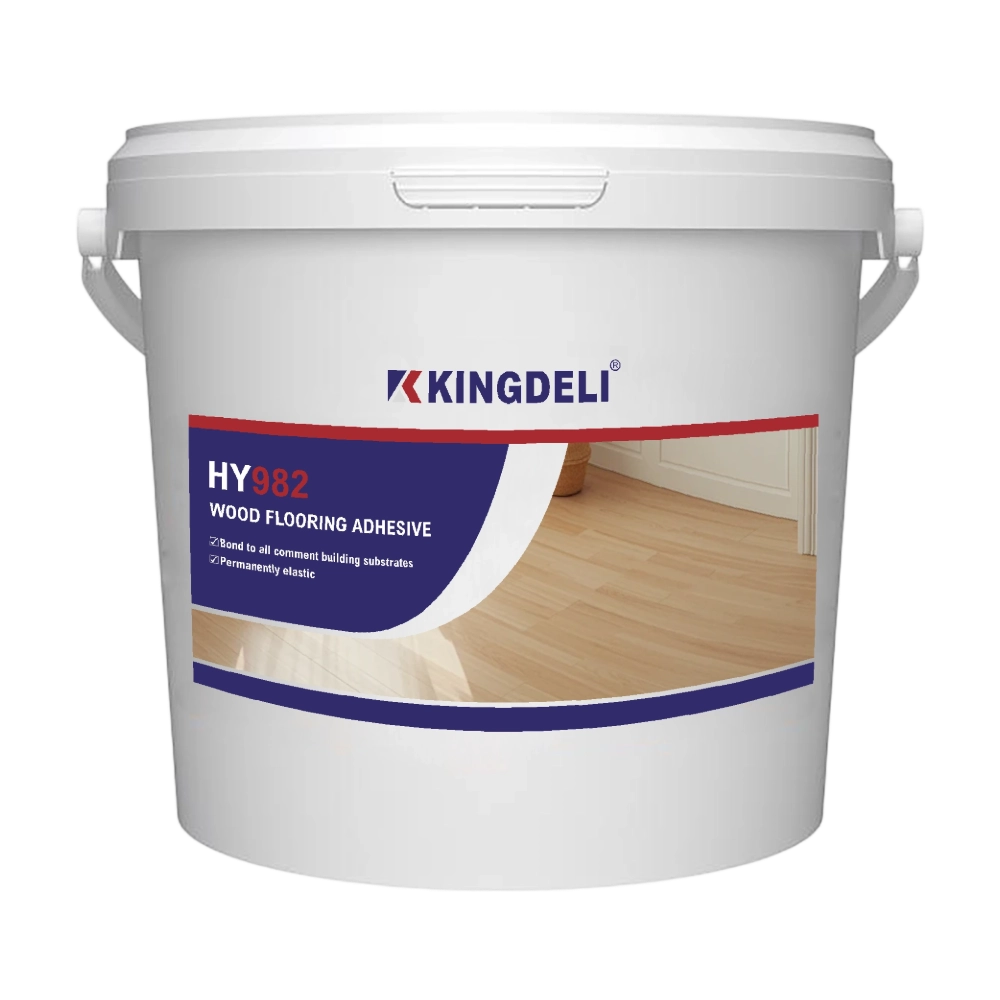
HY982 Premium Silane Modified Polymer Adhesive for Flooring & Panel Bonding

7 Costly Mistakes to Avoid When Matching MS Sealant Colors [2026 Expert Guide]
MOQ, Lead Time and Pricing for Bulk Polyurethane Windshield Orders

HY992 Modified Polyurethane Construction Sealant
HY992 Modified Polyurethane Sealant is a one-component, moisture-curing construction sealant designed for professional building and structural sealing applications. It provides excellent adhesion, weather resistance, and durable elasticity, making it suitable for a wide range of construction materials.
The formulation delivers strong bonding performance without corrosion or substrate contamination, while maintaining low VOC content for environmentally responsible construction projects.

HY995 Crystal Clear Ms Polymer Adhesive/Sealant
HY995 Crystal Clear Ms Polymer Adhesive/Sealant is a new generation MS Polymer adhesive / sealant formulated for all bonding and sealing applications where long term reliability is required. It has excellent bonding strength on various materials. It will cure to form a durable, flexible, waterproof seal.

HY997 High-Performance Anti-Microbial MS Polymer Sealant
HY997 MS polymer sealant for is is a premium one-component, neutral-curing modified silane sealant engineered for demanding interior applications. It offers a Class 20 movement capability, ensuring long-lasting flexibility and reliable performance under dynamic joint conditions. Curing at room temperature, HY997 delivers superior anti-microbial and mildew-resistant properties, maintaining hygienic and clean environments over time.

KINGDELI HY732 Professional Acetoxy Cure Silicone Sealant
KINGDELI HY732 is a professional-grade, one-component acetoxy cure silicone sealant designed for fast curing, strong adhesion, and long-lasting flexibility. Ideal for aquariums, glass applications, aluminum doors and windows, kitchens, and bathrooms, it provides reliable sealing performance with excellent anti-fungal protection in high-humidity environments.
Let’s Build Stronger Bonds with Quality Adhesives and Sealants
Have questions about the topic or need tailored sealant solutions for your project?
Our team is ready to provide expert guidance, product recommendations, and application support.
Innovating with Integrity, Bonding the World
Since 1998, KINGDELI has delivered trusted, sustainable sealant solutions that connect industries and inspire progress worldwide.

Whatsapp: +8618825946249
Kingdeli
Kingdeli
Kingdeli
Kingdeli
Kingdeli