


PU Adhesive vs Silicone and MS Polymer: Procurement Tradeoffs

- Selection Criteria for Automotive Glazing Adhesives
- Bonding performance and structural integrity
- Cure chemistry and process windows
- Environmental and regulatory constraints
- Operational Tradeoffs: Polyurethane vs Silicone vs MS Polymer
- Adhesion profile across substrates
- Elasticity, movement capability, and fatigue
- Durability: UV, moisture, and chemical resistance
- Procurement Considerations for Large-Scale Projects
- Total cost of ownership and unit pricing
- Supply chain, lead times, and quality assurance
- Application equipment, training, and safety
- KINGDELI Solutions and Product Fit
- Manufacturing capacity and compliance
- Relevant product portfolio and specifications
- Technical support, OEM partnerships, and sustainability
- Frequently Asked Questions
High-level procurement summary: For projects requiring bonded glazing and structural glass attachment, buyers must weigh chemistry-driven performance (urethane-based bonding agents versus silicone elastomers and silyl-modified polymers), production throughput (skin time, tack-free and full cure windows), substrate compatibility (primed metals, laminated glass, painted panels), environmental durability (UV, hydrolysis, temperature cycling), and regulatory constraints (VOC limits, automotive crash-retention standards). Strategic supplier selection reduces rework, warranty exposure, and lifecycle cost while ensuring compliance with ISO and ASTM benchmarks; reference industry guidance at Polyurethane (Wikipedia), Silicone (Wikipedia), and organizational quality frameworks such as ISO 9001 and testing standards at ASTM.
Selection Criteria for Automotive Glazing Adhesives
Bonding performance and structural integrity
Procurement decisions should prioritize adhesive systems that meet crash-load retention and peel/shear strength targets measured in standardized tests. Urethane-based glazing adhesives (commonly used for windshield bonding in passenger vehicles) provide high cohesive strength to maintain structural integrity during impact events; evaluate supplier test reports showing lap-shear, tensile-adhesion, and dynamic peel resistance under both dry and accelerated aging conditions to quantify retention factors.
Cure chemistry and process windows
Different chemistries present distinct process advantages: moisture-curing urethanes often exhibit longer open times but slower full cure (hours to days), neutral-cure silicones skin rapidly and can support higher line speeds but may not achieve the same structural modulus as urethanes, and MS polymer formulations balance cure speed and paintability. Specify required tack-free times, full-cure intervals, and recommended temperatures to align manufacturing takt time and post-assembly operations.
Environmental and regulatory constraints
Adhesive selection must reflect VOC restrictions, occupational exposure limits, and end-of-life considerations. Low-VOC and solvent-free formulations mitigate regulatory risk in jurisdictions with strict air-quality controls. Demand Safety Data Sheets (SDS) and independent test certificates for volatile organic compound emissions, and confirm compliance with regional regulations (for example, EU VOC directives and local environmental laws).
Operational Tradeoffs: Polyurethane vs Silicone vs MS Polymer
Adhesion profile across substrates
Polyurethane systems typically offer superior adhesion to primed metals, glass, and many plastics when appropriate priming and surface prep are applied. Neutral-curing silicone adhesives deliver excellent adhesion to glass and many non-porous substrates but often require mechanical fastening or secondary bonding when structural loads are present. MS polymers adhere well without primers to many painted and metallic substrates, reducing surface pre-treatment steps for retrofit or mixed-material assemblies.
Elasticity, movement capability, and fatigue
Silicone elastomers usually provide the widest operational temperature range and excellent long-term elasticity, attractive for thermal movement and sealing joints subject to large expansions. Polyurethane-based adhesives generally combine higher modulus with good elongation, useful for load-bearing glazing where limited flex and high cohesion are needed. MS polymer types offer middle-ground movement accommodation and tend to resist long-term compression set better than some urethanes.
Durability: UV, moisture, and chemical resistance
Silicone formulations are typically unmatched in UV and ozone resistance and resist yellowing under sunlight—suitable for exposed glazing beads. Polyurethanes can be engineered for excellent abrasion and solvent resistance but require careful formulation to avoid hydrolysis in high-moisture environments. MS polymers resist many solvents and provide balanced weathering performance for facade and automotive exterior uses.
Procurement Considerations for Large-Scale Projects
Total cost of ownership and unit pricing
Unit price is only one component of cost: factor in yield (bead length per cartridge), waste, rework rates, curing-related downtime, warranty claims, and lifecycle maintenance. For windshield bonding, the cost of a failed bond is orders of magnitude higher than material savings—specify acceptance criteria and include failure-mode cost scenarios in supplier bids.
Supply chain, lead times, and quality assurance
Large-volume programs require predictable supply and batch-to-batch consistency. Verify a supplier’s production capacity, warehousing, and contingency stock. Review factory audits, ISO certifications, and material traceability systems. For regulated markets or OEM programs, require PPAP-equivalent documentation and accelerated aging test batches for approval.
Application equipment, training, and safety
Different chemistries demand different dispensing hardware, static mixing ratios, and operator skills. Moisture-cure systems may need humidity-controlled storage; silicones can require special tooling to avoid contamination. Budget for training, maintenance of dispensing equipment, and personal protective equipment as part of procurement cost models.
| Attribute | Polyurethane (Urethane) Adhesives | Neutral/Acetic Silicone Sealants | MS Polymer (Silyl-modified) |
|---|---|---|---|
| Chemistry | Isocyanate-derived, moisture-cure | Siloxane backbone, neutral or acid cure | Silyl-terminated polymers, moisture-cure |
| Typical Application | Structural glazing, windshield bonding | Weather seals, non-structural glazing | General-purpose sealing, paintable exterior joints |
| Adhesion (glass/metal/paint) | High (with primer on some substrates) | Excellent to glass, variable to paint | Good to excellent, often primer-less |
| Movement Capability | ~25–50% depending on formulation | ~25–50% (high elasticity) | ~20–35% (balanced) |
| Paintability | Typically paintable after full cure | Generally not paintable (exceptions exist) | Usually paintable after cure |
| Temperature Range | -40 to +90°C (service) | -60 to +200°C (wide range) | -40 to +120°C (service) |
| UV/Weathering | Good (formulation-dependent) | Excellent | Very good |
| VOC & Odor | Low-VOC options available | Low to zero VOC (neutral types preferred) | Low-VOC, low-odor |
| Typical Cure Time | Skin in minutes; full strength hours–days | Skin in minutes; full cure days | Faster surface cure; full cure hours–days |
| Shelf Life | 6–18 months (temperature dependent) | 12–24 months (sealed) | 9–18 months |
KINGDELI Solutions and Product Fit
Manufacturing capacity and compliance
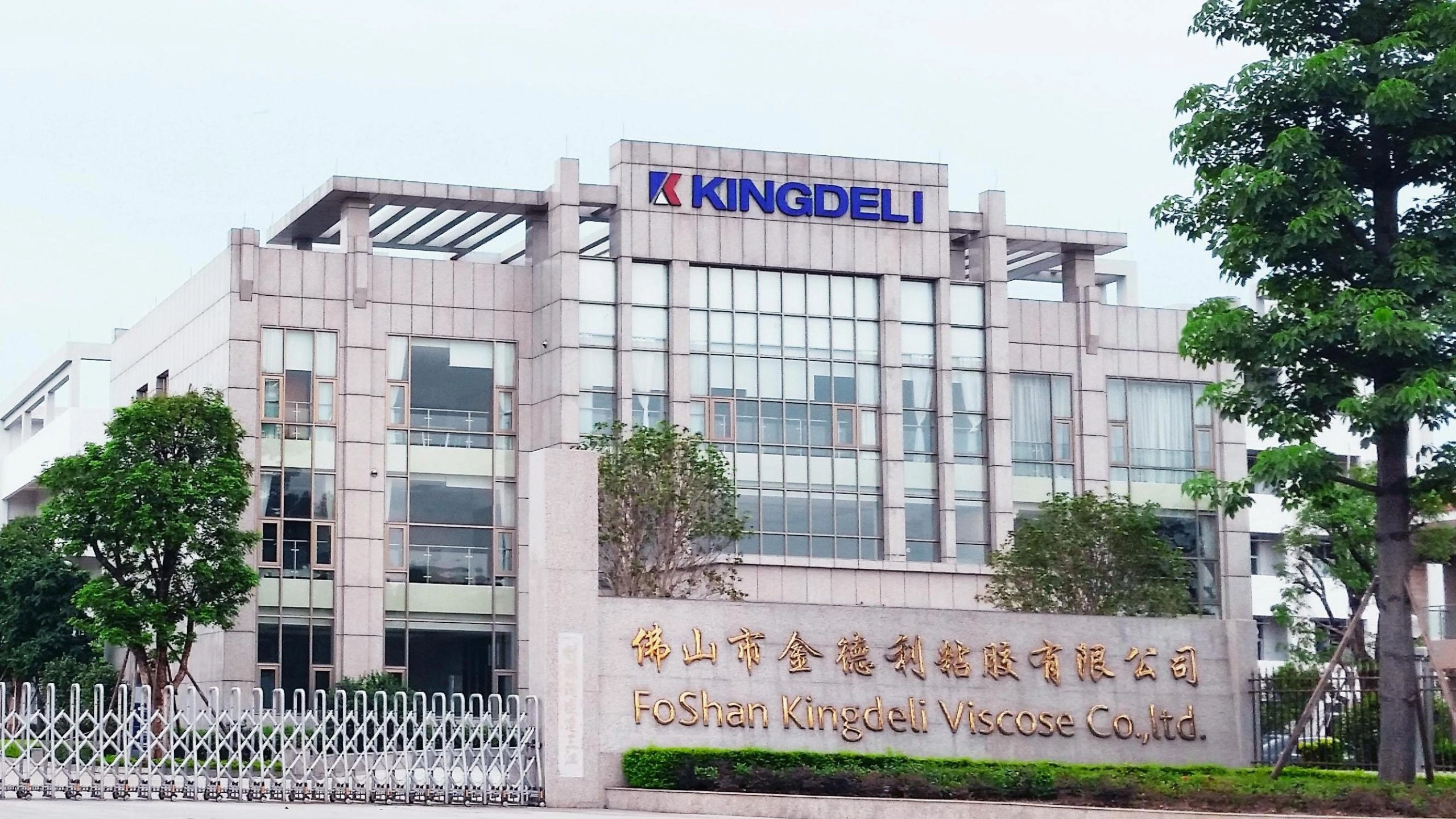
Since its establishment in 1998, KINGDELI has stood as a global leader in the high-performance sealant, adhesive, and coating industry. Headquartered in Foshan, China, our state-of-the-art 66,000 m² facility is powered by fully automated production lines with an annual capacity exceeding 100,000 tons, ensuring a consistent and robust supply for partners worldwide.
As a recognized National High-Tech Enterprise and a key contributor to the National Standard GB/T 29755-2013, we unite advanced manufacturing power with technical excellence. Our production adheres to ISO 9001 and ISO 14001 systems and aligns to international test methods in ASTM—buyers should request certificates and batch-level test reports during qualification.
Relevant product portfolio and specifications
Our portfolio covers the full spectrum of sealants and adhesives required for automotive glazing, facade, and industrial assembly programs. Key formulations include Neutral & Acetic Silicone sealants for exposed weather seals, automotive-grade Polyurethane Sealant systems tailored for bonded glass applications, and MS Polymer Sealant options that offer paintability and rapid surface cure. Complementary products include Acrylic Sealant, silicone glazing sealant, No More Nails adhesive, RTV Gasket Maker, Epoxy Tile Grout, and Self-Leveling Sealant. Technical data sheets provide specific mechanical properties, movement capabilities, and environmental durability values to support specification writing.
Technical support, OEM partnerships, and sustainability
With over 27 years of industry expertise and a trusted presence in 50+ countries, KINGDELI is more than a manufacturer; we are a dedicated solution provider. We offer end-to-end OEM/ODM support, sustainable low-VOC formulations, and professional technical service. Our teams can support pilot runs, dispense-equipment calibration, and customized formulation development to meet project-specific adhesion, cure, and aesthetic targets. At KINGDELI, we are driven by innovation and integrity, building trust and sealing the future for customers around the globe.
Procurement checklist for specification teams: require supplier capacity statements, SDS and VOC certifications, TDS with mechanical property tables, completion of sample qualification under accelerated aging, a documented warranty matrix, and a return/recall contingency plan tied to batch traceability.
Case planning tips for buyers: pilot adhesive batches under shop-floor conditions, measure cycle-time impacts from tack-free and handling windows, test cured bondlines for compatibility with paint and sealers used in final finish, and include both material and process failure scenarios in cost-risk models to inform long-term sourcing choices.
Contact KINGDELI for technical datasheets, sample kits, and a formal supplier capability submission to support procurement qualification and specification development.
Frequently Asked Questions
Which adhesive chemistry is recommended for structural windshield bonding?
Polyurethane-based bonding systems are commonly specified for structural windshield attachment due to high cohesive strength and proven crash-load retention; ensure primers and surface-prep procedures are validated and review supplier crash and dynamic peel test reports.
Can bonded windshields be painted over, and what cure time is required?
Paintability depends on chemistry: most polyurethane and many MS polymer products can be painted after full cure—typically hours to days—whereas silicone generally resists paint; always consult the TDS for recommended overpaint intervals and perform mock-ups under production conditions.
What supplier certifications and tests should procurement require for glazing adhesives?
Require ISO 9001 and ISO 14001 certifications, batch traceability, SDS, VOC certificates, and independent or supplier-provided ASTM or OEM-standard test reports for tensile-shear, peel, and accelerated aging; include a PPAP-equivalent qualification for high-volume programs.
How do cure times affect production line speed and takt time?
Cure characteristics (skin time, tack-free time, full cure) directly influence handling, installation sequencing, and conveyor throughput; faster skin times enable higher line speed but may not deliver final mechanical strength—factor in post-assembly cure windows and temporary fixturing requirements when modeling takt time.
What storage and handling constraints should buyers plan for?
Adhesives commonly require temperature-controlled storage, protection from moisture ingress (for moisture-cure systems), and stock rotation to preserve shelf life; verify supplier shelf-life data and shipping conditions and include environmental controls in warehouse specifications.
Benefits of MS Silicone Sealant for Commercial Construction
Packaging, Bulk Pricing and Supply Options for Acetic Silicone
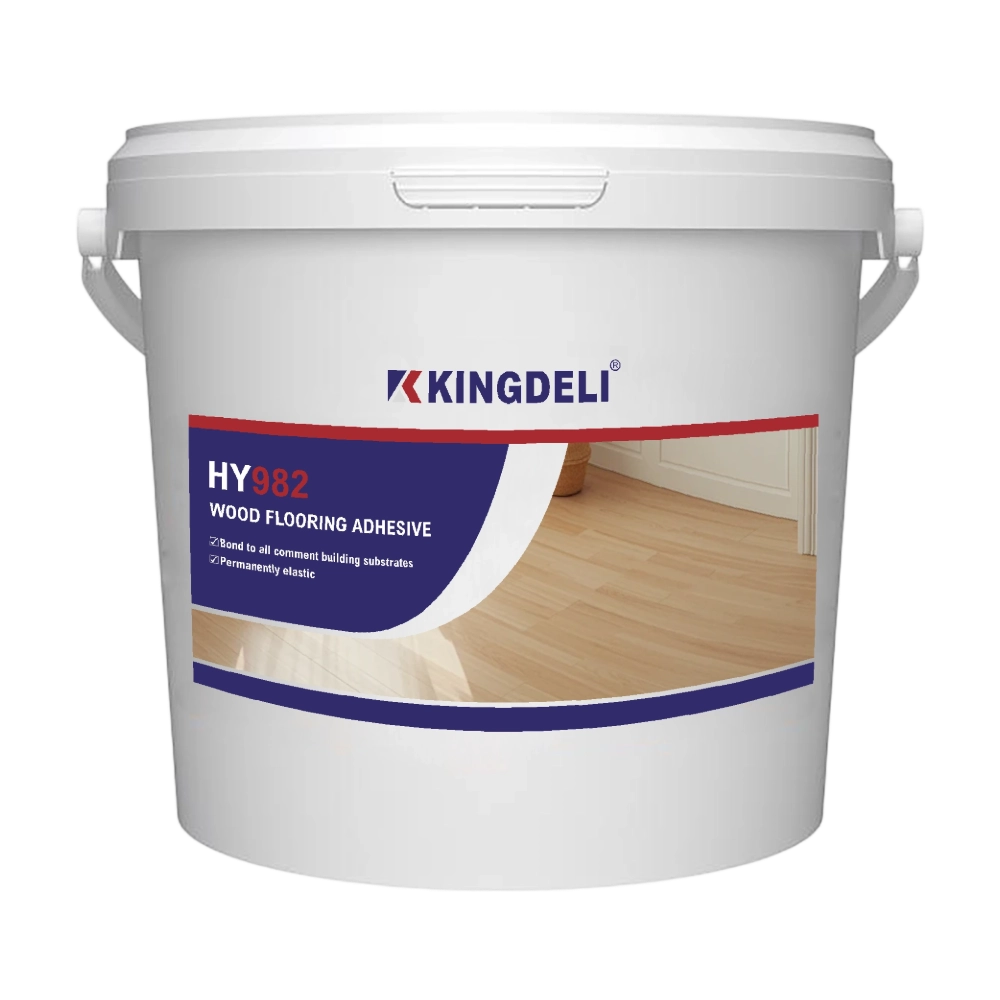
HY982 Premium Silane Modified Polymer Adhesive for Flooring & Panel Bonding
OEM/ODM neutral cure clear silicone sealant Manufacturers and Suppliers
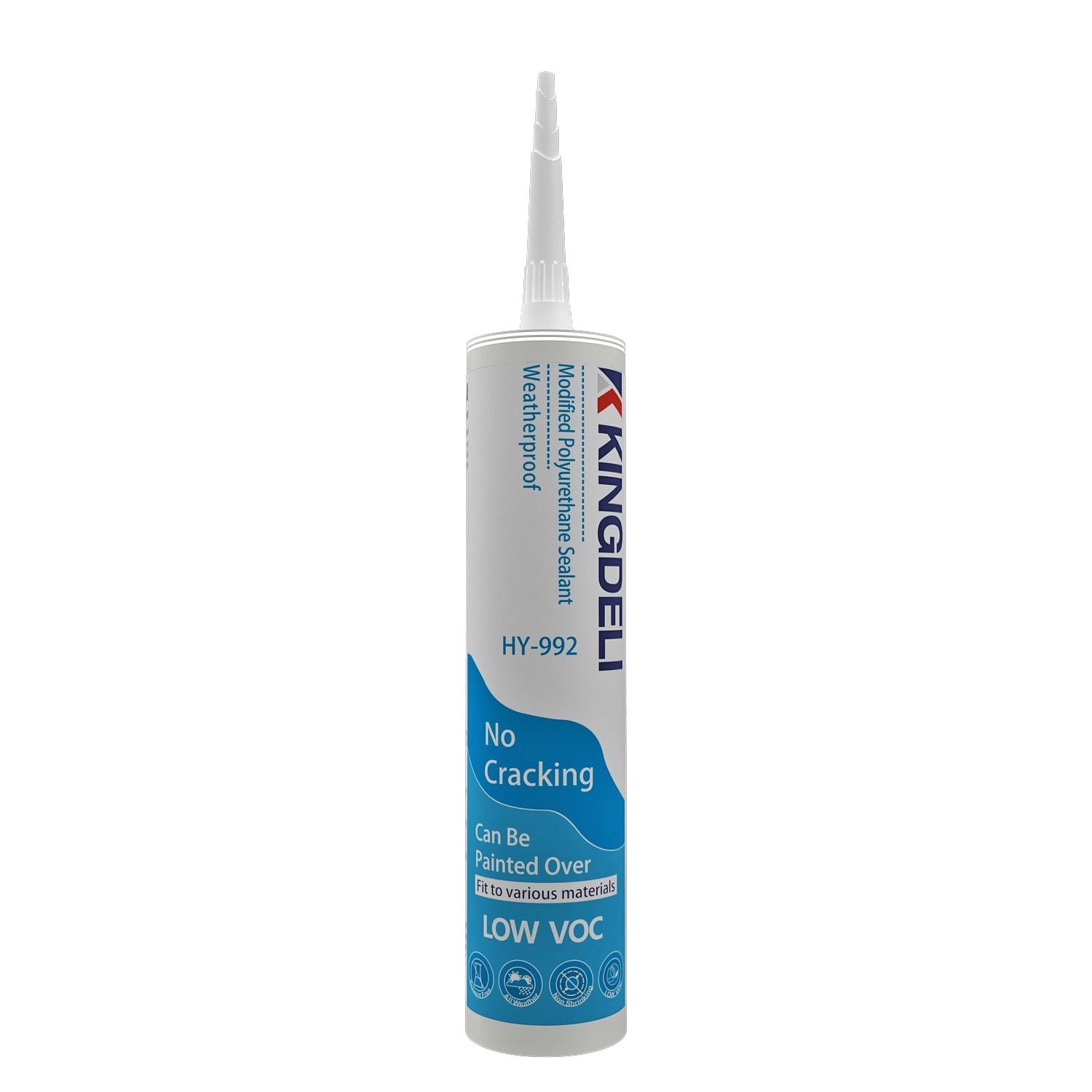
HY992 Modified Polyurethane Construction Sealant
HY992 Modified Polyurethane Sealant is a one-component, moisture-curing construction sealant designed for professional building and structural sealing applications. It provides excellent adhesion, weather resistance, and durable elasticity, making it suitable for a wide range of construction materials.
The formulation delivers strong bonding performance without corrosion or substrate contamination, while maintaining low VOC content for environmentally responsible construction projects.

HY995 Crystal Clear Ms Polymer Adhesive/Sealant
HY995 Crystal Clear Ms Polymer Adhesive/Sealant is a new generation MS Polymer adhesive / sealant formulated for all bonding and sealing applications where long term reliability is required. It has excellent bonding strength on various materials. It will cure to form a durable, flexible, waterproof seal.

HY997 High-Performance Anti-Microbial MS Polymer Sealant
HY997 MS polymer sealant for is is a premium one-component, neutral-curing modified silane sealant engineered for demanding interior applications. It offers a Class 20 movement capability, ensuring long-lasting flexibility and reliable performance under dynamic joint conditions. Curing at room temperature, HY997 delivers superior anti-microbial and mildew-resistant properties, maintaining hygienic and clean environments over time.
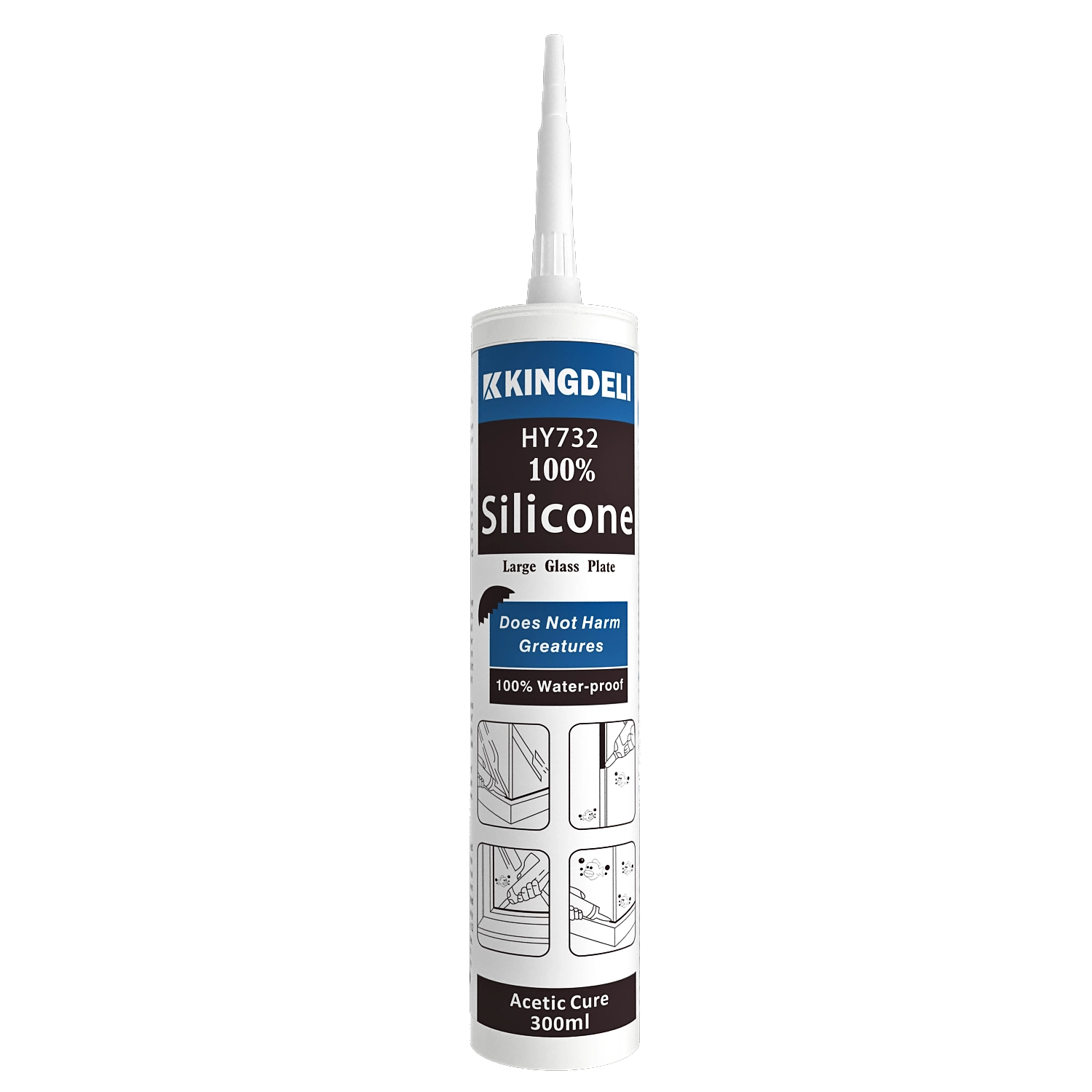
KINGDELI HY732 Professional Acetoxy Cure Silicone Sealant
KINGDELI HY732 is a professional-grade, one-component acetoxy cure silicone sealant designed for fast curing, strong adhesion, and long-lasting flexibility. Ideal for aquariums, glass applications, aluminum doors and windows, kitchens, and bathrooms, it provides reliable sealing performance with excellent anti-fungal protection in high-humidity environments.
Let’s Build Stronger Bonds with Quality Adhesives and Sealants
Have questions about the topic or need tailored sealant solutions for your project?
Our team is ready to provide expert guidance, product recommendations, and application support.
Innovating with Integrity, Bonding the World
Since 1998, KINGDELI has delivered trusted, sustainable sealant solutions that connect industries and inspire progress worldwide.
Whatsapp: +8618825946249
Kingdeli
Kingdeli
Kingdeli
Kingdeli
Kingdeli