


Private Label Silicone Sealant: A Buyer’s Product Selection Checklist

- How to Evaluate a Branded Silicone Sealant Program
- Start with the application and substrate map
- Translate performance claims into measurable specifications
- Technical and Compliance Checks Before Approval
- Review testing methods and documentation
- Assess environmental and regulatory requirements
- Compare cure chemistry and operational behavior
- Commercial Checklist for OEM and Distributor Buyers
- Evaluate packaging, branding, and market fit
- Use total cost of ownership instead of unit price alone
- Control forecasts, lead times, and change management
- Why KINGDELI Supports Scalable Sealant Private-Label Projects
- Integrated manufacturing capacity and technical depth
- Portfolio breadth for multi-category procurement
- Quality systems, standards, and responsible product development
- Recommended approval sequence
- Frequently Asked Questions
- What is the difference between neutral-cure and acetoxy-cure silicone?
- Which documents should a buyer request before placing an OEM order?
- How can a distributor reduce the risk of private-label product failure?
- Is low-VOC silicone automatically suitable for every green-building project?
- Can one sealant be used for glazing, concrete, tile, and metal?
- What should be included in a private-label supply agreement?
A private label silicone sealant program is a strategic product decision involving formulation performance, regulatory compliance, packaging reliability, supply continuity, and total ownership cost. Buyers should assess whether the product matches its intended substrates and service environment, confirm technical data through standardized testing, verify the supplier’s quality system, and define acceptance criteria before approving a branded launch. Neutral-cure, acetoxy-cure, glazing, construction, sanitary, low-VOC, and specialty formulations serve different market needs; the correct choice depends on adhesion, movement, weathering, temperature, cure speed, tooling, shelf life, and downstream warranty requirements.
How to Evaluate a Branded Silicone Sealant Program
Start with the application and substrate map
The first procurement step is to define where the material will be used and what surfaces it must bond or seal. Common substrates include glass, anodized aluminum, ceramic tile, painted metal, concrete, masonry, uPVC, wood, and composite panels. A product that performs well on nonporous glass may not provide dependable adhesion to porous concrete or treated plastics. Buyers should request a substrate matrix showing recommended, conditionally recommended, and unsuitable surfaces.
Project conditions also determine the required chemistry. Neutral silicone is generally preferred where low odor, broad substrate compatibility, reduced corrosion risk, or contact with alkaline building materials is important. Acetic silicone often offers fast skin formation and strong adhesion to many nonporous surfaces, but its acidic cure by-product can be unsuitable for certain metals, natural stone, cementitious materials, and sensitive electronics. The technical data sheet should explain these limitations rather than relying on a generic phrase such as all-purpose.
Translate performance claims into measurable specifications
Marketing language should be converted into procurement criteria. Key values include tensile strength, elongation at break, modulus, Shore A hardness, movement capability, tack-free time, curing rate, density, application temperature, service temperature, and shelf life. Movement capability is especially important in facade joints, window perimeters, curtain-wall interfaces, and expansion joints because the sealant must accommodate thermal and structural movement without losing adhesion.
Buyers should also examine joint design rather than treating sealant as a substitute for correct engineering. Joint width-to-depth ratios, backer rod selection, primer requirements, bond-breaker installation, surface preparation, and three-sided adhesion control have a direct effect on durability. Testing should include peel or adhesion evaluation on actual project substrates, not only on laboratory glass or aluminum panels.
Technical and Compliance Checks Before Approval
Review testing methods and documentation
A credible supplier should provide a technical data sheet, safety data sheet, certificate of analysis, batch traceability information, packaging specification, and recommended application procedure. The relevant test method matters because values generated under different standards are not automatically comparable. Buyers can review the scope of ASTM International standards when defining test protocols for adhesion, tensile properties, weathering, or construction-material performance.
Quality documentation should identify the exact formulation, color, packaging size, manufacturing date, expiry date, storage conditions, and release criteria. For regulated or sensitive applications, additional evidence may be required, such as emissions testing, food-contact suitability, fire-performance data, or compatibility reports. A supplier should never imply that a general construction sealant is automatically suitable for aquariums, medical environments, food production, structural glazing, or direct potable-water contact.
Assess environmental and regulatory requirements
Low-VOC positioning should be supported by a defined test method, declared limits, and a clear explanation of whether the measurement applies to the uncured product, cured emissions, or the complete building system. European projects may require documentation aligned with applicable chemical and construction-product rules, while other markets may specify national standards or customer-specific restricted-substance lists.
Certification claims require careful verification. An ISO 9001 certificate demonstrates that a quality management system has been assessed against the standard; it does not certify every cartridge as defect-free. Similarly, ISO 14001 environmental management guidance relates to organizational environmental management rather than a universal claim that every formulation is environmentally harmless. Buyers should check certificate scope, issuing body, validity dates, and manufacturing-site details.
Compare cure chemistry and operational behavior
Neutral-cure products are commonly selected for glazing, facade, metal, stone, and general construction applications where odor and corrosion control matter. Acetoxy-cure products can be efficient for glass, ceramic, and other nonporous surfaces, particularly where rapid skin formation is valuable. Neither chemistry is automatically superior; the correct selection depends on the substrate, joint geometry, ventilation, installation speed, and finished-service conditions.
Operational trials should measure extrusion force, tooling window, skin formation, cure depth, color stability, slump resistance, and adhesion after exposure to heat, moisture, ultraviolet radiation, and cleaning chemicals. Packaging should remain stable during transport and storage. A sealant that performs correctly in a laboratory but is difficult to extrude from a standard manual gun can generate installer complaints, rework, and channel returns.
Commercial Checklist for OEM and Distributor Buyers
Evaluate packaging, branding, and market fit
Private-label packaging should communicate the correct application, cure type, limitations, storage instructions, batch information, and safety warnings. Cartridge and sausage-pack dimensions must match the dispensing equipment used in the target market. Label translations should be reviewed by technical and regulatory personnel, especially where hazard statements, environmental claims, or performance standards are printed.
Brand owners should define whether the launch requires one universal product or a tiered range. A practical architecture may include an economical general-purpose grade, a High Quality neutral silicone for demanding construction work, a glazing grade, a sanitary grade, and complementary acrylic or hybrid products. Color availability, nozzle design, carton configuration, pallet pattern, and minimum order quantity should be agreed before artwork approval.
Use total cost of ownership instead of unit price alone
The lowest purchase price can become expensive when it causes failed adhesion, slow curing, damaged substrates, excessive waste, or inconsistent color. Total cost should include material price, freight, import duties, packaging, testing, inventory carrying cost, rejected batches, installation labor, warranty claims, and technical support. Buyers should request a landed-cost comparison using the same package size and net content.
| Decision factor | Basic supplier review | Advanced buyer review | Why it matters |
|---|---|---|---|
| Formulation | Product name and general application | Cure chemistry, substrate matrix, test data, and limitations | Reduces adhesion failures and misuse |
| Quality control | Visual inspection | Batch release criteria, retained samples, traceability, and audits | Improves consistency across repeat orders |
| Compliance | Unverified certificate logos | Certificate scope, validity, test method, and issuing organization | Protects market access and brand credibility |
| Supply capacity | Quoted lead time | Installed capacity, backup planning, raw-material controls, and forecast process | Supports reliable replenishment |
| Technical service | Sales contact only | Application guidance, sample testing, complaint analysis, and corrective action | Shortens launch and troubleshooting cycles |
| Packaging | Artwork and carton price | Dispensing compatibility, storage stability, labeling review, and transport testing | Reduces returns and field confusion |
Control forecasts, lead times, and change management
A supply agreement should define minimum order quantities, production lead times, forecast horizons, color tolerances, change-notification periods, inspection rights, and procedures for nonconforming goods. Buyers should ask how the manufacturer manages raw-material substitutions, formula revisions, equipment maintenance, and emergency capacity. Any change to catalyst, polymer, filler, pigment, or packaging can affect cure speed, adhesion, viscosity, or shelf life.
Supplier evaluation should include a factory audit or documented remote assessment. Useful questions cover incoming-material inspection, automated dosing, filling accuracy, seal integrity, environmental controls, finished-goods quarantine, sample retention, and complaint response. The ISO 9001 quality-management framework can provide a useful reference for reviewing process control, corrective action, and continual improvement practices.
Why KINGDELI Supports Scalable Sealant Private-Label Projects
Integrated manufacturing capacity and technical depth
Since its establishment in 1998, KINGDELI has developed into a global manufacturer of high-performance sealants, adhesives, and coatings. Our Foshan, China facility covers 66,000 m² and uses fully automated production lines with annual capacity exceeding 100,000 tons. This scale helps partners plan repeat orders, support regional distribution, and reduce the supply risk associated with fragmented production.
Our manufacturing and technical programs cover neutral silicone sealant, acetic silicone sealant, silicone glazing sealant, Acrylic Sealant, Polyurethane Sealant, and MS polymer Sealant. Each chemistry can be positioned according to substrate, movement, weathering, odor, emissions, and installation requirements. We support OEM and ODM development, including formulation selection, color matching, cartridge and sausage-pack formats, artwork coordination, technical documentation, and pre-launch sample evaluation.
Portfolio breadth for multi-category procurement
Many distributors prefer a coordinated supplier rather than separate vendors for every adhesive category. KINGDELI also offers No More Nails adhesive, RTV Gasket Maker, Epoxy Tile Grout, and Self-Leveling Sealant, enabling a broader construction-chemical assortment under one sourcing program. This approach can simplify vendor management, consolidate shipments, create cross-selling opportunities, and align packaging architecture across product families.
Our portfolio includes solutions for glazing, sanitary installation, interior finishing, industrial maintenance, tile systems, general construction, and assembly work. Product selection remains application-specific: an acrylic sealant may be appropriate for paintable interior joints, while a polyurethane or MS polymer sealant may be better suited to demanding adhesion and movement requirements. Technical recommendations should be confirmed through substrate trials and project conditions before commercialization.
Quality systems, standards, and responsible product development
KINGDELI is recognized as a National High-Tech Enterprise and contributed to the National Standard GB/T 29755-2013. Our products are engineered to meet strict international expectations, with certifications and management systems including ISO 9001, ISO 14001, CE, and ASTM-related requirements where applicable to the product and market. Buyers should still verify the certificate scope and product-specific evidence for each intended destination.
Our team also develops sustainable low-VOC formulations and provides professional technical service for application assessment, product matching, and issue resolution. Environmental management can be evaluated against the principles described by ISO 14001, while project teams should separately confirm local emissions and chemical requirements. With more than 27 years of industry expertise and customers in over 50 countries, KINGDELI combines manufacturing scale with practical support for brand owners, distributors, contractors, and project investors.
Recommended approval sequence
A disciplined launch process should begin with a written product brief, followed by substrate samples, laboratory testing, packaging review, pilot production, accelerated storage checks, and field validation. Commercial approval should occur only after the buyer confirms technical performance, regulatory documentation, package integrity, landed cost, and replenishment capability. This sequence protects the brand from premature claims and creates a repeatable framework for adding future grades.
Frequently Asked Questions
What is the difference between neutral-cure and acetoxy-cure silicone?
Neutral-cure silicone generally offers lower odor and broader compatibility with materials such as metals, stone, and alkaline substrates, while acetoxy-cure silicone commonly cures quickly and adheres well to glass and ceramics. The correct choice depends on the substrate and service environment.
Which documents should a buyer request before placing an OEM order?
Request the technical data sheet, safety data sheet, certificate of analysis, batch traceability information, packaging specification, storage and shelf-life data, relevant test reports, and certificates whose scope covers the manufacturing site and intended product.
How can a distributor reduce the risk of private-label product failure?
Use application-specific specifications, test the sealant on actual project substrates, validate packaging and dispensing behavior, review supplier quality controls, and include change-notification and nonconformance procedures in the supply agreement.
Is low-VOC silicone automatically suitable for every green-building project?
No. Low-VOC claims must be supported by a defined test method and limit, and project requirements may also cover chemical restrictions, emissions after curing, fire behavior, recycled content, or whole-building certification criteria.
Can one sealant be used for glazing, concrete, tile, and metal?
Some multipurpose products cover several substrates, but no universal assumption is safe. Buyers should review the manufacturer’s substrate matrix and conduct adhesion and compatibility trials for each critical surface.
What should be included in a private-label supply agreement?
The agreement should define formulation identity, specifications, packaging, colors, minimum orders, lead times, forecast rules, inspection criteria, shelf life, change control, complaint handling, corrective action, and responsibilities for regulatory labeling.
Contact KINGDELI to evaluate your application, compare suitable sealant chemistries, and develop a reliable OEM or ODM product range for your target market.
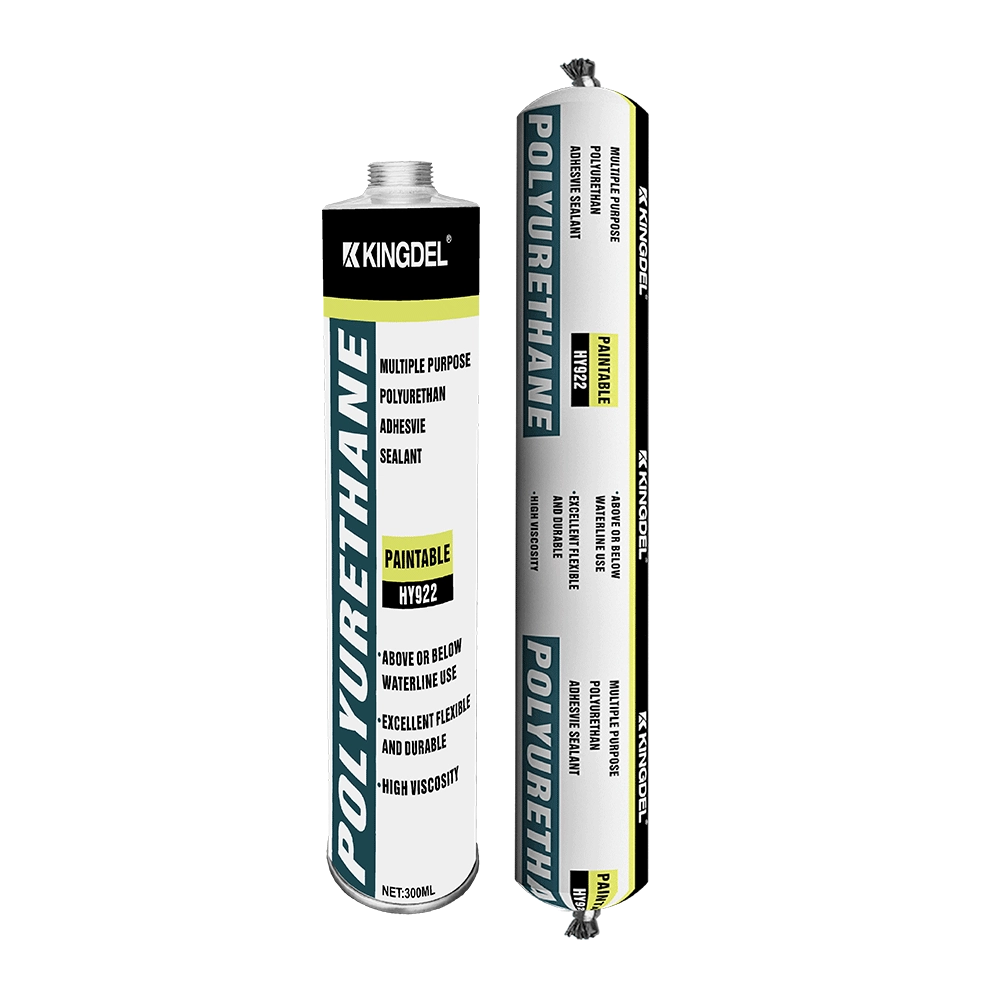
HY922 Multiple-Purpose Polyurethane Sealant by KINGDELI
Application Guide: MS Silicone Sealant for Window Frames
How to Evaluate Supplier Certificates and MSDS for Sealants
Construction Sealant Market Trends: High-Demand Products for 2026

HY992 Modified Polyurethane Construction Sealant
HY992 Modified Polyurethane Sealant is a one-component, moisture-curing construction sealant designed for professional building and structural sealing applications. It provides excellent adhesion, weather resistance, and durable elasticity, making it suitable for a wide range of construction materials.
The formulation delivers strong bonding performance without corrosion or substrate contamination, while maintaining low VOC content for environmentally responsible construction projects.

HY995 Crystal Clear Ms Polymer Adhesive/Sealant
HY995 Crystal Clear Ms Polymer Adhesive/Sealant is a new generation MS Polymer adhesive / sealant formulated for all bonding and sealing applications where long term reliability is required. It has excellent bonding strength on various materials. It will cure to form a durable, flexible, waterproof seal.

HY997 High-Performance Anti-Microbial MS Polymer Sealant
HY997 MS polymer sealant for is is a premium one-component, neutral-curing modified silane sealant engineered for demanding interior applications. It offers a Class 20 movement capability, ensuring long-lasting flexibility and reliable performance under dynamic joint conditions. Curing at room temperature, HY997 delivers superior anti-microbial and mildew-resistant properties, maintaining hygienic and clean environments over time.

KINGDELI HY732 Professional Acetoxy Cure Silicone Sealant
KINGDELI HY732 is a professional-grade, one-component acetoxy cure silicone sealant designed for fast curing, strong adhesion, and long-lasting flexibility. Ideal for aquariums, glass applications, aluminum doors and windows, kitchens, and bathrooms, it provides reliable sealing performance with excellent anti-fungal protection in high-humidity environments.
Let’s Build Stronger Bonds with Quality Adhesives and Sealants
Have questions about the topic or need tailored sealant solutions for your project?
Our team is ready to provide expert guidance, product recommendations, and application support.
Innovating with Integrity, Bonding the World
Since 1998, KINGDELI has delivered trusted, sustainable sealant solutions that connect industries and inspire progress worldwide.

Whatsapp: +8618825946249
Kingdeli
Kingdeli
Kingdeli
Kingdeli
Kingdeli