


OEM vs ODM PU Adhesive Suppliers: Sourcing for Auto Brands

- How OEM and ODM Automotive Adhesive Sourcing Models Differ
- OEM supply for established automotive specifications
- ODM development for differentiated vehicle bonding systems
- Why the distinction matters to auto brands
- Technical Qualification Criteria for Windshield Bonding Materials
- Substrate adhesion and primer compatibility
- Cure speed, open time, and safe drive-away performance
- Durability, emissions, and production reliability
- Procurement Due Diligence and Total Cost of Ownership
- Audit the supplier beyond certificates
- Calculate the installed cost, not only the cartridge price
- Protect supply continuity and intellectual property
- Why KINGDELI Can Support OEM and ODM Automotive Programs
- Manufacturing scale and controlled quality
- Formulation breadth for vehicle and adjacent applications
- End-to-end OEM and ODM support
- Frequently Asked Questions
- What is the main difference between an OEM and ODM adhesive supplier?
- What should auto brands test before approving a windshield bonding compound?
- Is a low price the best way to compare automotive adhesive suppliers?
- Can an ODM supplier create a private-label product for an automotive brand?
- Why are substrate and primer trials essential?
- What documentation should a supplier provide?
Automotive brands sourcing structural bonding materials must distinguish between an OEM adhesive supplier and an ODM development partner before approving a program. The decision affects formulation ownership, validation responsibility, production speed, warranty exposure, packaging, technical service, and long-term supply resilience. For windshield installation, the selected material must provide reliable adhesion to glass and body substrates, suitable open time, controlled curing, weather resistance, and predictable strength development under real assembly conditions. A procurement team should therefore assess more than unit price: it should compare technical capability, quality governance, compliance evidence, customization depth, and total lifecycle cost.
How OEM and ODM Automotive Adhesive Sourcing Models Differ
OEM supply for established automotive specifications
OEM sourcing generally means that the buyer provides a defined specification, approved formulation requirement, packaging format, or production standard, while the supplier manufactures the product under the buyer’s brand or approved commercial arrangement. This model is efficient when an auto brand already knows the required viscosity, cure profile, modulus, color, cartridge size, shelf life, and application method. It can shorten qualification cycles because the product architecture is already established and the main work involves production control, packaging adaptation, documentation, and delivery execution.
For automotive glazing, OEM procurement is useful when an installer network or vehicle manufacturer needs a repeatable bonding compound across multiple plants. The purchasing team can lock in a bill of materials, define incoming inspection requirements, establish batch-release criteria, and synchronize adhesive deliveries with line takt time. However, a supplier should not be treated as a simple toll manufacturer. Even an established specification requires compatibility checks, substrate testing, moisture and temperature controls, packaging validation, and change-management procedures.
ODM development for differentiated vehicle bonding systems
ODM sourcing gives the supplier a larger role in formulation development, performance optimization, packaging design, and application engineering. This approach is appropriate when a brand wants a faster-curing windshield bonding system, a lower-emission formulation, improved primer compatibility, enhanced green strength, or a private-label product designed for a particular climate and assembly process. The supplier’s laboratory and production team translate the buyer’s performance objectives into a validated product specification.
An ODM project should begin with a technical brief rather than a general request for a strong adhesive. The brief should define substrate types, glass coatings, paint systems, primer requirements, bead geometry, application equipment, ambient humidity, storage temperature, cure time, handling time, crash-related performance expectations, and warranty duration. Clear ownership of test data, formula changes, tooling, packaging artwork, and regulatory files should be written into the commercial agreement.
Why the distinction matters to auto brands
The wrong sourcing model can create hidden costs. A low-cost OEM arrangement may fail when the brand later needs regional climate adaptation or a new glass coating. Conversely, a full ODM program may be unnecessary for a mature product and can extend development time. The best model depends on the brand’s internal engineering resources, annual volume, product differentiation strategy, launch schedule, and willingness to manage formulation ownership.
| Decision factor | OEM model | ODM model | Procurement implication |
|---|---|---|---|
| Starting point | Buyer-defined specification or approved product | Performance brief and development objectives | Use OEM for repeatability; use ODM when technical differentiation is required |
| Customization | Usually packaging, labeling, color, and selected parameters | Formulation, cure profile, viscosity, packaging, and application design | More customization requires stronger project governance |
| Development timeline | Generally shorter after qualification | Includes laboratory trials, field validation, and scale-up | Align the model with the vehicle launch timetable |
| Technical responsibility | Buyer owns more of the specification | Supplier shares or leads formulation engineering | Define validation duties and change-control rules contractually |
| Commercial risk | Lower development risk but potentially less differentiation | Higher development coordination but greater product flexibility | Evaluate total cost, warranty risk, and future platform needs |
Automotive glazing requirements should be connected to recognized safety and quality frameworks. UNECE vehicle regulations include requirements relevant to safety glazing and vehicle construction, while ISO 9001 provides a framework for quality-management systems. These references do not replace product-specific validation, but they help buyers structure supplier audits, document control, traceability, and corrective-action expectations.
Technical Qualification Criteria for Windshield Bonding Materials
Substrate adhesion and primer compatibility
A windshield bonding compound must be evaluated against the actual glass, ceramic frit, paint, e-coat, bare metal, plastic trim, and primer systems used in production. Adhesion results from one glass supplier cannot automatically be transferred to another because coatings, surface energy, contamination, and frit composition may differ. Buyers should request lap-shear, peel, tensile, bead-adhesion, and aging data generated on representative substrates.
Primer interaction is equally important. Some vehicle assembly processes use a glass primer, a body primer, or an all-in-one adhesion promoter, while others depend on surface preparation and moisture-curing chemistry. The supplier should provide a controlled surface-preparation procedure, recommended flash-off time, allowable contamination limits, and rework instructions. Technical files should identify whether a primer is mandatory, optional, or incompatible with a given formulation.
Cure speed, open time, and safe drive-away performance
Production managers need a balance between application open time and rapid strength development. A bead that skins too quickly can reduce wetting and create assembly defects; a bead that cures too slowly can delay vehicle movement, increase floor-space requirements, and disrupt logistics. The correct cure profile depends on temperature, relative humidity, bead dimensions, substrate temperature, and vehicle design.
Suppliers should report cure data using defined test conditions rather than broad claims such as fast curing. Buyers should examine tack-free time, through-cure progression, modulus development, elongation, tensile strength, and adhesion retention after artificial aging. For repair channels, the brand should also confirm safe drive-away guidance through its own engineering and regulatory process rather than relying on a generic label statement.
Durability, emissions, and production reliability
Automotive glazing compounds operate through temperature cycling, vibration, ultraviolet exposure, moisture, road salt, cleaning chemicals, and long-term movement between dissimilar materials. A qualification plan should include heat aging, humidity aging, freeze-thaw exposure, salt or chemical resistance where relevant, and adhesion retention after environmental conditioning. The test plan should reflect the vehicle platform and service geography.
Low-VOC chemistry can support factory air-quality goals and sustainability programs, but lower emissions must not be accepted at the expense of adhesion or cure reliability. Buyers should request safety data sheets, technical data sheets, restricted-substance declarations, and available environmental documentation. ISO 14001 can help buyers assess whether a supplier operates a structured environmental-management system, although the certification itself is not proof of a specific adhesive’s environmental performance.
Procurement Due Diligence and Total Cost of Ownership
Audit the supplier beyond certificates
Certificates are useful indicators of management discipline, but they should be supported by evidence from the factory. An audit should review raw-material approval, incoming inspection, automated dosing, mixing controls, in-process viscosity checks, filling accuracy, lot coding, retention samples, finished-goods release, and nonconforming-product procedures. A credible supplier should explain how formulation changes are evaluated and how customers are notified before a change reaches production.
Capacity is another strategic issue. A supplier may have a strong laboratory but insufficient reactor capacity, filling equipment, warehouse space, or export experience for a global vehicle program. Buyers should compare nominal capacity with available capacity, maintenance planning, backup utilities, critical raw-material inventories, and business-continuity plans. Delivery performance should be measured through lead time, minimum order quantity, forecast flexibility, and emergency replenishment capability.
Calculate the installed cost, not only the cartridge price
The true cost of a vehicle glazing adhesive includes material consumption, waste, primer usage, labor, equipment cleaning, rework, line stoppage, inventory carrying cost, freight, packaging disposal, warranty exposure, and field-service claims. A product with a slightly higher purchase price may reduce bead waste or shorten handling time enough to produce a lower installed cost. Conversely, an attractive price can become expensive if inconsistent viscosity causes nozzle changes, uneven beads, glass movement, or rework.
Procurement models should include a cost-of-quality calculation. Relevant indicators include first-pass yield, rejected cartridges, opened-package waste, adhesion failures, customer complaints, corrective-action frequency, and average response time for technical incidents. For an ODM program, development and validation costs should be separated from recurring product costs so that the business case remains transparent across the vehicle platform’s expected life.
Protect supply continuity and intellectual property
Contracts should define approved manufacturing sites, alternate raw materials, formula confidentiality, ownership of custom developments, tooling responsibility, minimum notice for changes, audit rights, and remedies for supply interruption. Global auto brands should also assess export documentation, regional labeling, local inventory, hazardous-goods handling, and language requirements for safety documentation.
Technical information should be exchanged through controlled specifications and revision histories. A supplier that cannot maintain document integrity may create more risk than a supplier with a higher quoted price. The buyer should establish a sample approval process, golden-batch reference, acceptance limits, and a formal deviation procedure before mass production begins.
Why KINGDELI Can Support OEM and ODM Automotive Programs
Manufacturing scale and controlled quality
KINGDELI has operated in the high-performance sealant, adhesive, and coating industry since 1998. Headquartered in Foshan, China, our 66,000 m² manufacturing facility uses automated production lines and has annual capacity exceeding 100,000 tons. This industrial scale supports stable supply for distributors, vehicle-related manufacturers, construction-material channels, and international brand owners while maintaining structured production and batch-control processes.
We are a recognized National High-Tech Enterprise and a contributor to the National Standard GB/T 29755-2013. Our quality and environmental systems are aligned with internationally recognized frameworks, including ISO 9001 and ISO 14001, and our product portfolio includes solutions engineered toward applicable CE and ASTM requirements. Buyers should still confirm the exact certificate, test report, and product approval applicable to each intended use, but a documented management foundation provides a stronger starting point for qualification.
Formulation breadth for vehicle and adjacent applications
Our portfolio includes polyurethane sealant, neutral silicone sealant, acetic silicone sealant, acrylic sealant, silicone glazing sealant, MS polymer sealant, No More Nails adhesive, RTV gasket maker, epoxy tile grout, and self-leveling sealant. For automotive programs, the relevant selection may include moisture-curing polyurethane technologies, hybrid polymers, silicone products for non-structural sealing, and complementary materials for plant maintenance or aftermarket distribution.
This breadth helps procurement teams consolidate compatible products without forcing one chemistry into every application. Structural or semi-structural glazing demands different performance priorities from a gasket-forming compound, a trim adhesive, a construction sealant, or a flooring joint material. Our technical team can help define the correct product family, packaging format, surface-preparation method, and test sequence for the intended substrate and process.
End-to-end OEM and ODM support
Our OEM and ODM services can cover private-label packaging, formulation adjustment, viscosity and cure-profile development, color matching, technical documentation, sample preparation, application guidance, and scale-up coordination. Low-VOC development is available for brands seeking improved workplace conditions and sustainability alignment, subject to the performance requirements of the application.
With more than 27 years of industry expertise and a presence in over 50 countries, KINGDELI combines manufacturing capability with professional technical service. Our team supports project owners and distributors through specification review, sample evaluation, production planning, and after-sales communication. The objective is not simply to supply a cartridge; it is to create a controlled, traceable, and commercially practical bonding solution that protects production efficiency and brand reputation.
For a new vehicle platform, an effective qualification path is straightforward: issue a detailed technical brief, identify representative substrates, screen candidate formulations, complete laboratory and environmental testing, conduct line trials, approve packaging and documentation, then establish mass-production controls. KINGDELI can participate at each stage while the buyer retains clear visibility over performance criteria, change management, and commercial assumptions.
Frequently Asked Questions
What is the main difference between an OEM and ODM adhesive supplier?
OEM supply usually manufactures a buyer-defined or already approved product, while ODM supply involves deeper supplier participation in formulation development, performance optimization, packaging, and application engineering.
What should auto brands test before approving a windshield bonding compound?
Brands should test adhesion to actual glass, ceramic frit, paint, metal, and plastic substrates, together with cure speed, open time, modulus, elongation, aging resistance, primer compatibility, packaging stability, and production-line behavior.
Is a low price the best way to compare automotive adhesive suppliers?
No. Buyers should compare total installed cost, including consumption, waste, labor, primer use, rework, line interruptions, logistics, inventory, warranty exposure, and technical-support requirements.
Can an ODM supplier create a private-label product for an automotive brand?
Yes. An ODM partner can typically support custom formulation parameters, packaging, labeling, color, technical documentation, and application procedures, provided ownership, confidentiality, validation duties, and change-control terms are clearly agreed.
Why are substrate and primer trials essential?
Glass coatings, ceramic frits, paints, plastics, and primers vary in surface chemistry and preparation requirements. A formulation that performs on one substrate combination may not provide equivalent adhesion on another, so representative testing is essential.
What documentation should a supplier provide?
Core documentation normally includes a technical data sheet, safety data sheet, batch traceability information, quality certificates, restricted-substance declarations, test reports, storage guidance, shelf-life data, and controlled application instructions.
Contact KINGDELI to discuss an OEM or ODM automotive bonding program and identify the right sealant, adhesive chemistry, testing plan, and supply model for your vehicle platform.
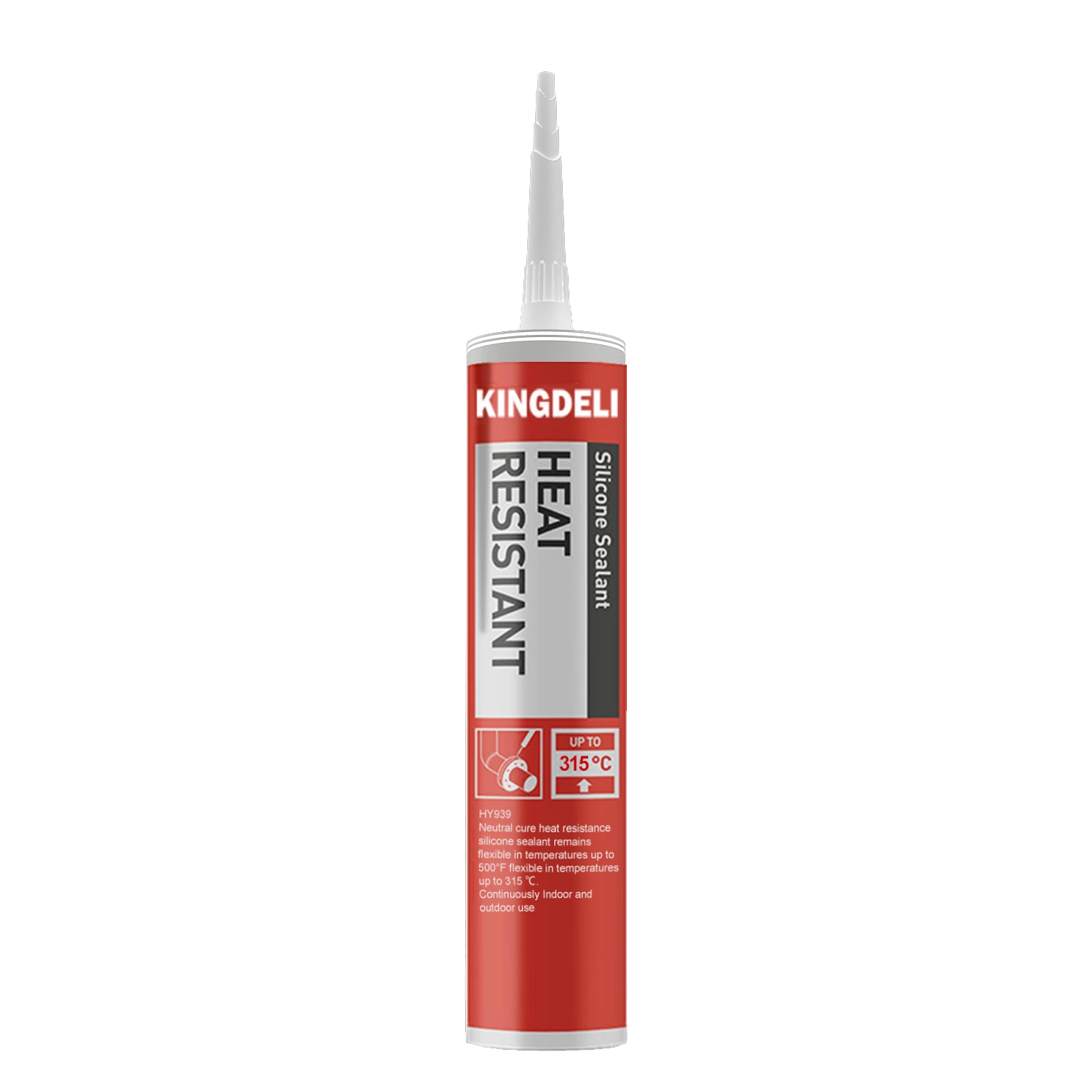
HY939A Neutral Heat Resistant Silicone Sealant | KINGDELI
The Ultimate Guide to MS Sealant Adhesion to Metal: Unlocking Maximum Bond Strength
Third-Party Inspection Protocols for PU Windshield Adhesives
Avoid These 7 Common MS Sealant Mistakes: The Secret to Long-Lasting, Leak-Proof Joints

HY992 Modified Polyurethane Construction Sealant
HY992 Modified Polyurethane Sealant is a one-component, moisture-curing construction sealant designed for professional building and structural sealing applications. It provides excellent adhesion, weather resistance, and durable elasticity, making it suitable for a wide range of construction materials.
The formulation delivers strong bonding performance without corrosion or substrate contamination, while maintaining low VOC content for environmentally responsible construction projects.

HY995 Crystal Clear Ms Polymer Adhesive/Sealant
HY995 Crystal Clear Ms Polymer Adhesive/Sealant is a new generation MS Polymer adhesive / sealant formulated for all bonding and sealing applications where long term reliability is required. It has excellent bonding strength on various materials. It will cure to form a durable, flexible, waterproof seal.

HY997 High-Performance Anti-Microbial MS Polymer Sealant
HY997 MS polymer sealant for is is a premium one-component, neutral-curing modified silane sealant engineered for demanding interior applications. It offers a Class 20 movement capability, ensuring long-lasting flexibility and reliable performance under dynamic joint conditions. Curing at room temperature, HY997 delivers superior anti-microbial and mildew-resistant properties, maintaining hygienic and clean environments over time.

KINGDELI HY732 Professional Acetoxy Cure Silicone Sealant
KINGDELI HY732 is a professional-grade, one-component acetoxy cure silicone sealant designed for fast curing, strong adhesion, and long-lasting flexibility. Ideal for aquariums, glass applications, aluminum doors and windows, kitchens, and bathrooms, it provides reliable sealing performance with excellent anti-fungal protection in high-humidity environments.
Let’s Build Stronger Bonds with Quality Adhesives and Sealants
Have questions about the topic or need tailored sealant solutions for your project?
Our team is ready to provide expert guidance, product recommendations, and application support.
Innovating with Integrity, Bonding the World
Since 1998, KINGDELI has delivered trusted, sustainable sealant solutions that connect industries and inspire progress worldwide.

Whatsapp: +8618825946249
Kingdeli
Kingdeli
Kingdeli
Kingdeli
Kingdeli