


OEM Silicone Sealant for Windows and Doors: Formula, Logo, Packaging

- How to Specify a Private-Label Fenestration Sealant
- Match the chemistry to substrates and joint conditions
- Define performance requirements before approving a formula
- Build the OEM brief around production reality
- Formula, Brand Identity, and Packaging Decisions
- Formulation architecture and low-VOC positioning
- Logo development and label information
- Packaging formats and logistics protection
- Quality Assurance and Commercial Risk Control
- Control the supply chain from raw material to finished unit
- Use standards and documentation to support market entry
- Evaluate total cost instead of cartridge price alone
- KINGDELI OEM and ODM Capabilities for Building Sealants
- Manufacturing scale and technical breadth
- OEM branding, formula development, and compliance support
- Why a solution provider can improve project ROI
- Frequently Asked Questions
OEM silicone sealant for windows and doors is not simply a private-label cartridge filled with a standard product. It is a coordinated specification covering polymer chemistry, adhesion, movement capability, curing behavior, color stability, packaging compatibility, brand presentation, regulatory documentation, and supply continuity. Window fabricators, door manufacturers, distributors, project owners, and building-material brands must align these variables before approving a formula. The correct sealant protects joints against rainwater, air leakage, ultraviolet exposure, thermal cycling, and substrate movement while also supporting efficient production and a credible market position.
How to Specify a Private-Label Fenestration Sealant
Match the chemistry to substrates and joint conditions
Neutral-cure silicone is generally preferred when the joint involves metals, coated aluminum, concrete, masonry, natural stone, plastics, or sensitive components that may be affected by acidic by-products. It typically offers broad substrate compatibility, low odor compared with acetoxy systems, and dependable resistance to weathering. Acetic silicone cures rapidly and often provides strong adhesion to glass and some non-porous surfaces, making it useful for selected glazing and interior applications. However, the acidic curing mechanism requires careful compatibility review around certain metals, alkaline surfaces, and sensitive finishes.
A glazing-grade formulation should be assessed against the actual window or door assembly rather than selected from a generic product list. The evaluation should include glass type, powder-coated or anodized aluminum, uPVC, painted steel, backer rod, spacer materials, laminated components, and any primers. Buyers should request adhesion testing on production substrates because surface energy, coating composition, contamination, and moisture can change field performance.
Define performance requirements before approving a formula
Important technical criteria include modulus, tensile strength, elongation, movement capability, tack-free time, full cure time, hardness, density, extrusion rate, sag resistance, temperature service range, ultraviolet resistance, water resistance, and shelf life. Joint geometry is equally important: sealant performance depends on the width-to-depth ratio, bond-breaker design, backer-rod selection, and correct tooling. A product that performs well in a laboratory bead may fail when applied to a narrow, three-sided joint or an improperly prepared surface.
Project specifications should identify the applicable test framework. ISO 11600 classifies building construction sealants according to applications and performance characteristics, while ASTM C920 addresses elastomeric joint sealants for building construction. These standards do not replace project-specific testing, but they provide a recognized basis for comparing movement, adhesion, durability, and product classification.
Build the OEM brief around production reality
An effective technical brief states the intended application, substrates, color range, curing technology, packaging format, target price, annual volume, sales regions, required certifications, and acceptance criteria. It should also define whether the material will be applied manually, with pneumatic equipment, or through an automated dispensing line. Extrusion force and nozzle behavior can materially affect labor cost, especially for large window and door factories.
Buyers should request a technical data sheet, safety data sheet, certificate of analysis, batch coding plan, compatibility statement, storage instructions, and sample approval procedure. A supplier should explain how raw materials are qualified, how viscosity is controlled, how color variation is managed, and how retained samples are used during complaint investigation. These details reduce the risk of approving an attractive label while overlooking operational inconsistency.
Formula, Brand Identity, and Packaging Decisions
Formulation architecture and low-VOC positioning
Silicone sealant formulations commonly combine a reactive polymer, reinforcing filler, plasticizer or processing aid, crosslinking components, adhesion promoters, catalysts, pigments, and specialty additives. The balance determines adhesion, rheology, cure speed, elasticity, surface appearance, and long-term durability. Increasing filler may improve cost control and body, but excessive or poorly dispersed filler can reduce extrusion smoothness, transparency, adhesion, or weathering performance.
Low-VOC positioning should be supported by a defined test method and transparent documentation rather than a vague marketing claim. Buyers should distinguish between total volatile content, odor perception, regulated substances, and indoor-air certifications. The formula must still meet the required cure profile and mechanical performance. For projects involving occupied buildings, schools, healthcare facilities, or green-building requirements, procurement teams should request regional compliance evidence before printing environmental claims on packaging.
Logo development and label information
Private-label branding should make technical selection easier at the point of sale and during installation. The front label should clearly communicate the chemistry, application, color, net content, curing type, and key performance benefit. The side or rear panel should include substrate limitations, surface preparation, application temperature, curing conditions, storage life, safety information, batch number, production date, manufacturer or responsible importer details, and applicable standards.
Logo files should be supplied in vector formats with defined color references, minimum clear space, and approved versions for cartridges, foil sausages, cartons, pallets, digital catalogs, and e-commerce images. A professional OEM process separates brand approval from formula approval: artwork should not be finalized until the product name, technical claims, warning language, country requirements, and packaging dimensions have been confirmed.
Packaging formats and logistics protection
310 ml and 300 ml cartridges are common for manual caulking guns, while 400 ml and 600 ml sausages can improve material efficiency for high-volume professional use. Packaging must be compatible with the sealant’s chemistry, moisture sensitivity, filling pressure, nozzle design, and storage conditions. A cartridge that leaks, deforms, or allows premature skin formation can create returns even when the bulk formula is technically sound.
Packaging engineering should cover tamper evidence, cap security, carton compression, pallet configuration, container loading, barcode readability, and climate exposure during transportation. Export buyers should confirm whether the packaging meets destination-language requirements and whether the product is classified for transport under local regulations. Batch traceability should link the finished unit to raw-material lots, production records, laboratory release results, and retained samples.
| Decision area | Neutral-cure silicone | Acetic-cure silicone | Buyer verification point |
|---|---|---|---|
| Typical substrate profile | Broad compatibility with many metals, masonry, plastics, and coated surfaces | Often effective on glass and selected non-porous surfaces | Conduct adhesion and staining tests on actual substrates |
| Curing by-product | Typically alcohol, oxime, or other neutral-system by-products depending on chemistry | Acetic acid odor during cure | Review safety data and substrate compatibility |
| Common OEM positioning | Windows, doors, façade joints, general weather sealing, and sensitive assemblies | Selected glazing, sanitary, and interior applications | Confirm application limitations and local standards |
| Packaging choices | Cartridges, sausages, pails, or drums depending on application | Cartridges and sausages are common for professional use | Test package stability, extrusion, and shelf life |
The comparison above is a formulation-selection guide, not a substitute for laboratory qualification. Product classification, curing chemistry, and performance claims vary by manufacturer. A procurement team should compare complete technical data rather than relying on the words “neutral” or “acetic” alone.
Quality Assurance and Commercial Risk Control
Control the supply chain from raw material to finished unit
Reliable production begins with incoming inspection of polymers, fillers, pigments, catalysts, and packaging components. Critical controls include moisture management, weighing accuracy, dispersion, vacuum deaeration, filling mass, nozzle fit, color consistency, cure response, and container sealing. Automated filling and batch coding can reduce human variation, but automation still requires calibrated equipment, documented procedures, and trained quality personnel.
A strong release protocol may include appearance, density, extrusion rate, tack-free time, hardness, adhesion, tensile or movement-related testing, and accelerated aging where appropriate. Retained samples allow the supplier and brand owner to investigate complaints using the same batch. For large projects, a pre-shipment sample, golden sample, and first-production approval can prevent a mismatch between the laboratory sample and commercial production.
Use standards and documentation to support market entry
Quality management systems help connect technical requirements with repeatable manufacturing. Buyers can review evidence of an ISO 9001 quality management system and an ISO 14001 environmental management system where relevant. Documentation should also be mapped to destination-market requirements, including labeling, chemical communication, restricted substances, building-product certifications, and customer-specific declarations.
Commercial risk also includes minimum order quantity, lead time, forecast flexibility, formula ownership, tooling charges, color development, warranty language, and change-control rules. The OEM agreement should state how formulation changes, raw-material substitutions, packaging revisions, and manufacturing-site changes are communicated and approved. This is particularly important for distributors whose customers expect the same application behavior across multiple purchasing cycles.
Evaluate total cost instead of cartridge price alone
Unit price is only one part of the cost model. Buyers should calculate yield per joint, extrusion labor, rejected units, cleaning time, packaging waste, freight cube, shelf-life losses, warranty exposure, and field-service costs. A slightly higher-priced sealant may generate better ROI if it extrudes smoothly, cures consistently, reduces rework, and remains stable through seasonal storage.
Technical service should be included in the supplier evaluation. Support may cover substrate preparation, primer selection, joint design, application temperature, tooling, cleaning, troubleshooting, and installer training. For international brands, multilingual documents and responsive complaint handling can protect customer relationships as effectively as the product itself.
KINGDELI OEM and ODM Capabilities for Building Sealants
Manufacturing scale and technical breadth
At KINGDELI, our manufacturing platform is designed for brand owners that need consistent quality, scalable output, and coordinated OEM/ODM execution. Since our establishment in 1998, we have developed high-performance sealants, adhesives, and coatings for customers in more than 50 countries. Our headquarters and 66,000 m² production facility are located in Foshan, China, with fully automated production lines and annual capacity exceeding 100,000 tons.
Our product portfolio supports more than one window or door use case. It includes neutral silicone sealant, acetic silicone sealant, silicone glazing sealant, Acrylic Sealant, Polyurethane Sealant, MS polymer Sealant, No More Nails adhesive, RTV Gasket Maker, Epoxy Tile Grout, and Self-Leveling Sealant. This breadth allows distributors and construction-material brands to consolidate complementary products through one technical and commercial partner.
OEM branding, formula development, and compliance support
Our OEM/ODM service can be structured around an existing formula, a modified specification, or a new application brief. We support product positioning, color matching, label coordination, packaging selection, sample evaluation, technical documentation, and production planning. Low-VOC formulation options are available for buyers targeting more demanding indoor-air and sustainability objectives, subject to application requirements and regional testing.
KINGDELI is recognized as a National High-Tech Enterprise and has contributed to the National Standard GB/T 29755-2013. Our quality and environmental systems, together with product documentation aligned with international expectations such as ISO 9001, ISO 14001, CE, and ASTM requirements where applicable, help buyers build a more defensible procurement file. Compliance remains product- and market-specific, so each project should confirm the exact applicable declaration or test report.
Why a solution provider can improve project ROI
Our value extends beyond filling and labeling. Engineering and technical-service teams can help buyers compare neutral and acetic curing systems, select a suitable glazing grade, assess compatibility, and coordinate packaging with logistics requirements. The same supplier relationship can also support polyurethane and MS polymer technologies when a project needs different movement, adhesion, paintability, or moisture-curing characteristics.
For brand owners, this integrated approach can shorten qualification cycles, simplify purchasing, improve batch traceability, and reduce the risk of inconsistent product claims. For distributors, it creates a broader construction sealants and adhesives portfolio without requiring separate technical negotiations for every category. For project operators, it supports more predictable application and after-sales response.
OEM success ultimately depends on disciplined specification, verified performance, controlled packaging, and transparent communication. Buyers should approve the chemistry on real substrates, validate the complete package, audit the supplier’s quality process, and establish change-control rules before commercial launch. With more than 27 years of industry expertise, global reach, automated capacity, and end-to-end technical support, KINGDELI is positioned to help partners build durable private-label product lines for fenestration and wider construction applications.
Contact KINGDELI to discuss a customized sealant formula, private-label packaging, and an OEM/ODM product program for your target market.
Frequently Asked Questions
Which silicone chemistry is better for windows and doors?
Neutral-cure silicone is generally preferred for assemblies containing metals, masonry, plastics, coated aluminum, or sensitive finishes, while acetic-cure silicone can be suitable for selected glass and non-porous interior applications. Actual substrates should be tested before approval.
What technical data should an OEM buyer request?
An OEM buyer should request a technical data sheet, safety data sheet, certificate of analysis, adhesion and compatibility results, batch coding plan, storage and shelf-life information, sample approval procedure, and documentation for applicable standards and market requirements.
Are cartridges or sausages better for private-label sealant?
Cartridges are widely used with manual caulking guns, while sausages can improve material efficiency for high-volume professional applications. The correct format depends on equipment, joint volume, packaging stability, logistics, and customer habits.
How can a buyer verify a private-label sealant formula?
The buyer should test the product on actual production substrates and evaluate adhesion, cure response, extrusion, appearance, movement capability, weather exposure, storage stability, and package compatibility. A first-production approval and retained samples provide additional control.
What should be included in an OEM sealant agreement?
The agreement should address formula ownership, minimum order quantity, lead time, color and packaging approval, warranty, quality acceptance criteria, batch traceability, raw-material substitutions, formula changes, manufacturing-site changes, and the communication process for technical or regulatory updates.
Can one manufacturer supply other construction adhesives besides silicone?
Yes. A broader supplier portfolio may include acrylic sealant, polyurethane sealant, MS polymer sealant, no-more-nails adhesive, RTV gasket maker, epoxy tile grout, and self-leveling sealant, allowing brands and distributors to consolidate complementary product categories.
Self-Leveling Sealant Buyer's Guide: Choosing the Right Type

HY-722 Premium Neutral Sanitary Sealant — High‑Performance Bathroom & Kitchen Silicone
OEM/ODM acetic cure silicone sealant Manufacturers and Suppliers
Electronics Encapsulation with Neutral Silicone Sealants
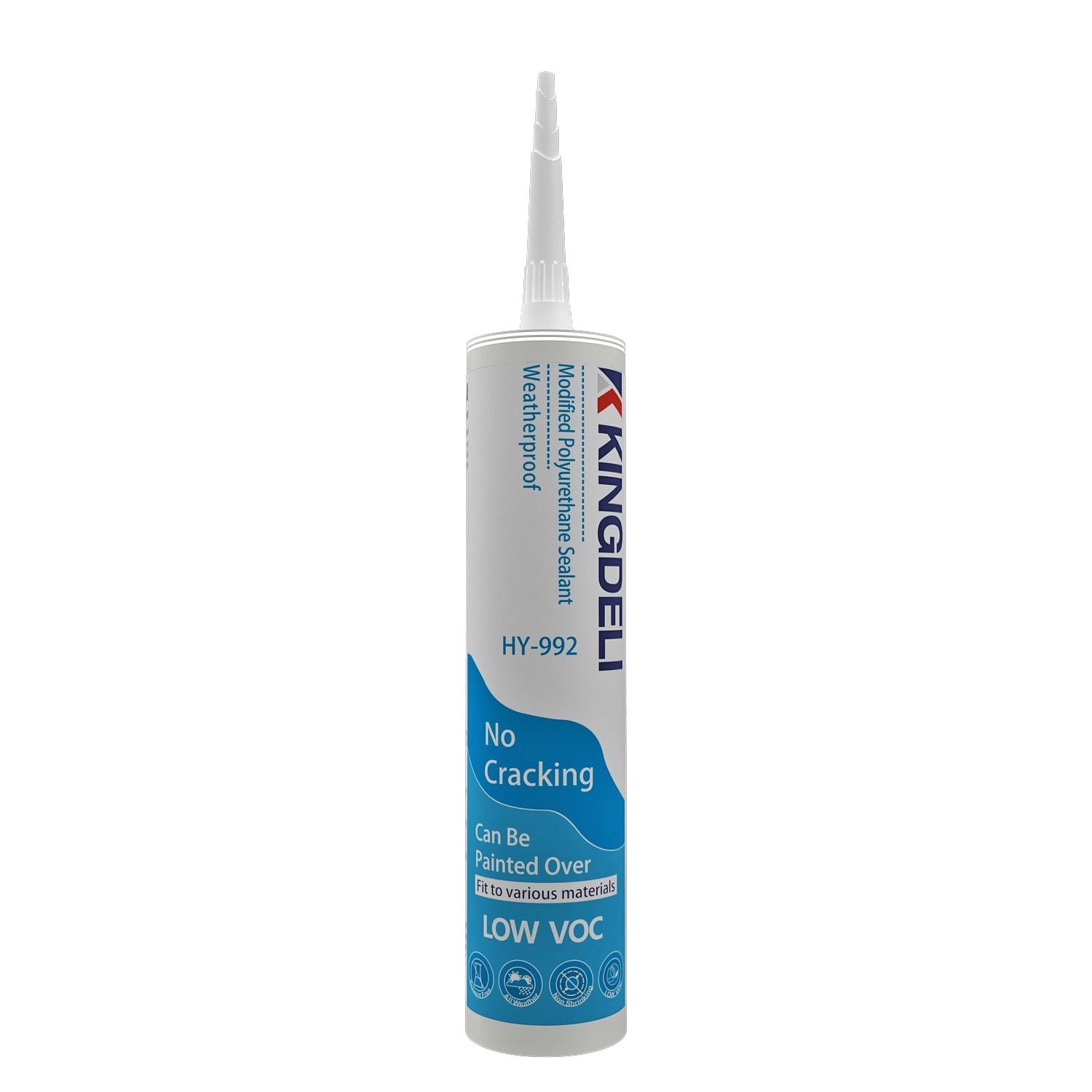
HY992 Modified Polyurethane Construction Sealant
HY992 Modified Polyurethane Sealant is a one-component, moisture-curing construction sealant designed for professional building and structural sealing applications. It provides excellent adhesion, weather resistance, and durable elasticity, making it suitable for a wide range of construction materials.
The formulation delivers strong bonding performance without corrosion or substrate contamination, while maintaining low VOC content for environmentally responsible construction projects.

HY995 Crystal Clear Ms Polymer Adhesive/Sealant
HY995 Crystal Clear Ms Polymer Adhesive/Sealant is a new generation MS Polymer adhesive / sealant formulated for all bonding and sealing applications where long term reliability is required. It has excellent bonding strength on various materials. It will cure to form a durable, flexible, waterproof seal.

HY997 High-Performance Anti-Microbial MS Polymer Sealant
HY997 MS polymer sealant for is is a premium one-component, neutral-curing modified silane sealant engineered for demanding interior applications. It offers a Class 20 movement capability, ensuring long-lasting flexibility and reliable performance under dynamic joint conditions. Curing at room temperature, HY997 delivers superior anti-microbial and mildew-resistant properties, maintaining hygienic and clean environments over time.
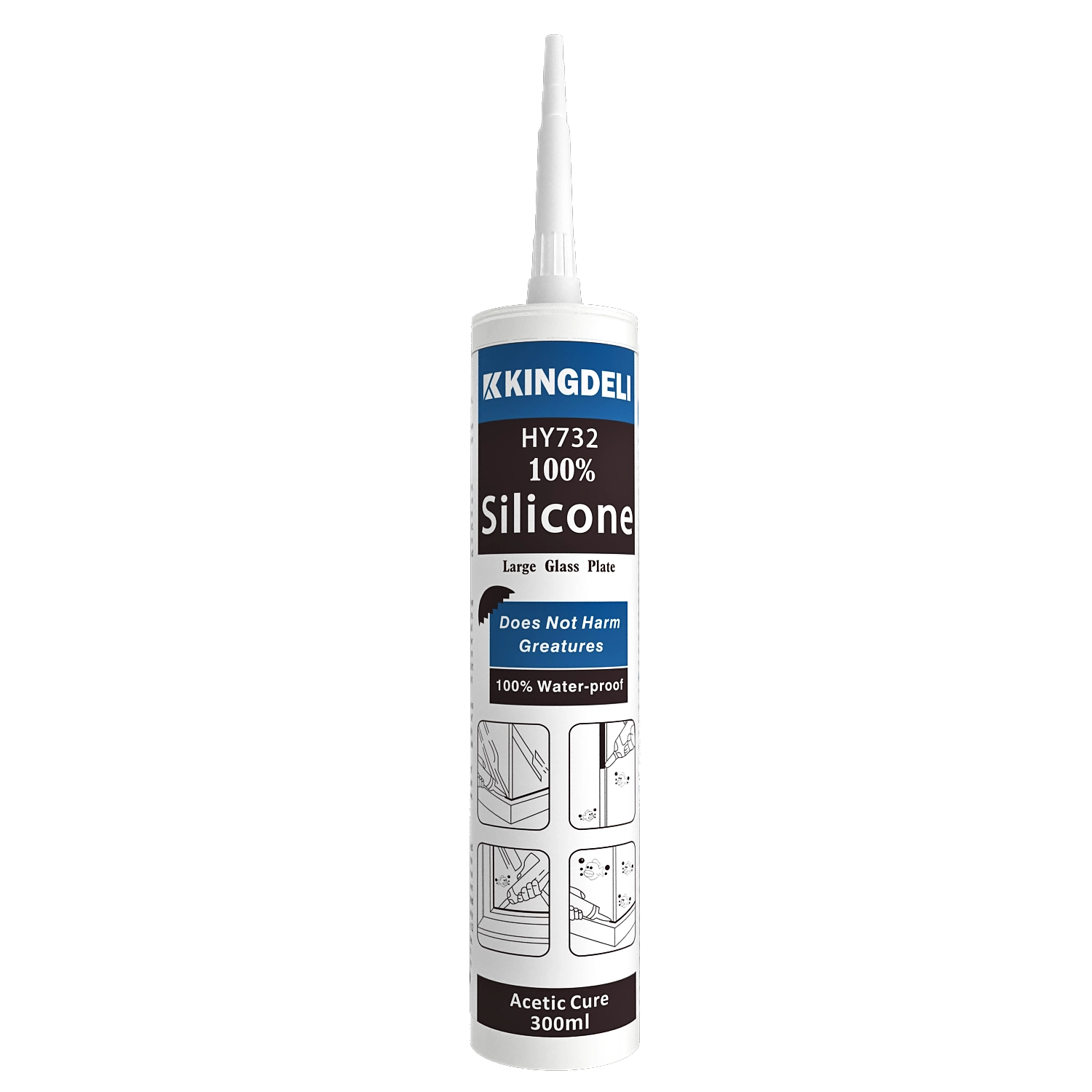
KINGDELI HY732 Professional Acetoxy Cure Silicone Sealant
KINGDELI HY732 is a professional-grade, one-component acetoxy cure silicone sealant designed for fast curing, strong adhesion, and long-lasting flexibility. Ideal for aquariums, glass applications, aluminum doors and windows, kitchens, and bathrooms, it provides reliable sealing performance with excellent anti-fungal protection in high-humidity environments.
Let’s Build Stronger Bonds with Quality Adhesives and Sealants
Have questions about the topic or need tailored sealant solutions for your project?
Our team is ready to provide expert guidance, product recommendations, and application support.
Innovating with Integrity, Bonding the World
Since 1998, KINGDELI has delivered trusted, sustainable sealant solutions that connect industries and inspire progress worldwide.
Whatsapp: +8618825946249
Kingdeli
Kingdeli
Kingdeli
Kingdeli
Kingdeli