


Everything You Need to Know About oem silicone sealant manufacturer

- The Role of Silicone Sealants in Modern Construction and Manufacturing
- What silicone sealant is and why it is widely used
- Acetoxy versus neutral-cure silicone
- Where OEM silicone products are used
- How to Evaluate an OEM Silicone Sealant Manufacturer
- Formulation development and OEM versus ODM service
- Manufacturing scale, quality control, and traceability
- Standards, documentation, and international market readiness
- Building a Successful Private-Label Silicone Sealant Program
- Packaging, branding, and supply-chain planning
- Technical performance metrics that matter
- Sustainability and long-term partnership
- Supplier-audit checklist
- Frequently Asked Questions
- What does an OEM silicone sealant manufacturer do?
- How do I choose between acetoxy and neutral-cure silicone?
- What documents should I request from a private-label sealant supplier?
- Can one silicone sealant be used on every building material?
- What is the difference between OEM and ODM sealant production?
- How can I reduce risk when importing silicone sealant?
An oem silicone sealant manufacturer provides the formulation expertise, production capacity, quality systems, packaging capability, and technical support required to launch silicone sealants under another company’s brand. The best partners do more than fill cartridges: they help select acetoxy or neutral-cure chemistry, match performance to the application, validate adhesion and weather resistance, comply with applicable standards, control batch consistency, and deliver scalable OEM or ODM production. KINGDELI, established in 1998 in Foshan, China, combines a 66,000 m² automated facility, annual capacity exceeding 100,000 tons, experience in more than 50 countries, and a broader portfolio covering silicone, polyurethane, MS polymer, and construction adhesives. This guide explains how private-label silicone manufacturing works, which technical and commercial factors matter, and how to assess a supplier before signing a long-term agreement.
The Role of Silicone Sealants in Modern Construction and Manufacturing
What silicone sealant is and why it is widely used
Silicone sealant is an elastomeric material based primarily on silicone polymers, fillers, pigments, curing agents, and performance additives. After application, the uncured compound reacts with moisture in the air and forms a flexible rubber-like seal. Unlike many rigid mastics, cured silicone can accommodate movement caused by thermal expansion, vibration, substrate deflection, and joint cycling. This makes it valuable for glazing, windows and doors, sanitary areas, façades, interior finishing, electrical assemblies, signage, and general maintenance.
Silicone is selected when long-term flexibility, ultraviolet resistance, temperature tolerance, and resistance to weathering are more important than paintability. However, no sealant is universally suitable. Silicone may have limited adhesion to certain porous, oily, or low-surface-energy materials, and many cured silicones are difficult to paint. A technically capable manufacturer therefore evaluates the substrate, joint geometry, movement, exposure, cure conditions, and required service life before recommending a formula.
Acetoxy versus neutral-cure silicone
Acetoxy silicone releases acetic acid during curing and is often recognized by its vinegar-like odor. It can provide fast skin formation and strong adhesion to many glass and glazed ceramic surfaces, making it common in general-purpose glazing, household repair, and sanitary applications. Its acidic cure chemistry may be unsuitable for some metals, concrete, natural stone, alkaline substrates, electronic components, and sensitive coatings because compatibility and corrosion risks must be assessed.
Neutral-cure silicone releases alcohol, oxime, or another neutral by-product depending on the formulation. It is generally preferred for broader substrate compatibility, including many metals, masonry systems, coated surfaces, and façade components. Neutral products may be engineered for low odor, low staining, weather sealing, structural glazing support applications where specifically qualified, or compatibility with sensitive materials. A responsible oem silicone sealant manufacturer will not treat neutral cure as automatically superior; the correct choice depends on the project specification and validated adhesion results.
Where OEM silicone products are used
Typical OEM programs include private-label sealants for building-material distributors, hardware chains, window and door fabricators, sanitaryware suppliers, industrial assemblers, and regional construction brands. Product families may include general-purpose silicone, sanitary silicone with fungicide, window and door sealant, high-temperature silicone, low-modulus weather sealant, mirror-compatible silicone, and specialized industrial grades. Each use case requires a different balance of modulus, tensile strength, elongation, skin time, curing rate, adhesion, color stability, and packaging format.
For structural or safety-critical applications, buyers should request project-specific documentation rather than relying on a generic marketing description. Requirements may include movement capability, adhesion testing, primer use, compatibility testing, accelerated weathering, and compliance with a specified standard. Guidance from organizations such as the ASTM standard for elastomeric joint sealants can help define performance expectations, while project engineers remain responsible for selecting and approving the system.
How to Evaluate an OEM Silicone Sealant Manufacturer
Formulation development and OEM versus ODM service
OEM generally means producing an agreed product according to the buyer’s formula, specification, or approved sample, then supplying it under the buyer’s brand. ODM usually involves the manufacturer developing or adapting the formulation, packaging, and technical specification for the customer. In practice, many sealant programs combine both models: the customer defines the market position and performance target, while the manufacturer optimizes raw materials, viscosity, cure speed, color, packaging, and cost.
A strong supplier should provide a documented development process. It normally begins with an application questionnaire covering substrates, environmental exposure, joint movement, dispensing equipment, curing temperature, packaging size, color, shelf-life target, regulatory market, and expected annual volume. Laboratory work may then include viscosity adjustment, adhesion screening, accelerated aging, color matching, extrusion evaluation, and compatibility checks. Samples should be identified by batch or revision, and changes to raw materials or formulation should require controlled approval.
Manufacturing scale, quality control, and traceability
Production scale matters because silicone sealant performance depends on controlled mixing, dispersion, moisture management, filling accuracy, and packaging integrity. A capable plant should control raw-material reception, weighing, mixing, deaeration, filtration where appropriate, filling, coding, carton packing, and finished-goods release. Automated production lines can improve repeatability, but automation does not replace laboratory verification and trained quality personnel.
Ask an oem silicone sealant manufacturer how it manages incoming inspection, in-process controls, retained samples, batch records, nonconforming product, complaint investigation, and corrective action. Useful release checks may include appearance, density, extrusion rate, tack-free or skin-formation time, hardness, adhesion, tensile properties, elongation, and curing behavior. The exact test method must be stated because results can vary significantly with specimen preparation, temperature, humidity, and conditioning.
ISO 9001 is a useful framework for quality-management processes, while ISO 14001 addresses environmental-management systems; neither standard alone proves that a particular sealant meets a construction performance requirement. Buyers should distinguish between a management-system certificate, a product test report, a declaration of conformity, and a third-party certification. The ISO 9001 quality-management standard and ISO 14001 environmental-management standard are valuable parts of supplier due diligence, but they should be reviewed alongside product-specific evidence.
Standards, documentation, and international market readiness
Export requirements vary by product, application, and destination. A buyer may need a technical data sheet, safety data sheet, certificate of analysis, shelf-life statement, batch traceability record, packaging specification, allergen or chemical declaration, and test reports against the relevant regional or project standard. Construction products sold in Europe may require assessment under applicable harmonized or voluntary standards and, where relevant, CE-related documentation. Products for contact with food, drinking water, medical environments, or sensitive electronics require especially careful regulatory evaluation; a general-purpose silicone should never be marketed for such uses without product-specific qualification.
For products that may contact food or materials used in food-processing environments, consult the applicable legal framework and obtain written evidence from the supplier. The U.S. FDA regulation for repeated-use rubber articles illustrates why intended use, composition, extraction conditions, and finished-product compliance must be assessed together. A test report for one color or formulation should not automatically be extended to every product in a private-label range.
| Evaluation area | Acetoxy silicone | Neutral-cure silicone | What an OEM buyer should verify |
|---|---|---|---|
| Cure by-product | Acetic acid | Typically alcohol, oxime, or another neutral by-product | Compatibility with substrates, coatings, metals, and enclosed spaces |
| Common strengths | Fast cure behavior and strong adhesion to many glass and glazed surfaces | Broader substrate compatibility and lower odor options | Application-specific adhesion and corrosion testing |
| Typical uses | General glazing, ceramic, household repair, sanitary work | Windows, doors, façades, masonry interfaces, metal and industrial assemblies | Movement, exposure, modulus, and project specification |
| Key limitation | May be unsuitable for sensitive metals, concrete, stone, or electronics | Some grades may have slower skin formation or require more formulation control | Technical data, sample testing, and validated production batch results |
Building a Successful Private-Label Silicone Sealant Program
Packaging, branding, and supply-chain planning
OEM packaging is a technical decision as well as a branding decision. Common formats include plastic or aluminum cartridges, foil sausages, squeeze tubes, pails, and drums. The package must resist moisture ingress, remain compatible with the sealant, support the intended dispensing gun, and protect shelf life during transport and storage. Label artwork should include product identity, use limitations, curing information, storage conditions, batch code, net content, safety information, and legally required warnings for the destination market.
Before approving artwork, buyers should define cartridge dimensions, nozzle design, color standards, carton configuration, pallet pattern, barcode requirements, language versions, and acceptable packaging tolerances. Forecasting is equally important. Silicone sealant has a finite shelf life, so purchasing decisions should balance minimum order quantity with realistic sales velocity. A supplier with large capacity, such as KINGDELI’s reported annual production capability exceeding 100,000 tons, can support scale, but the customer should still agree on production slots, lead times, safety stock, and change-control procedures.
Technical performance metrics that matter
Do not compare sealants using only price per cartridge. Compare usable volume, extrusion force, application speed, cure profile, adhesion, movement capability, modulus, hardness, tensile strength, elongation, weather resistance, and failure mode. A lower-priced product may create higher installed cost if it requires primer, has inconsistent extrusion, produces excessive waste, or fails prematurely. Ask whether reported values are typical, minimum guaranteed, or maximum limits, and request the test method and conditioning details.
Storage and application conditions can materially affect results. Most one-component moisture-curing silicones require protection from excessive heat and humidity before use, while curing depends on ambient moisture, temperature, bead depth, and ventilation. Thick sections can cure more slowly than exposed surfaces. The joint must be clean, dry, correctly designed, and free from incompatible residues. Backer rods, bond-breaker tape, primers, and tooling practices should follow the manufacturer’s instructions and the project specification.
Sustainability and long-term partnership
Low-VOC formulations, reduced packaging waste, recyclable components, efficient production, and responsible raw-material selection are increasingly important in sealants and adhesives procurement. Sustainability claims should be specific and documented rather than expressed as broad slogans. Buyers can request VOC test methods, environmental certificates, recycled-content information, waste-management practices, and evidence supporting any green-building or low-emission claim.
A long-term partnership also depends on communication. KINGDELI describes itself as a National High-Tech Enterprise, a contributor to the National Standard GB/T 29755-2013, and a supplier serving more than 50 countries. Its portfolio includes neutral and acetoxy silicone, polyurethane, MS polymer, and No More Nails adhesives, allowing customers to consolidate several product categories with one technical partner. The practical value of this breadth is strongest when supported by responsive engineering, multilingual documentation, sample turnaround, stable raw-material sourcing, and transparent handling of product changes.
Supplier-audit checklist
Before placing a commercial order, audit the supplier’s legal identity, facility ownership or control, production capacity, quality certifications, laboratory capability, export experience, insurance, worker-safety practices, and business continuity planning. Review at least one recent batch record and ask to see how deviations are investigated. Confirm whether the quoted specification applies to the exact color, package, and curing grade being purchased. Conduct independent or witnessed testing when the product will be used in façades, glazing, transportation, electrical systems, or other high-consequence applications.
Finally, put commercial and technical expectations in writing. The agreement should cover approved formulation, raw-material substitutions, tolerances, inspection rights, warranty boundaries, intellectual property, confidentiality, packaging ownership, minimum order quantities, delivery terms, shelf-life at shipment, claim handling, and notification periods for changes. This discipline reduces the risk that a successful sample becomes an inconsistent production product.
Frequently Asked Questions
What does an OEM silicone sealant manufacturer do?
An OEM silicone sealant manufacturer develops or produces silicone sealants for another company’s brand. Services can include formulation development, sample preparation, performance testing, bulk production, cartridge or sausage filling, private-label packaging, documentation, export support, and technical assistance.
How do I choose between acetoxy and neutral-cure silicone?
Choose based on the substrate and application rather than odor or price alone. Acetoxy silicone is often suitable for glass and glazed ceramic, while neutral-cure silicone is generally considered for broader compatibility with metals, masonry, coated surfaces, and sensitive materials. The exact product should be confirmed through technical data and adhesion testing.
What documents should I request from a private-label sealant supplier?
Request a technical data sheet, safety data sheet, certificate of analysis or batch release record, shelf-life and storage statement, packaging specification, relevant product test reports, quality-management certificates, environmental documentation where needed, and regulatory declarations applicable to the destination market and intended use.
Can one silicone sealant be used on every building material?
No. Adhesion and compatibility vary by glass, aluminum, concrete, stone, painted metal, plastics, wood, ceramic, and other substrates. Surface preparation, primer, joint design, cure by-products, staining potential, and movement must be assessed before approval. A small-area field or laboratory test is prudent for unfamiliar substrates.
What is the difference between OEM and ODM sealant production?
OEM commonly follows the buyer’s approved formulation or specification, whereas ODM typically involves the manufacturer developing or adapting the formulation and product presentation. Many commercial programs use a hybrid approach in which the buyer defines the market requirement and the manufacturer provides formulation and engineering support.
How can I reduce risk when importing silicone sealant?
Reduce risk through supplier audits, approved samples, product-specific testing, written specifications, batch traceability, packaging validation, clear Incoterms, shelf-life controls, pre-shipment inspection, and a documented change-control process. High-risk applications should also include independent testing and installation guidance.
Contact KINGDELI to discuss OEM or ODM silicone sealant development, private-label packaging, low-VOC options, international documentation, and a scalable supply program supported by more than 27 years of sealants and adhesives expertise.
Surface Prep for Self-Leveling Sealants: Avoid Bond Failures
Choosing Neutral Cure Silicone for Glazing and Curtain Walls

HY-951 Epoxy Tile Grout — High-Performance Epoxy Grout for Industrial and Commercial Tiling
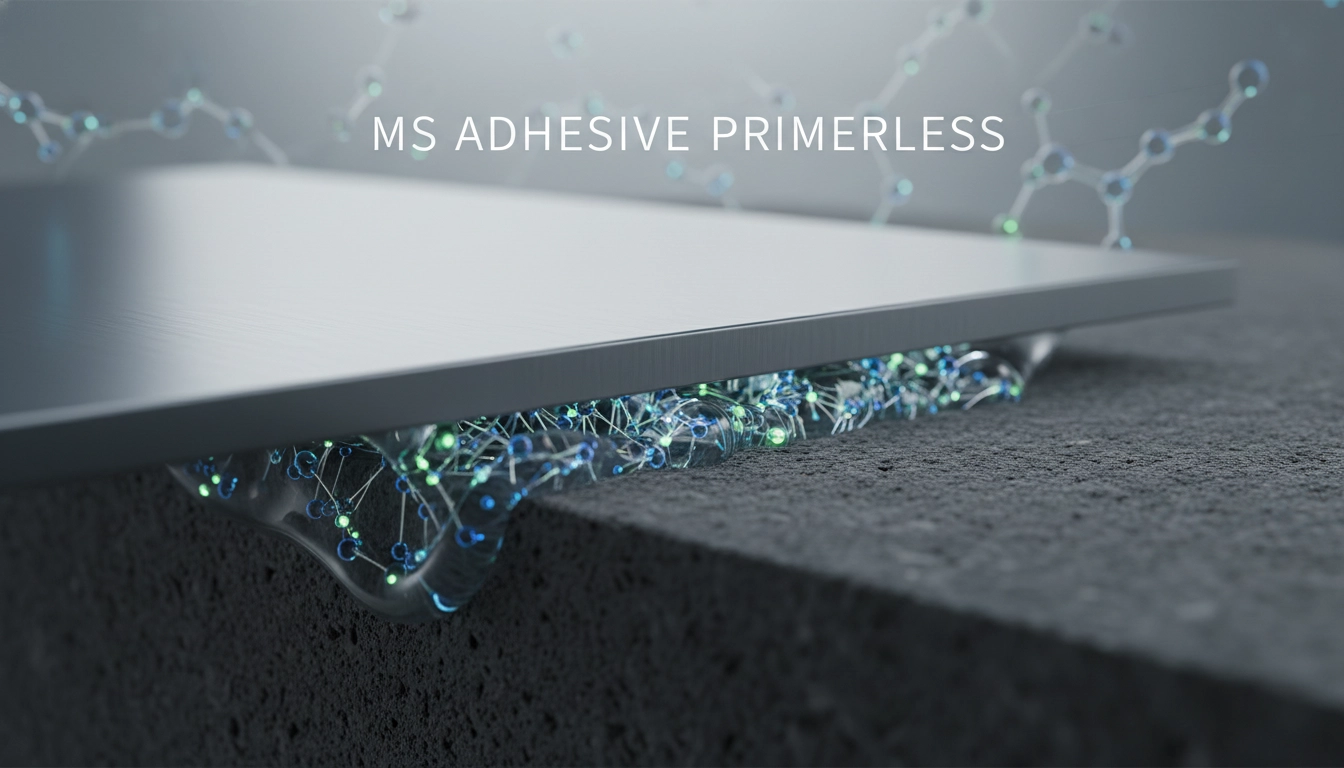
The Science of Speed: How MS Adhesive Primerless Technology Eliminates Prep Work in 2026

HY992 Modified Polyurethane Construction Sealant
HY992 Modified Polyurethane Sealant is a one-component, moisture-curing construction sealant designed for professional building and structural sealing applications. It provides excellent adhesion, weather resistance, and durable elasticity, making it suitable for a wide range of construction materials.
The formulation delivers strong bonding performance without corrosion or substrate contamination, while maintaining low VOC content for environmentally responsible construction projects.

HY995 Crystal Clear Ms Polymer Adhesive/Sealant
HY995 Crystal Clear Ms Polymer Adhesive/Sealant is a new generation MS Polymer adhesive / sealant formulated for all bonding and sealing applications where long term reliability is required. It has excellent bonding strength on various materials. It will cure to form a durable, flexible, waterproof seal.

HY997 High-Performance Anti-Microbial MS Polymer Sealant
HY997 MS polymer sealant for is is a premium one-component, neutral-curing modified silane sealant engineered for demanding interior applications. It offers a Class 20 movement capability, ensuring long-lasting flexibility and reliable performance under dynamic joint conditions. Curing at room temperature, HY997 delivers superior anti-microbial and mildew-resistant properties, maintaining hygienic and clean environments over time.

KINGDELI HY732 Professional Acetoxy Cure Silicone Sealant
KINGDELI HY732 is a professional-grade, one-component acetoxy cure silicone sealant designed for fast curing, strong adhesion, and long-lasting flexibility. Ideal for aquariums, glass applications, aluminum doors and windows, kitchens, and bathrooms, it provides reliable sealing performance with excellent anti-fungal protection in high-humidity environments.
Let’s Build Stronger Bonds with Quality Adhesives and Sealants
Have questions about the topic or need tailored sealant solutions for your project?
Our team is ready to provide expert guidance, product recommendations, and application support.
Innovating with Integrity, Bonding the World
Since 1998, KINGDELI has delivered trusted, sustainable sealant solutions that connect industries and inspire progress worldwide.

Whatsapp: +8618825946249
Kingdeli
Kingdeli
Kingdeli
Kingdeli
Kingdeli