











OEM Construction Sealant: Formula, Packaging, and Private Label Options

- How to Build an OEM Sealant Specification
- Start with the substrate and movement profile
- Choose the chemistry according to the application
- Define measurable performance criteria
- Packaging and Private-Label Execution
- Select a package that matches the channel
- Build compliant labels and technical documents
- Control color, artwork, and launch quantities
- Quality Assurance and Supplier Selection
- Audit manufacturing capability and process control
- Verify technical service before signing the contract
- KINGDELI OEM and ODM Capabilities
- Integrated manufacturing scale and technical breadth
- Standards, documentation, and market support
- Global reliability and private-label value
- Frequently Asked Questions
- What information should buyers provide for an OEM sealant quotation?
- Which chemistry is best for exterior construction joints?
- Can an OEM supplier customize both formula and packaging?
- What tests should be completed before a private-label launch?
- How can buyers reduce risk when ordering a new branded sealant?
- Does KINGDELI support low-VOC and international OEM programs?
OEM construction sealant programs require more than placing a customer logo on a standard cartridge. The commercial result depends on selecting the correct polymer chemistry, defining performance targets, validating compatibility with substrates, engineering packaging for the distribution channel, and controlling every batch after launch. For developers, distributors, importers, and private-label brand owners, the right construction sealant manufacturer should function as a technical partner capable of translating project requirements into a repeatable product specification. Formula design, package format, regulatory evidence, application behavior, shelf life, and supply continuity must be evaluated as one procurement decision rather than as separate purchasing tasks.
How to Build an OEM Sealant Specification
Start with the substrate and movement profile
The first specification question is not whether a product is silicone or polyurethane; it is where the material will be installed and what stresses it will experience. Concrete, masonry, aluminum, glass, ceramic tile, painted metal, timber, PVC, and composite panels can differ substantially in porosity, surface energy, moisture content, and chemical compatibility. A façade joint exposed to ultraviolet radiation and thermal cycling has a different requirement from an interior skirting application or a bathroom finishing joint.
Buyers should document joint width and depth, expected movement, exposure to rain and sunlight, service temperature, curing time, paintability, primer requirements, and the tools used for application. This information helps the formulator select an appropriate modulus, elongation profile, adhesion package, cure system, and rheology. It also reduces the risk of recommending a product that performs well in laboratory conditions but fails because the actual joint design, surface preparation, or installation sequence was not considered.
Choose the chemistry according to the application
Neutral silicone sealant is commonly evaluated for façade, window, door, and general weather-sealing work because it can offer broad substrate compatibility, durable outdoor performance, and low-corrosion behavior on sensitive metals. Acetic silicone sealant can provide fast curing and strong adhesion to many non-porous surfaces, making it relevant to selected glass, ceramic, and sanitary applications; however, its acidic cure by-products require careful review around concrete, marble, limestone, galvanized metals, and other sensitive substrates.
Acrylic Sealant is often selected for interior joints, trim, skirting, and areas where easy tooling and paintability are important. Polyurethane Sealant can be suitable for demanding construction joints where elasticity, adhesion, and abrasion resistance are required. MS polymer Sealant is frequently considered when buyers want a solvent-free or low-odor option with strong adhesion and paintability. Silicone glazing sealant requires particularly careful assessment of glass, spacer, frame, coating, and sealant compatibility because failure in a glazing assembly can create water ingress, safety, and warranty exposure.
Define measurable performance criteria
A private-label specification should identify measurable acceptance criteria rather than broad claims such as “High Quality quality” or “high performance.” Relevant parameters can include density, extrusion rate, tack-free time, through-cure rate, hardness, tensile strength, elongation, elastic recovery, adhesion after water immersion, adhesion after artificial weathering, shrinkage, slump, movement capability, shelf life, and color stability. The applicable test method depends on the market and application. For example, ASTM C920 establishes standard specifications for elastomeric joint sealants, while regional building codes and project specifications may impose additional requirements.
Testing should include both the base formula and the finished package. A sealant can meet a laboratory target yet suffer from poor extrusion after storage, nozzle blockage, liner interaction, pigment separation, or premature skin formation. Retained-sample programs, accelerated aging, adhesion tests on customer substrates, and production-batch release checks provide stronger evidence than a single pre-launch test.
Packaging and Private-Label Execution
Select a package that matches the channel
Packaging affects application speed, waste, shelf life, transport cost, and brand perception. Standard plastic or aluminum cartridges are widely used with manual or pneumatic caulking guns. Sausage packs can reduce packaging weight and material consumption while supporting high-volume professional installation, but they require compatible dispensing equipment. Buckets and pails can serve acrylic, coating, grout, or self-leveling products where larger quantities are needed. Dual-component cartridges are relevant to reactive systems that require controlled mixing at the point of use.
Package selection should account for filling equipment, nozzle design, plunger fit, foil or cartridge barrier properties, pallet configuration, temperature exposure during shipping, and the disposal requirements of the destination market. A reliable OEM partner should provide fill-weight tolerances, dimensional drawings, packaging compatibility data, carton specifications, pallet patterns, and drop or leakage test results. These details protect distributors from claims caused by damaged goods or inconsistent dispensing rather than by the formula itself.
Build compliant labels and technical documents
Private-label artwork must communicate more than a brand name. A professional label normally requires product identity, intended use, application instructions, surface-preparation guidance, limitations, curing information, storage conditions, batch or lot identification, net content, manufacturer or responsible-party details, and hazard information where applicable. Safety Data Sheets, Technical Data Sheets, certificates of analysis, and declarations of conformity should be aligned with the exact formula and package format.
Regulatory review is especially important when the product is exported. VOC terminology, hazard classifications, language requirements, chemical inventory obligations, recycling marks, and transport documentation vary by jurisdiction. The European Commission information on solvent emissions illustrates why solvent content and emissions controls may affect product positioning and compliance. Claims such as “eco-friendly,” “non-toxic,” or “low VOC” should be supported by defined test methods and documented limits, not used as unqualified marketing language.
Control color, artwork, and launch quantities
Color matching should be based on an approved physical standard or defined color reference, with tolerances agreed before mass production. White, clear, black, gray, and selected architectural colors may behave differently because pigments can affect cure, viscosity, opacity, and weathering. Buyers should approve a production-equivalent sample in the final package, not only a small laboratory bead.
Minimum order quantity is another central commercial issue. Low initial volumes reduce inventory exposure but can increase packaging cost, setup charges, and unit price. Large runs improve manufacturing efficiency but tie up working capital and create obsolescence risk if the design or label changes. A staged launch can combine a pilot batch, market validation, and a scheduled scale-up. The supply agreement should define lead times, forecast flexibility, raw-material substitution rules, artwork approval, change notification, and responsibility for obsolete packaging.
| Decision area | Standard approach | OEM best practice | Buyer benefit |
|---|---|---|---|
| Formula | Choose from an existing grade | Match chemistry to substrate, movement, climate, and cure conditions | Lower failure and warranty risk |
| Package | Select a common cartridge without validation | Test cartridge, nozzle, liner, plunger, seal, and dispensing equipment together | Fewer leakage and application complaints |
| Label | Translate marketing artwork only | Review instructions, hazards, claims, languages, and traceability data | Improved compliance and channel readiness |
| Quality | Inspect finished goods visually | Use incoming-material controls, in-process checks, release testing, and retained samples | More consistent field performance |
| Supply | Order only when stock is low | Use forecasts, safety stock, batch planning, and change-control procedures | Better continuity and working-capital control |
Quality Assurance and Supplier Selection
Audit manufacturing capability and process control
Supplier evaluation should cover raw-material purchasing, weighing accuracy, mixing energy, vacuum deaeration, moisture control, filling precision, curing-room conditions where relevant, and finished-goods storage. Automated production can improve repeatability, but automation is valuable only when process parameters are monitored and linked to documented release criteria. Buyers should request an audit package that explains quality responsibilities, calibration, nonconformance handling, corrective action, and batch traceability.
An ISO 9001 quality management system can provide a useful framework for controlled processes, customer requirements, documented information, and continual improvement. Environmental management should also be considered where the buyer has sustainability objectives; ISO 14001 addresses the systematic management of environmental responsibilities. Certification alone does not prove that a particular sealant is suitable, so it should be reviewed alongside product testing, plant capability, and application-specific evidence.
Verify technical service before signing the contract
Technical support becomes commercially important when a distributor enters a new market, when a brand launches a new package, or when a project uses unfamiliar substrates. The supplier should be able to review drawings or joint details, recommend primers where required, explain cleaning and tooling procedures, investigate adhesion complaints, and distinguish formula problems from installation errors. Clear escalation procedures and response times should be included in the commercial relationship.
Procurement teams should also compare total landed cost rather than factory price alone. Relevant variables include package weight, fill accuracy, freight cube, import duties, rejected units, technical claims, shelf-life losses, customer returns, and the cost of replacing a failed private-label product. A slightly higher unit price can produce better ROI when it is supported by stable quality, accurate documentation, and fewer field interventions.
KINGDELI OEM and ODM Capabilities
Integrated manufacturing scale and technical breadth
Since its establishment in 1998, KINGDELI has developed as a global supplier of high-performance sealants, adhesives, and coatings. Headquartered in Foshan, China, our 66,000 m² facility uses fully automated production lines and has annual capacity exceeding 100,000 tons. This scale supports stable supply planning for distributors, project owners, and private-label brands that require repeatable quality across multiple shipments.
Our portfolio covers neutral silicone sealant, acetic silicone sealant, Acrylic Sealant, silicone glazing sealant, No More Nails adhesive, Polyurethane Sealant, MS polymer Sealant, RTV Gasket Maker, Epoxy Tile Grout, and Self-Leveling Sealant. This breadth allows buyers to consolidate related categories with one technical partner while still selecting the chemistry and package appropriate to each application. Product development can address adhesion, elasticity, cure speed, viscosity, color, odor, VOC profile, and temperature resistance according to the target market and use case.
Standards, documentation, and market support
KINGDELI is recognized as a National High-Tech Enterprise and has contributed to the National Standard GB/T 29755-2013. Our management and product systems are aligned with international requirements including ISO 9001, ISO 14001, CE, and ASTM-related specifications where applicable to the product and destination market. Compliance is handled as a product-specific process: the final grade, package, label, intended use, and market determine which documentation and testing are required.
Our OEM/ODM service covers formula selection or customization, color development, package sourcing, label coordination, technical documentation, production scheduling, quality inspection, and after-sales technical support. Sustainable low-VOC formulation options can help brand owners respond to indoor-air-quality expectations and evolving environmental requirements, provided that claims are supported by appropriate test data. Professional technical service also helps buyers reduce launch friction by aligning product instructions with actual installation conditions.
Global reliability and private-label value
With more than 27 years of industry expertise and a presence in over 50 countries, KINGDELI serves customers across construction, glazing, renovation, industrial maintenance, and distribution channels. Our manufacturing process is designed to support traceability, consistent filling, and scalable replenishment, while our engineering team helps translate commercial positioning into practical product specifications.
For a private-label program, the strongest value proposition is not simply a customized label. It is a controlled route from application analysis to validated formula, compliant packaging, documented release testing, and dependable repeat orders. KINGDELI combines manufacturing capacity, product diversity, OEM/ODM coordination, and technical service to help partners build sealants and adhesives ranges that are credible to contractors, suitable for project specifications, and commercially sustainable.
Frequently Asked Questions
What information should buyers provide for an OEM sealant quotation?
Buyers should provide the intended application, substrates, joint dimensions, movement expectations, climate, curing conditions, color, package type, target market, annual volume, label requirements, and required standards. Samples of competing products or existing packages can further improve the accuracy of the quotation.
Which chemistry is best for exterior construction joints?
The appropriate chemistry depends on substrate compatibility, movement, ultraviolet exposure, moisture, paintability, and project standards. Neutral silicone, polyurethane, and MS polymer technologies are commonly evaluated for exterior work, but the final choice should be confirmed through application-specific adhesion and durability testing.
Can an OEM supplier customize both formula and packaging?
Yes. Depending on the supplier’s technical capability and minimum order requirements, customization can include viscosity, modulus, cure speed, color, adhesion profile, odor, VOC profile, cartridge or sausage format, nozzle, carton, artwork, and documentation.
What tests should be completed before a private-label launch?
Pre-launch validation should normally include extrusion, skin formation, through-cure, hardness, tensile and elongation testing, adhesion to intended substrates, water or weathering exposure where relevant, package compatibility, leakage checks, storage stability, and confirmation of label and safety documentation.
How can buyers reduce risk when ordering a new branded sealant?
Risk can be reduced through a production-equivalent pilot batch, approved reference samples, documented specifications, retained samples, batch traceability, supplier audits, change-control clauses, forecast planning, and a clear technical complaint process. Total landed cost and field performance should be assessed alongside the unit price.
Does KINGDELI support low-VOC and international OEM programs?
KINGDELI offers end-to-end OEM/ODM support, sustainable low-VOC formulation options, professional technical service, and products developed for international markets, with experience serving customers in more than 50 countries.
Negotiating Long-Term Supply Contracts for PU Windshield Adhesives
Top transparent acrylic sealant Manufacturers and Suppliers
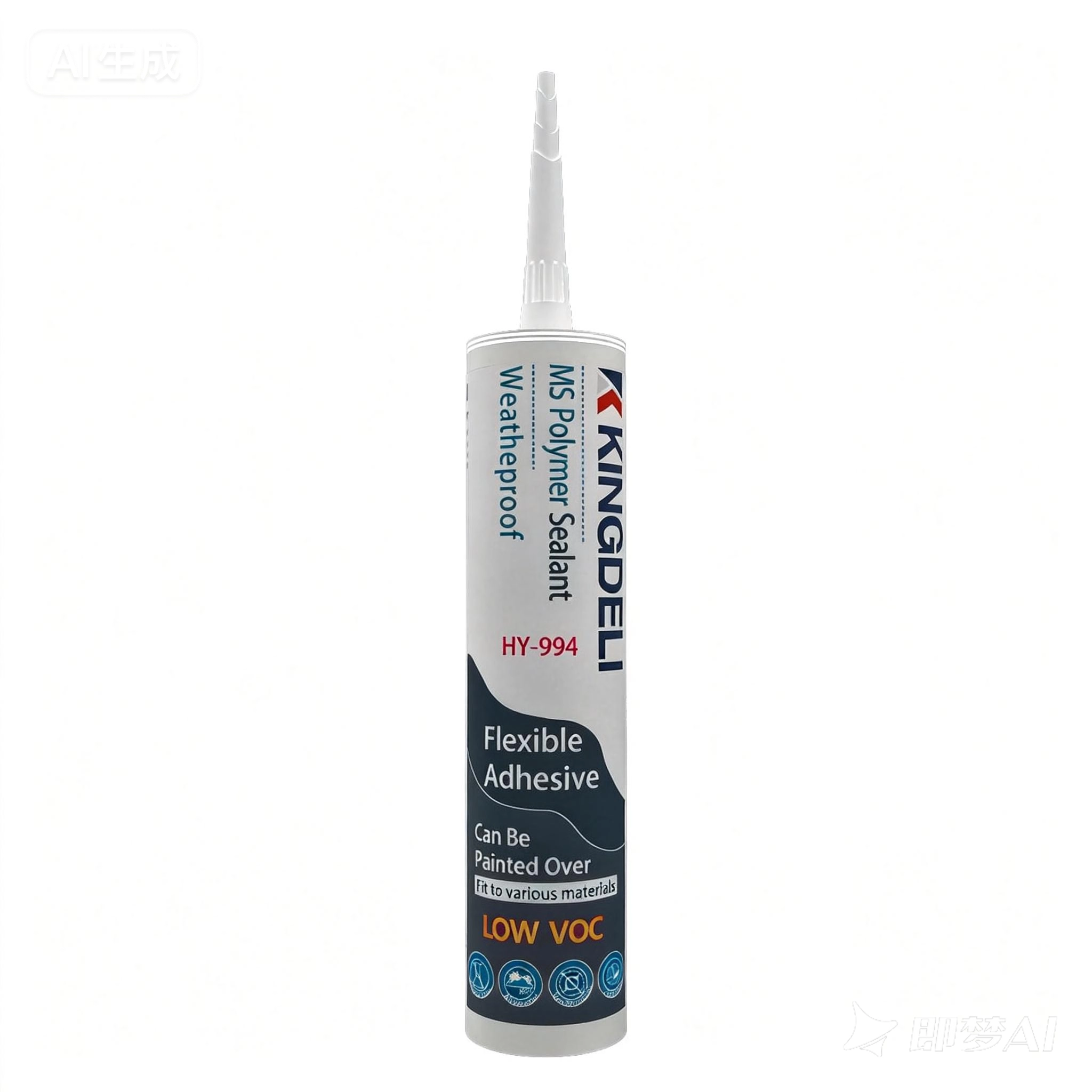
HY994 Multiple-Purpose MS Polymer Sealant | KINGDELI
Comparing Neutral vs Acetoxy Glass Silicone Sealants

HY992 Modified Polyurethane Construction Sealant
HY992 Modified Polyurethane Sealant is a one-component, moisture-curing construction sealant designed for professional building and structural sealing applications. It provides excellent adhesion, weather resistance, and durable elasticity, making it suitable for a wide range of construction materials.
The formulation delivers strong bonding performance without corrosion or substrate contamination, while maintaining low VOC content for environmentally responsible construction projects.

HY995 Crystal Clear Ms Polymer Adhesive/Sealant
HY995 Crystal Clear Ms Polymer Adhesive/Sealant is a new generation MS Polymer adhesive / sealant formulated for all bonding and sealing applications where long term reliability is required. It has excellent bonding strength on various materials. It will cure to form a durable, flexible, waterproof seal.

HY997 High-Performance Anti-Microbial MS Polymer Sealant
HY997 MS polymer sealant for is is a premium one-component, neutral-curing modified silane sealant engineered for demanding interior applications. It offers a Class 20 movement capability, ensuring long-lasting flexibility and reliable performance under dynamic joint conditions. Curing at room temperature, HY997 delivers superior anti-microbial and mildew-resistant properties, maintaining hygienic and clean environments over time.

KINGDELI HY732 Professional Acetoxy Cure Silicone Sealant
KINGDELI HY732 is a professional-grade, one-component acetoxy cure silicone sealant designed for fast curing, strong adhesion, and long-lasting flexibility. Ideal for aquariums, glass applications, aluminum doors and windows, kitchens, and bathrooms, it provides reliable sealing performance with excellent anti-fungal protection in high-humidity environments.
Let’s Build Stronger Bonds with Quality Adhesives and Sealants
Have questions about the topic or need tailored sealant solutions for your project?
Our team is ready to provide expert guidance, product recommendations, and application support.
Innovating with Integrity, Bonding the World
Since 1998, KINGDELI has delivered trusted, sustainable sealant solutions that connect industries and inspire progress worldwide.

Whatsapp: +8618825946249
Kingdeli
Kingdeli
Kingdeli
Kingdeli
Kingdeli