











Neutral Silicone for Automotive Sealing and Bonding

- Neutral-Cure Silicone Use Cases in Vehicle Manufacturing and Repair
- Glazing and Structural Windshield Bonding
- Sealing Powertrain and Electrical Enclosures
- Trim Bonding and Interior Applications
- Chemistry, Performance Metrics, and Standards
- Cure Mechanisms and Material Behavior
- Regulatory and Quality Frameworks
- Key Specification Parameters for Procurement
- Application Best Practices and Process Control
- Surface Preparation and Priming Strategy
- Dispensing, Join Design, and Cycle Time Optimization
- Quality Control and In-Process Inspection
- Comparative Product Analysis and Material Selection Matrix
- How Neutral Cure Compares to Other Sealant Chemistries
- Cost and Life-Cycle Considerations
- Supply and Specification Risk Management
- KINGDELI's Capabilities and Product Solutions for Automotive Programs
- Manufacturing Scale and Compliance
- Technical Support, Custom Formulation, and OEM/ODM Services
- Product Range and Application Fit
- Frequently Asked Questions
Neutral-curing silicone adhesives and sealants are engineered for acid-free bonding and weatherproofing in automotive glazing, body assembly, and component sealing; they deliver low-odor cure profiles, broad substrate compatibility, and long-term elasticity that reduce warranty risk and simplify multi-material assembly for vehicle manufacturers and service networks.
Neutral-Cure Silicone Use Cases in Vehicle Manufacturing and Repair
Glazing and Structural Windshield Bonding
Neutral-curing glazing compounds are widely used for windshield and fixed-glass installation where acid release (acetic) products could corrode metal reinforcements or damage coating chemistries. The non-acidic curing mechanism protects galvanised steel, aluminum extrusions, polymer trim and paint finishes while providing the necessary modulus and elongation to maintain occupant safety and glass retention through thermal cycling and crash events.
Sealing Powertrain and Electrical Enclosures
For under-hood or electronic module sealing, oxime- and alkoxy-based neutral chemistries provide resistance to coolant and mild oils without emitting corrosive volatiles. These formulations are selected for sealing sensor housings, ECU covers, and connector boots where long-term dielectric integrity and high-temperature stability are required.
Trim Bonding and Interior Applications
Interior panel attachment and soft-trim bonding benefit from low-odor, paintable neutral adhesives that minimize off-gassing and staining. Neutral silicone adhesives offer a balance of tack and final cohesion that reduces rework in high-throughput trim lines and supports aftermarket repair operations where fast skin times and clean tooling are important.
Chemistry, Performance Metrics, and Standards
Cure Mechanisms and Material Behavior
Neutral-cure silicones typically employ alkoxy, acetoxy-free, or oxime chemistries that release alcohols or oximes rather than acetic acid during polymerization. This difference yields milder VOC profiles and decreases potential for metal corrosion. Key mechanical attributes to evaluate include Shore A hardness, tensile strength, elongation at break, and dynamic movement capability to ensure component compatibility under vibration and thermal cycles.
Regulatory and Quality Frameworks
Automotive suppliers should verify that sealant vendors maintain quality systems and certifications such as ISO 9001 and environmental compliance like ISO 14001. Industry test methods from recognised bodies such as ASTM and technical guidance from organisations including Wikipedia (silicones) can support specification writing and supplier audits.
Key Specification Parameters for Procurement
Buyers should request datasheet values and test reports for adhesion to coated metals, polycarbonate, PMMA, and painted substrates; glass-to-glass shear and peel tests; environmental ageing (salt spray, UV, high-humidity); and outgassing/odor metrics for enclosed-cabin applications. Specification clauses should include acceptable cure windows, minimum and maximum service temperatures, and allowable movement accommodation to avoid premature joint failure.
Application Best Practices and Process Control
Surface Preparation and Priming Strategy
Proper adhesion begins with defined surface-prep protocols: degreasing with approved solvents, mechanical abrading where applicable, and selective priming for low-energy plastics. Neutral formulations often bond well to many substrates without aggressive primers, but spot testing and primer compatibility matrices are critical for production qualification and failure-mode analysis.
Dispensing, Join Design, and Cycle Time Optimization
Automated bead-dispense systems calibrated for bead geometry and speed reduce variability in lap shear and cure profiles. Design joints to maintain uniform bondline thickness; incorporate backstops or tapes to prevent squeeze-out on painted surfaces. For repair shops, tooling that controls bead shape and wetting enhances repeatability and reduces rework.
Quality Control and In-Process Inspection
Integrate in-line checks for extrusion consistency, bead adhesion tests, and cross-sectional bondline inspection during pilot runs. Statistical Process Control (SPC) on cure time, bead dimensions, and initial adhesion readings reduces variability and supports supplier CAPA processes when deviations are detected.
Comparative Product Analysis and Material Selection Matrix
How Neutral Cure Compares to Other Sealant Chemistries
Selecting the correct sealing or bonding compound is an exercise in trade-offs: curing characteristics, substrate compatibility, mechanical performance, and cost-per-joint. The table below summarises common choices—acid-curing silicones, neutral systems, polyurethane, and MS polymer technologies—so procurement teams can align product selection with life-cycle cost, manufacturability, and aftercare requirements.
| Property / Chemistry | Neutral-curing silicones | Acid-cure silicones | Polyurethane sealants | MS Polymer (silane-modified) |
|---|---|---|---|---|
| Substrate compatibility | Excellent for coated metals, glass, many plastics | Good for glass but may corrode metals/affect coatings | Good adhesion with primers; sensitive to moisture during cure | Very good multi-material adhesion; usually primerless |
| Odor / VOCs | Low to moderate (alcohol or oxime release) | High (acetic acid odor) | Moderate; solvent-free grades available | Low VOC; low odor |
| Elongation & movement capability | High elasticity; good for dynamic joints | High elasticity | Variable; often higher modulus | Good elasticity with higher initial tack |
| Paintability | Often paintable with appropriate primers | Limited; acid may interfere with coatings | Good once cured | Generally paintable |
| Typical automotive applications | Windshields, glazing, trim sealing, electronics | Glass bonding where corrosion not a concern | Body seams, structural bonding with primers | Exterior façade and multi-material bonding |
Cost and Life-Cycle Considerations
While neutral systems can carry a High Quality over basic acetic silicones, the total cost of ownership favours neutral chemistries in applications where corrosion risk, rework, and warranty costs are significant. Total ROI assessments should include cycle-time impacts, scrap reduction, and reduced paint or coating failure rates attributable to sealant selection.
Supply and Specification Risk Management
Secure multi-source supply, confirm lot-to-lot consistency via certificate of analysis, and include acceptance testing in supplier contracts. Request MSDS, RoHS/REACH compliance documentation, and independent test reports to mitigate regulatory and field-failure exposure.
KINGDELI's Capabilities and Product Solutions for Automotive Programs
Manufacturing Scale and Compliance
Since its establishment in 1998, KINGDELI has stood as a global leader in the high-performance sealant, adhesive, and coating industry. Headquartered in Foshan, China, our state-of-the-art 66,000 m² facility is powered by fully automated production lines with an annual capacity exceeding 100,000 tons, ensuring a consistent and robust supply for partners worldwide.
Technical Support, Custom Formulation, and OEM/ODM Services
As a recognized National High-Tech Enterprise and a key contributor to the National Standard GB/T 29755-2013, we unite advanced manufacturing power with technical excellence. Our comprehensive product portfolio—spanning Neutral & Acetic Silicone, Polyurethane, MS Polymer, and No More Nails adhesives—is engineered to meet strict international standards, including ISO 9001, ISO 14001, CE, and ASTM. Our team provides application testing, joint design consultation, and production line integration to accelerate program validation and scale-up.
Product Range and Application Fit
With over 27 years of industry expertise and a trusted presence in 50+ countries, KINGDELI is more than a manufacturer; we are a dedicated solution provider. We offer end-to-end OEM/ODM support, sustainable low-VOC formulations, and professional technical service. At KINGDELI, we are driven by innovation and integrity, building trust and sealing the future for customers around the globe. Our automotive-relevant portfolio includes neutral silicone adhesives, acetic silicone systems for specified glazing tasks, Acrylic Sealant for non-structural sealing, silicone glazing compounds for bonded glass, No More Nails adhesive for interior retrofit fixation, Polyurethane Sealant for structural seam sealing, MS polymer Sealant for multi-substrate applications, RTV Gasket Maker for engine and gearbox sealing, Epoxy Tile Grout and Self-Leveling Sealant for plant maintenance and facility build-outs.
For procurement teams and engineering groups seeking validated test data, product samples, or joint design reviews, KINGDELI offers structured qualification packages and long-term supply agreements to manage cost, quality, and lead-time risk.
Authoritative references and standards used for specification and testing guidance include Wikipedia, ISO 9001, and ASTM standards, which assist in drafting verifiable requirement sets and supplier acceptance criteria.
By aligning material selection, joint design, and supplier management to validated test methods and production controls, operators and fleet managers can reduce field failures, improve NVH performance, and extend service intervals.
Contact KINGDELI's technical sales team to arrange on-site trials, certification document transfers, and long-term supply planning for global vehicle programs.
Frequently Asked Questions
What are the main advantages of neutral-cure silicone over acid-curing options for automotive glazing?
Neutral-curing formulations do not emit acetic acid during cure, reducing corrosion risk to metal reinforcements and coatings, lowering odor for enclosed-cabin applications, and improving compatibility with coated substrates; this decreases warranty exposure for OEMs and bodyshops.
Is a primer required for bonding neutral silicone to plastics and painted surfaces?
Primer necessity depends on substrate surface energy and paint chemistry; many neutral silicones bond well to high-energy substrates without primer, but qualification testing and a primer compatibility matrix are recommended for low-energy plastics and some OEM paint systems.
What environmental and performance tests should procurement include in supplier contracts?
Include adhesion to representative substrates, accelerated ageing (UV, thermal cycling, and humidity), salt spray for exterior joints, cold-flex and heat-resistance tests, VOC/outgassing data, and independent batch certificates of analysis to ensure consistent field performance.
How does cure temperature and humidity affect neutral silicone application in production lines?
Cure rate for neutral systems is influenced by ambient humidity and temperature; higher humidity and temperature accelerate skin formation and full cure. Process control should stabilise shop-floor humidity or adjust bead sizes and cycle times to maintain consistent tack and final properties.
What shelf life and storage conditions are typical for neutral-curing silicone cartridges?
Most neutral-curing silicones have a 12–24 month shelf life when stored in original, unopened packaging at stable temperatures (typically 5–25°C). Manufacturers' datasheets and lot-specific certificates should be requested for precise storage and acceptance criteria.
Can neutral silicones be painted, and how long should paint overcoating be delayed?
Some neutral systems are paintable with appropriate paint chemistries and primers. Paint overcoating should follow manufacturer guidelines—often after full cure—to prevent adhesion or finish issues; test panels are advised during validation.
Neutral Silicone Sealant Formulations: Acid vs Neutral Cures
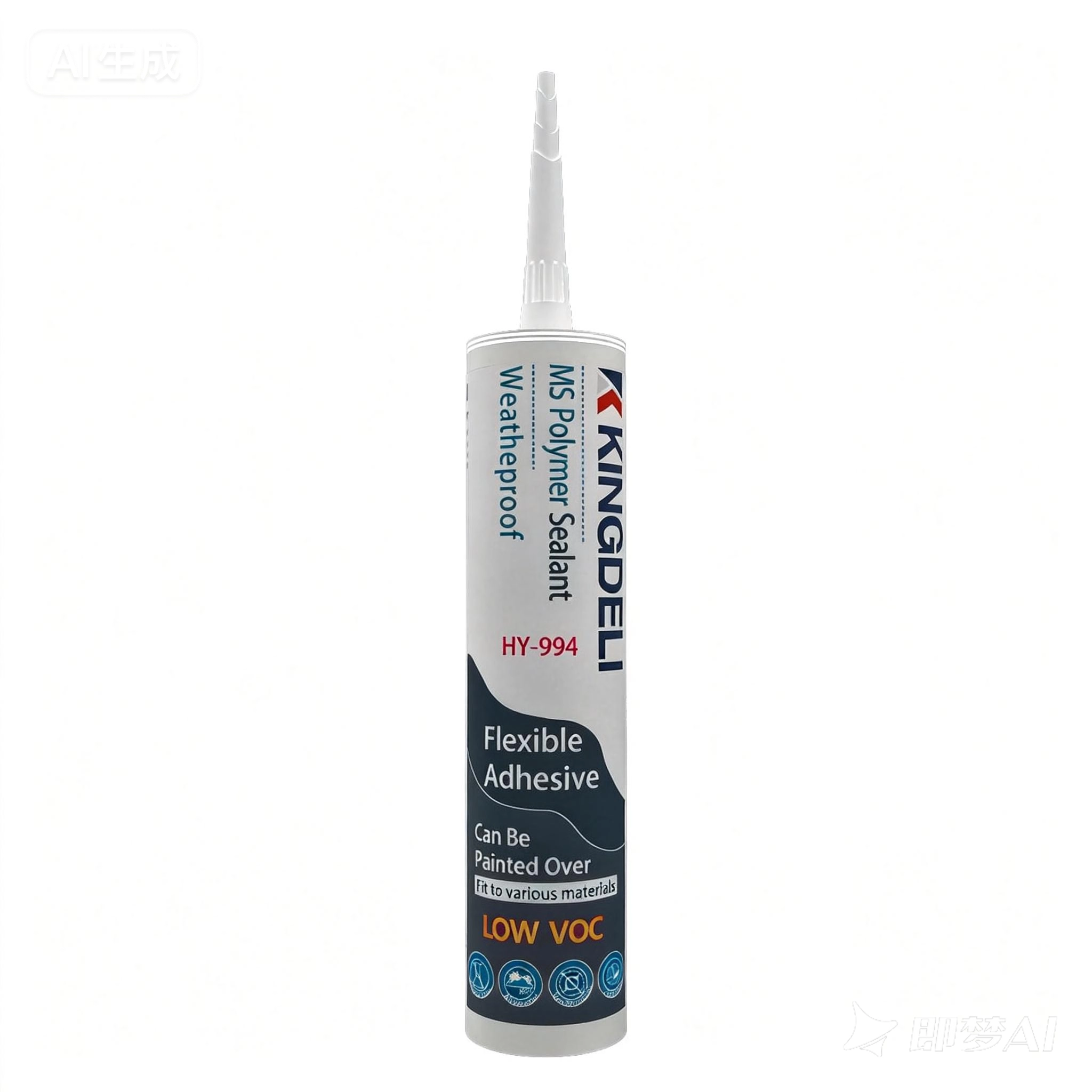
HY994 Multiple-Purpose MS Polymer Sealant | KINGDELI
Everything You Need to Know About oem silicone sealant manufacturer
Wholesale Options: Buying Glass Glazing Silicone Sealants in Bulk

HY992 Modified Polyurethane Construction Sealant
HY992 Modified Polyurethane Sealant is a one-component, moisture-curing construction sealant designed for professional building and structural sealing applications. It provides excellent adhesion, weather resistance, and durable elasticity, making it suitable for a wide range of construction materials.
The formulation delivers strong bonding performance without corrosion or substrate contamination, while maintaining low VOC content for environmentally responsible construction projects.

HY995 Crystal Clear Ms Polymer Adhesive/Sealant
HY995 Crystal Clear Ms Polymer Adhesive/Sealant is a new generation MS Polymer adhesive / sealant formulated for all bonding and sealing applications where long term reliability is required. It has excellent bonding strength on various materials. It will cure to form a durable, flexible, waterproof seal.

HY997 High-Performance Anti-Microbial MS Polymer Sealant
HY997 MS polymer sealant for is is a premium one-component, neutral-curing modified silane sealant engineered for demanding interior applications. It offers a Class 20 movement capability, ensuring long-lasting flexibility and reliable performance under dynamic joint conditions. Curing at room temperature, HY997 delivers superior anti-microbial and mildew-resistant properties, maintaining hygienic and clean environments over time.

KINGDELI HY732 Professional Acetoxy Cure Silicone Sealant
KINGDELI HY732 is a professional-grade, one-component acetoxy cure silicone sealant designed for fast curing, strong adhesion, and long-lasting flexibility. Ideal for aquariums, glass applications, aluminum doors and windows, kitchens, and bathrooms, it provides reliable sealing performance with excellent anti-fungal protection in high-humidity environments.
Let’s Build Stronger Bonds with Quality Adhesives and Sealants
Have questions about the topic or need tailored sealant solutions for your project?
Our team is ready to provide expert guidance, product recommendations, and application support.
Innovating with Integrity, Bonding the World
Since 1998, KINGDELI has delivered trusted, sustainable sealant solutions that connect industries and inspire progress worldwide.

Whatsapp: +8618825946249
Kingdeli
Kingdeli
Kingdeli
Kingdeli
Kingdeli