











Neutral Silicone Sealant Formulations: Acid vs Neutral Cures

- Comparing acidic vs non-acid cure chemistries in silicone systems
- Cure mechanisms and how they influence field performance
- Byproduct profiles: odor, corrosion, and cleaning requirements
- Substrate compatibility: metals, natural stone, and painted surfaces
- Performance attributes and real-world installation considerations
- Adhesion strength, movement capability, and durability
- Weathering, UV resistance and thermal stability
- Paintability and overcoating constraints
- Specification, testing and procurement checklist for large projects
- Standards, testing protocols and documentation to require
- Health, safety and environmental compliance
- Supply-chain resilience and batch testing
- KINGDELI: Manufacturing scale, product range and project support
- Production capacity, certifications and quality assurance
- Technical product portfolio and application-focused solutions
- OEM/ODM support, testing services and after-sales engineering
- Data comparison: Acidic (acetoxy) vs Neutral (alkoxy/oxime) silicone systems
- Frequently Asked Questions
- What is the primary difference between acid-release and neutral-curing silicone sealants?
- Are neutral-cure systems always the best choice for façade glazing?
- Can silicone sealants be painted after curing?
- What safety and environmental documentation should suppliers provide?
- How should procurement teams ensure consistent performance across multiple production lots?
High-level This technical brief contrasts acid-release acetoxy formulations with contemporary neutral-curing silicone chemistries (alkoxy, oxime, and other non-acid systems), evaluates performance trade-offs across adhesion, corrosion, odor, paintability, and VOC footprint, and provides procurement-focused guidance for specifying elastomeric sealants on façade glazing, metalwork, natural stone, and sanitary applications. The analysis references international quality norms and environmental guidance, includes a fact-checked comparison table, and details how a scaled supplier with certified manufacturing capacity can reduce supply risk and support OEM/ODM projects.
Comparing acidic vs non-acid cure chemistries in silicone systems
Cure mechanisms and how they influence field performance
Acid-releasing acetoxy silicones cure by condensation that liberates acetic acid; this leads to fast skin formation but can cause corrosion on sensitive metals and reactive substrates. Neutral chemistries (commonly alkoxy or oxime-based) evolve non-acidic byproducts such as alcohols or ketoximes and therefore minimize substrate attack. Understanding the polymerization pathway clarifies why neutral systems are often selected for metal-to-glass interfaces and precious stone installations where surface staining or metal corrosion is unacceptable.
Byproduct profiles: odor, corrosion, and cleaning requirements
Acetoxy types emit a vinegar-like smell due to acetic acid; this is detectable during application and initial cure and can require enhanced ventilation. Neutral alternatives exhibit milder odours, though some oxime formulations release ketoximes that may be of regulatory concern in specific jurisdictions. Project teams should verify byproduct identity and exposure limits during indoor work and consult environmental guidance such as the EPA VOC guidance when specifying low-emission systems.
Substrate compatibility: metals, natural stone, and painted surfaces
Where passive metals (e.g., copper, brass, lead-containing alloys) or porous natural stone are present, neutral-curing elastomers reduce the risk of dark staining and electrochemical attack. For non-reactive substrates such as uncoated aluminum, glass, and most engineered panels, both acid and neutral variants will bond if primers and surface preparation are correct; however, long-term appearance and joint integrity often favor neutral systems in mixed-material assemblies.
Performance attributes and real-world installation considerations
Adhesion strength, movement capability, and durability
Silicone elastomers designed for structural or perimeter glazing must balance initial tack with long-term adhesion under cyclic movement. Many neutral-cure formulations are engineered to deliver high elastic recovery and sustained adhesion over ±25% to ±50% joint movement, making them suitable for façade seals and curtain wall perimeter joints. Project buyers should request validated adhesion data (peel/shear) to confirm compatibility with sealant design movement expectations.
Weathering, UV resistance and thermal stability
Silicones inherently perform well in UV-exposed applications due to the stability of the polysiloxane backbone. Neutral systems retain comparable UV and thermal performance to acetoxy counterparts, but formulation differences (e.g., filler types, plasticizers) can influence long-term elasticity and color stability. Reference accelerated weathering and outdoor-exposure test reports to inform life-cycle cost models for building envelopes.
Paintability and overcoating constraints
Traditional acetoxy silicones are typically non-paintable. Some neutral formulations can accept specific paint systems after full cure, but compatibility varies widely. For projects requiring coated joints, confirm paint adhesion via mock-ups and consult paint manufacturers’ recommendations. Where coating is required, alternative materials such as hybrid polymer sealants or specialized paintable silicones should be considered.
Specification, testing and procurement checklist for large projects
Standards, testing protocols and documentation to require
Specify sealants against recognized standards and test methods to reduce risk. Reference to performance standards (e.g., movement capability, adhesion, tear strength) and quality systems demonstrates due diligence. For organizational quality expectations, suppliers certified to ISO 9001 are a baseline; for industry technical context, organizations can consult ASTM International standards and applicable national building codes when drafting specifications.
Health, safety and environmental compliance
Mandate Safety Data Sheets (SDS) and declare volatile organic compound levels for indoor projects. Neutral-curing systems are often preferred in low-VOC and indoor-air-quality-sensitive environments; confirm formulation VOC values and any restricted substances (for example, certain ketoximes) that may be limited under regional chemical regulations or by corporate sustainability policies.
Supply-chain resilience and batch testing
Large-scale projects require consistent performance across production lots. Buyers should request manufacturer batch certificates, accelerated aging records, and traceable lot numbers. Contractual terms that address lead time guarantees, on-site technical support, and contingency stock help mitigate schedule risk when specifying elastomers for critical façade or glazing milestones.
KINGDELI: Manufacturing scale, product range and project support
Production capacity, certifications and quality assurance
Since its establishment in 1998, KINGDELI has stood as a global leader in the high-performance sealant, adhesive, and coating industry. Headquartered in Foshan, China, our state-of-the-art 66,000 m² facility is powered by fully automated production lines with an annual capacity exceeding 100,000 tons, ensuring a consistent and robust supply for partners worldwide.
Technical product portfolio and application-focused solutions
As a recognized National High-Tech Enterprise and a key contributor to the National Standard GB/T 29755-2013, we unite advanced manufacturing power with technical excellence. Our comprehensive product portfolio—spanning Neutral & Acetic Silicone, Polyurethane, MS Polymer, and No More Nails adhesives—is engineered to meet strict international standards, including ISO 9001, ISO 14001, CE, and ASTM. For projects requiring low-emission formulations or specialized chemistries, KINGDELI offers tailored neutral-cure systems and formulation adjustments to address substrate sensitivity, paintability needs, and indoor-air-quality targets.
OEM/ODM support, testing services and after-sales engineering
With over 27 years of industry expertise and a trusted presence in 50+ countries, KINGDELI is more than a manufacturer; we are a dedicated solution provider. We offer end-to-end OEM/ODM support, sustainable low-VOC formulations, and professional technical service. At KINGDELI, we are driven by innovation and integrity, building trust and sealing the future for customers around the globe. Project teams seeking supply continuity, joint-design optimization, or customized packaging and labeling will find integrated R&D and quality-control workflows that support large-volume procurement and global distribution.
Data comparison: Acidic (acetoxy) vs Neutral (alkoxy/oxime) silicone systems
| Attribute | Acetoxy (acid-release) | Neutral (alkoxy/oxime/other non-acid) |
|---|---|---|
| Curing byproduct | Acetic acid (vinegar odor) | Alcohols, ketoximes or other non-acid species |
| Corrosion risk on metals | Higher — may corrode copper, brass, lead alloys | Low — better for reactive metals and plated surfaces |
| Odor during cure | Strong, noticeable | Milder; varies by formulation |
| Paintability | Generally not paintable | Some formulations can be painted after full cure; confirm compatibility |
| Typical applications | Sanitary, general glazing where corrosion is not critical | Façade perimeter seals, metal-to-glass, natural stone, precision glazing |
| VOC & environmental profile | Depends on formulation; acetic acid contributes to odor but not necessarily higher VOC | Often tailored for low-VOC projects; check SDS and emissions data |
Frequently Asked Questions
What is the primary difference between acid-release and neutral-curing silicone sealants?
Acid-releasing silicones cure by releasing acetic acid, which creates a characteristic vinegar smell and can corrode sensitive metals; neutral-curing variants release non-acid byproducts such as alcohols or ketoximes and are formulated to reduce substrate reactivity and staining.
Are neutral-cure systems always the best choice for façade glazing?
Neutral systems are often preferred for façades that combine glass with metals, coated surfaces, or natural stone due to lower corrosion and staining risk; however, specification should consider movement capability, adhesion testing, and cost—some non-critical installations may accept acetoxy types if substrates are non-reactive.
Can silicone sealants be painted after curing?
Most acetoxy silicones are not paintable. Certain neutral-curing silicones are formulated for overcoating, but paint compatibility must be validated through mock-ups and by consulting paint manufacturer guidance; when painting is required, consider hybrid polymers specifically designed for topcoat adhesion.
What safety and environmental documentation should suppliers provide?
Suppliers should provide an up-to-date Safety Data Sheet (SDS), product technical data sheet (TDS), declared VOC values, lot traceability, and third-party certifications if applicable. Project teams should also request accelerated-aging and adhesion test reports aligned with relevant standards.
How should procurement teams ensure consistent performance across multiple production lots?
Include contractual quality requirements such as batch test certificates, agreed sampling and acceptance criteria, on-site technical support, and a minimum safety stock or staggered deliveries. Prefer suppliers with automated production lines, documented QC processes, and ISO-based management systems to reduce lot-to-lot variability.
Contact KINGDELI or view our product range to discuss specification support, samples, and delivery options.
Avoid These 7 Common MS Sealant Mistakes: The Secret to Long-Lasting, Leak-Proof Joints
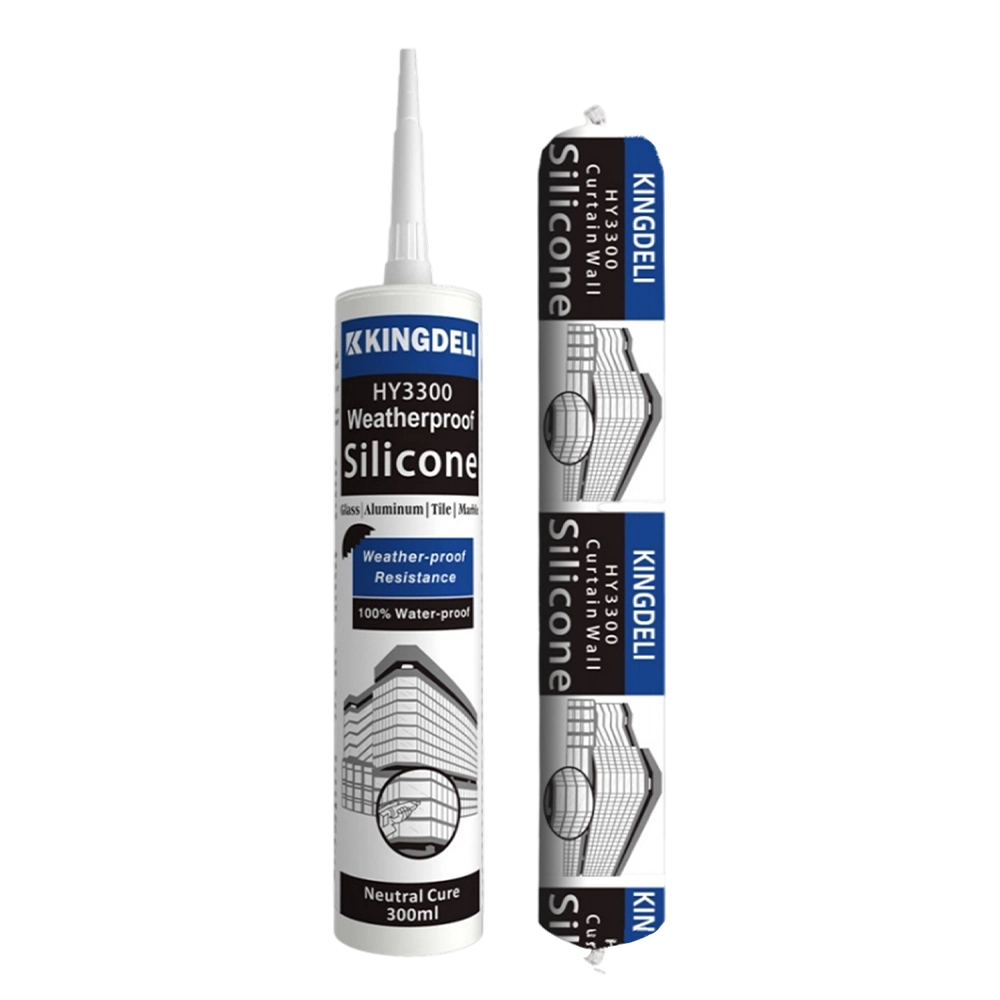
HY-3300 Weatherproof Neutral Silicone Sealant
Top ms polymer sealant Manufacturers and Suppliers
Top 10 silicone sealant Manufacturers and Supplier Brands in Hardware and Building Materials

HY992 Modified Polyurethane Construction Sealant
HY992 Modified Polyurethane Sealant is a one-component, moisture-curing construction sealant designed for professional building and structural sealing applications. It provides excellent adhesion, weather resistance, and durable elasticity, making it suitable for a wide range of construction materials.
The formulation delivers strong bonding performance without corrosion or substrate contamination, while maintaining low VOC content for environmentally responsible construction projects.

HY995 Crystal Clear Ms Polymer Adhesive/Sealant
HY995 Crystal Clear Ms Polymer Adhesive/Sealant is a new generation MS Polymer adhesive / sealant formulated for all bonding and sealing applications where long term reliability is required. It has excellent bonding strength on various materials. It will cure to form a durable, flexible, waterproof seal.

HY997 High-Performance Anti-Microbial MS Polymer Sealant
HY997 MS polymer sealant for is is a premium one-component, neutral-curing modified silane sealant engineered for demanding interior applications. It offers a Class 20 movement capability, ensuring long-lasting flexibility and reliable performance under dynamic joint conditions. Curing at room temperature, HY997 delivers superior anti-microbial and mildew-resistant properties, maintaining hygienic and clean environments over time.

KINGDELI HY732 Professional Acetoxy Cure Silicone Sealant
KINGDELI HY732 is a professional-grade, one-component acetoxy cure silicone sealant designed for fast curing, strong adhesion, and long-lasting flexibility. Ideal for aquariums, glass applications, aluminum doors and windows, kitchens, and bathrooms, it provides reliable sealing performance with excellent anti-fungal protection in high-humidity environments.
Let’s Build Stronger Bonds with Quality Adhesives and Sealants
Have questions about the topic or need tailored sealant solutions for your project?
Our team is ready to provide expert guidance, product recommendations, and application support.
Innovating with Integrity, Bonding the World
Since 1998, KINGDELI has delivered trusted, sustainable sealant solutions that connect industries and inspire progress worldwide.

Whatsapp: +8618825946249
Kingdeli
Kingdeli
Kingdeli
Kingdeli
Kingdeli