











Choosing MS Silicone Sealant: Hardness, Color and Performance

- Understanding sealant selection criteria
- Why chemistry matters: what MS silicone really is
- Key performance drivers: hardness, modulus and elongation
- Standards and test methods you should insist on
- Choosing MS Silicone Sealant: Hardness, Color and Performance
- Hardness and joint design: matching Shore A to movement requirements
- Color stability and aesthetics: pigments, UV and substrate interactions
- Real-world durability: adhesion, abrasion and chemical resistance
- Comparing MS polymers to silicones, polyurethanes and acrylics
- Side-by-side technical comparison
- When MS polymer is the better choice
- When another chemistry is preferable
- Specifying, testing and installation best practices
- Specification checklist I use on projects
- Installation tips that affect final performance
- Verification: field testing and QA
- KINGDELI: reliability, capacity and product range
- How KINGDELI supports MS polymer selections
- Certifications and traceability
- Frequently asked questions (FAQ)
- 1. Is MS silicone sealant the same as silicone?
- 2. What Shore A hardness should I choose for exterior expansion joints?
- 3. Can MS polymer sealants be painted?
- 4. How do I verify color stability and UV resistance?
- 5. Do MS polymers need primers?
- 6. What standards should I reference in specifications?
- Contact and product inquiry
I write this from years of hands-on experience specifying and testing sealants for façades, glazing, transportation and industrial projects. In this article I focus on what engineers, architects and procurement managers really search for when they evaluate an ms silicone sealant: how hardness (Shore A and elastic modulus), color and long-term performance determine suitability; what trade-offs exist between MS (silyl-modified) polymers, silicones and polyurethanes; and which test standards and data you should use to verify claims. I aim to give practical, verifiable guidance you can apply when selecting sealants for joints, glazing, expansion gaps and bonding tasks.
Understanding sealant selection criteria
Why chemistry matters: what MS silicone really is
The market term ms silicone sealant often refers to MS polymer (silyl-terminated polymer) sealants. These are hybrid, moisture-curing polymers—different from traditional silicone (siloxane) chemistry. MS polymers combine elasticity, strong adhesion to diverse substrates and paintability with low VOCs and a neutral cure profile. For a general overview of sealants and their categories, see the Sealant Wikipedia page (https://en.wikipedia.org/wiki/Sealant).
Key performance drivers: hardness, modulus and elongation
When we talk about hardness (commonly Shore A) and elastic modulus, we're describing how a sealant responds to joint movement and loads. Low Shore A values (softer) mean higher flexibility and better accommodation of large movements; higher Shore A (firmer) provides structural support and abrasion resistance. Elastic modulus at 100% elongation (or equivalent) is often more predictive of stress in restrained joints. Always request datasheet values and test certificates for Shore A, tensile strength and elongation from suppliers when specifying.
Standards and test methods you should insist on
Use internationally recognized standards to compare products: ASTM C920 (elastomeric joint sealants) and ISO/EN standards such as ISO 11600. These standards define classification, movement capability and standard test methods. ASTM C920 is available at the ASTM site (https://www.astm.org/Standards/C920.htm).
Choosing MS Silicone Sealant: Hardness, Color and Performance
Hardness and joint design: matching Shore A to movement requirements
In practice I choose sealant hardness based on joint width-to-depth ratio, anticipated movement and substrate stiffness. Typical guidance:
- Soft (Shore A 10–30): best for high-movement joints, large thermal cycles, and delicate substrates.
- Medium (Shore A 30–50): general-purpose for façade and glazing perimeter joints.
- Firm (Shore A 50+): where mechanical wear or tooling resistance is needed (less movement accommodation).
Color stability and aesthetics: pigments, UV and substrate interactions
Color fade or staining is a common user complaint on visible joints. MS polymers generally offer better paintability and color matching than traditional acetoxy silicones, and many neutral cure silicones have excellent UV resistance but are difficult to paint. For façade applications I look for accelerated weathering data (e.g., ASTM G154 xenon arc or ISO 4892-2) demonstrating ΔE <3 after a specified period. When specifying color, insist on batch color certificates and test pieces cured under representative conditions—substrate and primer differences can affect final appearance.
Real-world durability: adhesion, abrasion and chemical resistance
MS polymers typically provide strong adhesion to metals, treated woods, powder-coated surfaces and many plastics without primers. However, for oily substrates, low-surface-energy plastics (like PE/PP) or wet conditions, primer tests are essential. Compare supplier adhesion test reports (lap shear, peel tests), and request results for exposure classes you expect. For chemical and fuel resistance, consult product chemical-resistance tables—polyurethanes, for example, can show different resistance profiles than MS polymers or silicones.
Comparing MS polymers to silicones, polyurethanes and acrylics
Side-by-side technical comparison
Here is a concise comparison of common sealant types. Data ranges are typical and must be verified from manufacturer datasheets.
| Property | MS Polymer (MS silicone) | Neutral Silicone | Polyurethane | Acrylic |
|---|---|---|---|---|
| Typical Shore A | 20–60 (depending on formulation) | 10–40 | 40–60 | 25–50 (hardened) |
| Elongation at break | 200–600% | 200–1000% | 200–400% | 10–50% |
| UV/Weather Resistance | Good | Excellent | Good (may need sealer) | Poor |
| Paintability | Good | Poor (most silicones) | Good (after full cure) | Excellent |
| Primer needed | Sometimes (substrate dependent) | Rarely | Often | Often |
Sources: Manufacturer technical datasheets and application guides (e.g., Sika, Soudal), and general sealant references such as Silicone (Wikipedia) and product pages from major suppliers (examples: Soudal MS Polymers, Sika).
When MS polymer is the better choice
Choose MS polymer when you need a combination of strong adhesion to mixed substrates, good paintability, neutral cure (non-acidic), and low odor/low VOC performance. For interior finishing, bonding composite panels, or façade joints that will be painted, MS polymers often strike the best balance.
When another chemistry is preferable
For sealing glass-to-glass or where extreme long-term UV resistance and high- and low-temperature tolerance are paramount (e.g., solar panel glazing), neutral silicones may be best. For structural bonding where high mechanical strength and abrasion resistance is needed, polyurethanes or structural adhesives could be preferred. I always match the product to the performance envelope and installation environment rather than brand alone.
Specifying, testing and installation best practices
Specification checklist I use on projects
Every spec I write includes:
- Movement capability requirement (±% of joint width) referenced to ISO/ASTM class.
- Required Shore A, tensile strength and elongation values (from datasheets).
- Adhesion test report requirements: substrate-specific peel/lap tests.
- Weathering test data (e.g., ASTM G154, ISO 4892) for exterior use.
- VOC limits and cure profile (neutral vs acetic cure).
Installation tips that affect final performance
Even the best MS polymer can fail if installed incorrectly. My top installation notes:
- Prepare surfaces: clean, dry and free of contaminants. Use recommended primers when testing shows benefit.
- Correct joint geometry: 2:1 width-to-depth ratio is a common starting point (use backer rods to maintain depth).
- Tooling and curing: tool within the recommended time and allow full cure before exposure to movement or painting.
- Paint compatibility: verify paint adhesion to cured sealant via cross-hatch or peel test; wait for full cure if paint manufacturer requires it.
Verification: field testing and QA
Ask for field mock-ups and perform adhesion and color checks in-situ. For critical projects I specify witness testing of adhesion after aging (e.g., 14–28 day weather exposure) to ensure real-world performance matches lab claims.
KINGDELI: reliability, capacity and product range
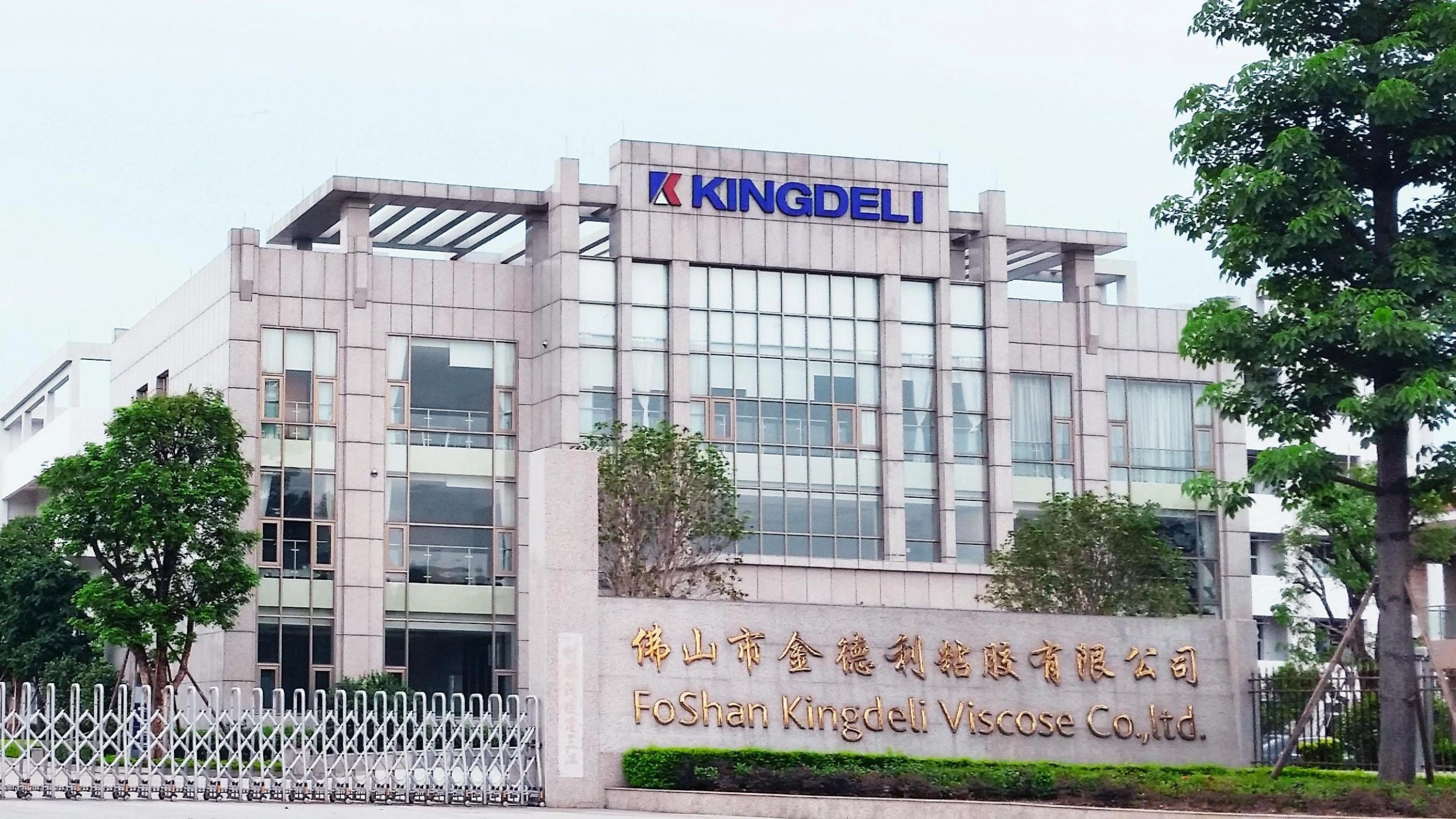
Since its establishment in 1998, KINGDELI has stood as a global leader in the high-performance sealant, adhesive, and coating industry. Headquartered in Foshan, China, our state-of-the-art 66,000 m² facility is powered by fully automated production lines with an annual capacity exceeding 100,000 tons, ensuring a consistent and robust supply for partners worldwide.
As a recognized National High-Tech Enterprise and a key contributor to the National Standard GB/T 29755-2013, we unite advanced manufacturing power with technical excellence. Our comprehensive product portfolio—spanning Neutral & Acetic Silicone, Polyurethane, MS Polymer, and No More Nails adhesives—is engineered to meet strict international standards, including ISO 9001, ISO 14001, CE, and ASTM.
With over 27 years of industry expertise and a trusted presence in 50+ countries, KINGDELI is more than a manufacturer; we are a dedicated solution provider. We offer end-to-end OEM/ODM support, sustainable low-VOC formulations, and professional technical service. At KINGDELI, we are driven by innovation and integrity, building trust and sealing the future for customers around the globe.
KINGDELI core products include: neutral silicone sealant, acetic silicone sealant, acrylic sealant, silicone glazing sealant, No More Nails adhesive, polyurethane sealant, MS polymer sealant, RTV gasket maker, epoxy tile grout and self-leveling sealant. Our advantages are robust automated capacity, long-term R&D and standards involvement, and comprehensive testing to support global projects.
How KINGDELI supports MS polymer selections
From my interaction with KINGDELI technical teams, they provide application-specific testing, color matching services and primer compatibility reports—services I recommend mandating in specs for critical façade and high-visibility projects.
Certifications and traceability
When evaluating suppliers, insist on traceable batch certificates and ISO/CE/ASTM evidence. KINGDELI’s certified systems and history of standards involvement reduce supply and compliance risk on international projects.
Frequently asked questions (FAQ)
1. Is MS silicone sealant the same as silicone?
No. The term MS silicone is a market shorthand but MS polymer sealants are chemically different from silicone (siloxane) systems. MS polymers are silane-modified polymers (hybrids) with neutral cure and good paintability, while silicones are polysiloxane-based with distinct UV and temperature resistance properties. For chemistry background see Silicone (Wikipedia).
2. What Shore A hardness should I choose for exterior expansion joints?
Choose based on movement and substrate stiffness: typically Shore A 25–40 for high-movement joints; tougher conditions or traffic-prone joints may use higher Shore A. Always reconcile Shore A with elongation and modulus to predict joint stress.
3. Can MS polymer sealants be painted?
Yes—MS polymers are generally paintable, but you must confirm compatibility with your paint system and curing schedule; perform test panels and adhesion tests per your paint manufacturer’s recommendations.
4. How do I verify color stability and UV resistance?
Request accelerated weathering data (e.g., ASTM G154 or ISO 4892 xenon arc) and ΔE/color change metrics from the supplier. Field mock-ups exposed to the actual façade orientation provide the best verification.
5. Do MS polymers need primers?
Sometimes. MS polymers adhere well to many substrates, but primers may be required for low-energy plastics, oily metals or very porous surfaces. Insist on substrate-specific adhesion reports in your specification.
6. What standards should I reference in specifications?
Common standards include ASTM C920 for elastomeric joint sealants and ISO/EN standards such as ISO 11600 for building sealants; include movement class, adhesion test requirements and weathering tests in your spec. See ASTM C920 and ISO 11600.
Contact and product inquiry
If you need specific product recommendations, technical datasheets, color samples or test reports for MS polymer (ms silicone) sealants, contact KINGDELI technical sales for project support and OEM/ODM options. For personalized guidance and to request samples, please reach out via our website or email—our technical team will respond with datasheets, certificates and compatibility testing tailored to your substrates and environmental conditions.
Contact KINGDELI today to request technical datasheets, color samples and project-specific recommendations for MS polymer sealants and our full range of products. We provide end-to-end support from selection to field validation.
Best rtv gasket maker manufacturers and supplier brands in Automotive Solutions
MS Silicone Sealant Tools and Application Best Practices
Best ms polymer sealant manufacturers and supplier brands in Automotive Solutions
Top silicone sealant Manufacturers and Suppliers
HY722B
What is the shelf life of the product?
The shelf life is 12 months when stored in unopened cartridges under cool, dry conditions.
HY924
What is the shelf life?
Aluminum cartridge: 9 months
Aluminum foil sausage: 12 months
Store in a cool, dry place for best shelf performance.
HY739
What is HY-739 best used for?
It is ideal for glass sealing, DIY home repairs, bonding, and general building sealing.
HY- 972
Is HY-972 suitable for exterior applications?
HY-972 is mainly recommended for interior and light exterior applications where exposure is moderate. For heavy outdoor or structural movement joints, a silicone or polyurethane sealant is recommended.
HY925
Can HY925 be painted after curing?
Yes. HY925 has high viscosity and can be painted after full curing using many common coatings.
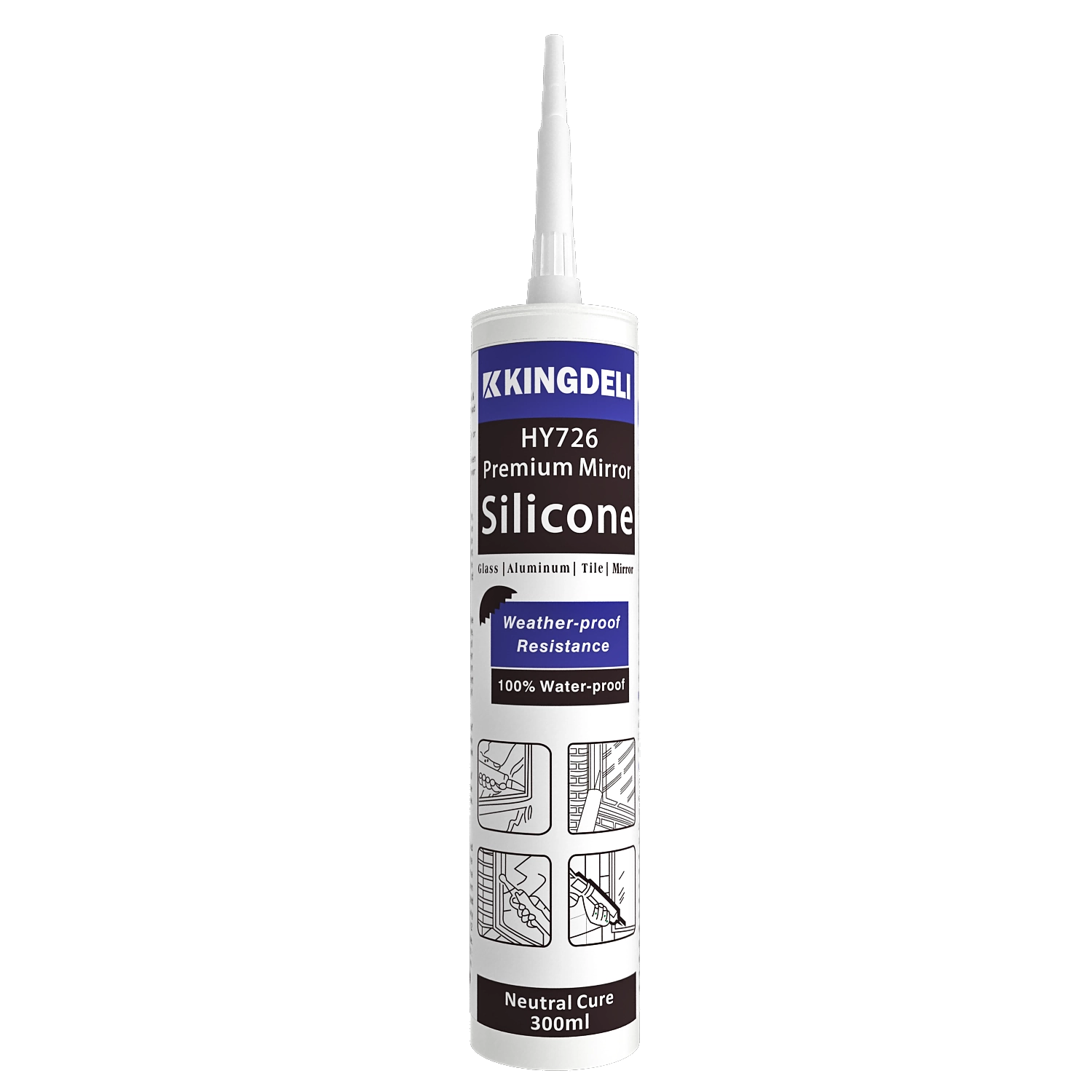
HY-726 Premium Clear Neutral Silicone Sealant
HY726 one-component, shelf-stable, 100% silicone elastomeric adhesive using alkoxy technology. It is specifically designed for sealing sensitive surfaces such as copper, gold, and metal-coated mirrors.
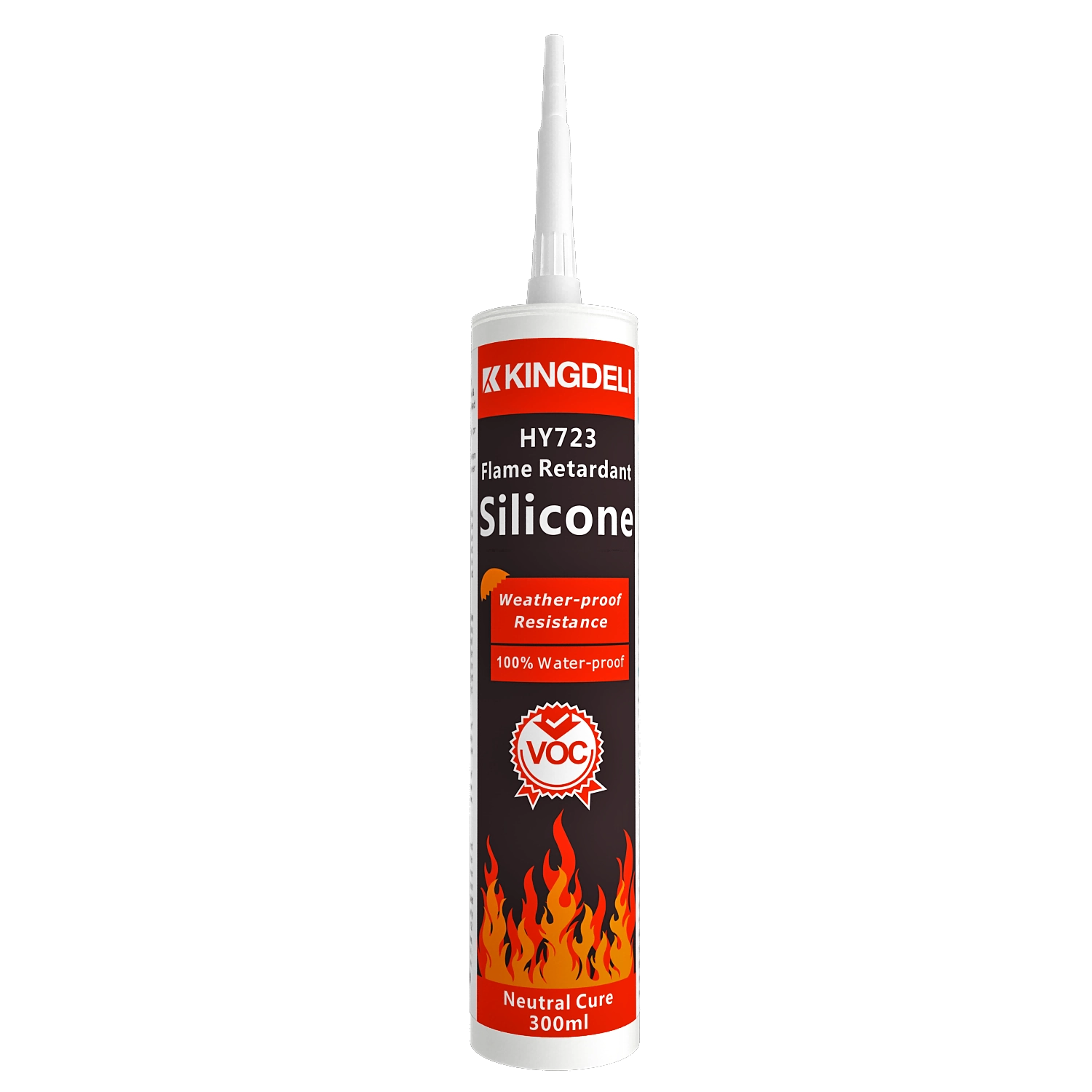
HY-723 Flame Retardant Neutral Silicone Sealant
HY-723 Flame Retardant Neutral Silicone Sealant is a high modulus one-component, shelf-stable, neutral cure, elastomeric adhesive. s. It helps control the spread of fire, smoke, and toxic fumes within a given area surrounded by firewalls for a period of up to four hours, depending on joint configuration.
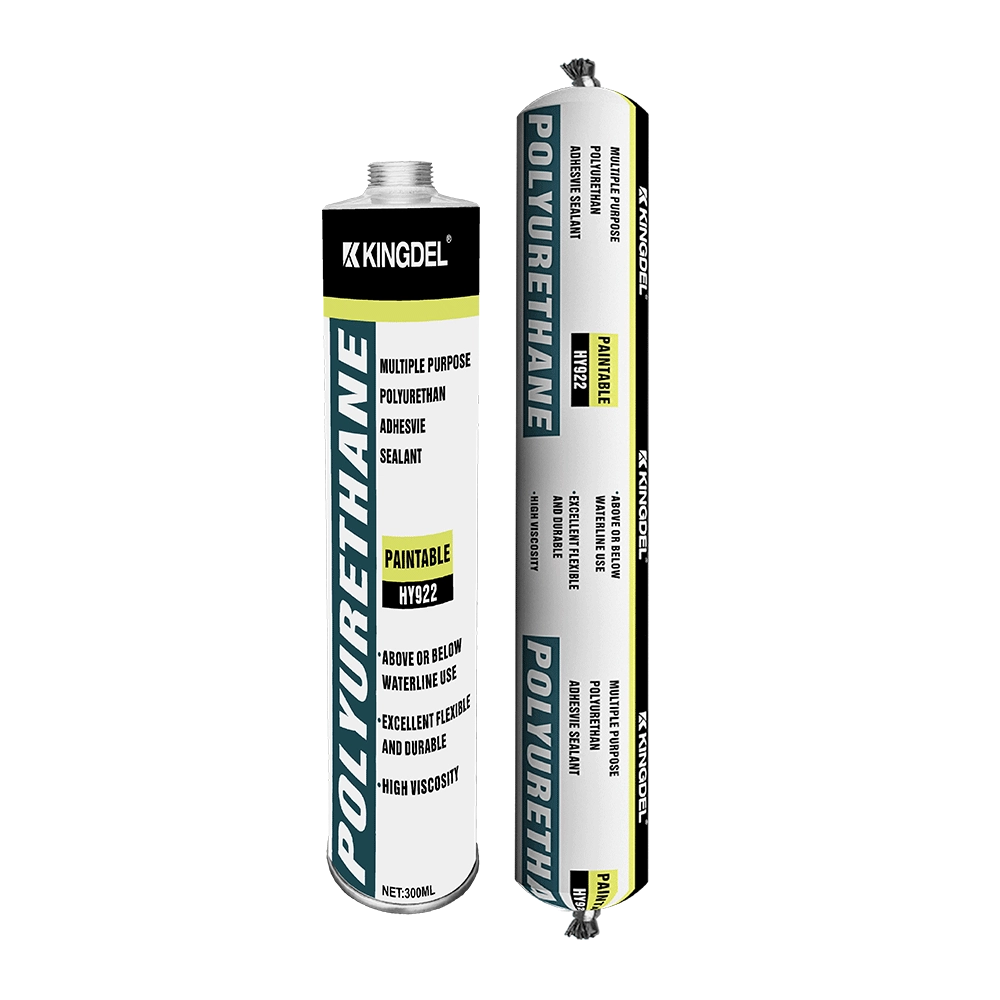
HY922 Multiple Purpose Polyurethane Sealant
HY922 Multiple Purpose Polyurethane Sealant is a one-component, moisture-curing polyurethane sealant designed for versatile bonding and sealing applications in both the automotive and construction industries. It cures to form a flexible yet tough elastomeric joint with excellent adhesion to a wide range of substrates. The formulation is non-corrosive, solvent-free, and produces a smooth, bubble-free finish during application.
HY922 delivers fast surface drying and quick positioning, improving installation efficiency while maintaining long-term durability. With strong weather resistance and good creep resistance, it performs reliably in demanding indoor and outdoor environments, including moist and partially submerged conditions.
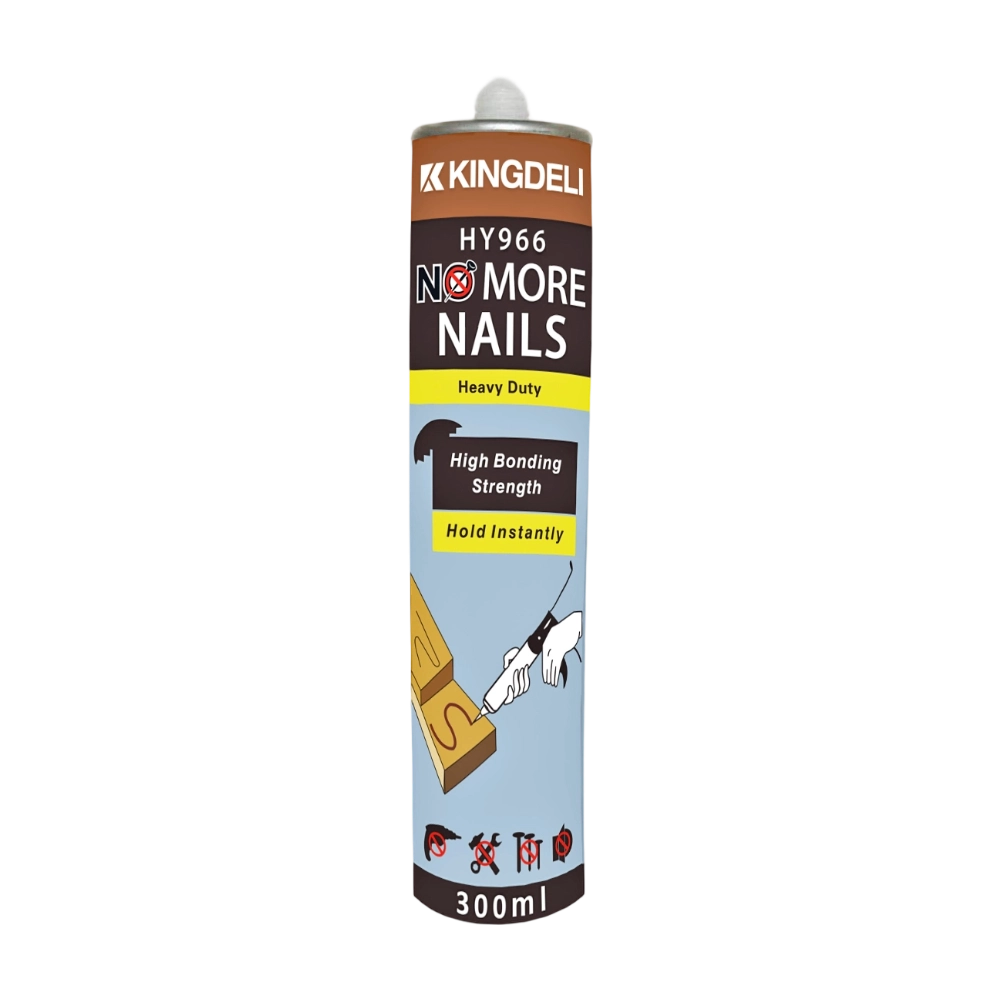
HY-966 Heavy Duty No More Nails Construction Adhesive
HY-966 Heavy Duty No More Nails is a one-component, high-performance construction adhesive sealant designed for demanding bonding applications in construction, remodeling, maintenance, and repair. Its instant grab formulation secures materials immediately, significantly reducing the need for bracing or mechanical fixing during installation.
HY-966 cures reliably in moist environments and delivers durable adhesion across a wide range of substrates. It provides excellent resistance to water, temperature variation, and aging, ensuring long-term performance in interior construction applications.
Let’s Build Stronger Bonds with Quality Adhesives and Sealants
Have questions about the topic or need tailored sealant solutions for your project?
Our team is ready to provide expert guidance, product recommendations, and application support.
Innovating with Integrity, Bonding the World
Since 1998, KINGDELI has delivered trusted, sustainable sealant solutions that connect industries and inspire progress worldwide.
Whatsapp: +8618825946249
Kingdeli
Kingdeli
Kingdeli
Kingdeli
Kingdeli