


I write from hands-on experience specifying sealants for commercial floors, plazas, and large-scale joints. This guide explains why low-VOC options matter for specifiers, facility managers, and purchasing teams, and it compares formulations, performance metrics, and standards to help you select the right self-leveling product for heavy-traffic environments while meeting indoor air quality goals.
Why VOC Matters in Commercial Sealant Specification
Health and regulatory drivers
Volatile organic compounds (VOCs) released during installation and cure can affect indoor air quality and occupant health. Many jurisdictions enforce VOC content limits for adhesives and sealants—see the South Coast Air Quality Management District (SCAQMD) Rule 1168 overview for regulatory frameworks and limits (SCAQMD Rule 1168). Selecting a low-VOC self-leveling sealant reduces short-term emissions during installation and helps meet sustainability targets.
Occupant comfort and project risk
Commercial projects often occupy spaces immediately after works are completed. Low-VOC formulations minimize odour complaints, sick building risk, and re-occupancy delays. For healthcare, education, or food service sites, specifying a low-VOC self-leveling sealant supports safer re-entry timelines and reduces the need for extended ventilation.
Formulation Types and Performance Trade-offs
Silicone, polyurethane and MS polymer distinctions
Not all sealants are equal. Neutral cure silicones, polyurethane sealant, and MS polymer systems each have strengths: silicones provide excellent flexibility and UV resistance, polyurethane offers high abrasion resistance and adhesion to concrete, and MS polymers combine low-odor, paintability, and good adhesion. Many manufacturers now offer low-VOC versions across these chemistries suitable for a self-leveling sealant application.
Curing, movement capability and durability
For joints subject to traffic, a true self-leveling sealant must cure to a resilient, abrasion-resistant elastomer with appropriate Shore hardness and movement accommodation. ASTM C920 provides a recognized framework for sealant classification and performance; reference details are available at the ASTM page (ASTM C920). Match the classification to joint movement requirements—over-specifying hardness or underestimating movement leads to early failure.
Comparative Data: Choosing Low-VOC Options
Key metrics to compare
When evaluating products, I focus on VOC (g/L), cure mechanism, Shore hardness, elongation, and recommended joint width/depth. VOC limits are commonly expressed in grams per liter (g/L); low-VOC products often fall below 50 g/L and ultra-low formulations can be under 5 g/L depending on chemistry.
Data table: typical ranges and sources
Below is a comparative table of common commercial sealant classes used for leveling and joint filling. Values are representative ranges from industry literature and regulatory guidance.
| Sealant Type | Typical VOC (g/L) | Cure Type | Typical Shore A | Best Use | Source |
|---|---|---|---|---|---|
| Neutral Cure Silicone (low-VOC) | <5–50 | Moisture cure | 10–30 | Exterior joints, UV exposure | Wikipedia: Silicone |
| Polyurethane (low-VOC) | 10–200 | Moisture cure | 20–60 | Concrete floors, abrasion | ASTM C920 overview |
| MS Polymer / SMP (low-VOC) | 5–50 | Moisture cure | 20–50 | Indoor/outdoor joints, paintable | Wikipedia: Adhesive |
| Solvent-based sealants | >250 | Solvent evaporation | 10–70 | Industrial, limited indoor use | EPA: VOCs |
Sources cited include regulatory guidance and industry references such as the EPA and ASTM; these provide verifiable context for the VOC ranges and performance metrics listed above (EPA on VOCs, SCAQMD Rule 1168, ASTM C920).
Specifying and Procuring Low-VOC Self-Leveling Sealants
Performance-based specs and testing
I recommend performance-based specifications: list required VOC limits, movement class (per ASTM C920), adhesion to prepared substrates, cure time, and abrasion resistance. Require manufacturer test data and independent lab certificates for VOC (preferably GC-MS or EPA methods) and physical properties.
Application, substrate preparation and warranty
Installation quality drives field performance. For an effective self-leveling sealant application on concrete slabs or tiled surfaces, joints must be clean, dry, and of correct geometry. Use backer rod to control depth, and follow manufacturer-specified primer recommendations. Secure a clear warranty that links product performance to the installer and environmental conditions.
Cost vs lifecycle value
Low-VOC formulations may carry a modest High Quality, but lifecycle value often outweighs upfront cost due to reduced rework, lower ventilation costs, and fewer occupant disruptions. For large commercial projects, savings in project schedule and reduced IAQ mitigation often justify paying more per linear meter for a quality self-leveling sealant.
KINGDELI: Manufacturer Capabilities and Why It Matters
Since its establishment in 1998, KINGDELI has stood as a global leader in the high-performance sealant, adhesive, and coating industry. Headquartered in Foshan, China, our state-of-the-art 66,000 m² facility is powered by fully automated production lines with an annual capacity exceeding 100,000 tons, ensuring a consistent and robust supply for partners worldwide.
As a recognized National High-Tech Enterprise and a key contributor to the National Standard GB/T 29755-2013, we unite advanced manufacturing power with technical excellence. Our comprehensive product portfolio—spanning Neutral & Acetic Silicone, Polyurethane, MS Polymer, and No More Nails adhesives—is engineered to meet strict international standards, including ISO 9001, ISO 14001, CE, and ASTM.
With over 27 years of industry expertise and a trusted presence in 50+ countries, KINGDELI is more than a manufacturer; we are a dedicated solution provider. We offer end-to-end OEM/ODM support, sustainable low-VOC formulations, and professional technical service. At KINGDELI, we are driven by innovation and integrity, building trust and sealing the future for customers around the globe.
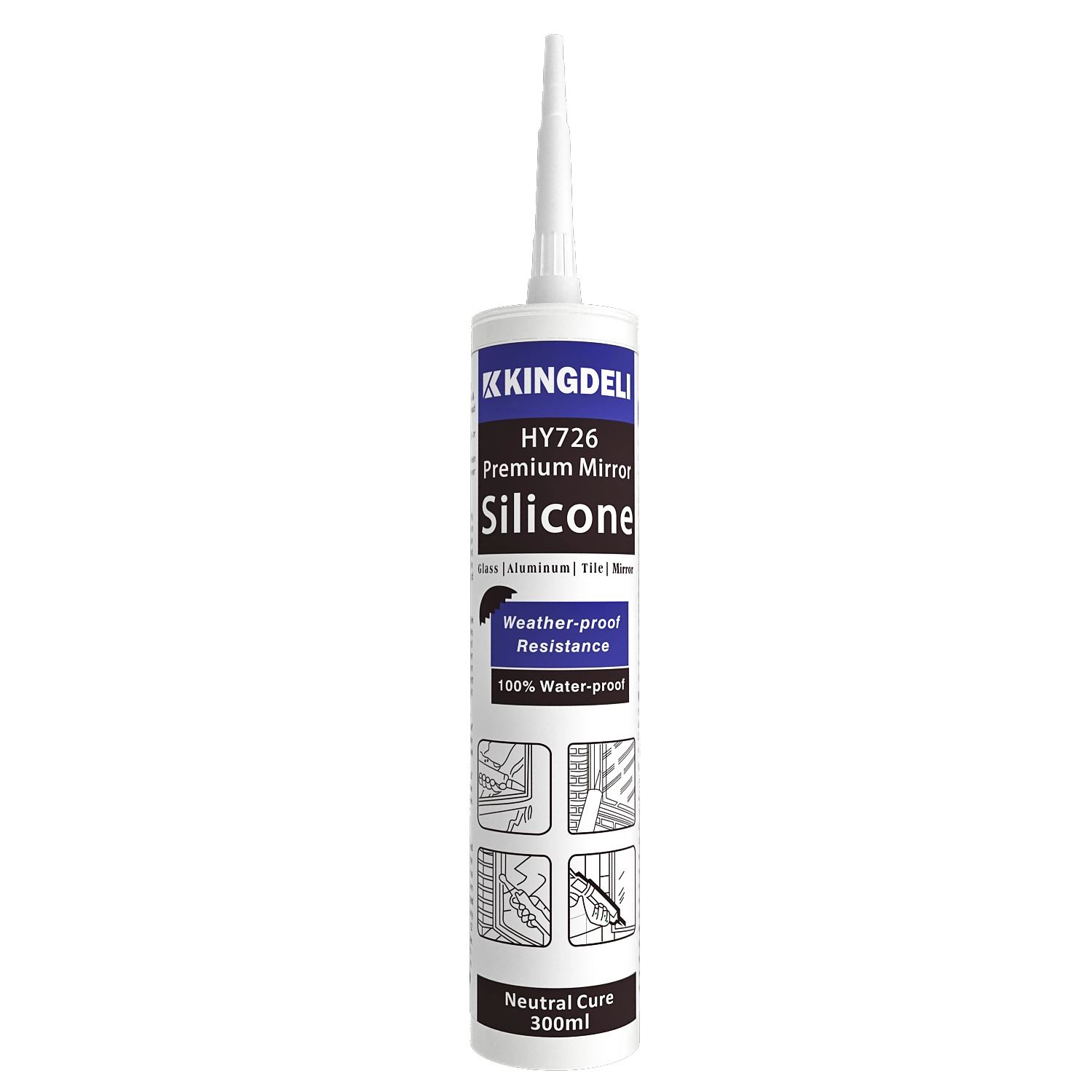
Our strengths for commercial buyers include high-volume, consistent production; verified low-VOC formulations; and a broad product range including neutral silicone sealant, acetic silicone sealant, acrylic sealant, silicone glazing sealant, No More Nails adhesive, polyurethane sealant, MS polymer sealant, RTV gasket maker, epoxy tile grout, and self-leveling sealant. These capabilities mean fast lead times, scalable OEM support, and product consistency across large projects.
How I recommend specifying KINGDELI products
For projects prioritizing low-VOC performance in traffic-bearing joints, request KINGDELI's technical data sheets for their self-leveling sealant lines, confirm VOC test reports, and include factory backing for field trials on representative substrates before full procurement.
Practical Selection Checklist
Essential procurement items
- Specify VOC limit (g/L) and acceptable test method.
- Define movement classification and Shore hardness range.
- Require adhesion and abrasion test data; request field mock-ups.
Installation and quality assurance
Confirm installer certifications, provide detailed joint drawings, and set acceptance criteria tied to measurable parameters (cure time, adhesion, surface appearance). Track IAQ measurements if re-occupancy is time-sensitive.
Conclusion and Next Steps
Low-VOC self-leveling sealant choices are increasingly mature across chemistries, allowing commercial buyers to meet health and sustainability targets without compromising durability. Prioritize verified VOC data, alignment with ASTM performance classes, and rigorous installation practice. Partnering with manufacturers like KINGDELI—who combine production scale, technical compliance, and low-VOC formulations—simplifies procurement and reduces project risk.
Contact and product inquiry
If you need assistance specifying a low-VOC self-leveling sealant for your project or want product datasheets and VOC test reports, contact our technical sales team or view KINGDELI’s portfolio to request samples and OEM support. We can help you evaluate life-cycle costs, arrange field trials, and ensure compatibility with your substrates.
FAQ
What is a self-leveling sealant and where is it used?
A self-leveling sealant is a low-viscosity elastomeric sealant that flows into horizontal joints and cures to form a smooth, traffic-resistant surface. It is commonly used for concrete floor joints, terrazzo, and tiled floor joints where a flat finish and load-bearing capability are required.
How low is low-VOC for sealants?
Definitions vary, but many regulatory programs and manufacturers classify products under 50 g/L as low-VOC and under 5–10 g/L as ultra-low or near-zero. Check local regulations such as SCAQMD Rule 1168 for jurisdictional limits (SCAQMD Rule 1168).
Can low-VOC sealants match traditional formulations in durability?
Yes. Modern low-VOC chemistries—especially neutral silicones, polyurethanes, and MS polymers—can provide comparable adhesion, flexibility, and abrasion resistance when properly specified and installed. Verify with technical data and independent testing.
What tests should I request from a manufacturer?
Request VOC test reports, ASTM classification (e.g., C920 where applicable), adhesion to project substrates, Shore hardness, elongation, and abrasion resistance data. Independent lab verification is preferable.
How should I prepare joints for a self-leveling sealant?
Clean and dry the joint, remove contaminants, set correct depth with backer rod, and use primer if recommended. Follow the manufacturer’s substrate preparation guide to ensure adhesion and performance.






Whatsapp: +8618825946249
Kingdeli
Kingdeli
Kingdeli
Kingdeli
Kingdeli