


How to Vet a Private Label Silicone Sealant Manufacturer

- Building a Reliable Supplier Evaluation Framework
- Start with the application rather than the catalogue
- Verify legal identity, ownership, and manufacturing scope
- Assess quality systems and technical documentation
- Testing the Product, Formulation, and Brand-Protection Capability
- Review formulation control and raw-material traceability
- Demand application-specific validation
- Evaluate private-label execution beyond the logo
- Commercial, Regulatory, and Supply-Chain Due Diligence
- Compare total cost of ownership
- Confirm market compliance and responsible claims
- Test communication and contingency planning
- Why KINGDELI Is a Practical Partner for Branded Sealant Programs
- Manufacturing scale with controlled consistency
- Broad chemistry coverage for portfolio development
- End-to-end OEM and ODM support
- Frequently Asked Questions
Vetting a private label silicone sealant manufacturer requires more than comparing unit prices or reviewing a product catalogue. Buyers should assess formulation expertise, raw-material traceability, production capacity, batch consistency, independent testing, regulatory documentation, packaging control, technical support, and long-term supply reliability. A qualified OEM or ODM partner should be able to convert a target application into a stable formulation, validate adhesion and curing performance, manufacture consistent batches, support compliant branding, and protect the buyer from avoidable warranty, recall, and supply-chain risks. This guide explains how distributors, construction-material brands, project owners, and industrial procurement teams can evaluate a sealants and adhesives supplier before signing a commercial agreement.
Building a Reliable Supplier Evaluation Framework
Start with the application rather than the catalogue
The correct supplier-selection process begins with the intended use. A sanitary joint, aluminium window perimeter, curtain-wall interface, concrete expansion joint, insulated-glass unit, HVAC assembly, and general construction joint do not require the same chemistry or performance profile. Buyers should define the substrate combination, movement capability, exposure to ultraviolet radiation, temperature range, humidity, water contact, paintability requirements, cure speed, tooling time, packaging format, and expected service life.
This application brief prevents a common procurement mistake: selecting a low-cost general-purpose product for a technically demanding installation. Neutral-curing silicone is often considered when compatibility with sensitive substrates, low odour, or reduced corrosion risk is important, while acetic-curing silicone may suit certain non-porous glass and ceramic applications. Neither chemistry should be selected by label alone. The manufacturer must provide substrate-specific recommendations and test evidence for the intended assembly.
Verify legal identity, ownership, and manufacturing scope
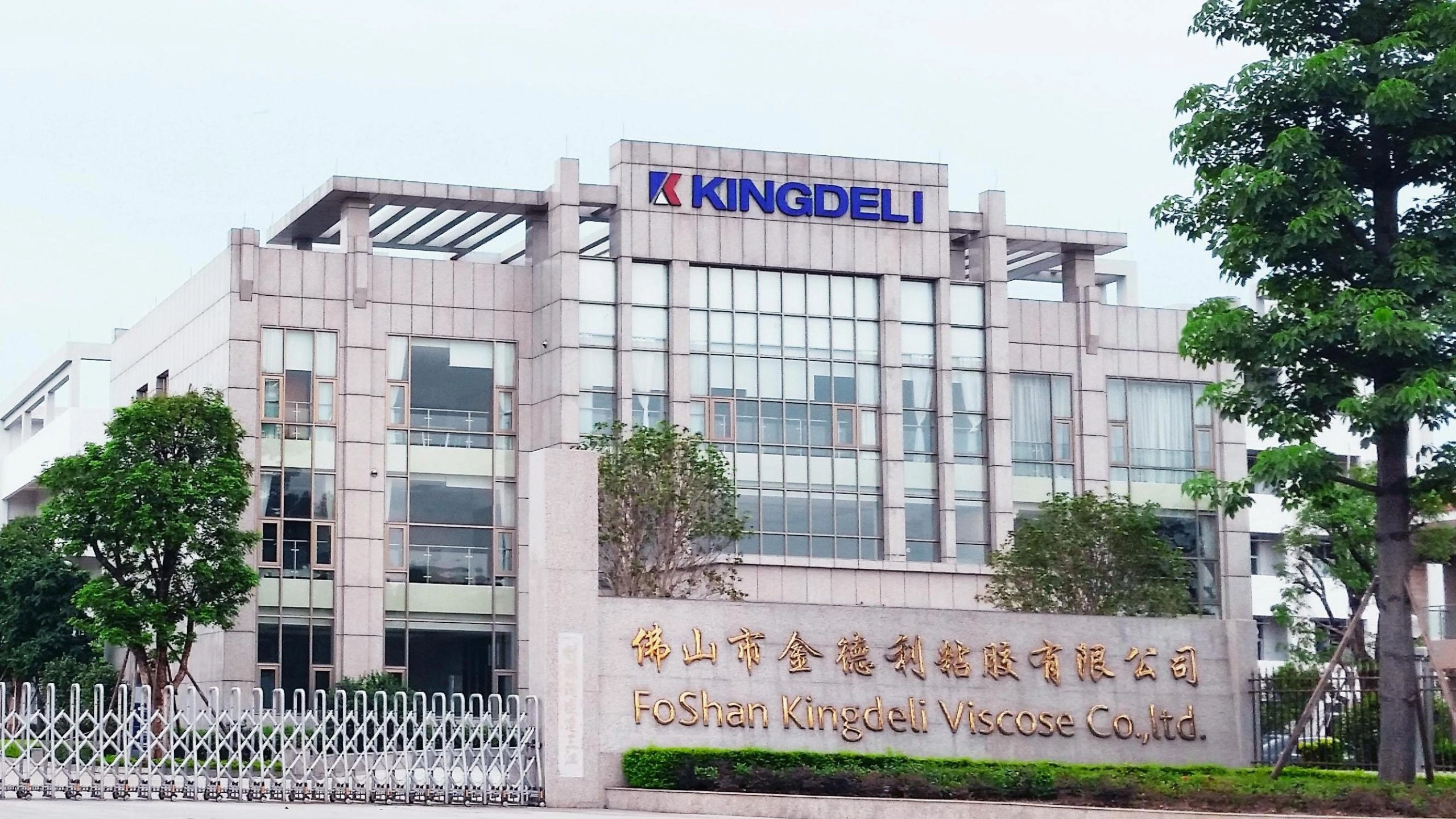
A credible supplier should disclose its registered Foshan KINGDELI Viscose Co., Ltd., manufacturing address, ownership structure, export history, production scope, and quality-management responsibilities. Buyers should distinguish between an actual formulator, a contract packer, a trading company, and a factory that outsources critical production stages. A supplier may legitimately use external partners for packaging components or selected raw materials, but the party responsible for formulation, batch release, and complaint handling should be clearly identified.
Factory audits should examine material receiving, storage conditions, mixing, filling, cartridge sealing, batch coding, quarantine procedures, finished-goods warehousing, and nonconforming-product controls. Photographs and certificates are useful screening tools, but an audit or live video assessment provides stronger evidence. The buyer should also confirm whether the quoted capacity is dedicated to sealants and adhesives or represents the total output of several unrelated product lines.
Assess quality systems and technical documentation
Quality certification is valuable only when it reflects an operating system rather than a framed document. Buyers should request the scope and validity of an ISO 9001 certificate, documented inspection plans, sample certificates of analysis, stability records, and examples of corrective-action reports. The requirements of ISO 9001 provide a useful reference for evaluating process control, customer requirements, documented information, and continual improvement.
Technical documentation should identify density, skin-formation time, tack-free time, curing rate, hardness, tensile strength, elongation, movement capability, application temperature, storage conditions, shelf life, and recommended joint dimensions. Where relevant, buyers should request adhesion testing on actual substrates rather than relying only on generic laboratory data. A responsible supplier will explain test methods, sample conditioning, acceptance criteria, and limitations instead of presenting unsupported performance claims.
Testing the Product, Formulation, and Brand-Protection Capability
Review formulation control and raw-material traceability
Silicone performance depends on polymer selection, crosslinking chemistry, fillers, plasticizers, adhesion promoters, pigments, catalysts, and packaging compatibility. A private-label programme should establish which parameters are fixed, which can be adjusted, and how changes are approved. The buyer should ask whether the manufacturer maintains approved-vendor lists, incoming inspection standards, lot traceability, and retained samples for each production batch.
Raw-material substitutions can change cure behaviour, adhesion, modulus, colour, odour, extrusion force, or shelf life. A robust change-control procedure requires written notification, risk assessment, comparative testing, and buyer approval before a formulation or critical supplier changes. This is especially important for brands selling under their own name, because the brand owner remains commercially exposed even when the production fault originates upstream.
Demand application-specific validation
Samples should be tested under conditions that reflect the end market. For construction applications, evaluation may include adhesion after water immersion, accelerated ageing, temperature cycling, ultraviolet exposure, primer compatibility, staining, and movement simulation. For glazing or façade work, the technical review should address compatibility with insulating-glass sealants, spacers, coatings, laminated glass, gaskets, and adjacent materials. For industrial assembly, testing may need to cover oil exposure, vibration, compression set, electrical insulation, or contact with cleaning chemicals.
Buyers should use a written approval protocol covering sample identification, cure time, substrate preparation, bead dimensions, environmental conditions, test duration, and pass-fail criteria. Independent verification can be appropriate for high-risk projects. ASTM International provides widely used test standards for construction materials and sealants; its standards and publications can help procurement teams identify suitable methods, although the exact standard must match the application and jurisdiction.
Evaluate private-label execution beyond the logo
Brand customization includes more than printing a label. A capable partner should support cartridge, foil pack, sausage, pail, and bottle formats where applicable; artwork review; multilingual technical data sheets; safety documentation; barcode management; colour matching; carton configuration; palletization; and regulatory markings. The supplier should confirm minimum order quantities for standard and customized packaging, tooling charges, artwork approval stages, lead times, and ownership of packaging artwork.
Packaging compatibility is a technical issue. Sealant can react with unsuitable liners, nozzles, caps, inks, or cartridges, resulting in premature curing, leakage, poor extrusion, or altered shelf life. A controlled pilot run should therefore evaluate filled-pack stability, transport vibration, hot and cold storage, nozzle fit, label adhesion, and product identification. Buyers should retain approved golden samples for future batch comparison.
| Evaluation area | Weak supplier signal | Strong supplier evidence | Buyer decision impact |
|---|---|---|---|
| Formulation ownership | Unclear chemistry or frequent unexplained substitutions | Controlled formulas, approved raw-material sources, documented change management | Reduces performance variation and warranty exposure |
| Factory capability | Limited production visibility and outsourced filling | Auditable mixing, filling, coding, quarantine, and release procedures | Improves supply continuity and batch reliability |
| Product validation | Generic brochure claims without test conditions | Application-specific test reports and defined acceptance criteria | Supports technical approvals and project compliance |
| Private-label service | Logo application only | Artwork, packaging, documentation, multilingual support, and pilot-run control | Shortens launch time and protects brand consistency |
| After-sales support | Sales contact with no technical escalation route | Named technical team, complaint procedure, retained samples, corrective actions | Limits installation disputes and downtime |
Commercial, Regulatory, and Supply-Chain Due Diligence
Compare total cost of ownership
Purchase price is only one part of the economic decision. Buyers should calculate usable product cost after accounting for waste, extrusion force, cure speed, rework, packaging damage, freight, duties, inventory carrying cost, and expected complaint rates. A slightly higher-priced formulation may produce better margin if it reduces failed joints, installer callbacks, and replacement shipments.
Commercial terms should address minimum order quantity, forecast flexibility, payment milestones, sample charges, tooling, price-adjustment mechanisms, incoterms, loading plans, insurance, and responsibility for damaged cargo. The contract should define product specifications, approved packaging, batch-release documents, shelf-life requirements at delivery, inspection rights, remedies for nonconforming goods, confidentiality, intellectual property, and termination procedures.
Confirm market compliance and responsible claims
Documentation requirements vary by destination and application. Depending on the market, buyers may need safety data sheets, technical data sheets, VOC information, chemical inventory declarations, packaging-language compliance, CE-related documentation, or project-specific approvals. The European Commission guidance on CE marking explains that CE marking applies only where harmonised EU legislation requires it; it should not be treated as a universal quality label for every sealant.
Procurement teams should also examine environmental claims carefully. Low-VOC, solvent-free, odour-reduced, mould-resistant, and sustainable statements need defined test methods and scope. The ISO 14001 environmental-management framework can support an assessment of whether the supplier manages environmental responsibilities systematically, but it does not by itself prove that a particular cartridge has a specific VOC level.
Test communication and contingency planning
Before approval, buyers should observe how quickly and accurately the supplier answers technical questions. Delays in issuing a revised drawing or inconsistent answers about cure chemistry can become serious problems during a product launch. A strong supplier provides a named project manager, technical contact, escalation route, complaint-response target, and corrective-action timeline.
Supply continuity should be tested through questions about backup equipment, alternative raw-material sources, maintenance planning, power interruptions, port disruptions, and peak-season allocation. A written business-continuity plan is particularly important for distributors that promise fixed delivery schedules to contractors or retail chains. Forecast sharing, safety stock, dual packaging sources, and staged shipments can reduce exposure without requiring excessive inventory.
Why KINGDELI Is a Practical Partner for Branded Sealant Programs
Manufacturing scale with controlled consistency
Our team at KINGDELI combines more than 27 years of experience with a 66,000 m² manufacturing facility in Foshan, China. Fully automated production lines support annual capacity exceeding 100,000 tons, giving distributors and brand owners a stronger basis for planned launches, recurring container programmes, and multi-market supply. Scale is valuable when it is connected to process control, batch traceability, stable sourcing, and reliable release procedures.
As a recognised National High-Tech Enterprise and a contributor to the National Standard GB/T 29755-2013, we connect formulation development with practical manufacturing knowledge. Our quality and environmental systems are aligned with internationally recognised requirements, including ISO 9001 and ISO 14001, while selected products and programmes can be developed against applicable CE and ASTM expectations. Product claims remain application-dependent, so our technical team works with buyers to define the correct specification and validation plan.
Broad chemistry coverage for portfolio development
Our portfolio supports more than a single construction use case. Buyers can evaluate neutral silicone sealant for sensitive substrates and general construction applications, acetic silicone sealant for suitable glass and ceramic uses, silicone glazing sealant for façade and window systems, and acrylic sealant for paintable interior joints. We also supply polyurethane sealant, MS polymer sealant, RTV gasket maker, epoxy tile grout, self-leveling sealant, and No More Nails adhesive for complementary repair, assembly, flooring, tiling, and industrial product categories.
This breadth allows a distributor to consolidate compatible products with one technical and commercial partner while preserving application-specific chemistry. It also supports line architecture, such as High Quality façade products, mid-market construction grades, low-VOC interior products, and specialist industrial formulations under separate brand positions.
End-to-end OEM and ODM support
Our OEM/ODM service covers formulation discussion, sample development, performance adjustment, packaging selection, artwork coordination, technical documents, production, inspection, and export preparation. Low-VOC formulation options and professional technical service help buyers respond to increasingly demanding project specifications and sustainability objectives. The process is structured around the buyer’s market, substrate requirements, packaging strategy, and target cost rather than a one-size-fits-all catalogue item.
With customers and market presence in more than 50 countries, KINGDELI understands that private-brand success depends on repeatability after the first shipment. Our team supports specification alignment, product selection, documentation, troubleshooting, and continuous communication so that distributors and brand owners can build a dependable sealants and adhesives range.
For buyers comparing manufacturers, the final decision should be based on verified technical evidence, transparent production controls, realistic commercial terms, and the supplier’s ability to remain accountable after delivery. A structured audit, application trial, packaging pilot, and written quality agreement provide far more protection than a low initial quotation or an attractive product brochure.
Frequently Asked Questions
What should buyers check first when vetting a silicone sealant OEM supplier?
Buyers should first define the application and then verify the supplier’s legal identity, manufacturing scope, formulation ownership, quality system, production address, and ability to provide application-specific technical documentation.
How can a buyer confirm that a sealant manufacturer controls its formulation?
The buyer should request information about approved raw-material sources, incoming inspection, batch traceability, retained samples, fixed formulation parameters, and the written change-control process used for substitutions or process modifications.
What testing is important before approving a branded sealant?
Testing should reflect the intended use and may include adhesion on actual substrates, water immersion, ultraviolet exposure, temperature cycling, movement simulation, cure behaviour, staining, primer compatibility, packaging stability, and other project-specific requirements.
Does ISO 9001 certification prove that every sealant batch will perform correctly?
No. ISO 9001 indicates a quality-management framework, but buyers still need product specifications, batch-release controls, application-specific test results, retained samples, and a quality agreement defining acceptance criteria.
What should be included in a private-label packaging programme?
A complete programme should address cartridge or foil-pack format, artwork approval, language requirements, safety and technical documents, barcodes, colour, carton configuration, palletization, minimum order quantities, tooling, lead times, and packaging compatibility testing.
How should buyers compare supplier quotations?
Quotations should be compared using total cost of ownership, including usable product, waste, freight, duties, packaging damage, inventory costs, rework, complaint exposure, payment terms, minimum order quantities, and supply continuity rather than unit price alone.
Why is technical support important after the first shipment?
Technical support helps resolve substrate, curing, adhesion, packaging, and installation issues; it also provides a defined complaint process, corrective-action response, specification updates, and communication needed to protect the buyer’s brand and customer relationships.
Joint Design and Movement Accommodation with Neutral Sealant
Application Equipment and Tools for Efficient Silicone Sealing
Specifying Low-VOC MS Silicone Sealant for Regulatory Compliance
Acoustic and Thermal Benefits of Silicone Glazing Sealants
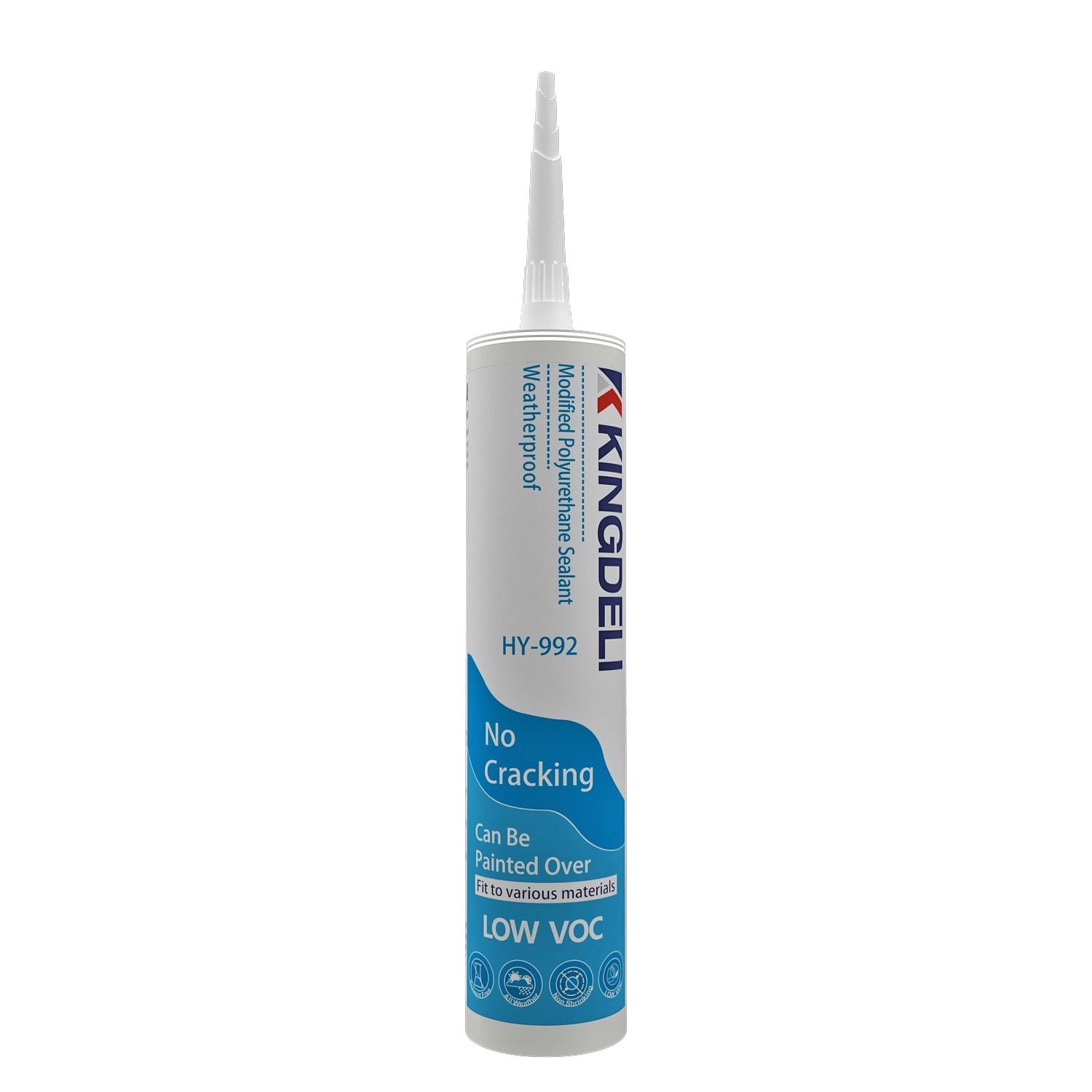
HY992 Modified Polyurethane Construction Sealant
HY992 Modified Polyurethane Sealant is a one-component, moisture-curing construction sealant designed for professional building and structural sealing applications. It provides excellent adhesion, weather resistance, and durable elasticity, making it suitable for a wide range of construction materials.
The formulation delivers strong bonding performance without corrosion or substrate contamination, while maintaining low VOC content for environmentally responsible construction projects.

HY995 Crystal Clear Ms Polymer Adhesive/Sealant
HY995 Crystal Clear Ms Polymer Adhesive/Sealant is a new generation MS Polymer adhesive / sealant formulated for all bonding and sealing applications where long term reliability is required. It has excellent bonding strength on various materials. It will cure to form a durable, flexible, waterproof seal.

HY997 High-Performance Anti-Microbial MS Polymer Sealant
HY997 MS polymer sealant for is is a premium one-component, neutral-curing modified silane sealant engineered for demanding interior applications. It offers a Class 20 movement capability, ensuring long-lasting flexibility and reliable performance under dynamic joint conditions. Curing at room temperature, HY997 delivers superior anti-microbial and mildew-resistant properties, maintaining hygienic and clean environments over time.
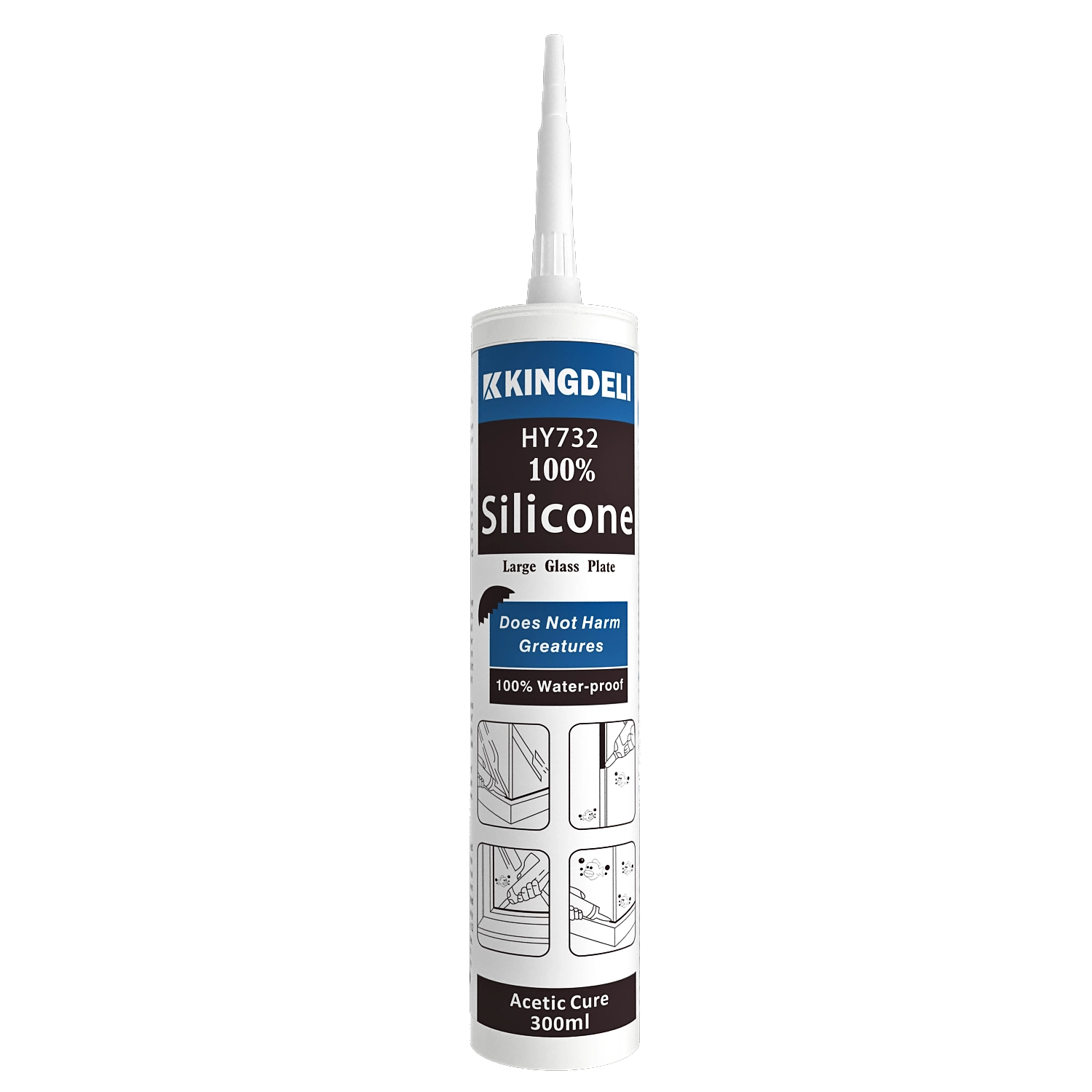
KINGDELI HY732 Professional Acetoxy Cure Silicone Sealant
KINGDELI HY732 is a professional-grade, one-component acetoxy cure silicone sealant designed for fast curing, strong adhesion, and long-lasting flexibility. Ideal for aquariums, glass applications, aluminum doors and windows, kitchens, and bathrooms, it provides reliable sealing performance with excellent anti-fungal protection in high-humidity environments.
Let’s Build Stronger Bonds with Quality Adhesives and Sealants
Have questions about the topic or need tailored sealant solutions for your project?
Our team is ready to provide expert guidance, product recommendations, and application support.
Innovating with Integrity, Bonding the World
Since 1998, KINGDELI has delivered trusted, sustainable sealant solutions that connect industries and inspire progress worldwide.
Whatsapp: +8618825946249
Kingdeli
Kingdeli
Kingdeli
Kingdeli
Kingdeli