


How to Vet a Construction Sealant Manufacturer for Large Projects

- A Strategic Framework for Evaluating Sealant and Adhesive Suppliers
- Start with the project’s performance requirements
- Verify formulation depth and product architecture
- Assess standards, test methods, and evidence
- Factory, Quality, and Supply-Chain Due Diligence
- Inspect manufacturing controls and capacity
- Review traceability and nonconformance procedures
- Test logistics and commercial resilience
- Technical Approval, Sustainability, and Project Support
- Use mock-ups and compatibility testing before mass ordering
- Evaluate low-emission and environmental claims carefully
- Build a weighted supplier scorecard
- Why KINGDELI Is Structured for International Project Supply
- Manufacturing scale backed by documented quality
- A broad portfolio for different construction conditions
- OEM, ODM, and technical partnership
- Frequently Asked Questions
Vetting a construction sealant manufacturer for a large project requires a structured review of technical capability, quality assurance, production reliability, compliance documentation, and project support. The lowest quoted price does not necessarily represent the lowest installed cost: premature joint failure, substrate incompatibility, color variation, delayed deliveries, or incomplete certification can create expensive rework and schedule risk. Buyers should therefore assess the supplier’s chemistry portfolio, factory controls, annual output, batch traceability, testing evidence, packaging capability, export experience, and ability to support specification development before signing a framework agreement.
A Strategic Framework for Evaluating Sealant and Adhesive Suppliers
Start with the project’s performance requirements
Large construction programs should define the performance brief before comparing vendors. The specification should identify substrates, joint movement, exposure to ultraviolet radiation, temperature range, moisture conditions, expected service life, curing requirements, paintability, acoustic or airtightness objectives, fire-related constraints, and cleaning procedures. A façade package may require a weatherproof silicone or glazing-grade formulation, while interior finishing may call for acrylic sealant, hybrid polymer, or a low-odor adhesive. Wet-area installations, expansion joints, precast interfaces, window perimeters, flooring transitions, and mechanical equipment all create different demands.
Procurement teams should also distinguish between a product’s marketing description and its tested application. A sealant described as flexible is not automatically suitable for a high-movement façade joint. Similarly, a product labeled waterproof may not have adequate adhesion to every coated metal, stone, glass, concrete, or plastic substrate. A credible supplier should provide application limits, substrate preparation guidance, recommended joint dimensions, tooling instructions, curing conditions, and compatibility warnings in a technical data sheet.
Verify formulation depth and product architecture
A capable supplier should offer more than one generic cartridge product. Its portfolio should reflect an understanding of different polymer technologies, including neutral-cure silicone, acetic-cure silicone, polyurethane, acrylic, MS polymer, construction adhesive, epoxy grout, and specialty RTV products. This range helps the project team select chemistry according to movement, adhesion, moisture, aesthetics, odor, paintability, and environmental requirements rather than forcing every application into one formula.
Ask whether the supplier controls formulation development internally, operates a laboratory, and can modify viscosity, curing speed, modulus, color, packaging, and emission profile for a defined project need. Buyers should request technical data sheets, safety data sheets, certificates of analysis, accelerated aging results where relevant, and substrate-compatibility recommendations. For custom products, the approval process should include laboratory samples, mock-up testing, production validation, and written acceptance criteria.
Assess standards, test methods, and evidence
Certificates should be reviewed for scope, issuing organization, validity, product identification, and applicable manufacturing site. ISO 9001 addresses quality management systems, while ISO 14001 addresses environmental management systems; neither certificate alone proves that a specific sealant meets the performance requirements of a project. Buyers should connect management-system credentials with product-level evidence and independent test reports. The ISO 9001 standard provides useful context for evaluating process control, documented procedures, corrective action, and continual improvement.
For elastomeric joint sealants, ASTM C920 is a widely recognized specification framework covering properties such as type, grade, class, and movement capability. European projects may reference EN 15651 categories for façade, glazing, sanitary, or pedestrian walkway applications. These standards should be treated as specification tools, not as automatic proof of suitability for a particular building. The buyer must confirm that the tested formulation, color, packaging format, and manufacturing location match the product being offered. The ASTM C920 specification is an appropriate starting point for understanding elastomeric sealant classification.
| Evaluation area | Minimum evidence to request | Why it matters on large projects |
|---|---|---|
| Quality management | Current ISO 9001 certificate and audit scope | Shows whether documented controls cover the relevant production site and activities. |
| Environmental management | Current ISO 14001 certificate, environmental objectives, and waste controls | Supports ESG reviews, responsible sourcing, and customer sustainability requirements. |
| Product performance | Product-specific test reports, technical data sheet, and certificate of analysis | Connects claimed properties to the exact formulation and batch. |
| Movement capability | Applicable ASTM C920 or EN 15651 classification and test details | Helps engineers match joint movement and exposure conditions to the correct sealant. |
| Supply continuity | Capacity statement, lead-time history, safety-stock plan, and business-continuity procedure | Reduces the risk of installation stoppages caused by material shortages. |
| Application risk | Compatibility testing, adhesion recommendations, and mock-up procedure | Prevents failures caused by incompatible substrates, coatings, primers, or adjacent materials. |
Factory, Quality, and Supply-Chain Due Diligence
Inspect manufacturing controls and capacity
A factory assessment should examine raw-material receiving, storage conditions, weighing accuracy, mixing systems, curing or aging controls, filling lines, label verification, packaging inspection, and finished-goods warehousing. Sealants are sensitive to formulation accuracy, moisture exposure, temperature, and contamination. A professional operation should be able to explain how it prevents cross-contamination between colors and chemistries, controls shelf life, manages returned goods, and releases batches after laboratory inspection.
Capacity should be evaluated against the actual project schedule rather than presented as a headline figure. Request monthly output by product family, current utilization, equipment redundancy, planned maintenance, peak-season constraints, and the lead time for standard and customized packaging. A supplier that can produce large volumes but lacks sufficient filling lines, raw-material security, or export packing controls may still create delivery risk. Buyers should also confirm whether capacity is dedicated, shared across multiple markets, or dependent on subcontracted operations.
Review traceability and nonconformance procedures
Every shipment should be traceable to a production batch, raw-material lot, manufacturing date, shelf-life date, packaging line, and release record. The supplier should have a documented method for handling complaints, quarantining suspect stock, conducting root-cause analysis, issuing corrective actions, and communicating field notifications. Ask for a redacted example of a corrective-action report. The quality of that document often reveals more about operational maturity than a certificate displayed on a website.
Incoming raw materials should be verified against agreed specifications, particularly for polymers, plasticizers, fillers, pigments, catalysts, and adhesion promoters. Finished-product checks may include density, appearance, extrusion rate, tack-free time, cure profile, hardness, tensile properties, elongation, adhesion, movement capability, and storage stability. Not every property applies to every chemistry, so the acceptance plan should be tailored to the product and application.
Test logistics and commercial resilience
For a multinational project, logistics must cover export documentation, pallet configuration, container loading, humidity and temperature exposure, dangerous-goods classification where applicable, and local-language labeling. A reliable partner should provide a realistic production-to-delivery timeline that includes raw-material procurement, testing, filling, inspection, customs clearance, and destination delivery. The contract should define minimum remaining shelf life at arrival and the process for replacing damaged or short-dated stock.
Commercial due diligence should include ownership structure, payment terms, insurance, warranty boundaries, product-liability arrangements, intellectual-property protection, and references from comparable projects. Buyers should speak with references about actual delivery performance, technical responsiveness, complaint resolution, color consistency, and behavior during demand surges. A supplier’s financial and operational stability matters because large projects often require staged releases over many months.
Technical Approval, Sustainability, and Project Support
Use mock-ups and compatibility testing before mass ordering
Laboratory data cannot replace a representative site mock-up. The approval process should test the proposed product on the actual substrates, coatings, membranes, primers, backing materials, and adjacent components. Evaluation should cover adhesion after cleaning and aging, cohesive strength, staining or migration, cure behavior, tooling, appearance, and interaction with primers or backer rods. For glazing and façade work, the project team should follow the system manufacturer’s compatibility recommendations and record the tested batch numbers.
Application training is equally important. Even a technically suitable sealant can fail because of inadequate joint depth, poor surface preparation, trapped moisture, incorrect backer-rod placement, premature exposure, or tooling after skin formation. A capable supplier should provide method statements, installer guidance, on-site or remote technical support, and a clear escalation route for field issues. Training records and inspection checklists can become valuable evidence for quality handover.
Evaluate low-emission and environmental claims carefully
Demand for low-VOC and lower-impact building materials is increasing, but environmental claims should be supported by defined test methods, declarations, or certification rather than vague language. Review VOC content, emissions testing, packaging materials, recycled content, production waste, energy management, and end-of-life considerations. The ISO 14001 framework can help buyers understand how an environmental management system structures monitoring, compliance obligations, objectives, and continual improvement.
Safety documentation should be current and consistent with the destination market. The United Nations Globally Harmonized System of Classification and Labelling of Chemicals provides an internationally recognized basis for hazard communication, but local regulations may impose additional requirements. Procurement teams should verify labels, safety data sheets, restricted substances, worker-protection guidance, and transport classifications for each target country.
Build a weighted supplier scorecard
A weighted scorecard reduces the influence of a persuasive sales presentation or a low initial quotation. A practical model may assign 25% to technical performance and application fit, 20% to quality systems and traceability, 20% to supply capacity and logistics, 15% to compliance and sustainability, 10% to technical service, and 10% to total commercial value. The weighting should reflect project risk: a hospital, curtain-wall tower, infrastructure program, or high-rise residential development may place more emphasis on documentation, mock-ups, and continuity of supply.
Total cost should include product price, primers, labor, waste, application equipment, testing, freight, inventory, warranty exposure, and the financial impact of rework. A slightly higher-cost material may deliver a lower lifecycle cost when it reduces installation time, improves adhesion reliability, minimizes odor complaints, or avoids replacement of failed joints. The final decision should be based on documented performance and risk-adjusted value rather than price per cartridge alone.
Why KINGDELI Is Structured for International Project Supply
Manufacturing scale backed by documented quality
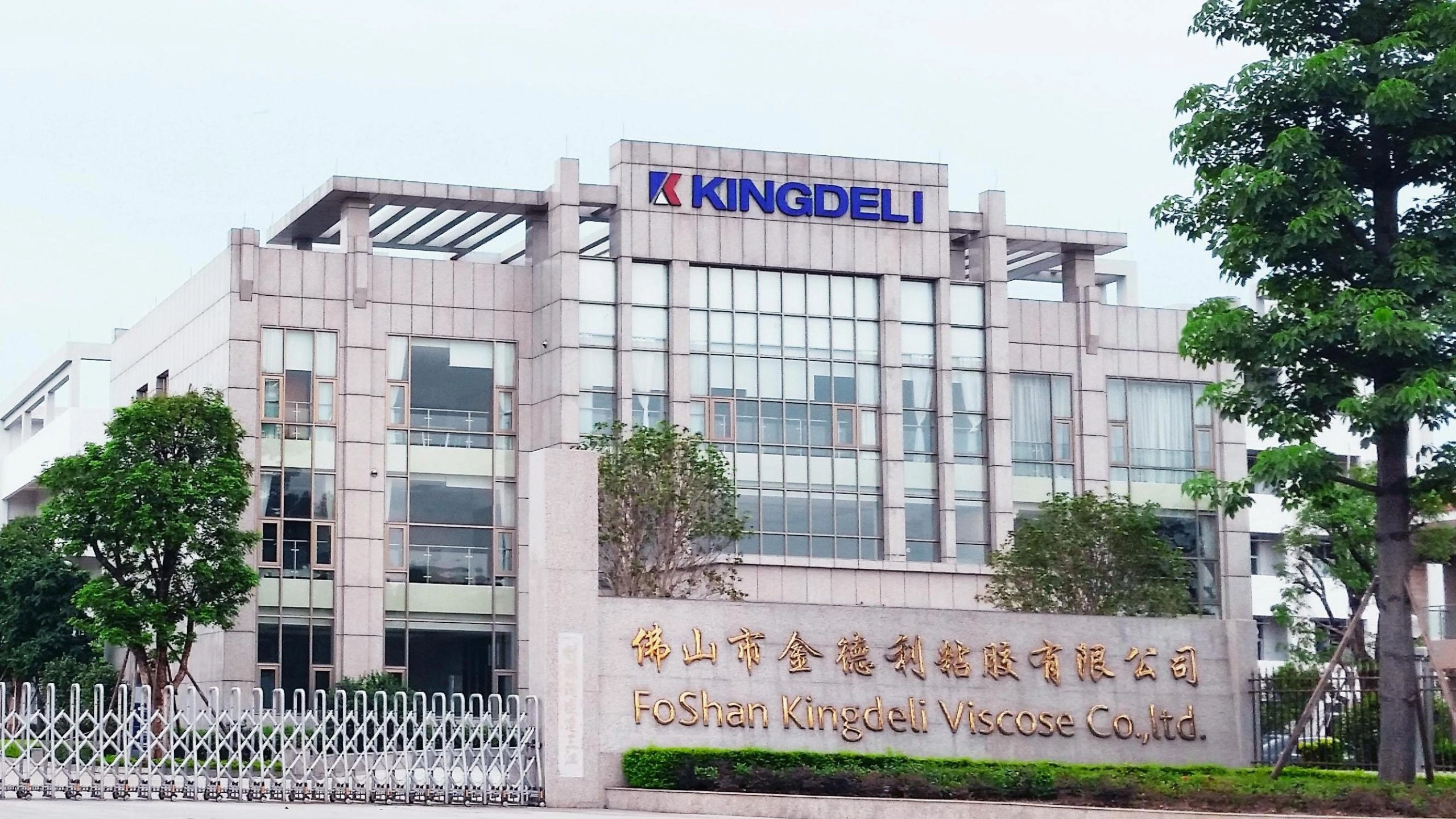
KINGDELI has operated in the high-performance sealant, adhesive, and coating industry since 1998. Our headquarters and manufacturing base are located in Foshan, China, where a state-of-the-art 66,000 m² facility uses fully automated production lines and supports annual capacity exceeding 100,000 tons. This scale is designed to provide consistent supply for distributors, contractors, brand owners, and project partners managing recurring or high-volume requirements.
Our organization is recognized as a National High-Tech Enterprise and has contributed to the National Standard GB/T 29755-2013. Our quality and environmental systems are supported by ISO 9001 and ISO 14001 certifications, while selected products are engineered to meet applicable international requirements such as CE and ASTM. Buyers should still match each product and test report to the project specification, but this combination of manufacturing infrastructure, technical development, and documented systems provides a strong basis for supplier qualification.
A broad portfolio for different construction conditions
Our product range is designed to help procurement teams source compatible materials across multiple work packages. Neutral silicone sealant supports applications where low odor and broad substrate compatibility are important, while acetic silicone sealant can be considered for suitable non-sensitive substrates and general-purpose sealing. Silicone glazing sealant is positioned for relevant glass and frame applications subject to system compatibility and project testing. Acrylic Sealant can support interior joints and paintable finishing requirements where its performance profile is appropriate.
For bonding and assembly, our No More Nails adhesive provides a practical option for selected construction and renovation tasks. Polyurethane Sealant offers a flexible chemistry for applications requiring strong adhesion and durable sealing, while MS polymer Sealant can support projects seeking a hybrid polymer with low odor and broad application versatility. Our portfolio also includes RTV Gasket Maker for specified sealing and gasket-related uses, Epoxy Tile Grout for durable tile-joint finishing, and Self-Leveling Sealant for applications where controlled flow and joint filling are required. Product selection should always follow substrate, movement, exposure, and curing requirements.
OEM, ODM, and technical partnership
With more than 27 years of industry expertise and a presence in over 50 countries, KINGDELI provides more than finished goods. Our team supports OEM and ODM programs involving formulation selection, color development, cartridge and sausage packaging, private labeling, documentation, and export coordination. This can help distributors and brand owners reduce supplier fragmentation while maintaining a consistent product platform across markets.
Our technical service model includes product recommendation, application guidance, documentation support, and project communication. We also develop sustainable low-VOC formulations for customers with environmental and indoor-air-quality objectives. The appropriate product is confirmed through technical review and, where necessary, substrate testing and mock-up validation. This disciplined approach helps project owners manage approval risk before committing to large-scale procurement.
Supplier qualification should end with a written approval plan, not a verbal promise. The plan should identify the approved product code, manufacturing site, test evidence, packaging specification, color tolerance, batch-release documents, delivery milestones, storage conditions, inspection responsibilities, warranty terms, and change-notification requirements. KINGDELI’s combination of automated production, broad chemistry coverage, international market experience, and technical support gives buyers a practical platform for building that approval plan.
Contact KINGDELI to review project requirements, compare suitable sealant and adhesive technologies, and request technical documentation or product samples for qualification.
Frequently Asked Questions
What should buyers verify before selecting a sealant supplier for a large construction project?
Buyers should verify formulation expertise, production capacity, batch traceability, product-specific testing, quality and environmental certifications, compatibility data, logistics capability, technical service, commercial stability, and references from comparable projects.
Does ISO 9001 certification prove that a sealant is suitable for a specific application?
No. ISO 9001 addresses the quality management system, but it does not by itself prove that a particular sealant meets a project’s performance requirements. Buyers should also review product-specific test reports, technical data sheets, certificates of analysis, and compatibility results.
Why are substrate and compatibility tests important before mass ordering?
Compatibility testing confirms how the proposed material performs on the actual substrates, coatings, membranes, primers, backing materials, and adjacent components. It can identify adhesion loss, staining, migration, cure problems, or chemical interaction before installation at scale.
How can a project team compare the total cost of sealant suppliers?
Total cost should include product price, primers, labor, waste, application equipment, testing, freight, inventory, warranty exposure, and the potential cost of rework. A higher unit price may still provide lower lifecycle cost if it improves installation reliability and reduces failures.
What construction sealant technologies should a large-project supplier offer?
A capable supplier may offer neutral and acetic silicone, glazing silicone, polyurethane, acrylic, MS polymer, construction adhesive, RTV gasket maker, epoxy grout, and self-leveling products so that chemistry can be matched to movement, adhesion, moisture, odor, paintability, and exposure requirements.
What support should a qualified sealant manufacturer provide after the purchase order?
The supplier should provide application guidance, method statements, substrate-preparation instructions, mock-up support, installer training, technical documentation, batch information, delivery coordination, and a clear escalation process for field complaints or nonconformities.
Top transparent acrylic sealant Manufacturers and Suppliers
Glass-to-Metal Adhesion: Silicone Primer and Surface Prep
Neutral Silicone Sealant Formulations: Acid vs Neutral Cures

HY995 Crystal Clear MS Polymer Adhesive Sealant - KINGDELI
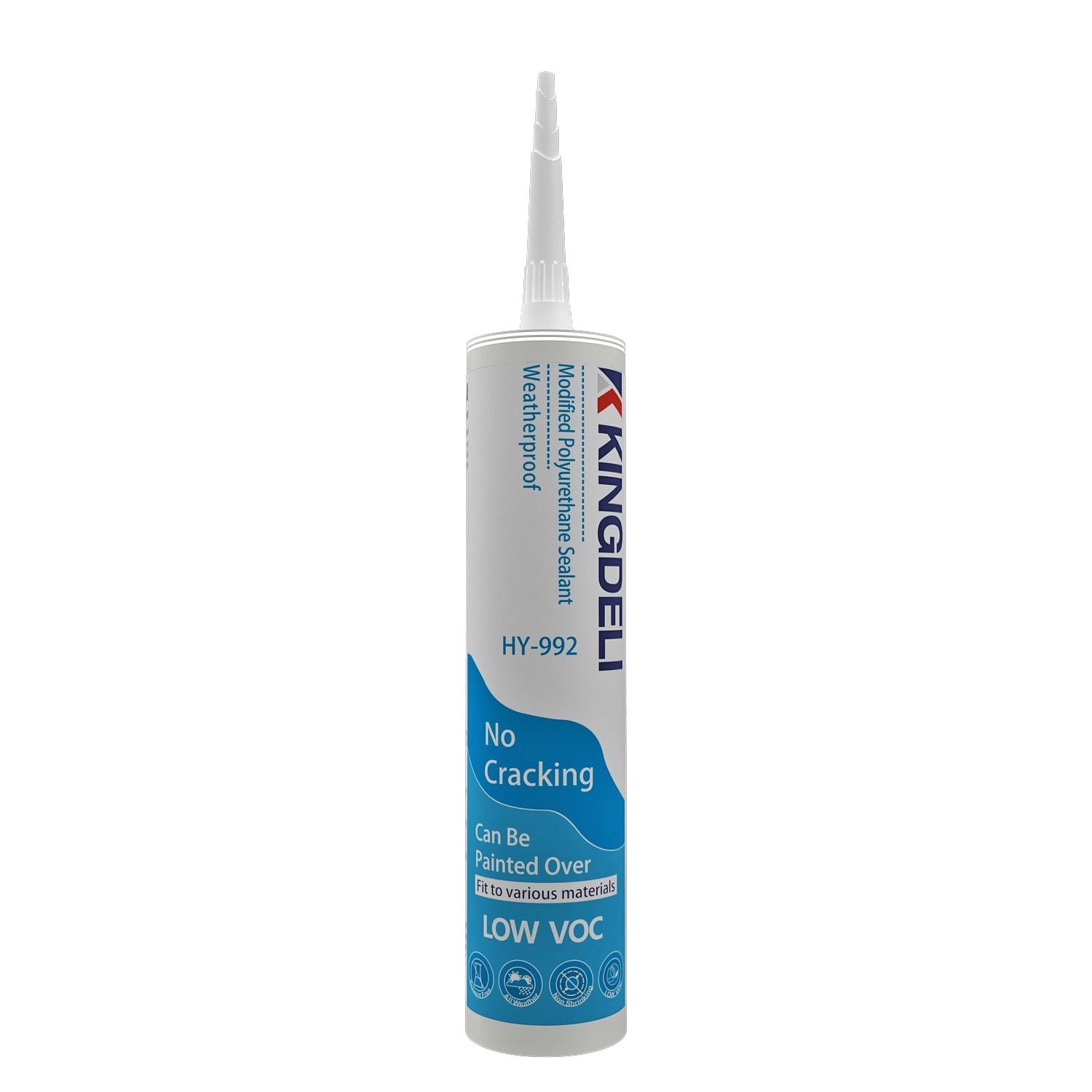
HY992 Modified Polyurethane Construction Sealant
HY992 Modified Polyurethane Sealant is a one-component, moisture-curing construction sealant designed for professional building and structural sealing applications. It provides excellent adhesion, weather resistance, and durable elasticity, making it suitable for a wide range of construction materials.
The formulation delivers strong bonding performance without corrosion or substrate contamination, while maintaining low VOC content for environmentally responsible construction projects.
HY995 Crystal Clear Ms Polymer Adhesive/Sealant
HY995 Crystal Clear Ms Polymer Adhesive/Sealant is a new generation MS Polymer adhesive / sealant formulated for all bonding and sealing applications where long term reliability is required. It has excellent bonding strength on various materials. It will cure to form a durable, flexible, waterproof seal.

HY997 High-Performance Anti-Microbial MS Polymer Sealant
HY997 MS polymer sealant for is is a premium one-component, neutral-curing modified silane sealant engineered for demanding interior applications. It offers a Class 20 movement capability, ensuring long-lasting flexibility and reliable performance under dynamic joint conditions. Curing at room temperature, HY997 delivers superior anti-microbial and mildew-resistant properties, maintaining hygienic and clean environments over time.
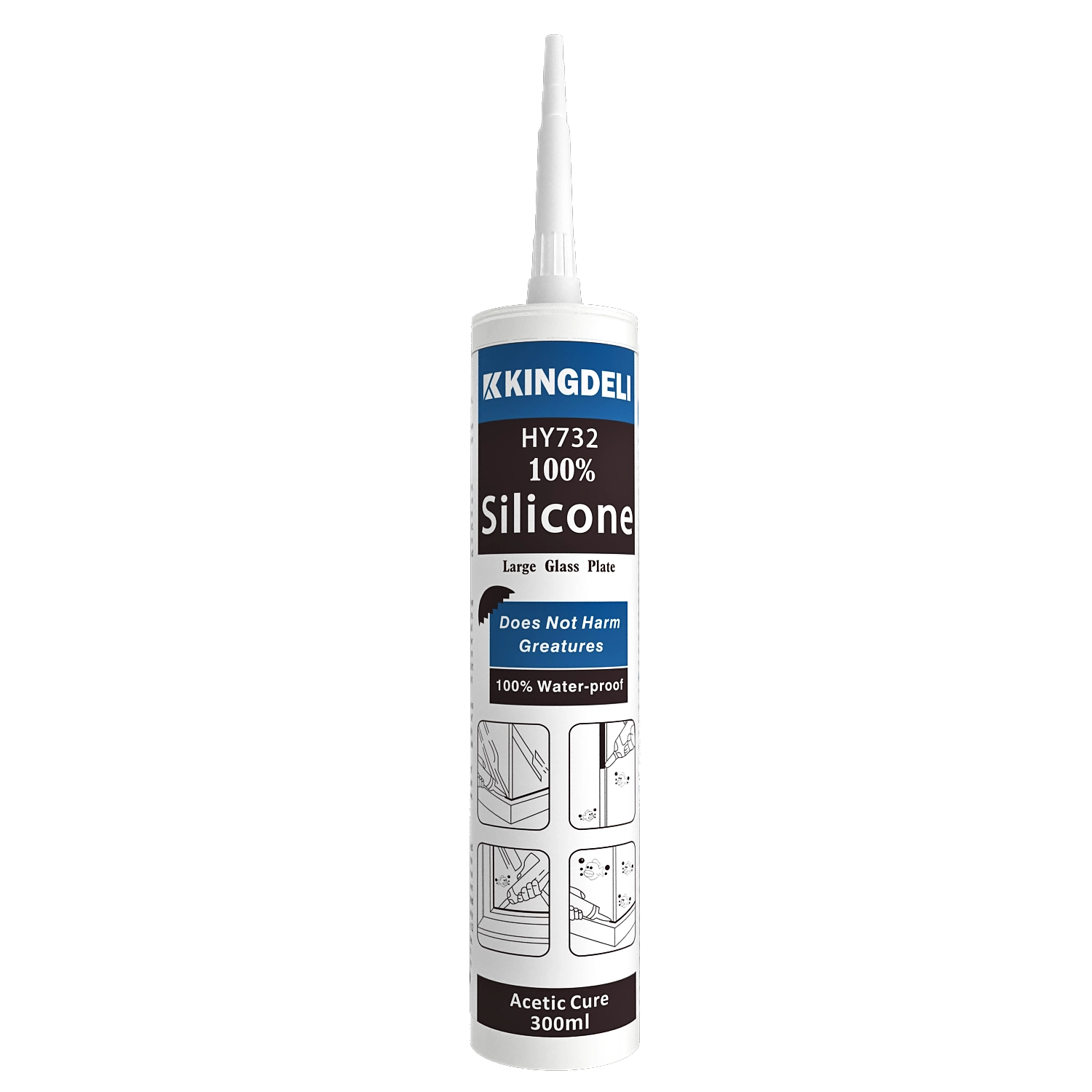
KINGDELI HY732 Professional Acetoxy Cure Silicone Sealant
KINGDELI HY732 is a professional-grade, one-component acetoxy cure silicone sealant designed for fast curing, strong adhesion, and long-lasting flexibility. Ideal for aquariums, glass applications, aluminum doors and windows, kitchens, and bathrooms, it provides reliable sealing performance with excellent anti-fungal protection in high-humidity environments.
Let’s Build Stronger Bonds with Quality Adhesives and Sealants
Have questions about the topic or need tailored sealant solutions for your project?
Our team is ready to provide expert guidance, product recommendations, and application support.
Innovating with Integrity, Bonding the World
Since 1998, KINGDELI has delivered trusted, sustainable sealant solutions that connect industries and inspire progress worldwide.
Whatsapp: +8618825946249
Kingdeli
Kingdeli
Kingdeli
Kingdeli
Kingdeli