











How to Use MS Sealant for Concrete: A Step-by-Step Professional Checklist (2026 Guide)

- What is MS Sealant for Concrete?
- Quick Summary: Key Takeaways on MS Polymers
- Pre-Application Checklist: Preparing the Concrete Substrate
- How to Use MS Sealant for Concrete: Step-by-Step Application
- Expert Tips and Common Mistakes to Avoid
- Cost Analysis and Future Sealant Trends (2026+)
- Conclusion
- FAQ
- Does MS sealant require a primer on concrete?
- How long does MS polymer sealant take to cure on concrete?
- Can you paint over MS sealant on concrete surfaces?
- What is the difference between MS polymer and polyurethane sealants?
- How do you remove old sealant before applying MS sealant?
- Can MS sealant be applied to damp concrete?
- Is MS sealant UV resistant for outdoor concrete joints?
- How long does MS sealant last in high-traffic concrete pavements?
What is MS Sealant for Concrete?
MS sealant for concrete is an advanced, isocyanate-free hybrid adhesive—technically known as a Silyl Modified Polymer (SMP)—that combines the ultraviolet (UV) resistance of silicone with the mechanical strength of polyurethane to create durable, highly flexible expansion joint seals.
Historically, contractors had to weigh the pros and cons of hybrid sealant vs polyurethane. However, MS (Modified Silicone) sealants have successfully bridged the gap between these two traditional materials. By removing harmful isocyanates from the chemical equation, these modern sealants provide a highly durable, flexible, and bubble-free seal. This exceptional chemical makeup makes them the ultimate concrete expansion joint filler for demanding commercial construction environments where longevity and performance are absolutely critical.
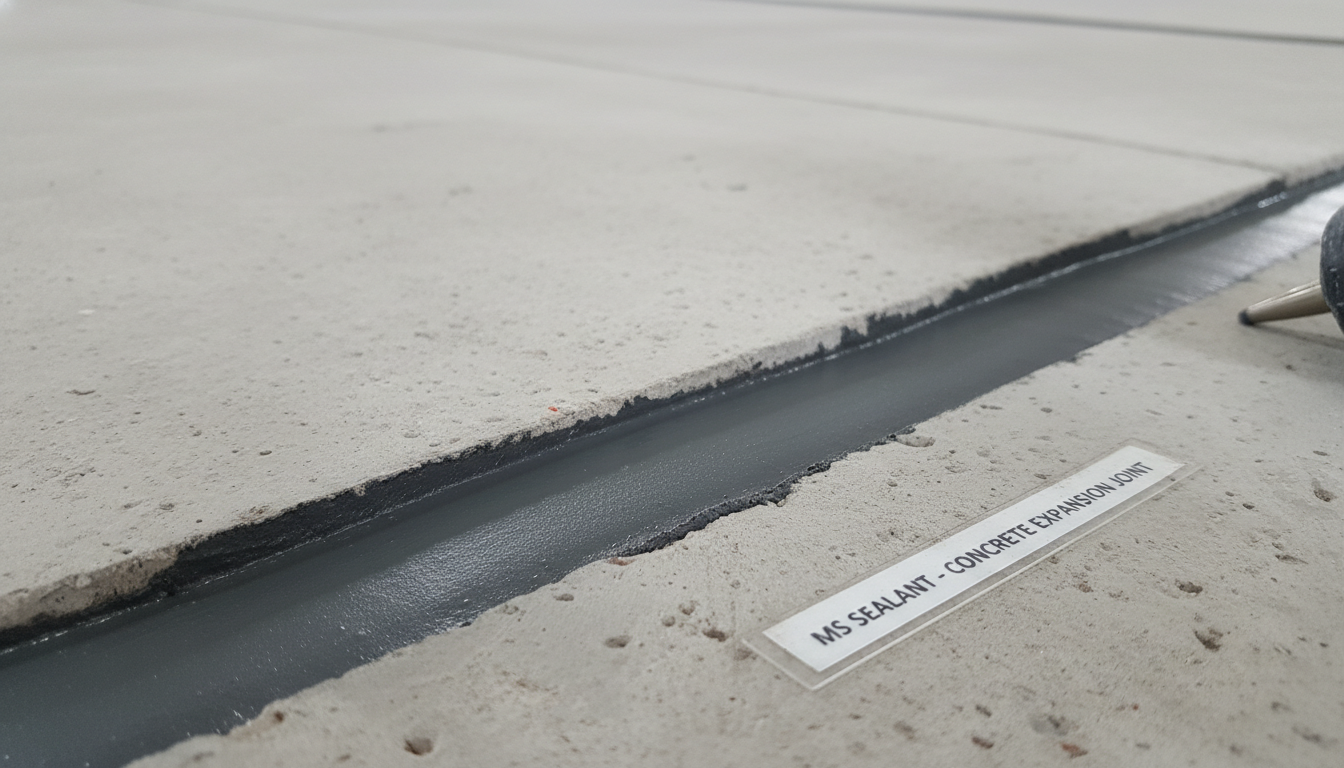
As reported by Wikipedia, Silyl-modified polymers are the main components in solvent-free and isocyanate-free sealant products, offering the desirable properties of polyurethane alongside the superior UV resistance of silicone. They are highly valued because they mitigate the common failure points found in older sealant formulations.
- UV Resistance: Unlike traditional polyurethanes that degrade, chalk, or turn yellow when exposed to direct sunlight, MS sealants maintain their integrity and color over decades of intense solar radiation.
- Mechanical Strength: They offer high tear resistance, incredible elasticity, and superior movement accommodation, allowing concrete slabs to expand and contract naturally without breaking the seal.
- Paintability: While pure silicone sealants repel paint, MS polymers can be easily painted over once fully cured with most water-based and solvent-based architectural paints, providing superior aesthetic blending for visible facades.
- Isocyanate-Free: Because they lack isocyanates, these sealants will not react with trapped moisture to create carbon dioxide gas. This completely eliminates the risk of ugly bubbles and blisters forming within the joint during the curing phase.
Quick Summary: Key Takeaways on MS Polymers
The primary takeaways for MS polymers include their eco-friendly, low-VOC formulations, the ability to achieve exceptional primerless concrete adhesion even on damp surfaces, and superior long-term weatherability that prevents the chalking and yellowing typical of traditional polyurethane.
Understanding the "Why" behind silyl modified polymer application is crucial for modern construction professionals aiming to optimize their workflow and reduce costly callbacks. The benefits are vividly clear when comparing these advanced polymers to older, legacy technologies that often require more extensive surface preparation and ideal weather conditions to cure properly.
- Eco-Friendly and Safe Application: These cutting-edge formulas are 100% isocyanate-free and feature incredibly low Volatile Organic Compounds (VOCs). This ensures a significantly safer application process for workers in enclosed spaces and guarantees a zero-bubbling finish during the curing process, even in high humidity.
- Unmatched Primerless Adhesion: Time is money on a construction site. MS sealants achieve exceptional bonding strength directly to porous substrates, including damp concrete block, poured walls, and precast panels. Eliminating the priming step saves valuable labor time and material costs.
- Long-Term Weatherability: They offer unparalleled long-term UV stability. Unlike older sealants that break down under thermal stress, MS polymers prevent the yellowing, chalking, and shrinking commonly seen in traditional polyurethanes over a 5 to 10-year span.
- Cold Weather Extrudability: Many traditional sealants become thick and difficult to gun in cold weather. MS polymers maintain a smooth, buttery consistency, making them easy to extrude and tool even when temperatures plummet.
Pre-Application Checklist: Preparing the Concrete Substrate
Preparing the concrete substrate requires inspecting the joint for structural integrity, mechanically cleaning the surface to remove all dust and laitance, and installing a closed-cell backer rod to control the sealant depth and prevent three-sided adhesion failure.
Proper preparation is absolutely non-negotiable for a successful silyl modified polymer application. Even the highest quality, most expensive sealant will inevitably fail if the substrate beneath it is compromised or poorly prepared. Professional contractors must adhere strictly to this pre-application checklist to ensure a watertight, permanent bond:
- Inspect the Concrete Surface: Carefully check the entire length of the joint for structural integrity. Ensure there is no severe spalling, deep cracking, or crumbling concrete along the joint edges. Any loose aggregate must be repaired or ground down prior to sealing.
- Mechanically Clean the Joint: Chemical cleaning is rarely sufficient. Use a stiff wire brush, a specialized diamond-blade angle grinder, or a sandblaster to mechanically remove all laitance, remnants of old sealants, dirt, oils, and environmental contaminants. The goal is to expose fresh, porous concrete.
- Vacuum Residual Dust: Sweep, then thoroughly vacuum all residual dust from the joint using a high-powered industrial shop vacuum. Even though MS polymers are inherently forgiving and offer industry-leading primerless concrete adhesion, a completely dust-free environment guarantees maximum bond strength and prevents micro-failures along the bond line.
- Install a Closed-Cell Backer Rod: Insert an appropriately sized closed-cell backer rod into the joint. The backer rod should be approximately 25% larger than the joint width so it fits snugly. This essential step controls the sealant depth and prevents premature failure caused by three-sided adhesion, ensuring the sealant can stretch and compress properly in two directions.
How to Use MS Sealant for Concrete: Step-by-Step Application
To use MS sealant, cut the nozzle at a 45-degree angle to match the joint width, apply the polymer using a high-thrust caulking gun with steady pressure to eliminate air voids, and immediately tool the bead to ensure a smooth, watertight finish.
Applying a concrete expansion joint filler correctly dictates the long-term lifespan and aesthetic quality of the weatherproofing seal. Haphazard application leads to weak spots and water ingress. Here is the detailed, step-by-step professional application process:
- Step 1: Prepare the Cartridge: Cut the MS sealant cartridge nozzle at a clean 45-degree angle. Ensure the diameter of the opening perfectly matches the width of the prepared concrete joint to allow for a single, uniform pass. Puncture the inner foil seal if applicable.
- Step 2: Utilize Proper Equipment: Load the cartridge (or sausage pack) into a professional-grade, high-thrust caulking gun (minimum 18:1 thrust ratio). MS polymers are dense; a high-thrust gun allows for consistent extrusion control, prevents hand fatigue, and ensures an even flow of material.
- Step 3: Apply with Steady Pressure: Apply the sealant with steady, even pressure. Push the bead slightly ahead of the nozzle rather than dragging it. This "pushing" technique forces the material against the concrete joint walls, ensuring total contact, superior wetting of the substrate, and completely eliminating hidden air pockets.
- Step 4: Immediate Tooling: Immediately tool the joint using a specialized sealant spatula or tooling knife. Do not use your finger. Tooling presses the sealant firmly into the substrate, maximizing adhesion, and creates a smooth, slightly concave finish that naturally sheds water effectively.
- Step 5: Clean Up: Because MS sealants cure via ambient moisture, clean any spills or excess material immediately with an appropriate solvent (like mineral spirits) before the product skins over. Once cured, it can only be removed mechanically.
Expert Tips and Common Mistakes to Avoid
A critical expert tip is to maintain a strict 2:1 width-to-depth joint ratio to maximize movement capability, while common mistakes include applying sealant over standing water—which completely compromises the bond—and failing to use masking tape for clean edges.
Even highly seasoned contractors can encounter performance issues if they ignore the specific nuances of MS polymer chemistry. To ensure your work meets the most stringent ASTM C920 sealant standards, keep these advanced troubleshooting points and expert tips in mind on the job site:
- Mistake: Applying sealant over pooling water.
- Expert Tip: While one of the greatest strengths of MS sealants is their ability to tolerate damp concrete, standing water, frost, or ice acts as an impenetrable physical barrier. Applying sealant over pooling water will completely compromise the bond. Always blow out or dry excess pooling water with compressed air before application.
- Mistake: Ignoring proper joint dimensions.
- Expert Tip: Always maintain a strict 2:1 width-to-depth ratio for the applied sealant. For example, a joint that is 1 inch wide should have a sealant depth of 1/2 inch. This specific geometry maximizes the movement capability of the cured sealant, preventing tearing and cohesive failure during aggressive freeze-thaw cycles.
- Expert Tip for Crisp Aesthetics: Apply professional-grade masking tape along both top edges of the concrete joint prior to sealing. This simple step achieves crisp, perfectly clean architectural lines. Remember to remove the tape immediately after tooling, pulling it away at a 45-degree angle before the sealant forms a surface skin (usually within 15-30 minutes).
- Expert Tip on Joint Movement: Do not apply sealant during extreme temperature highs or lows if possible. Applying sealant at moderate temperatures ensures the joint is at its median width, allowing the sealant to handle subsequent expansion and contraction equally.
Cost Analysis and Future Sealant Trends (2026+)
While MS sealants have a higher initial material cost, their rapid primerless application reduces total project labor by up to 15%, while 2026 industry trends highlight a massive shift toward bio-based, ultra-low VOC formulas meeting advanced green building standards.
The long-standing debate of hybrid sealant vs polyurethane often comes down to budget calculations, but forward-thinking estimators and contractors are increasingly looking at the total lifecycle cost rather than just the price per cartridge. Furthermore, official compliance metrics are rapidly evolving in 2026. According to the ASTM International specifications for elastomeric joint sealants, products must meet rigorous movement, adhesion, and weathering criteria—benchmarks which premium SMPs consistently exceed.
- Unmatched Cost Efficiency: While MS sealants carry a slightly higher upfront material cost than standard polyurethanes, their extended lifespan and lack of primer requirements flip the financial script. By eliminating the time-consuming step of priming and reducing the likelihood of callbacks for failed joints, total project labor and lifecycle maintenance costs are reduced by up to 15%.
- Future Trends for 2026 and Beyond: The commercial construction industry is rapidly shifting toward bio-based MS polymers and ultra-low VOC formulas. These chemical advancements are no longer optional; they are necessary to meet stringent LEED v5 standards and next-generation green building certifications that prioritize indoor air quality and sustainable manufacturing.
- Real-World Infrastructure Impact: High-traffic commercial concrete pavements, airport runways, and bridge expansions are transitioning almost exclusively to SMP technology. This massive infrastructural shift is driven by the need for reduced curing downtime, allowing facilities to reopen to traffic faster, and providing immediate weather resistance upon application, even if rain is forecasted shortly after sealing.
- Supply Chain Resilience: As raw material costs for traditional polyurethanes fluctuate due to global supply chain issues with isocyanates, MS polymers have offered a more stable pricing model, making them a predictable and reliable choice for massive, multi-year commercial developments.
Conclusion
MS sealant represents the premium standard for sealing commercial concrete joints, delivering exceptional durability and flexibility without the bubbling risks of older technologies, ultimately providing a permanent, high-performance weatherproofing solution for any professional construction project.
By adhering strictly to this step-by-step professional checklist, contractors can effortlessly prevent common site failures like bubbling and loss of adhesion. More importantly, they can ensure full compliance with ASTM C920 sealant standards and guarantee a permanent, high-performance seal on every single project. MS polymers have definitively proven themselves as the superior choice for modern concrete construction, brilliantly blending the very best attributes of both silicone and polyurethane chemistries into one perfect product. As building standards become stricter and project timelines tighter, adopting SMP technology is a strategic move for any serious contractor.
Contact us today to optimize your concrete expansion joint filler strategy.
FAQ
Does MS sealant require a primer on concrete?
In most cases, MS polymer sealants offer excellent primerless adhesion to porous substrates like concrete and masonry. However, for continuously submerged applications, such as in swimming pools or water treatment plants, or when dealing with highly friable concrete surfaces, a chemical primer may still be highly recommended by the manufacturer to ensure a foolproof bond. Always perform a small adhesion test if the concrete is exceptionally old, degraded, or has been previously chemically treated.
How long does MS polymer sealant take to cure on concrete?
MS sealants typically form a surface skin within 20 to 40 minutes, making them dust-tack free relatively quickly. Full curing happens at a rate of roughly 2 to 3 millimeters per 24 hours, depending on ambient humidity and temperature. Because they are moisture-curing polymers, higher ambient humidity generally accelerates the overall curing process, whereas extremely dry, cold environments may slow it down slightly.
Can you paint over MS sealant on concrete surfaces?
Yes, one of the primary advantages of MS sealant is that it is highly paintable with water-based and most solvent-based paints. It is recommended to wait until the sealant has fully cured before applying paint to prevent surface cracking, as the paint film will not stretch at the same rate as the highly flexible elastomer beneath it.
What is the difference between MS polymer and polyurethane sealants?
Unlike polyurethane, MS polymers are completely isocyanate-free, meaning they will not outgas or bubble when applied in high humidity or on damp concrete. MS sealants also offer far superior UV resistance, meaning they won't yellow, chalk, crack, or degrade under direct, long-term sunlight like polyurethane can, maintaining both their physical strength and visual appeal for much longer.
How do you remove old sealant before applying MS sealant?
Old sealant must be removed completely using mechanical means, such as a sharp utility knife, an oscillating multi-tool, or a heavy-duty wire brush. After the bulk mechanical removal is complete, the concrete joint walls must be ground clean and meticulously vacuumed to expose fresh, completely porous concrete. This ensures the new MS sealant has an ideal surface to bond to. Chemical solvents alone are generally ineffective at removing cured elastomers from porous concrete pores.
Can MS sealant be applied to damp concrete?
Yes, MS sealants are moisture-curing and can bond effectively to damp concrete substrates without foaming or bubbling. However, the surface must not have standing water, ice, or frost, as this will act as a physical barrier to adhesion. If the concrete is visibly wet and glistening, it should be blown dry before application.
Is MS sealant UV resistant for outdoor concrete joints?
Absolutely. The "modified silicone" backbone built into the chemical structure provides exceptional, long-term UV stability, making it absolutely ideal for exterior concrete facades, structural driveways, and heavy-duty pavements. It maintains its impressive elasticity and clean aesthetic appearance for decades without breaking down, cracking, or chalking from harsh solar radiation, effectively solving one of the most common failure points.
How long does MS sealant last in high-traffic concrete pavements?
When properly applied with the correct width-to-depth ratio and backer rod, MS sealant can last 10 to 20 years in high-traffic environments. Its high movement capability allows it to expand and contract with the concrete through extreme freeze-thaw cycles without tearing, making it an incredibly resilient choice for heavy-duty commercial applications.
MS Polymers vs. Traditional Sealants: The Definitive Comparison for Durability and Cost-Efficiency (2026 Guide)
Top 10 silicone sealant Manufacturers and Supplier Brands in Hardware and Building Materials
![MS Hybrid Sealant vs. Silicone vs. Polyurethane: The Definitive Showdown [2026 Edition] - KINGDELI](https://static.gooecloud.com/upload/img/ai-image/ms-hybrid-sealant-vs-silicone-vs-polyurethane-the-definitive-showdown-2026-edition.png?x-oss-process=image/format,webp/quality,Q_100 "MS-Hybrid-Sealant-vs.-Silicone-vs.-Polyurethane:-The-Definitive-Showdown-[2026-Edition] - KINGDELI")
MS Hybrid Sealant vs. Silicone vs. Polyurethane: The Definitive Showdown [2026 Edition]
Benefits of MS Silicone Sealant for Commercial Construction
HY-2300
Can it be applied to structural curtain walls?
It is recommended for small curtain wall projects (building height <15m, area <1000㎡). For large structural curtain walls, please contact us for more suitable structural silicone options.
HY-2100
What color options are available?
Standard colors include clear, black, grey, and white, with custom color matching available upon request.
HY722B
What substrates does HY-722B adhere to?
It provides strong adhesion to glass, wood, metals, UPVC, and coated frames. Substrates should be clean, dry, and free of oil or dust.
HY638
On which substrates should HY-638 not be used?
HY-638 is not recommended for use on:
- Masonry
- Cementitious surfaces
- Metals such as zinc, brass, copper, and lead It is also not suitable for certain specialized architectural joint applications.
HY924
How should surfaces be prepared?
Ensure surfaces are clean, dry, and free from dust, oil, and contaminants. Clean with appropriate solvent if needed.
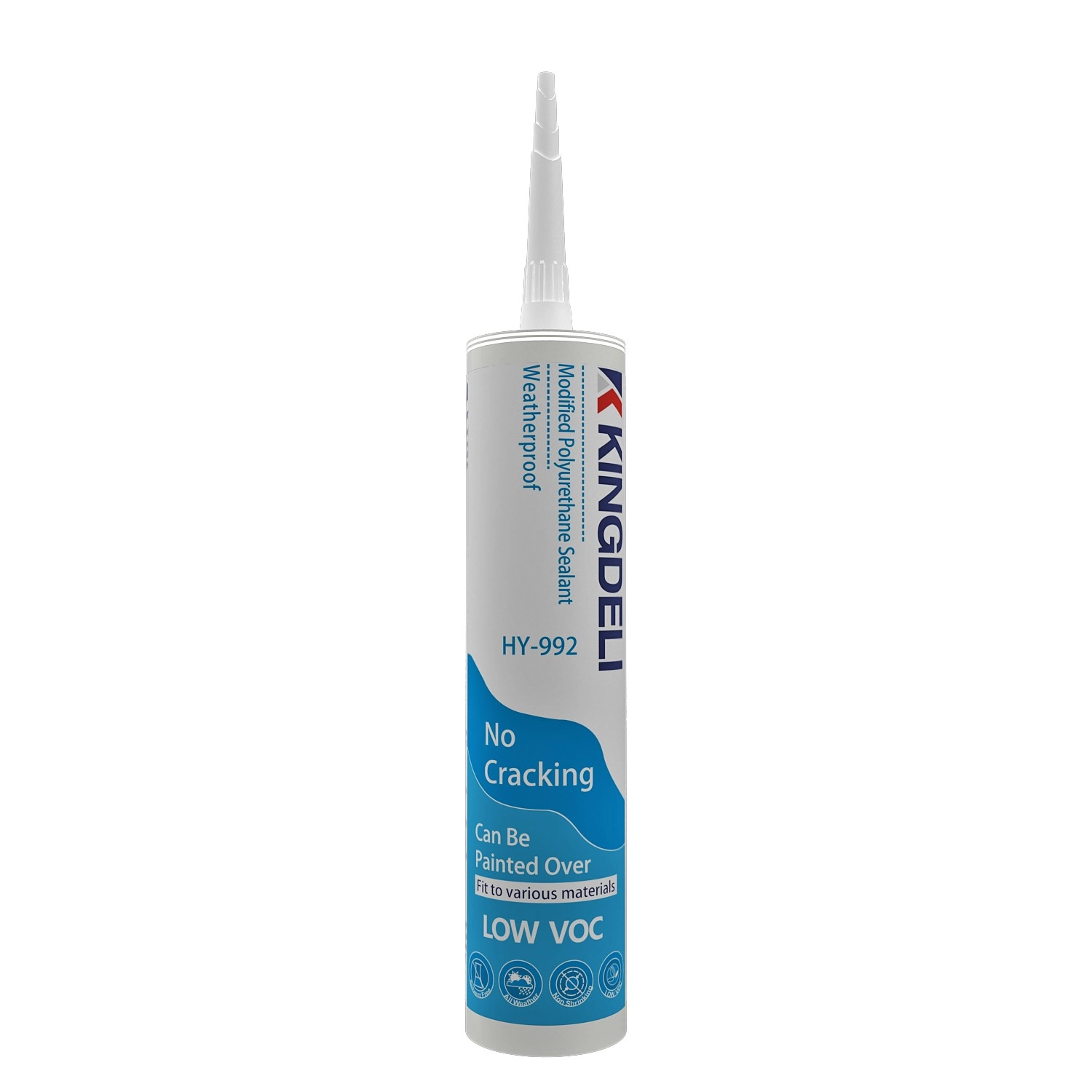
HY992 Modified Polyurethane Construction Sealant
HY992 Modified Polyurethane Sealant is a one-component, moisture-curing construction sealant designed for professional building and structural sealing applications. It provides excellent adhesion, weather resistance, and durable elasticity, making it suitable for a wide range of construction materials.
The formulation delivers strong bonding performance without corrosion or substrate contamination, while maintaining low VOC content for environmentally responsible construction projects.

HY995 Crystal Clear Ms Polymer Adhesive/Sealant
HY995 Crystal Clear Ms Polymer Adhesive/Sealant is a new generation MS Polymer adhesive / sealant formulated for all bonding and sealing applications where long term reliability is required. It has excellent bonding strength on various materials. It will cure to form a durable, flexible, waterproof seal.

HY997 High-Performance Anti-Microbial MS Polymer Sealant
HY997 MS polymer sealant for is is a premium one-component, neutral-curing modified silane sealant engineered for demanding interior applications. It offers a Class 20 movement capability, ensuring long-lasting flexibility and reliable performance under dynamic joint conditions. Curing at room temperature, HY997 delivers superior anti-microbial and mildew-resistant properties, maintaining hygienic and clean environments over time.
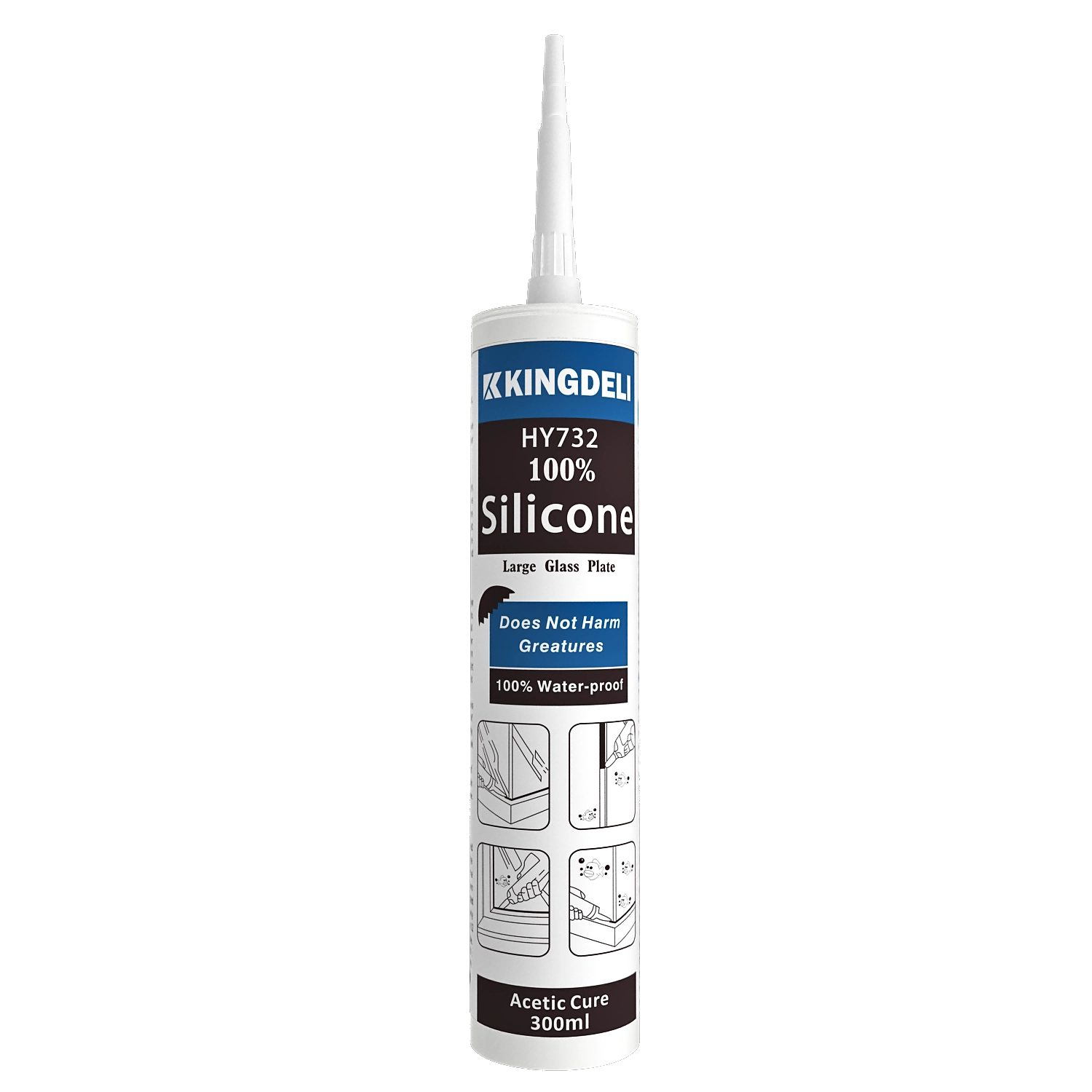
KINGDELI HY732 Professional Acetoxy Cure Silicone Sealant
KINGDELI HY732 is a professional-grade, one-component acetoxy cure silicone sealant designed for fast curing, strong adhesion, and long-lasting flexibility. Ideal for aquariums, glass applications, aluminum doors and windows, kitchens, and bathrooms, it provides reliable sealing performance with excellent anti-fungal protection in high-humidity environments.
Let’s Build Stronger Bonds with Quality Adhesives and Sealants
Have questions about the topic or need tailored sealant solutions for your project?
Our team is ready to provide expert guidance, product recommendations, and application support.
Innovating with Integrity, Bonding the World
Since 1998, KINGDELI has delivered trusted, sustainable sealant solutions that connect industries and inspire progress worldwide.
Whatsapp: +8618825946249
Kingdeli
Kingdeli
Kingdeli
Kingdeli
Kingdeli