











How to Choose the Right MS Sealant for Construction: A Professional Contractor's Checklist for 2026

- What is MS Sealant for Construction?
- Quick Summary: Why MS Polymers Dominate Modern Construction
- The Professional Contractor's Checklist: Selecting the Right MS Sealant
- Cost vs. Performance ROI and 2026 Building Standards
- Expert Tips & Common Mistakes When Applying MS Sealants
- Conclusion
- Is MS polymer the same as silicone?
- Can you paint over MS sealant?
- How long does MS polymer sealant take to cure?
- Does MS sealant work on wet surfaces?
- What is the difference between polyurethane and MS polymer?
- Is MS sealant toxic or high in VOCs?
- Do I need a primer before applying MS sealants?
- How long does MS sealant last in outdoor construction?
The modern construction landscape demands building materials that can withstand extreme weather conditions, accommodate significant structural movement, and adhere strictly to tightening environmental regulations. At the forefront of these evolving demands are silyl modified polymers (SMPs), a revolutionary sealant class that has fundamentally changed how professionals approach jointing and bonding. Whether you are dealing with high-stress expansion joints on a commercial skyscraper or sealing sensitive natural stone on a residential facade, selecting the correct chemical formulation is essential. This comprehensive guide provides an actionable checklist for contractors in 2026, helping you navigate the complexities of modern adhesives to ensure flawless, long-lasting applications.
What is MS Sealant for Construction?
MS sealant is an advanced, moisture-curing compound made from silyl modified polymers. It acts as a structural hybrid sealant technology, uniquely combining the exceptional weather resistance of silicone with the high mechanical strength and elasticity of polyurethane in one formula.
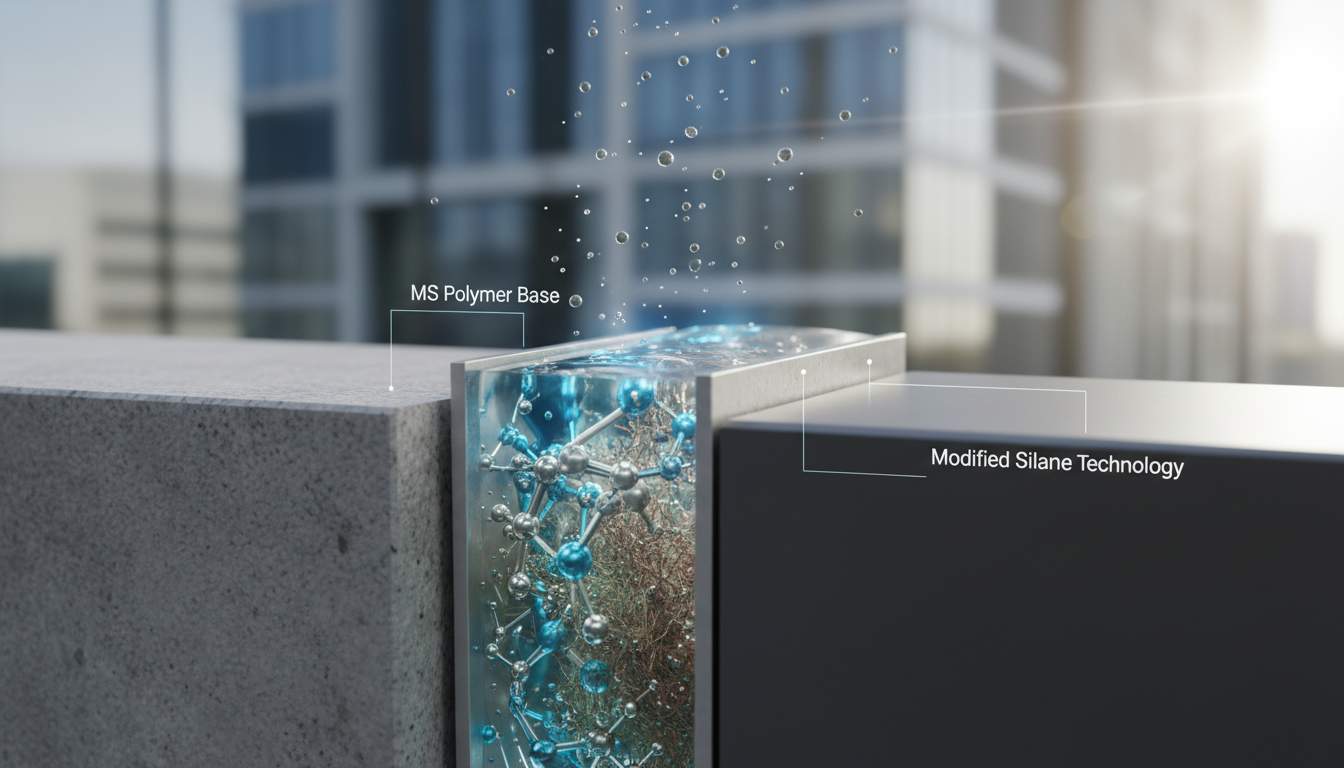
This innovative chemistry means that contractors no longer have to compromise between flexibility and durability. As reported by Wikipedia, these silyl modified polymers are the main components in solvent-free and isocyanate-free sealants that offer remarkable adhesion to a vast array of building substrates while maintaining superior temperature and UV resistance. Because it acts as an isocyanate-free construction adhesive, it is significantly safer for workers in enclosed spaces and actively prevents the bubbling, foaming, and toxic outgassing typically associated with older chemical formulations. At a molecular level, the polyether backbone terminated with silyl groups allows the sealant to cross-link with ambient moisture, creating a permanent, highly elastic network. It represents the absolute pinnacle of modern structural bonding and expansion joint sealing.
Quick Summary: Why MS Polymers Dominate Modern Construction
MS polymers dominate the modern construction industry because they deliver superior, unprimed adhesion across virtually all building materials, cure reliably in challenging weather conditions, and maintain an environmentally safe, non-toxic profile.
When contractors evaluate the debate of polyurethane vs ms polymer, the advantages of the MS hybrid become immediately clear on the job site. Here is a quick summary of why this technology leads the market:
- Primerless Adhesion to Multiple Substrates: It functions seamlessly as a primerless adhesion sealant, creating a tenacious bond on both porous materials (like concrete, brick, and blockwork) and non-porous surfaces (like glass, aluminum, and PVC) without the need for time-consuming, expensive surface primers.
- Damp Surface Curing Capabilities: Unlike traditional polyurethane options that foam, bubble, or fail structurally when exposed to water during the curing process, MS sealants cure perfectly in damp conditions. They can even bond tightly to wet surfaces, preventing weather-related project delays.
- Immediate Paintability and Aesthetics: The sealant is easily paintable "wet-on-wet" immediately after application. It is highly compatible with most water-based architectural paints, preventing aesthetic delays, cracking, and frustrating fish-eye defects.
- Superior UV and Weather Resistance: Silicone-like UV stability ensures the sealant will not crack, chalk, shrink, or yellow under intense sunlight, ensuring a completely watertight and airtight seal for decades.
The Professional Contractor's Checklist: Selecting the Right MS Sealant
Selecting the right MS sealant requires evaluating your specific project's substrate materials, anticipated joint movement, environmental exposure, and the necessary cure times to guarantee long-term performance.
To prevent costly joint failures, structural damage, and aesthetic blemishes, use this professional checklist before purchasing your materials:
- Substrate Compatibility: Evaluate the specific adhesion requirements for your building materials. While MS universally acts as a top-tier primerless adhesion sealant, highly sensitive natural stone (like marble or granite) or specialized architectural metals may require a targeted, non-staining MS formulation to avoid oil migration into the substrate.
- Movement Accommodation: Match the sealant's elasticity and modulus to the joint's stress levels. For high-stress expansion joints subject to thermal expansion, look for movement accommodation capabilities ranging from +/- 25% to 50%. A lower modulus formulation is typically best for accommodating high movement without tearing the substrate.
- Environmental Exposure: Factor in the long-term environmental load the building will endure. Consider extreme temperature fluctuations, coastal salt spray, or harsh industrial chemical exposure. Ensure the hybrid sealant technology chosen is specifically rated for those extremes, guaranteeing it won't break down under constant stress.
- Cure Time and Tack-Free Requirements: Balance your project's required speed with the sealant's proper cross-linking time. Check the manufacturer's specified tack-free time to ensure proper joint tooling can be achieved before the sealant skins over, which usually occurs within 10 to 30 minutes depending on ambient humidity.
Cost vs. Performance ROI and 2026 Building Standards
While MS sealants may carry a slightly higher upfront cost than legacy polyurethanes, their superior longevity, lack of shrinkage, and prevention of expensive callbacks deliver a significantly higher long-term return on investment over a building's lifecycle.
As the construction industry continually evaluates polyurethane vs ms polymer, lifecycle cost becomes the deciding factor. As reported by Rite Adhesives, traditional polyurethanes degrade faster under UV light and moisture, and their shorter service life offsets any initial material savings. When a joint fails, the cost of erecting scaffolding, removing the old sealant, and reapplying the new product dwarfs the initial cost difference. Investing in a premium, isocyanate-free construction adhesive mitigates these risks entirely, permanently preserving the integrity of the building envelope.
Furthermore, future-proofing your projects for the 2026+ green building standards requires utilizing ultra-low VOC (Volatile Organic Compound) materials. As reported by the U.S. Green Building Council, strict LEED v4 and v4.1 low-emitting materials credits mandate exceptionally low VOCs for interior adhesives and wet-applied sealants. Because MS polymers are inherently solvent-free and emit zero isocyanates, they effortlessly comply with these rigorous indoor air quality and sustainability benchmarks, securing valuable LEED certification points for your commercial projects.
Expert Tips & Common Mistakes When Applying MS Sealants
Applying MS sealants flawlessly requires pairing high-quality materials with proper site preparation, meticulous tooling techniques, and optimal storage practices to ensure maximum adhesion and structural integrity.
Avoid these practical field application gaps with our expert troubleshooting guide:
- Mistake: Skipping surface cleaning entirely. Just because a premium product boasts robust capabilities as a primerless adhesion sealant does not mean it can magically bond to loose dust, construction grease, or standing dirt.
- Tip: Clean all substrates thoroughly using an approved solvent or mechanical abrasion. Use specific tooling techniques with appropriate, non-soapy smoothing agents (like specialized tooling liquids) to ensure a perfect, watertight seal without compromising the chemical bond. Avoid using dish soap, which can degrade the sealant edges.
- Mistake: Ignoring the correct depth-to-width ratio in expansion joints. Overfilling a joint prevents the sealant from stretching properly, leading to cohesive failure, while underfilling leads to adhesive failure.
- Tip: Always use a properly sized closed-cell polyurethane backer rod to control the sealant depth. The standard rule of thumb is a 2:1 width-to-depth ratio for dynamic joints. Additionally, store MS sealants properly on-site in temperature-controlled environments to maintain shelf life and avoid premature curing within the packaging.
Conclusion
Utilizing a professional selection checklist ensures that contractors choose the optimal MS sealant to guarantee project longevity, superior weatherability, and strict compliance with modern building codes. By embracing this advanced hybrid sealant technology, construction teams benefit from the unmatched combination of primerless adhesion, safe handling, and resilient long-term elasticity, ultimately protecting the building and their reputation. Contact us today to discuss your specific project requirements, get expert MS sealant recommendations, and request bulk pricing.
Is MS polymer the same as silicone?
No, MS polymer is a hybrid sealant. It combines the UV resistance of silicone with the mechanical strength and paintability of polyurethane.
Can you paint over MS sealant?
Yes, one of the biggest advantages of MS sealants is that they are highly paintable. They can often be painted wet-on-wet with water-based paints without causing fish-eyes.
How long does MS polymer sealant take to cure?
Curing time depends on temperature and humidity, as it is moisture-cured. Typically, it skins over in 10-30 minutes and cures at a rate of 2-3mm per 24 hours.
Does MS sealant work on wet surfaces?
Yes, high-quality MS sealants can bond effectively to damp and even fully wet surfaces. This makes them ideal for unpredictable weather on construction sites.
What is the difference between polyurethane and MS polymer?
Polyurethane contains isocyanates and can bubble if applied to wet substrates. MS polymers are isocyanate-free, do not bubble in damp conditions, and offer better long-term UV resistance.
Is MS sealant toxic or high in VOCs?
MS sealants are generally solvent-free and have very low VOCs. They are considered safe, environmentally friendly, and widely used in green construction projects.
Do I need a primer before applying MS sealants?
In most cases, MS sealants offer primerless adhesion to a wide variety of materials. However, highly porous or constantly submerged surfaces may still require a primer.
How long does MS sealant last in outdoor construction?
Thanks to superior UV and weather resistance, MS sealants can last 20 years or more. They do not shrink, crack, or chalk as quickly as traditional sealants.
Top neutral cure silicone sealant Manufacturers and Suppliers
Top rtv gasket maker Manufacturers and Suppliers
MS Silicone Sealant Joint Design and Movement Capabilities
Top polyurethan sealant adheres to metal Manufacturers and Suppliers
HY-4300
Can HY-4300 be used with other silicone sealants?
Yes. HY-4300 has good compatibility with neutral-cure silicone sealant systems. Compatibility testing is recommended before large-scale application.
HY939A
Is this product suitable for outdoor use?
Yes. It features outstanding resistance to weathering, UV radiation, ozone, and aging, making it suitable for long-term outdoor applications.
HY924
How long does HY924 take to cure?
Curing starts as soon as the material contacts moisture. Tack-free time is typically 30–60 minutes, with full curing depending on humidity, temperature, and bead thickness.
HY-682
What substrates can it bond to?
It adheres strongly to almost all common construction and industrial materials, including concrete, metal, stone, ceramics, epoxy flooring, and painted surfaces.
Exceptions: PE, PP, and PPR materials.
HY-2300
What is HY-2300 mainly used for?
HY-2300 is designed for outdoor glazing and weatherproof sealing, especially suitable for curtain wall joints, window & door frames, ACP panel seams, and general building decoration sealing.
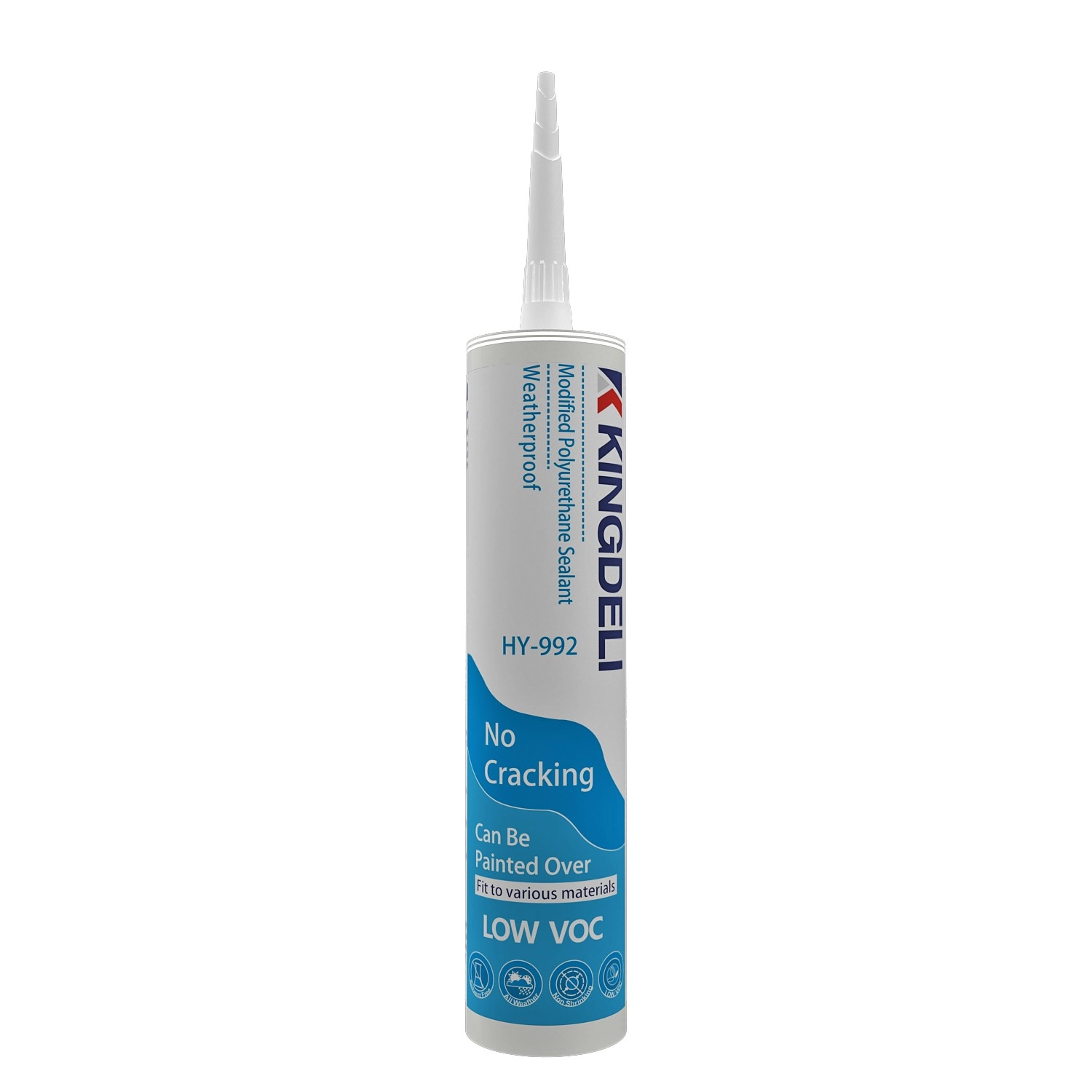
HY992 Modified Polyurethane Construction Sealant
HY992 Modified Polyurethane Sealant is a one-component, moisture-curing construction sealant designed for professional building and structural sealing applications. It provides excellent adhesion, weather resistance, and durable elasticity, making it suitable for a wide range of construction materials.
The formulation delivers strong bonding performance without corrosion or substrate contamination, while maintaining low VOC content for environmentally responsible construction projects.

HY995 Crystal Clear Ms Polymer Adhesive/Sealant
HY995 Crystal Clear Ms Polymer Adhesive/Sealant is a new generation MS Polymer adhesive / sealant formulated for all bonding and sealing applications where long term reliability is required. It has excellent bonding strength on various materials. It will cure to form a durable, flexible, waterproof seal.

HY997 High-Performance Anti-Microbial MS Polymer Sealant
HY997 MS polymer sealant for is is a premium one-component, neutral-curing modified silane sealant engineered for demanding interior applications. It offers a Class 20 movement capability, ensuring long-lasting flexibility and reliable performance under dynamic joint conditions. Curing at room temperature, HY997 delivers superior anti-microbial and mildew-resistant properties, maintaining hygienic and clean environments over time.
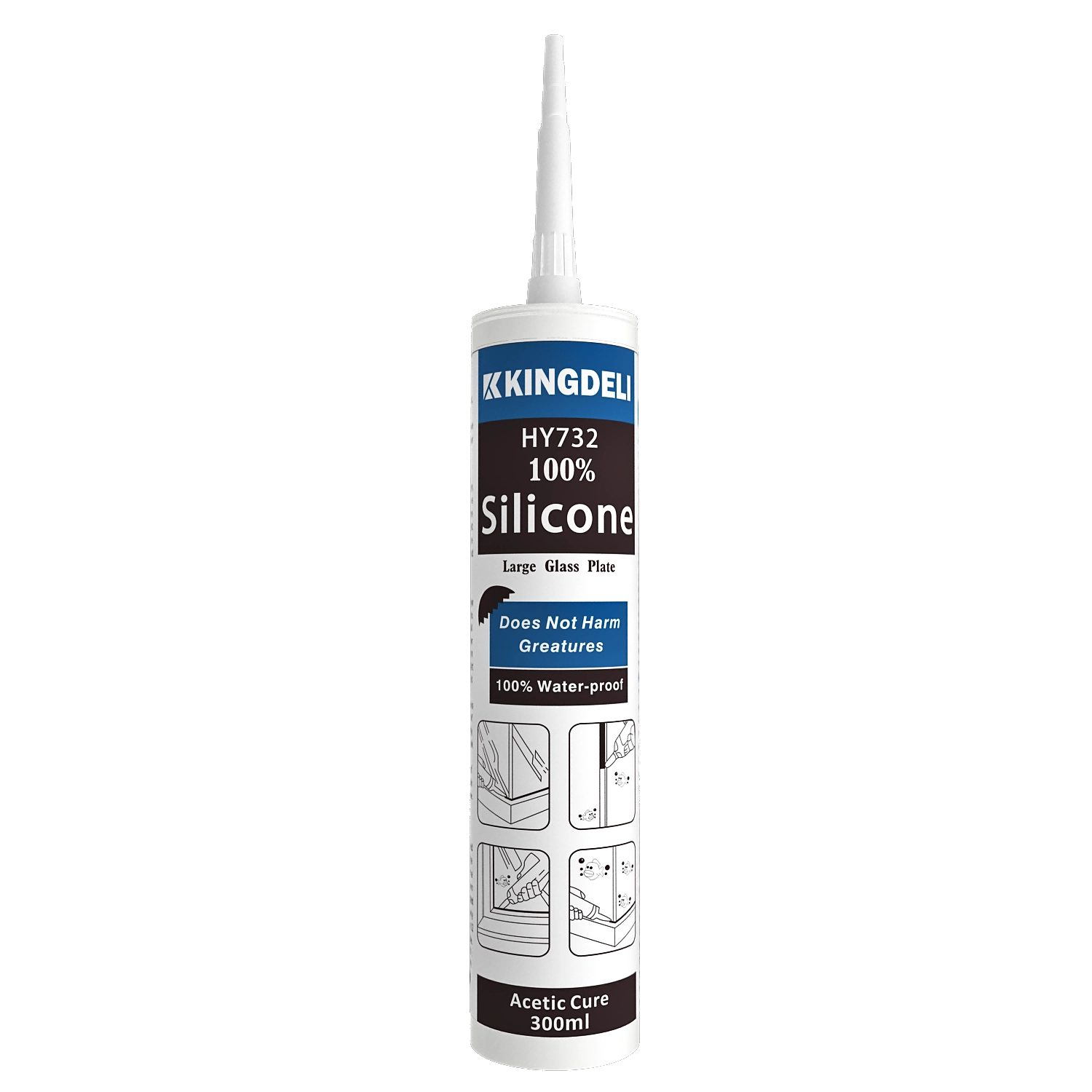
KINGDELI HY732 Professional Acetoxy Cure Silicone Sealant
KINGDELI HY732 is a professional-grade, one-component acetoxy cure silicone sealant designed for fast curing, strong adhesion, and long-lasting flexibility. Ideal for aquariums, glass applications, aluminum doors and windows, kitchens, and bathrooms, it provides reliable sealing performance with excellent anti-fungal protection in high-humidity environments.
Let’s Build Stronger Bonds with Quality Adhesives and Sealants
Have questions about the topic or need tailored sealant solutions for your project?
Our team is ready to provide expert guidance, product recommendations, and application support.
Innovating with Integrity, Bonding the World
Since 1998, KINGDELI has delivered trusted, sustainable sealant solutions that connect industries and inspire progress worldwide.
Whatsapp: +8618825946249
Kingdeli
Kingdeli
Kingdeli
Kingdeli
Kingdeli