


Fire-Rated Neutral Silicone Sealant Solutions for Buildings

- Fire-rated sealing approaches for façade joints and compartmentation
- How neutral-curing silicones contribute to passive fire protection
- Substrate compatibility and corrosion-sensitive applications
- Standards, classification, and fire rating terminology
- Selection matrix: specification, procurement and value engineering
- Technical criteria for specification writers
- Supply chain resilience and procurement logic for large projects
- Total cost of ownership and lifecycle considerations
- Installation, quality control and field verification
- Joint preparation, backing and primer selection
- Tooling, cure management and environmental constraints
- Inspection, documentation and performance monitoring
- KINGDELI: scalable fire-rated sealant supply and technical support
- Manufacturing scale, certifications and standard contributions
- Product range and customization for fire-rated projects
- Technical support, testing and integrated supply chain services
- Frequently Asked Questions
High-performance non-acidic silicone sealing systems designed for fire resistance are critical for modern façades, curtain walls, and compartmentation joints; this guide consolidates material science, test protocols, on-site installation controls, and procurement criteria so facility owners, contractors, and specification writers can minimize fire risk, ensure compliance with passive fire protection requirements, and secure scalable supply chains.
Fire-rated sealing approaches for façade joints and compartmentation
How neutral-curing silicones contribute to passive fire protection
Neutral-cure silicone formulations—also described as oxime, alkoxy, or non-acidic RTV compounds—provide elastic sealing that resists temperature cycling and maintains adhesion under thermal stress. While most silicones are not intumescent, they can retain joint integrity and delay breach by preserving substrate adhesion and limiting early-stage smoke and flame propagation when used inside tested firestop systems. Test protocols such as ASTM E1966 and vertical assembly tests validate performance of combined systems; relevant technical information is available from ASTM and fire model guidance from NFPA.
Substrate compatibility and corrosion-sensitive applications
Non-acidic sealants are specified when metal corrosion, sensitive glass coatings, or electronic enclosures require a neutral cure chemistry that does not release acetic acid during polymerization. For curtain wall interfaces, selecting a sealant with proven adhesion to anodized aluminum, steel, glass, and backed substrates reduces long-term failure risk. Suppliers should provide adhesion test data for each substrate under wet/dry cycling and accelerated aging.
Standards, classification, and fire rating terminology
Buyers and specifiers must differentiate fire-resistance classifications (e.g., through-penetration versus joint systems). Use authoritative references such as fire-resistance rating definitions and follow test methods like ASTM E1966 or EN 1366 series for service penetrations and linear joint seals. Certificates should explicitly reference the assembly report number and the tested joint geometry.
Selection matrix: specification, procurement and value engineering
Technical criteria for specification writers
Specifications should list movement capability (±25% typical for high-movement silicones), service temperature range (commonly -50°C to +150°C), shore hardness, tensile strength, and accelerated weathering results. Include required approvals: UL/ASTM lab reports, EN test reports, and ISO management system certifications. For projects with VOC constraints, request third-party emissions testing to align with local regulations.
Supply chain resilience and procurement logic for large projects
Procurement strategies must address continuous supply over phased construction: confirm annual production capacity, lead times, batch traceability, and contingency stock arrangements. For multi-site rollouts, require a supplier with global logistics, multiple packing formats, and documented cold-chain procedures if temperature-sensitive formulations are used.
Total cost of ownership and lifecycle considerations
Evaluate lifecycle cost rather than unit price. Factors include expected maintenance cycles, rework risk from adhesion failures, compatibility with sealant primers, and occupational health measures (low-odor neutral chemistries reduce site disruption). A durable seal that reduces reseal frequency delivers measurable ROI across a building portfolio.
Installation, quality control and field verification
Joint preparation, backing and primer selection
Correct surface preparation is fundamental: remove old sealant, cleaning with approved solvents, and verification that substrates are dry and free of release agents. Specify compatible backer rods and, where required, intumescent strips or fire collars as part of a tested assembly. Primer selection should be based on substrate porosity and supplier compatibility charts.
Tooling, cure management and environmental constraints
Neutral-curing silicones typically show a surface skinning time and full cure rate dependent on temperature and humidity. Plan tooling operations to achieve a concave profile for stress distribution and avoid entrapped air. During cold or low-humidity conditions, consider temporary enclosure to ensure recommended cure rates and adhesion development.
Inspection, documentation and performance monitoring
QA procedures must include pre-installation mock-ups, batch number logging, and post-installation inspection checklists that document joint width/depth, primer use, and cure observations. For critical firestopping, maintain an as-built register linked to fire test reports and periodically inspect joints for movement-induced failure, entrainment, or UV degradation.
| Property / System | Neutral-cure silicone (non-acid) | Acetoxy silicone | Polyurethane sealant | Intumescent fire sealant |
|---|---|---|---|---|
| Typical movement capability | ±20–50% (high elasticity) | ±20–40% | ±10–25% | ±10–30% (depends on formulation) |
| Service temperature | -50°C to +150°C | -40°C to +150°C | -30°C to +90°C | -20°C to +120°C |
| Substrate corrosion risk | Low (neutral cure) | Higher (acetic release) | Moderate | Low to moderate |
| Primary fire function | Maintain joint integrity; used within tested firestop assemblies | Seal and weatherproof; limited fire performance alone | Elastic sealing; variable fire performance | Active char expansion to close gaps under fire—primary firestop |
| Paintability | Usually paintable with compatible primers | Poor; surface may repel paint | Often paintable | Variable |
KINGDELI: scalable fire-rated sealant supply and technical support
Manufacturing scale, certifications and standard contributions
Since its establishment in 1998, KINGDELI has stood as a global leader in the high-performance sealant, adhesive, and coating industry. Headquartered in Foshan, China, our state-of-the-art 66,000 m² facility is powered by fully automated production lines with an annual capacity exceeding 100,000 tons, ensuring a consistent and robust supply for partners worldwide.As a recognized National High-Tech Enterprise and a key contributor to the National Standard GB/T 29755-2013, we unite advanced manufacturing power with technical excellence. Our comprehensive product portfolio—spanning Neutral & Acetic Silicone, Polyurethane, MS Polymer, and No More Nails adhesives—is engineered to meet strict international standards, including ISO 9001, ISO 14001, CE, and ASTM.With over 27 years of industry expertise and a trusted presence in 50+ countries, KINGDELI is more than a manufacturer; we are a dedicated solution provider. We offer end-to-end OEM/ODM support, sustainable low-VOC formulations, and professional technical service. At KINGDELI, we are driven by innovation and integrity, building trust and sealing the future for customers around the globe.
Product range and customization for fire-rated projects
Our relevant product families for passive fire protection and façade sealing include neutral silicone systems, acetic-cure silicones for specific weatherproofing needs, high-movement glazing sealants, polyurethane joint sealants, MS polymer adhesives for flexible bonding, RTV gasket compounds for mechanical assemblies, epoxy tile grouts for wet-area transitions, and self-leveling sealants for horizontal joints. Project teams can request custom formulations for low-VOC performance, color matching, or accelerated/retarded cure profiles to fit installation schedules.
Technical support, testing and integrated supply chain services
We provide specification support, submittal packages with test certificates (UL/ASTM/EN where applicable), on-site training for installers, and global logistics solutions to ensure multi-phase projects are supplied without interruption. For assemblies requiring third-party fire testing, KINGDELI coordinates sample preparation and delivers formulation data to accredited laboratories. Prospective partners can verify quality management systems via our ISO certificates and validated production control records available on request.
For industry-standard background on silicone chemistry and material properties, consult Silicone (Wikipedia); for quality management and system certification guidance see ISO; for fire and performance test frameworks, refer to ASTM and NFPA.
Contact the KINGDELI technical sales team to request data sheets, project-specific formulation recommendations, or batch-level production and lead-time commitments.
Frequently Asked Questions
What is the difference between neutral-cure and acetoxy-cure silicones for façade joints?
Neutral-cure silicones cure without releasing acetic acid and are preferred where metal corrosion or sensitive coatings are a concern; acetoxy-cure products release acetic acid during cure and may accelerate corrosion on some substrates. Neutral chemistries also tend to have lower odor and are specified where substrate compatibility is critical.
Can elastic silicone sealants alone provide a fire rating for compartmentation?
Elastic silicone sealants generally maintain joint integrity and delay failure, but they are not intumescent; for rated compartmentation they must be used within tested firestop assemblies or paired with active intumescent materials, collars, or backer systems that are validated by authoritative test reports such as ASTM E1966 or EN series tests.
What quality documentation should buyers request from a sealant supplier?
Buyers should request third-party fire test reports (with assembly numbers), product data sheets that list movement capability and service temperature, ISO management system certifications, VOC/emission data, adhesion test results for relevant substrates, and batch traceability and production capacity statements to ensure supply resilience.
How should contractors prepare joints before applying neutral-curing silicone?
Joints must be cleaned of old sealant and contaminants, dried, and inspected for substrate compatibility. Use appropriate backing materials (foam rod or intumescent strip) to control sealant depth, apply primers where recommended by the manufacturer, and tool the sealant to a concave profile for stress distribution and adhesion.
What procurement practices reduce risk for multi-phase building projects?
Specify required lead times and minimum stock commitments, confirm annual production capacity and packing variations, require batch traceability and QA documentation, and engage a supplier capable of OEM/ODM customization and international logistics to prevent interruptions during phased installations.
Silicone Sealant for Windows and Doors: Manufacturer vs Supplier
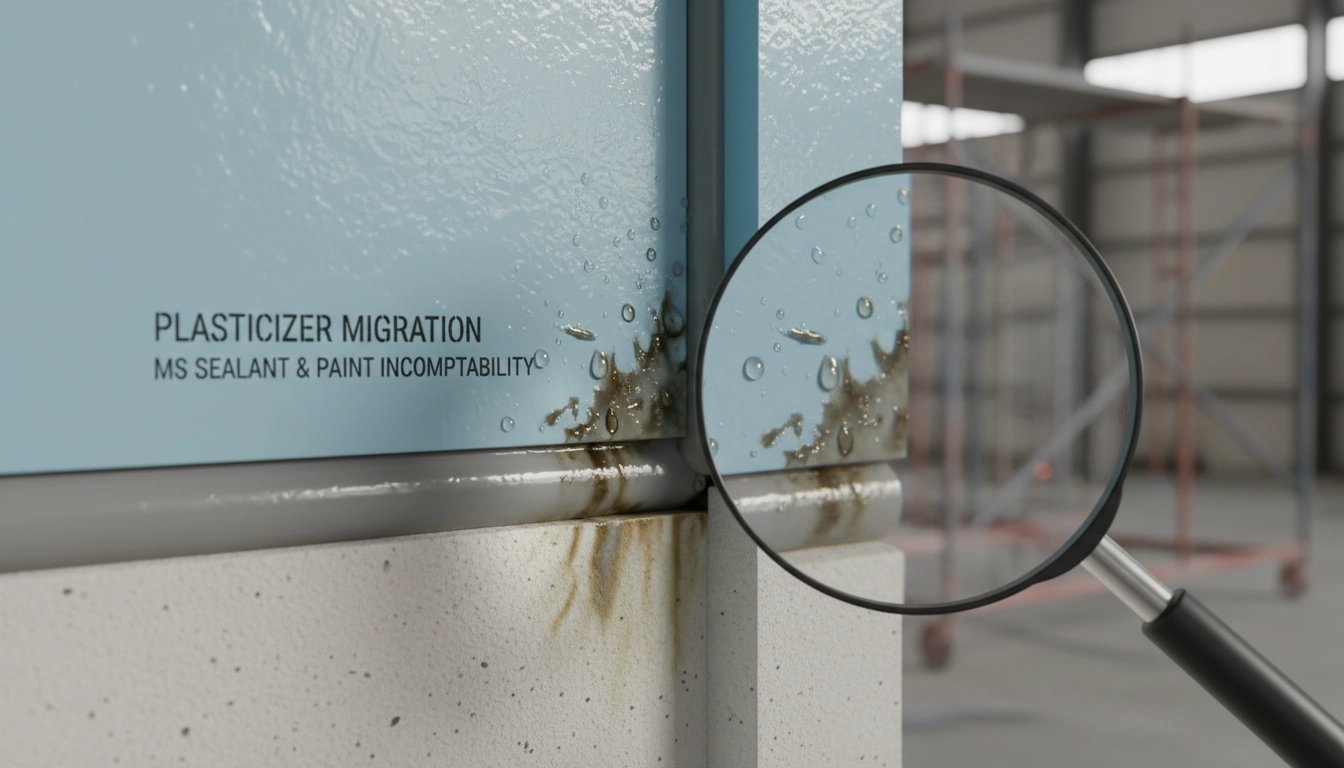
7 Costly Mistakes When Painting Over MS localized Polymer Sealants in 2026 (And How to Fix Them)

HY-739 Premium Acetic Silicone Sealant | KINGDELI

7 Critical RTV Gasket Maker Mistakes Most Mechanics Make (and How to Avoid Them) [2026 Update]

HY992 Modified Polyurethane Construction Sealant
HY992 Modified Polyurethane Sealant is a one-component, moisture-curing construction sealant designed for professional building and structural sealing applications. It provides excellent adhesion, weather resistance, and durable elasticity, making it suitable for a wide range of construction materials.
The formulation delivers strong bonding performance without corrosion or substrate contamination, while maintaining low VOC content for environmentally responsible construction projects.

HY995 Crystal Clear Ms Polymer Adhesive/Sealant
HY995 Crystal Clear Ms Polymer Adhesive/Sealant is a new generation MS Polymer adhesive / sealant formulated for all bonding and sealing applications where long term reliability is required. It has excellent bonding strength on various materials. It will cure to form a durable, flexible, waterproof seal.

HY997 High-Performance Anti-Microbial MS Polymer Sealant
HY997 MS polymer sealant for is is a premium one-component, neutral-curing modified silane sealant engineered for demanding interior applications. It offers a Class 20 movement capability, ensuring long-lasting flexibility and reliable performance under dynamic joint conditions. Curing at room temperature, HY997 delivers superior anti-microbial and mildew-resistant properties, maintaining hygienic and clean environments over time.

KINGDELI HY732 Professional Acetoxy Cure Silicone Sealant
KINGDELI HY732 is a professional-grade, one-component acetoxy cure silicone sealant designed for fast curing, strong adhesion, and long-lasting flexibility. Ideal for aquariums, glass applications, aluminum doors and windows, kitchens, and bathrooms, it provides reliable sealing performance with excellent anti-fungal protection in high-humidity environments.
Let’s Build Stronger Bonds with Quality Adhesives and Sealants
Have questions about the topic or need tailored sealant solutions for your project?
Our team is ready to provide expert guidance, product recommendations, and application support.
Innovating with Integrity, Bonding the World
Since 1998, KINGDELI has delivered trusted, sustainable sealant solutions that connect industries and inspire progress worldwide.

Whatsapp: +8618825946249
Kingdeli
Kingdeli
Kingdeli
Kingdeli
Kingdeli