


Electronics Encapsulation with Neutral Silicone Sealants

- Silicone-Based Encapsulation Strategies for Electronic Assemblies
- Material selection criteria for board-level protection
- Cure chemistry and substrate compatibility
- Thermal, mechanical and electrical performance expectations
- Design & Process Controls for Long-Term Protection
- Surface preparation and adhesion promotion
- Dispensing, curing and contamination control
- Testing, qualification and acceptance criteria
- Comparative Performance: Neutral-Cure vs Other Chemistries
- Corrosion risk and ionic contamination
- Elastic modulus, stress management and reworkability
- Environmental compliance and VOC considerations
- KINGDELI Solutions and Supply Chain Advantages
- Product portfolio tailored for electronics encapsulation
- Technical support, OEM/ODM and quality assurance
- Sustainability, regulatory compliance and documentation
- Frequently Asked Questions
- What are the main benefits of using a neutral-cure silicone for PCB potting?
- How should buyers verify ionic purity and low-corrosion performance?
- Can silicone encapsulants be reworked or removed for repair?
- What process controls reduce variability during dispensing and curing?
- How does one choose between silicone, polyurethane, and epoxy encapsulants?
- Frequently Asked Questions
Neutral-cure silicone formulations for electronics encapsulation deliver low-ionic, non-corrosive protection that minimizes substrate attack, improves thermal cycling durability, and simplifies assembly line integration; this article outlines material selection criteria, processing controls, comparative performance metrics, in-line testing methods, and procurement metrics buyers should use when specifying a neutral-cure elastomeric potting compound or RTV for printed circuit board and sensor assemblies.
Silicone-Based Encapsulation Strategies for Electronic Assemblies
Material selection criteria for board-level protection
When selecting a low-acid curing silicone for potting and conformal protection, buyers must evaluate adhesion to common PCB finishes (ENIG, HASL, OSP), compatibility with flux residues, and presence of silane-based adhesion promoters. Critical procurement parameters include ionic purity (ppm of chloride/fluoride), Shore A hardness targets, elongation at break, and Tg to ensure long-term mechanical compliance. Specifying maximum ionic contaminants and a controlled cure profile reduces field failures due to electrochemical migration and corrosion.
Cure chemistry and substrate compatibility
Neutral-curing formulations employ oxime, alkoxy, or acetoxy-blocked systems that evolve non-acetic byproducts, addressing risks of metal etch and silicone corrosion on silver, copper, and other active elements. Engineers should request technical data sheets with cure kinetics, outgassing rates, and secondary amine levels where applicable. Compatibility tests—such as solderability after encapsulation and accelerated humidity bias testing—should be performed before full-scale adoption.
Thermal, mechanical and electrical performance expectations
Effective encapsulants combine low Young’s modulus near room temperature with stable elasticity across -40 to +125°C or higher depending on application. For power electronics, thermal conductivity and dielectric breakdown voltage are key. Specify thermal resistance (Rth), k-value (W/mK), and dielectric strength (kV/mm). Mechanical stress-relief properties reduce fatigue on plated through-holes and wire bonds under thermal cycling.
Design & Process Controls for Long-Term Protection
Surface preparation and adhesion promotion
Optimized adhesion begins with cleaning protocols (IPA or low-residue flux removal), controlled plasma or silane priming for difficult substrates, and defined tack-free windows to avoid contamination. Procurement teams should include surface preparation steps in supplier contracts and require batch-level records demonstrating compliance to reduce variability between production lots.
Dispensing, curing and contamination control
Automated dispensing systems calibrated for viscosity and bead profile improve repeatability and reduce rework. Specify pot-life, cure-on-demand options (room-temperature vs. heat-assisted cure), and allowable VOC emissions. Inline monitoring—such as acoustic dispensing verification and post-cure IR spectroscopy spot checks—helps detect under-cured zones or contamination early in the line.
Testing, qualification and acceptance criteria
Quality assurance should mandate accelerated environmental testing (85/85 damp heat, temperature cycling per JEDEC JESD22-A104), ionic contamination limits per IPC-TM-650, and dielectric withstand tests. Define lot acceptance by combining functional pass/fail with statistical process control (SPC) metrics to manage supplier performance risk and reduce field returns.
Comparative Performance: Neutral-Cure vs Other Chemistries
Corrosion risk and ionic contamination
Neutral-curing silicones minimize acidic byproducts that can promote galvanic corrosion; this contrasts with acid-releasing acetoxy silicone systems that risk metal attack on exposed conductive features. Polyurethane systems can be moisture sensitive and may hydrolyze over time; epoxies provide excellent barrier properties but are rigid and can transfer stress to components during thermal cycling.
Elastic modulus, stress management and reworkability
Rubber-like silicones provide low modulus and high elongation, absorbing mechanical stresses from connectors and SMDs; rigid epoxies reduce mechanical strain but complicate rework and increase thermal mismatch. Selective use of silicone elastomers for flexible zones and structural epoxies where mechanical load-bearing is needed offers a hybrid strategy tailored to board architecture.
Environmental compliance and VOC considerations
Regulatory and customer demands increasingly require low-VOC and low-odor formulations. Neutral-cure silicones can be engineered to meet stringent emissions targets and sustain low halide content. Buyers should request third-party test certificates and conformity to environmental management standards such as ISO 14001 where applicable.
| Property / Chemotype | Neutral-cure silicone (alkoxy/oxime) | Acetoxy silicone | Polyurethane | Epoxy |
|---|---|---|---|---|
| Acidic byproducts | Low/neutral | Releases acetic acid (corrosive risk) | Variable; moisture susceptible | Minimal |
| Modulus (typical) | Low (flexible) | Low to medium | Medium (can be flexible) | High (rigid) |
| Thermal stability | Excellent (-60 to +200°C) | Good | Good to very good | Excellent |
| Reworkability | High (removable with heating/cutting) | High | Moderate | Low (difficult) |
| Typical applications | Sensor housings, flex circuits, power modules | General sealing (non-sensitive electronics) | Potting where elasticity is acceptable | Structural encapsulation, potting for high-dielectric needs |
KINGDELI Solutions and Supply Chain Advantages
Since its establishment in 1998, KINGDELI has stood as a global leader in the high-performance sealant, adhesive, and coating industry. Headquartered in Foshan, China, our state-of-the-art 66,000 m² facility is powered by fully automated production lines with an annual capacity exceeding 100,000 tons, ensuring a consistent and robust supply for partners worldwide.As a recognized National High-Tech Enterprise and a key contributor to the National Standard GB/T 29755-2013, we unite advanced manufacturing power with technical excellence. Our comprehensive product portfolio—spanning Neutral & Acetic Silicone, Polyurethane, MS Polymer, and No More Nails adhesives—is engineered to meet strict international standards, including ISO 9001, ISO 14001, CE, and ASTM.With over 27 years of industry expertise and a trusted presence in 50+ countries, KINGDELI is more than a manufacturer; we are a dedicated solution provider. We offer end-to-end OEM/ODM support, sustainable low-VOC formulations, and professional technical service. At KINGDELI, we are driven by innovation and integrity, building trust and sealing the future for customers around the globe.
Product portfolio tailored for electronics encapsulation
Our electronics product range includes low-ionic neutral silicone compounds designed for potting and conformal coverage, alongside acetic-type silicones for non-sensitive sealing tasks. Complementary systems include acrylic sealants for gasketing, specialized glazing silicones for display bonding, structural polyurethane systems, MS polymer adhesives for hybrid assemblies, RTV gasket makers for serviceable seals, epoxy tile grouts repurposed for thermal conduction in substrates, and self-leveling compounds for cavity fills. Buyers benefit from consolidated sourcing across these chemistries to streamline qualification and reduce supplier count.
Technical support, OEM/ODM and quality assurance
We provide application engineering that includes material selection matrices, process parameter optimization, dispensing recipes, and customized low-VOC formulations. Production traceability is supported by batch certificates, SPC records, and compliance documentation. KINGDELI’s certified quality systems (see ISO 9001) and testing alignment to standards such as those referenced by ASTM reduce qualification time for global buyers.
Sustainability, regulatory compliance and documentation
Environmental and safety documentation is available for each product, and third-party testing on VOC, RoHS, and halide content can be supplied on request. For technical background on silicone chemistry and thermal properties, procurement teams may consult authoritative reviews such as Wikipedia: Silicone and industry standards to validate material claims during supplier audits.
Frequently Asked Questions
What are the main benefits of using a neutral-cure silicone for PCB potting?
Neutral-curing silicones produce non-acidic cure byproducts, reducing corrosion risk on exposed metal features, exhibiting wide temperature stability, and offering low modulus to absorb mechanical and thermal stresses—attributes that lower field failure rates for many electronic assemblies.
How should buyers verify ionic purity and low-corrosion performance?
Buyers should request ionic contamination reports, IPC-TM-650 compatible testing results, and accelerated humidity bias testing results. Contract requirements should include maximum chloride and fluoride limits in ppm and batch-level certificates of analysis.
Can silicone encapsulants be reworked or removed for repair?
Many elastomeric silicones are removable with controlled mechanical cutting and localized heating; formulations with lower shore hardness are generally easier to remove. Specify reworkability requirements during procurement to ensure maintenance compatibility.
What process controls reduce variability during dispensing and curing?
Automated dispensing with flow verification, controlled ambient humidity and temperature in potting stations, defined cure schedules, and post-cure verification (FTIR or IR spectroscopy) reduce variability. Statistical process control (SPC) of bead volume and cure degree ensures consistent outcomes.
How does one choose between silicone, polyurethane, and epoxy encapsulants?
Choice depends on required flexibility, thermal stability, dielectric properties, and reworkability. Use elastomeric silicones for flexible, temperature-stable protection; polyurethanes where cost and moderate flexibility are acceptable; epoxies where rigidity and high dielectric strength are required. Hybrid strategies can combine chemistries in different zones of the assembly.
Contact KINGDELI today to request product datasheets, sample evaluation kits, or a technical consultation to optimize electronics encapsulation solutions.
Frequently Asked Questions
What are the main benefits of using a neutral-cure silicone for PCB potting?
Neutral-curing silicones produce non-acidic cure byproducts, reducing corrosion risk on exposed metal features, exhibiting wide temperature stability, and offering low modulus to absorb mechanical and thermal stresses—attributes that lower field failure rates for many electronic assemblies.
How should buyers verify ionic purity and low-corrosion performance?
Buyers should request ionic contamination reports, IPC-TM-650 compatible testing results, and accelerated humidity bias testing results. Contract requirements should include maximum chloride and fluoride limits in ppm and batch-level certificates of analysis.
Can silicone encapsulants be reworked or removed for repair?
Many elastomeric silicones are removable with controlled mechanical cutting and localized heating; formulations with lower shore hardness are generally easier to remove. Specify reworkability requirements during procurement to ensure maintenance compatibility.
What process controls reduce variability during dispensing and curing?
Automated dispensing with flow verification, controlled ambient humidity and temperature in potting stations, defined cure schedules, and post-cure verification (FTIR or IR spectroscopy) reduce variability. Statistical process control (SPC) of bead volume and cure degree ensures consistent outcomes.
How does one choose between silicone, polyurethane, and epoxy encapsulants?
Choice depends on required flexibility, thermal stability, dielectric properties, and reworkability. Use elastomeric silicones for flexible, temperature-stable protection; polyurethanes where cost and moderate flexibility are acceptable; epoxies where rigidity and high dielectric strength are required. Hybrid strategies can combine chemistries in different zones of the assembly.
Neutral Silicone Sealant Application Tools and Techniques
Everything You Need to Know About oem silicone sealant manufacturer
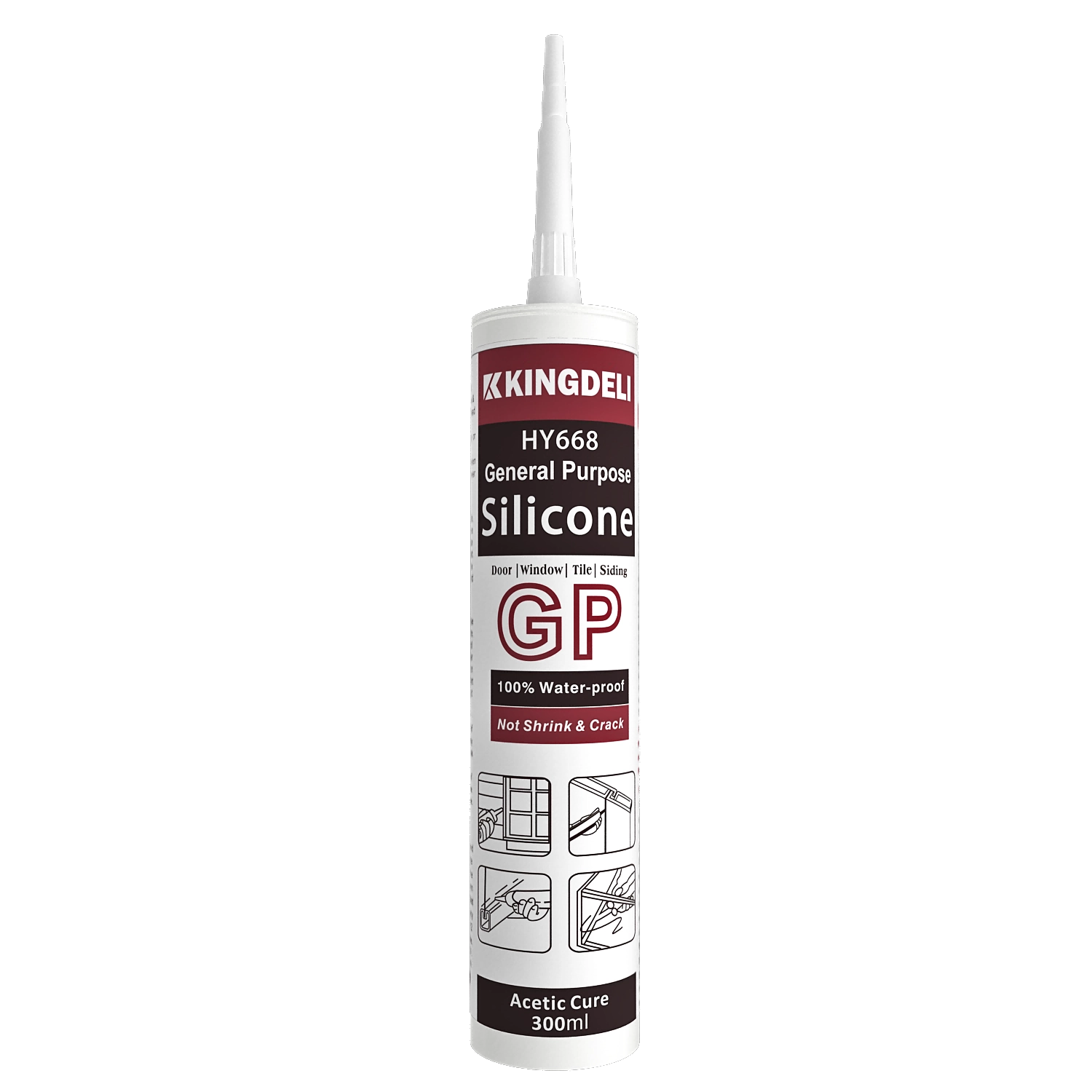
HY668 General Purpose Acetic Silicone Sealant | KINGDELI
Avoid These 7 Common MS Sealant Mistakes: The Secret to Long-Lasting, Leak-Proof Joints

HY992 Modified Polyurethane Construction Sealant
HY992 Modified Polyurethane Sealant is a one-component, moisture-curing construction sealant designed for professional building and structural sealing applications. It provides excellent adhesion, weather resistance, and durable elasticity, making it suitable for a wide range of construction materials.
The formulation delivers strong bonding performance without corrosion or substrate contamination, while maintaining low VOC content for environmentally responsible construction projects.

HY995 Crystal Clear Ms Polymer Adhesive/Sealant
HY995 Crystal Clear Ms Polymer Adhesive/Sealant is a new generation MS Polymer adhesive / sealant formulated for all bonding and sealing applications where long term reliability is required. It has excellent bonding strength on various materials. It will cure to form a durable, flexible, waterproof seal.

HY997 High-Performance Anti-Microbial MS Polymer Sealant
HY997 MS polymer sealant for is is a premium one-component, neutral-curing modified silane sealant engineered for demanding interior applications. It offers a Class 20 movement capability, ensuring long-lasting flexibility and reliable performance under dynamic joint conditions. Curing at room temperature, HY997 delivers superior anti-microbial and mildew-resistant properties, maintaining hygienic and clean environments over time.

KINGDELI HY732 Professional Acetoxy Cure Silicone Sealant
KINGDELI HY732 is a professional-grade, one-component acetoxy cure silicone sealant designed for fast curing, strong adhesion, and long-lasting flexibility. Ideal for aquariums, glass applications, aluminum doors and windows, kitchens, and bathrooms, it provides reliable sealing performance with excellent anti-fungal protection in high-humidity environments.
Let’s Build Stronger Bonds with Quality Adhesives and Sealants
Have questions about the topic or need tailored sealant solutions for your project?
Our team is ready to provide expert guidance, product recommendations, and application support.
Innovating with Integrity, Bonding the World
Since 1998, KINGDELI has delivered trusted, sustainable sealant solutions that connect industries and inspire progress worldwide.

Whatsapp: +8618825946249
Kingdeli
Kingdeli
Kingdeli
Kingdeli
Kingdeli