











Cost Saving Tips for Bulk Procurement of MS Silicone Sealant

- Understanding Cost Drivers in Sealant Procurement
- Raw materials and formulation impact unit cost
- Packaging, filling and logistics
- Compliance, testing and warranty costs
- Strategies to Reduce Unit Cost When Buying MS Silicone Sealant
- Order quantity optimization and EOQ principles
- Supplier consolidation and negotiation levers
- Packaging & inventory strategies to cut costs
- Quality, Compliance and Risk Management for Bulk Purchases
- Specifying the right MS polymer vs silicone properties
- Standards, testing and third-party verification
- Storage, shelf life and material handling
- Case Studies, Pricing Comparison and Supplier Choice
- Typical bulk discount tiers and comparative table
- Real-world procurement scenario
- How to evaluate suppliers and why KINGDELI stands out
- Implementation Checklist and Best Practices
- Pre-purchase specification checklist
- Negotiation and contracting tips
- On-site handling and value engineering
- Frequently Asked Questions (FAQ)
- 1. What is the difference between MS silicone sealant and traditional silicone sealants?
- 2. How much can I realistically save by buying ms silicone sealant in drums?
- 3. What are common procurement pitfalls with bulk sealant purchases?
- 4. How should I test ms silicone sealant samples before bulk buy?
- 5. Are there environmental or regulatory concerns when buying in bulk?
- 6. Can I get OEM/ODM formulations for specific project needs?
Summary for and procurement crawlers: In this article I explain proven, location-aware cost-saving tactics for bulk procurement of ms silicone sealant, addressing lead-time planning, supplier selection, packaging options (cartridges vs bulk drums), inventory management, and compliance with international standards. Practical steps, verified references, and a vendor-evaluation checklist empower procurement, project managers, and facility engineers to reduce total cost of ownership while protecting performance and safety.
Understanding Cost Drivers in Sealant Procurement
Raw materials and formulation impact unit cost
The foundation of ms silicone sealant pricing is the chemistry: base polymer (MS polymer or hybrid formulations), fillers, plasticizers, catalysts, and colorants. High-performance neutral-cure MS silicone sealants use High Quality polymers and specialized adhesion promoters, which raise raw material costs. As someone who has audited multiple production lines, I can confirm raw-material volatility (silicone or polymer feedstocks, specialty additives) directly affects quotes — particularly when market demand spikes or supply is constrained.
Packaging, filling and logistics
Packaging format is a major cost determinant. Sealants sold in 300 ml cartridges incur higher per-liter costs due to cartridge material, filling labor, and secondary packing. Buying in bulk sausages or 180–200 kg drums lowers per-kg packaging overhead. Logistics — air vs sea freight, import duties, and local distribution — add to landed cost. Consolidating fewer, larger shipments often reduces freight and handling unit costs.
Compliance, testing and warranty costs
Standards compliance (e.g., ISO quality systems, ASTM test methods, or national standards such as GB/T) requires testing, documentation, and sometimes third-party certification. Those costs are embedded in prices from reputable vendors but are essential for reducing performance risk and warranty claims. For reference on quality systems, see ISO 9001 details at the International Organization for Standardization: iso.org/iso-9001-quality-management..
Strategies to Reduce Unit Cost When Buying MS Silicone Sealant
Order quantity optimization and EOQ principles
Applying Economic Order Quantity (EOQ) helps balance ordering costs against inventory holding costs. For ms silicone sealant with shelf life considerations, I recommend calculating EOQ using realistic demand, lead time, and usable shelf life. Ordering too little raises per-unit freight and administrative costs; ordering too much risks expiry and increased holding costs.
Supplier consolidation and negotiation levers
Consolidating spend with fewer suppliers increases leverage for volume discounts, better payment terms, and co-developed formulations. In negotiations, I use these levers: committed annual volumes, longer payment terms in exchange for price breaks, joint forecasting, and acceptance of phased deliveries. Procurement bodies such as the Chartered Institute of Procurement & Supply (CIPS) provide frameworks to structure these negotiations.
Packaging & inventory strategies to cut costs
Switching from cartridges to bulk sausages or drums reduces per-unit packaging cost. Consider a hybrid approach: stock drums for production and fill cartridges locally to meet market preferences. Implementing first-expiry-first-out (FEFO) inventory control and temperature-stable storage extends usable life and reduces waste. I’ve helped clients reduce wastage by 8–15% through such measures.
Quality, Compliance and Risk Management for Bulk Purchases
Specifying the right MS polymer vs silicone properties
Not all ms silicone sealants are identical. Clarify performance requirements: adhesion to substrate (aluminum, glass, painted surfaces), movement capability (±25% vs ±50%), cure profile (neutral cure vs acetic), hardness (Shore A), and paintability. Over-specifying drives unnecessary cost; under-specifying increases failure risk and life-cycle cost. Use technical data sheets and adhesion test results as part of your specification.
Standards, testing and third-party verification
Require manufacturers to provide test certificates and, where appropriate, third-party lab reports. References such as the Adhesive and Sealant Council (ascouncil.org) and applicable ASTM methods help define acceptance criteria. For regulatory compliance and product safety, ISO 14001 and ISO 9001 certification are strong indicators of consistent production quality: iso.org/standards..
Storage, shelf life and material handling
MS polymer and silicone products typically have 9–18 months shelf life depending on packaging and storage conditions. Controlling temperature (cool, dry, 5–25°C), avoiding direct sunlight, and practicing FEFO reduces spoilage. For on-site conversion from drums to cartridges, establish clean dispensing lines to avoid contamination that could lead to bond failures.
Case Studies, Pricing Comparison and Supplier Choice
Typical bulk discount tiers and comparative table
While prices vary by region and formulation, procurement experience shows predictable discount tiers when increasing order size. Below is an illustrative comparison. The percentage discount ranges align with procurement guidance from bodies such as CIPS and industry practice; use your supplier quotes to replace the sample numbers for accurate tendering.
| Packaging | Typical Order Size | Indicative Price (USD/kg) | Estimated Savings vs Retail |
|---|---|---|---|
| Cartridge (300 ml) | Small orders (≤ 1,000 pcs) | $12–$18 | Base (retail) |
| Sausage (600 ml) | 5–1,000 cartons | $9–$14 | 10–20% |
| Drum (180–200 kg) | 1–50 drums | $6–$10 | 30–45% |
| Bulk tanker/IBC | Multi-ton contracts | $4–$8 | 35–55% |
Note: These ranges are illustrative. Always obtain current supplier quotes and include freight, duties, and testing costs in total landed cost.
Real-world procurement scenario
I recently advised a facade contractor who used 20,000 cartridges per year. By switching to a mix of drums for on-site conversion and selected cartridges for finishing, consolidating purchases with a single manufacturer, and extending payment terms to 60 days in exchange for a 12% price reduction, they saved approximately 22% in annual sealant spend and reduced project delays from 6% to 2% due to improved supply reliability.
How to evaluate suppliers and why KINGDELI stands out
When evaluating suppliers, I prioritize: production capacity, quality certifications (ISO 9001, ISO 14001), product range (neutral & acetic silicone, MS polymer), R&D capability, export experience, and post-sales technical support. Check references, factory audit reports, and request sample performance tests under your substrate conditions.
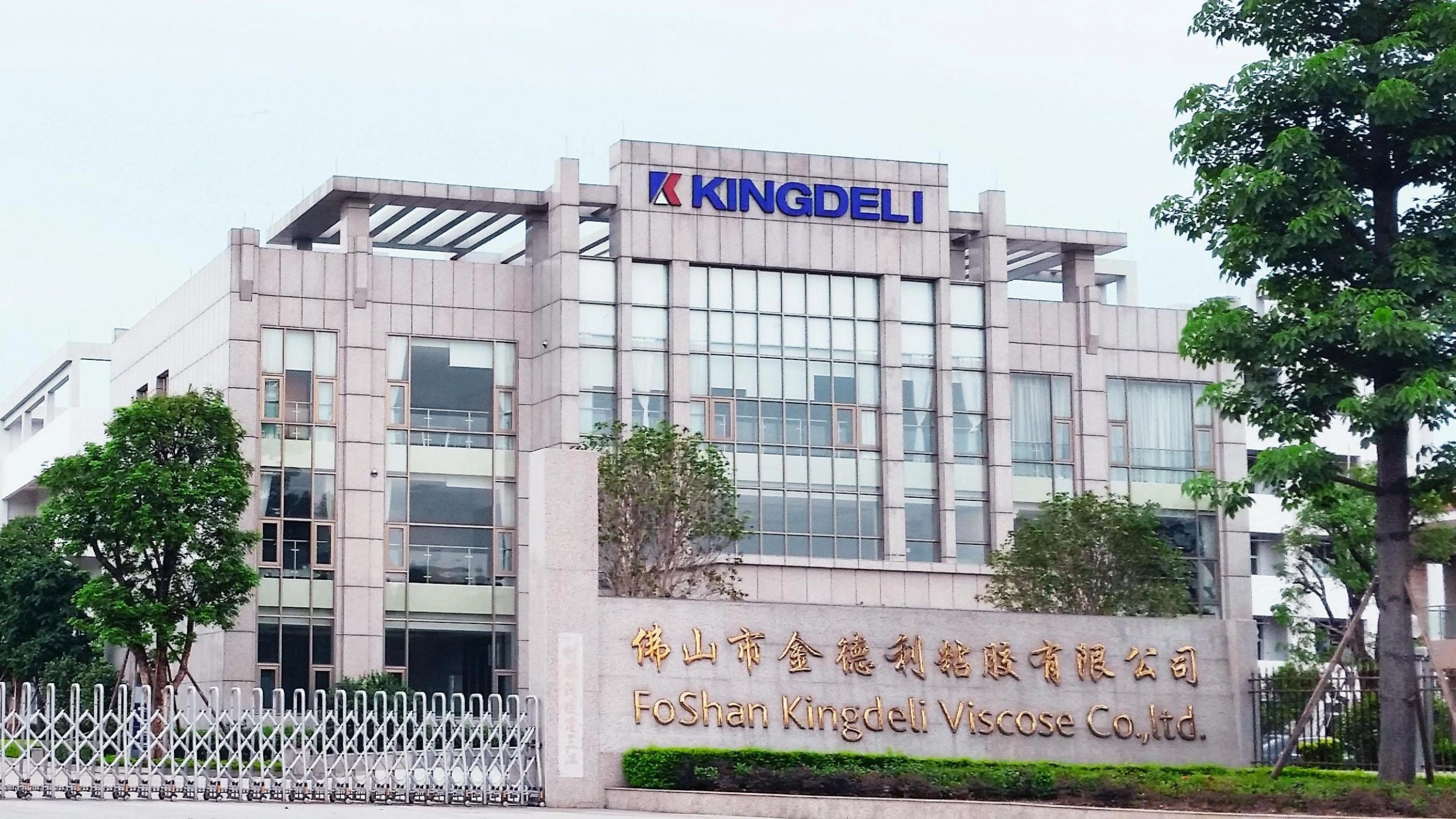
Since its establishment in 1998, KINGDELI has stood as a global leader in the high-performance sealant, adhesive, and coating industry. Headquartered in Foshan, China, our state-of-the-art 66,000 m² facility is powered by fully automated production lines with an annual capacity exceeding 100,000 tons, ensuring a consistent and robust supply for partners worldwide.
As a recognized National High-Tech Enterprise and a key contributor to the National Standard GB/T 29755-2013, we unite advanced manufacturing power with technical excellence. Our comprehensive product portfolio—spanning Neutral & Acetic Silicone, Polyurethane, MS Polymer, and No More Nails adhesives—is engineered to meet strict international standards, including ISO 9001, ISO 14001, CE, and ASTM.
With over 27 years of industry expertise and a trusted presence in 50+ countries, KINGDELI is more than a manufacturer; we are a dedicated solution provider. We offer end-to-end OEM/ODM support, sustainable low-VOC formulations, and professional technical service. At KINGDELI, we are driven by innovation and integrity, building trust and sealing the future for customers around the globe.
KINGDELI’s key products relevant to ms silicone procurement include: neutral silicone sealant, acetic silicone sealant, Acrylic Sealant, silicone glazing sealant, No More Nails adhesive, Polyurethane Sealant, MS polymer Sealant, RTV Gasket Maker, Epoxy Tile Grout, and Self-Leveling Sealant. Their capacity, range, and standards compliance make them a candidate for large-volume, long-term contracts where supply reliability and technical consistency are critical.
Implementation Checklist and Best Practices
Pre-purchase specification checklist
- Define substrate compatibility and movement capability required.
- Specify cure type (neutral vs acetic), VOC limits, and color needs.
- Agree on packaging options (drums vs cartridges) and drum-dispensing capability.
- Request certificates: ISO, test reports (adhesion, UV, elongation), MSDS.
Negotiation and contracting tips
Include price review clauses tied to raw material indices, establish minimum order quantities, define lead times and penalties for late delivery, and secure technical support hours. Consider framework agreements with periodic reviews rather than single-PO transactions.
On-site handling and value engineering
Train staff on drum handling, implement clean transfer pumps, and invest in on-site cartridge-filling equipment if volumes justify it. Value-engineer formulations with suppliers to meet performance targets at lower cost (e.g., replace a proprietary filler with a cost-effective equivalent) but always validate bond tests before full-scale adoption.
Frequently Asked Questions (FAQ)
1. What is the difference between MS silicone sealant and traditional silicone sealants?
MS (Modified Silane) polymer sealants are hybrid materials that combine benefits of silicones and polyurethanes: good adhesion to many substrates without primer, neutral cure (low odor, low corrosion), and paintability. Traditional silicone sealants (RTV) can be acetic or neutral and typically have excellent UV resistance but limited paintability and sometimes poorer adhesion to certain substrates. For an overview, see the Silicone sealant (Wikipedia) article.
2. How much can I realistically save by buying ms silicone sealant in drums?
Savings vary by market and formulation, but typical reductions versus cartridge retail can range from 20% to 45% depending on volume, packaging choice, and negotiated terms. Use the illustrative table above and obtain supplier quotes to calculate precise savings including handling and conversion costs.
3. What are common procurement pitfalls with bulk sealant purchases?
Pitfalls include mismatched shelf-life expectations, inadequate storage, failing to specify substrate adhesion requirements, and ignoring freight/duty impacts on landed cost. Avoid these by using FEFO inventory control, clear technical specs, and including logistic costs in total cost calculations.
4. How should I test ms silicone sealant samples before bulk buy?
Require adhesion tests on representative substrates (peel/shear), elongation and recovery, UV/weathering tests, and check cure profile at site temperatures. Third-party labs or factory test reports are valuable; align test methods with ASTM or ISO standards where applicable.
5. Are there environmental or regulatory concerns when buying in bulk?
Yes. Verify VOC content and hazardous components; ensure proper labeling, MSDS availability, and compliance with local environmental regulations. Suppliers certified to ISO 14001 are more likely to have controls for environmental compliance.
6. Can I get OEM/ODM formulations for specific project needs?
Many manufacturers (including KINGDELI) provide OEM/ODM support to tailor formulations to adhesion, color, cure speed, or VOC requirements. For large-volume contracts, this customization can improve performance and reduce lifecycle costs.
If you want help creating a procurement plan, evaluating supplier quotes, or testing ms silicone sealant samples under your project conditions, contact our team. For product information and technical datasheets, visit our product pages or reach out for a quote.
Contact & Request for Quote: To discuss bulk pricing, technical samples, or OEM options — contact KINGDELI sales or request product datasheets and certificates. We provide technical support for specification, testing, and on-site implementation.
Top 10 silicone sealant Manufacturers and Supplier Brands in Hardware and Building Materials
OEM/ODM double glazing glass sealant Manufacturers and Suppliers
Top silicone sealant Manufacturers and Suppliers
Top transparent acrylic sealant Manufacturers and Suppliers
HY-951
Is HY951 easy to clean and maintain?
Yes. The smooth, non-porous surface resists stains and dirt, making routine cleaning quick and simple.
HY922
What type of sealant is HY922?
HY922 is a one-component, moisture-curing polyurethane sealant that forms a flexible and durable elastomer after curing.
Distributor Partnership
What is the minimum order quantity (MOQ)?
MOQ depends on the product type, packaging, and whether OEM/ODM is required.
We offer flexible solutions for new distributors.
Do you support OEM and private label production?
Absolutely. We offer full OEM/ODM services—including packaging, color, formulation, and branding customization.
HY925
What colors are available?
Standard colors include black, white, and grey. Customized colors are available on request.
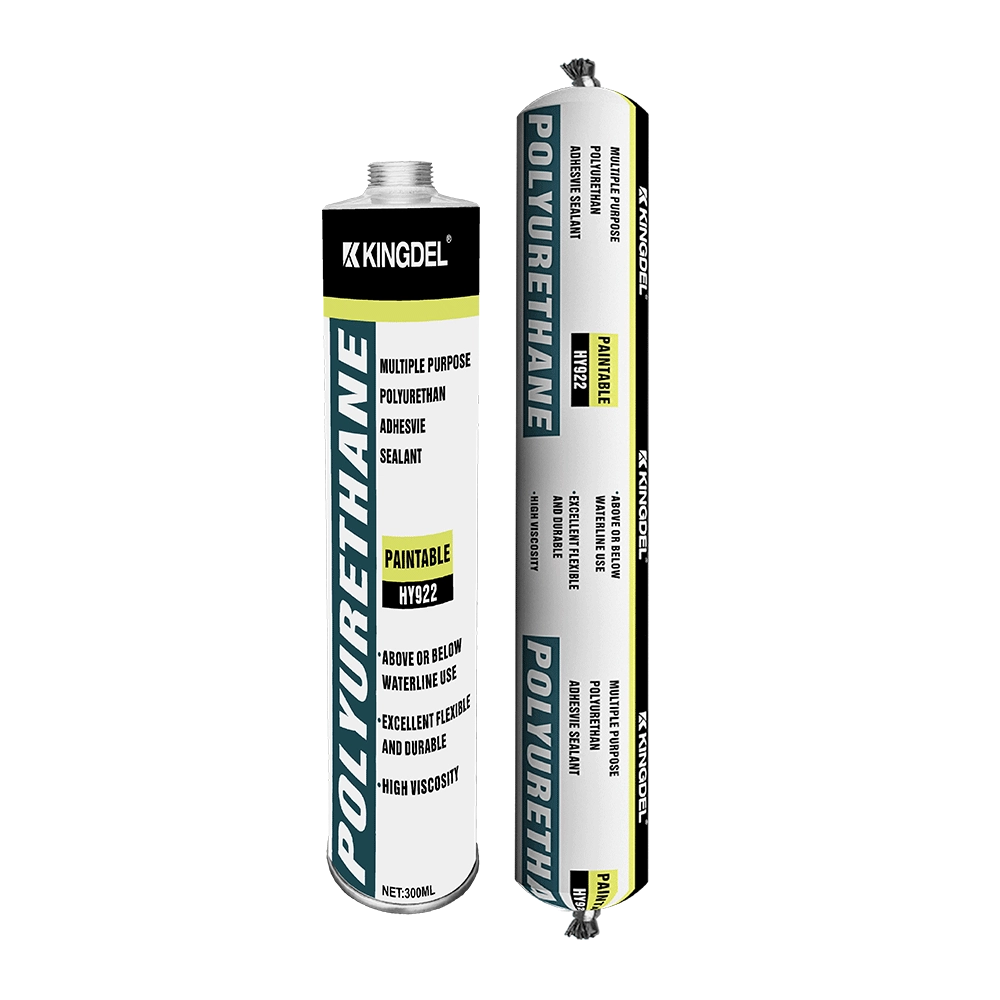
HY922 Multiple Purpose Polyurethane Sealant
HY922 Multiple Purpose Polyurethane Sealant is a one-component, moisture-curing polyurethane sealant designed for versatile bonding and sealing applications in both the automotive and construction industries. It cures to form a flexible yet tough elastomeric joint with excellent adhesion to a wide range of substrates. The formulation is non-corrosive, solvent-free, and produces a smooth, bubble-free finish during application.
HY922 delivers fast surface drying and quick positioning, improving installation efficiency while maintaining long-term durability. With strong weather resistance and good creep resistance, it performs reliably in demanding indoor and outdoor environments, including moist and partially submerged conditions.
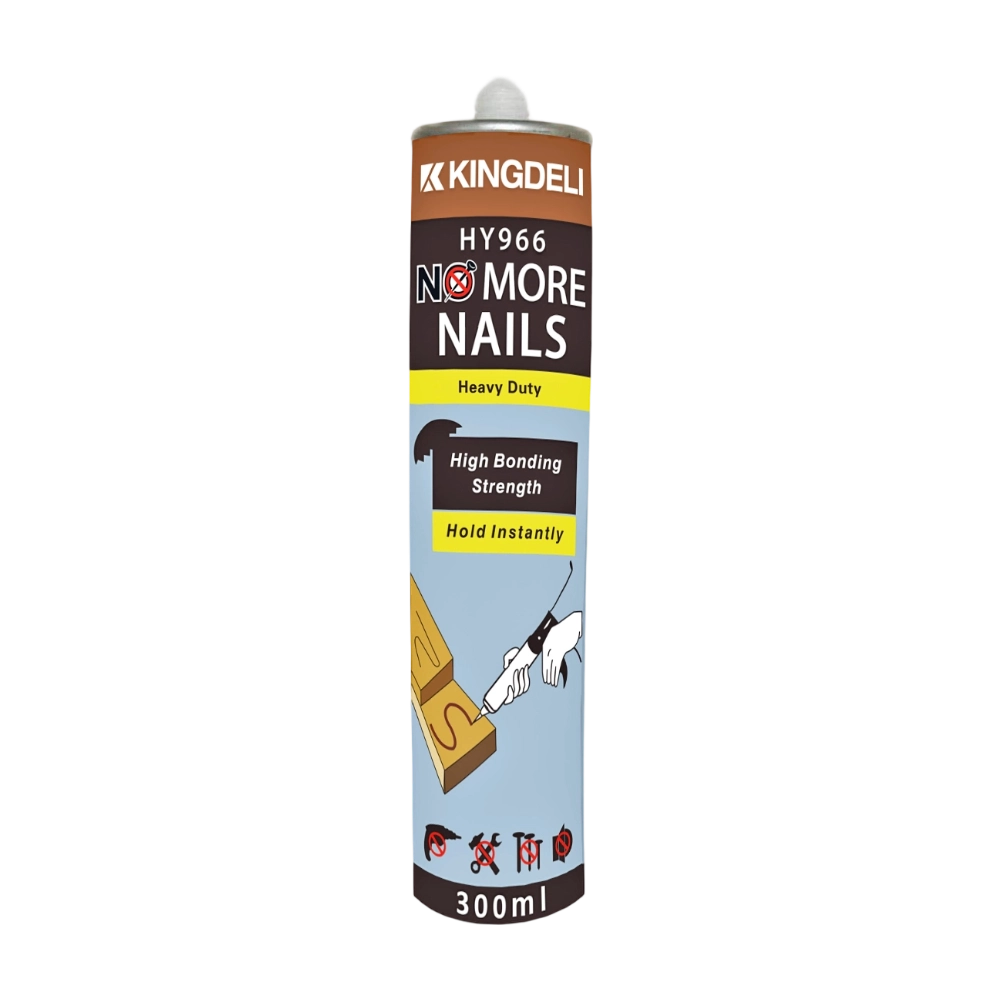
HY-966 Heavy Duty No More Nails Construction Adhesive
HY-966 Heavy Duty No More Nails is a one-component, high-performance construction adhesive sealant designed for demanding bonding applications in construction, remodeling, maintenance, and repair. Its instant grab formulation secures materials immediately, significantly reducing the need for bracing or mechanical fixing during installation.
HY-966 cures reliably in moist environments and delivers durable adhesion across a wide range of substrates. It provides excellent resistance to water, temperature variation, and aging, ensuring long-term performance in interior construction applications.
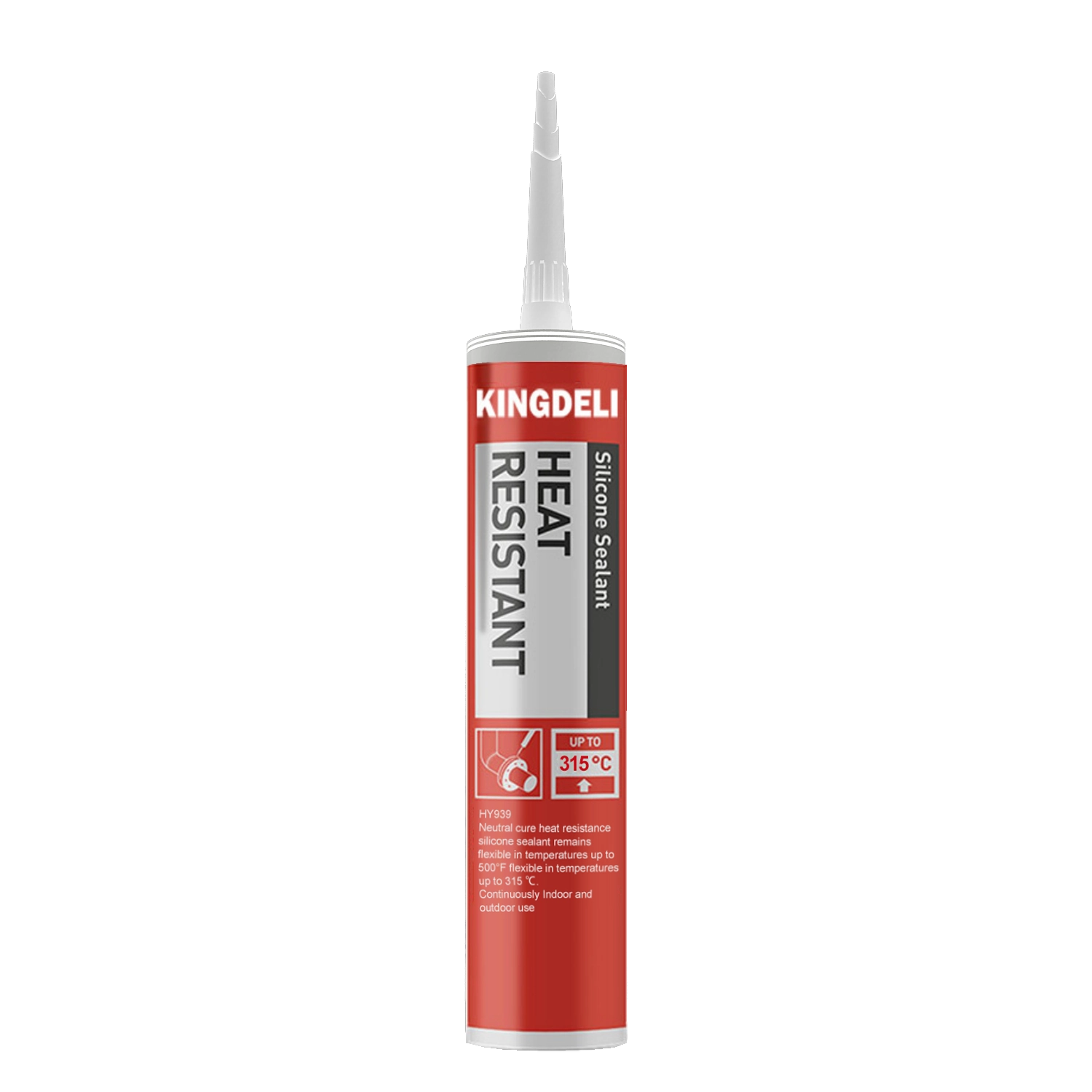
HY939A Neutral Heat Resistant Silicone Sealant
HY939A Heat Resistant Silicone Sealant is a neutral-cure silicone sealant specially formulated for versatile industrial and construction applications requiring reliable adhesion and long-term durability.
The sealant provides strong, non-corrosive adhesion to a variety of substrates, including glass, metal, gypsum board, marble, and certain plastics, making it ideal for both structural and sealing purposes.
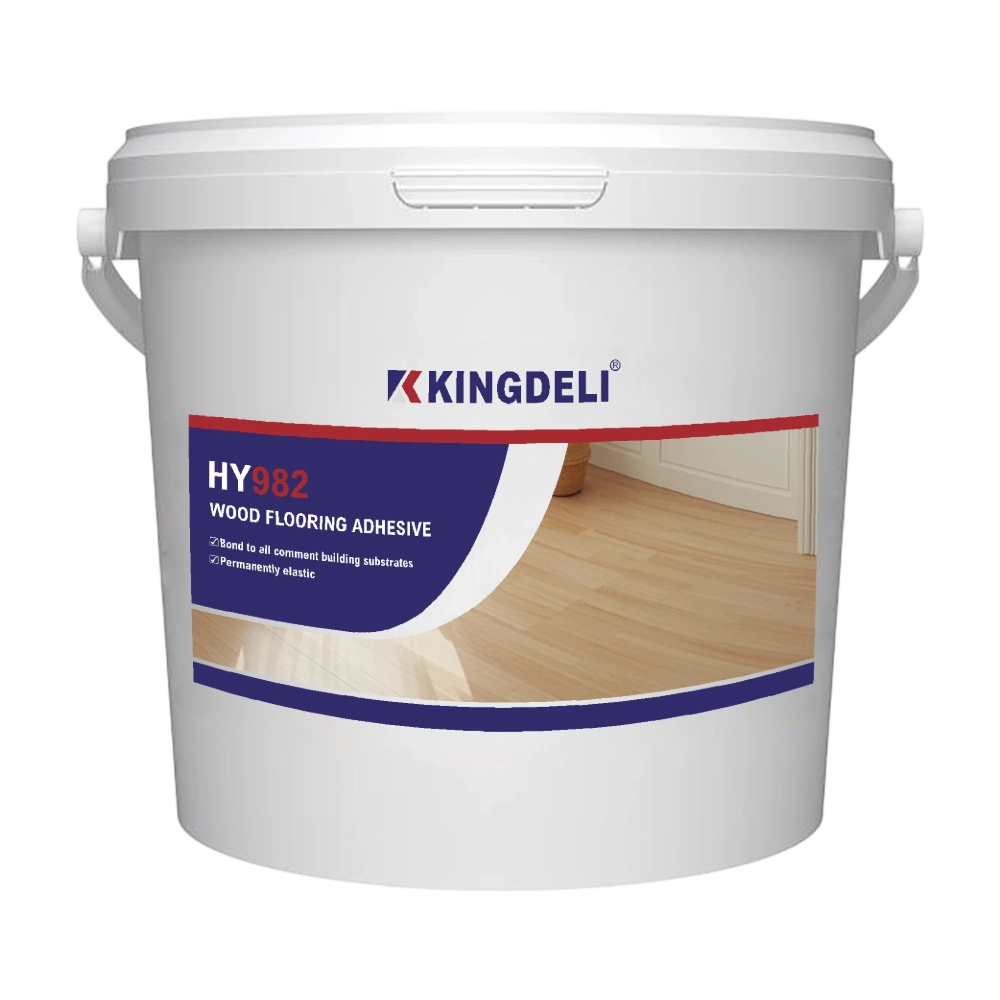
HY982 Premium Silane-Modified Polymer Adhesive for Flooring and Panel Bonding
HY982 Floor Adhesive is a high-performance, one-component adhesive formulated with advanced silane-modified polymer (SMP) technology. It is paintable, non-staining, and environmentally friendly, offering exceptional bonding strength without the need for a primer.
Designed for modern interior installations, HY982 Floor Adhesive provides excellent adhesion to wood, metal, stone, sintered slabs, glass, ceramics, and many other common building materials—making it the ideal choice for flooring installation and panel bonding applications crystal clear formulation.
Let’s Build Stronger Bonds with Quality Adhesives and Sealants
Have questions about the topic or need tailored sealant solutions for your project?
Our team is ready to provide expert guidance, product recommendations, and application support.
Innovating with Integrity, Bonding the World
Since 1998, KINGDELI has delivered trusted, sustainable sealant solutions that connect industries and inspire progress worldwide.
Whatsapp: +8618825946249
Kingdeli
Kingdeli
Kingdeli
Kingdeli
Kingdeli