











Cost Breakdown: Raw Materials and Margins in PU Adhesives

- How PU Adhesive Pricing Is Built Across the Supply Chain
- Raw materials are the primary variable cost
- Additives and performance ingredients influence value
- Packaging, production, and quality assurance add measurable cost
- Margin Analysis: Separating Manufacturer Economics from Buyer Value
- Gross margin is not the same as excessive profit
- Application economics matter more than kilogram price
- Quotation normalization prevents false comparisons
- KINGDELI’s Approach to Consistent Cost and Performance
- Scale and automation support supply reliability
- Standards, formulation breadth, and technical support
- OEM, ODM, and lower-risk purchasing programs
- Frequently Asked Questions
- What raw materials have the greatest effect on PU adhesive pricing?
- How should buyers compare two polyurethane adhesive quotations?
- Why can a lower-cost adhesive create a higher project cost?
- What quality documents should a B2B buyer request?
- Is a manufacturer’s margin always a disadvantage for the buyer?
- Can KINGDELI provide customized adhesive and sealant solutions?
For buyers sourcing a polyurethane adhesive for windshield applications, the quoted price is only one part of the commercial equation. A reliable cost analysis must connect raw-material volatility with formulation complexity, packaging, production yield, compliance testing, logistics, technical service, warranty risk, and the manufacturer’s operating margin. Polyurethane adhesives used for automotive glass, transportation, construction, insulated panels, footwear, and industrial assembly can have very different cost structures even when they appear similar on a price-per-cartridge basis. The practical procurement question is therefore not simply “What is the lowest price?” but “What delivered performance and risk profile are included in the price?”
Polyurethane chemistry is based on reactions involving polyols and isocyanates, with catalysts, moisture-control systems, adhesion promoters, fillers, pigments, plasticizers, stabilizers, and rheology modifiers added to achieve the required processing and cured properties. The chemistry is technically sensitive: changes in viscosity, moisture content, cure rate, modulus, open time, primer compatibility, or packaging quality can affect production efficiency and field performance. Buyers should assess suppliers against documented quality systems such as ISO 9001 and, where environmental management is material to the project, ISO 14001.
How PU Adhesive Pricing Is Built Across the Supply Chain
Raw materials are the primary variable cost
Isocyanates and polyols generally form the largest part of the chemical input cost. Their prices can move with crude-oil derivatives, energy costs, plant outages, regional availability, currency fluctuations, freight rates, and contract terms. A formulation containing specialty polyols, silane-modified components, blocked isocyanates, or high-performance adhesion promoters may cost considerably more than a standard industrial grade. Buyers should request a technical bill of materials or at least a clear explanation of the major cost drivers, while recognizing that confidential formulations may prevent full disclosure of exact percentages.
Fillers such as calcium carbonate, silica, carbon black, and other mineral or functional materials can reduce cost or modify rheology, density, sag resistance, hardness, and mechanical strength. However, filler substitution is not automatically economical. Lower-cost filler may increase mixing demand, reduce extrusion smoothness, affect moisture sensitivity, or create inconsistent bead quality. For windshield bonding and structural assembly, the cost of an application failure is normally much higher than the saving achieved through aggressive filler loading.
Additives and performance ingredients influence value
Catalysts control cure speed and can affect skin formation, through-cure behavior, odor, and storage stability. Moisture scavengers help protect one-component systems during storage, while adhesion promoters improve bonding to glass, coated metals, plastics, and painted substrates. UV stabilizers, antioxidants, plasticizers, thixotropes, and pigments also influence final performance. A low quotation may indicate a simpler additive package, but it may also lead to slower line throughput, shorter shelf life, greater primer dependence, or more stringent storage conditions.
For automotive glazing, procurement teams should review modulus, elongation, tensile and lap-shear performance, cure rate at defined temperature and humidity, electrical resistance where relevant, compatibility with glass coatings, and paint or primer systems. Applicable test methods should be identified rather than inferred from marketing language. ASTM standards provide recognized test frameworks, but the correct method depends on the substrate, end use, and customer specification.
Packaging, production, and quality assurance add measurable cost
Cartridges, foil sausages, pails, and drums each create different packaging and filling costs. Foil packaging can reduce moisture exposure and improve material utilization, while cartridges may be easier for distributors and installers. The relevant comparison is cost per usable gram or cost per completed application, not simply cost per package. A package that leaves excessive residue or requires frequent nozzle replacement can increase labor and waste.
Manufacturing cost includes mixing energy, vacuum operation, labor, equipment depreciation, cleaning, batch release, laboratory testing, environmental controls, and production yield. A modern automated line can reduce variation and improve repeatability, but its cost must be recovered through volume and operating efficiency. Quality assurance also includes incoming-material inspection, viscosity checks, density measurement, cure testing, adhesion testing, packaging integrity checks, and retained samples. These controls protect buyers from batch-to-batch variation that can otherwise create rework and warranty claims.
| Cost component | What typically drives it | Procurement implication |
|---|---|---|
| Isocyanates and polyols | Petrochemical feedstocks, supply availability, energy, currency, and contract terms | Compare quotation validity, indexation, and formulation grade rather than only the headline price |
| Functional additives | Cure speed, adhesion, rheology, storage stability, UV resistance, and regulatory requirements | Verify that performance claims are supported by test data on the intended substrates |
| Packaging | Package format, barrier properties, filling process, closures, labels, and waste rate | Calculate usable material and labor cost per application |
| Manufacturing and testing | Automation, yield, energy, laboratory controls, certification, and batch release | Assess consistency, traceability, and the cost of line interruptions or rejected batches |
| Logistics and compliance | Hazard classification, documentation, freight distance, warehousing, and local regulations | Use total landed cost and confirm import, storage, and handling obligations |
| Supplier margin and service | Technical support, inventory financing, warranty exposure, customization, and commercial risk | Judge margin against measurable service, reliability, and risk reduction |
Margin Analysis: Separating Manufacturer Economics from Buyer Value
Gross margin is not the same as excessive profit
A manufacturer’s selling price must cover direct materials, direct labor, factory overhead, depreciation, quality systems, regulatory work, sales administration, financing, inventory risk, and profit. Gross margin is calculated before many corporate expenses, while net margin is calculated after those expenses. Comparing a supplier’s price with its estimated raw-material cost can therefore produce a misleading conclusion. A producer with strong automation may have higher fixed costs but lower unit conversion costs at scale; a smaller producer may quote less overhead but face weaker purchasing power and less robust quality infrastructure.
Margin also compensates the supplier for commercial risk. Custom colors, private labels, special packaging, low minimum order quantities, consignment inventory, extended payment terms, and emergency production all consume working capital. A buyer seeking OEM or ODM development should expect tooling, trials, laboratory validation, regulatory documentation, and pilot-batch costs to be reflected somewhere in the commercial model.
Application economics matter more than kilogram price
The correct comparison is often cost per bonded vehicle, window, panel, assembly, or linear meter. A higher-value moisture-cure adhesive may reduce bead size, shorten fixture time, eliminate primer, lower waste, or reduce labor. Conversely, a low-cost product may require more material, longer waiting time, additional surface preparation, or greater inspection. Total cost of ownership should include dispensing equipment, operator time, rejected parts, cleaning solvent, storage losses, transport damage, and after-sales service.
For a glass-bonding program, buyers should calculate bead length, cross-sectional dimensions, package yield, cure time, installation throughput, and rework probability. The calculation should use verified technical data under the project’s temperature and humidity conditions. Safety and compliance costs should also be included because chemical handling requirements and regional restrictions can affect warehouse design, employee training, transport documentation, and insurance.
Quotation normalization prevents false comparisons
Procurement teams should normalize every offer to the same currency, Incoterm, package size, tax status, delivery location, shelf life, and payment terms. Product specifications should be aligned for viscosity, density, cure profile, modulus, tensile strength, elongation, adhesion, primer requirements, storage temperature, and warranty period. A quotation that excludes technical service, testing, or special documentation may appear cheaper while transferring cost to the buyer.
Supplier audits can examine batch traceability, calibration, raw-material segregation, moisture control, preventive maintenance, complaint handling, and change-control procedures. Change notification is particularly important for automotive and construction programs because an unannounced change in catalyst, filler, package liner, or adhesion promoter can alter field behavior. The ISO 19011 auditing guidance offers a useful framework for planning and conducting management-system audits.
KINGDELI’s Approach to Consistent Cost and Performance
Scale and automation support supply reliability
Our team at KINGDELI has operated in the high-performance sealant, adhesive, and coating industry since 1998. Headquartered in Foshan, China, our 66,000 m² facility uses fully automated production lines and has annual capacity exceeding 100,000 tons. This manufacturing scale supports stable supply, repeatable filling, controlled batch production, and efficient service for distributors, brand owners, contractors, and industrial customers in multiple regions.
Capacity alone does not guarantee value, so our manufacturing process is supported by documented quality controls, technical laboratories, production traceability, and structured product-development procedures. We help buyers evaluate the relationship between formulation, package format, application method, and total project cost instead of treating adhesive procurement as a commodity-only decision.
Standards, formulation breadth, and technical support
KINGDELI is recognized as a National High-Tech Enterprise and has contributed to the National Standard GB/T 29755-2013. Our products are engineered to meet relevant international requirements, with certifications and management systems including ISO 9001, ISO 14001, CE, and ASTM-related testing where applicable to the product and market. Certification claims should always be matched to the specific product, factory, certificate scope, and destination-market requirement.
Our portfolio includes neutral silicone sealant, acetic silicone sealant, Acrylic Sealant, silicone glazing sealant, No More Nails adhesive, Polyurethane Sealant, MS polymer Sealant, RTV Gasket Maker, Epoxy Tile Grout, and Self-Leveling Sealant. This breadth enables buyers to consolidate compatible products across glazing, construction, industrial assembly, maintenance, and finishing applications while selecting the appropriate chemistry for each substrate and exposure condition.
OEM, ODM, and lower-risk purchasing programs
With more than 27 years of industry expertise and customers in over 50 countries, KINGDELI provides OEM/ODM support, private-label coordination, packaging adaptation, formulation consultation, and professional technical service. Our engineering team can help define application requirements, validate packaging, organize samples, and establish a production specification for repeat orders. These steps reduce ambiguity in quotation comparisons and help brand owners protect product consistency across regional markets.
We also support sustainable, low-VOC formulation objectives where the application and regulatory framework allow. Low-VOC design should be evaluated through measured emissions, curing behavior, adhesion, durability, and compliance documentation rather than through a broad environmental claim. By connecting formulation engineering with manufacturing capacity and customer service, KINGDELI aims to improve predictable landed cost, reduce operational disruption, and strengthen long-term return on adhesive procurement.
Frequently Asked Questions
What raw materials have the greatest effect on PU adhesive pricing?
Isocyanates and polyols usually have the greatest influence because they are the principal polymer-forming ingredients and are exposed to petrochemical, energy, supply, and currency changes. Specialty adhesion promoters, catalysts, moisture scavengers, and rheology modifiers can also materially affect the price of high-performance grades.
How should buyers compare two polyurethane adhesive quotations?
Normalize package size, usable content, Incoterms, taxes, freight, shelf life, payment terms, cure conditions, substrate preparation, primer requirements, and technical specifications. The most useful calculation is total applied cost per completed assembly rather than price per cartridge or kilogram.
Why can a lower-cost adhesive create a higher project cost?
A lower-priced product may require more material, slower curing, extra primer, additional labor, more inspection, or increased rework. Storage losses, inconsistent batches, warranty claims, and line stoppages can also exceed the initial purchase saving.
What quality documents should a B2B buyer request?
Buyers should request a technical data sheet, safety data sheet, certificate of analysis or batch release record, shelf-life statement, test reports relevant to the application, quality certificates, change-control policy, packaging specification, and traceability information. Certificates should be checked for scope and product applicability.
Is a manufacturer’s margin always a disadvantage for the buyer?
No. A reasonable margin can fund raw-material qualification, laboratory testing, automation, inventory availability, technical support, compliance work, warranty management, and continuous product improvement. The buyer should determine whether these services reduce total risk and applied cost.
Can KINGDELI provide customized adhesive and sealant solutions?
Yes. KINGDELI offers OEM/ODM support, formulation consultation, packaging adaptation, private-label coordination, sampling, and technical service across polyurethane, silicone, MS polymer, acrylic, and related product categories, subject to project requirements and validation.
Contact KINGDELI to compare total applied cost, request technical documentation, or review a suitable sealant and adhesive solution for your market and application.
Troubleshooting Self-Leveling Sealant Failures: Fixes and Prevention
OEM/ODM acrylic sealant Manufacturers and Suppliers
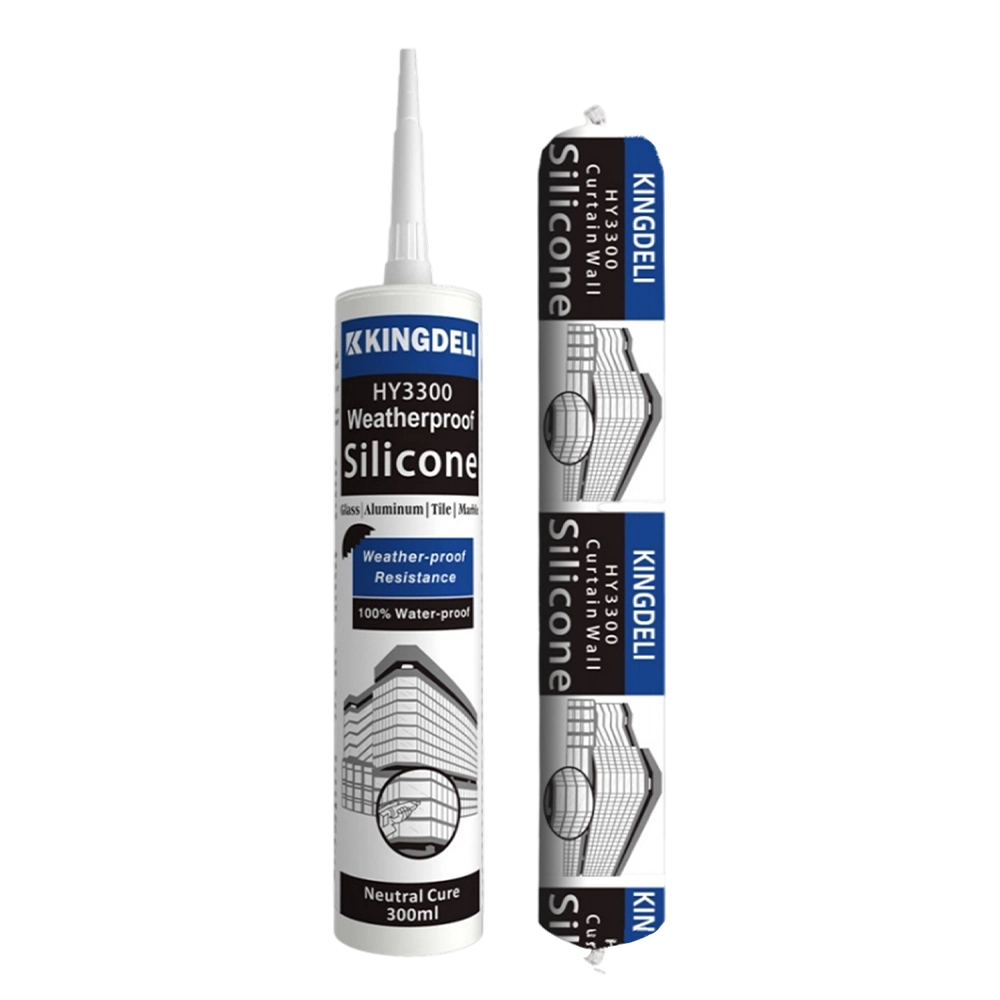
HY-3300 Weatherproof Neutral Silicone Sealant
Negotiating Long-Term Supply Contracts for PU Windshield Adhesives

HY992 Modified Polyurethane Construction Sealant
HY992 Modified Polyurethane Sealant is a one-component, moisture-curing construction sealant designed for professional building and structural sealing applications. It provides excellent adhesion, weather resistance, and durable elasticity, making it suitable for a wide range of construction materials.
The formulation delivers strong bonding performance without corrosion or substrate contamination, while maintaining low VOC content for environmentally responsible construction projects.

HY995 Crystal Clear Ms Polymer Adhesive/Sealant
HY995 Crystal Clear Ms Polymer Adhesive/Sealant is a new generation MS Polymer adhesive / sealant formulated for all bonding and sealing applications where long term reliability is required. It has excellent bonding strength on various materials. It will cure to form a durable, flexible, waterproof seal.

HY997 High-Performance Anti-Microbial MS Polymer Sealant
HY997 MS polymer sealant for is is a premium one-component, neutral-curing modified silane sealant engineered for demanding interior applications. It offers a Class 20 movement capability, ensuring long-lasting flexibility and reliable performance under dynamic joint conditions. Curing at room temperature, HY997 delivers superior anti-microbial and mildew-resistant properties, maintaining hygienic and clean environments over time.

KINGDELI HY732 Professional Acetoxy Cure Silicone Sealant
KINGDELI HY732 is a professional-grade, one-component acetoxy cure silicone sealant designed for fast curing, strong adhesion, and long-lasting flexibility. Ideal for aquariums, glass applications, aluminum doors and windows, kitchens, and bathrooms, it provides reliable sealing performance with excellent anti-fungal protection in high-humidity environments.
Let’s Build Stronger Bonds with Quality Adhesives and Sealants
Have questions about the topic or need tailored sealant solutions for your project?
Our team is ready to provide expert guidance, product recommendations, and application support.
Innovating with Integrity, Bonding the World
Since 1998, KINGDELI has delivered trusted, sustainable sealant solutions that connect industries and inspire progress worldwide.

Whatsapp: +8618825946249
Kingdeli
Kingdeli
Kingdeli
Kingdeli
Kingdeli