


Cost Analysis: Silicone vs Alternatives for Glass Glazing

- Why sealant choice matters for glazing
- Functional roles of glazing sealants
- Risk and lifecycle thinking
- Standards and performance baselines
- Cost comparison: material, application, and lifecycle
- Common alternatives evaluated
- Table: Typical cost and performance metrics (per linear meter)
- How I calculated per-meter cost
- Performance, maintenance, and failure modes
- Durability and weathering
- Adhesion, compatibility, and priming
- Common failure causes and remediation
- Selection guide: when to choose silicone vs alternatives
- When glass glazing silicone sealant is the right choice
- When alternatives make sense
- Decision checklist I use for clients
- KINGDELI: capabilities and how we fit into the choice
- How KINGDELI data supports your specs
- Practical procurement tips
- Appendix: quick comparative cost model
- FAQ
- 1. Is silicone always the best choice for glass glazing?
- 2. How do I estimate coverage for a glazing joint?
- 3. What standards should sealants meet for glazing?
- 4. Do I always need a primer with silicone on glass?
- 5. How do environmental regulations affect sealant choice?
- 6. Can structural glazing use standard glass glazing silicone sealant?
I write from years of glazing-specification and sealant-product consulting experience to deliver a practical, verifiable cost analysis focused on glass glazing silicone sealant versus its common alternatives. In this article I combine standards-based performance expectations (e.g., ASTM C920), manufacturer coverage data, and market pricing to give you transparent per-meter costs, expected service life, and replacement-cycle economics for informed decisions on façade and fenestration projects.
Why sealant choice matters for glazing
Functional roles of glazing sealants
Sealants in glazed assemblies perform multiple roles: weatherproofing, structural adhesion (in some systems), thermal and acoustic isolation, and accommodation of differential movement. Choosing a glass glazing silicone sealant or an alternative affects initial cost, installation complexity, durability, and long-term maintenance budgets.
Risk and lifecycle thinking
I always advise clients to evaluate total cost of ownership (TCO) rather than sticker price. A lower-cost acrylic or generic polyurethane may reduce upfront spend but increase maintenance, failures, or rework. Lifecycle thinking ties material properties—UV resistance, elasticity, adhesion—to predictable service intervals and replacement costs.
Standards and performance baselines
Industry standards such as ASTM C920 (elastomeric joint sealants) and ISO quality systems (ISO 9001) provide baseline performance and manufacturing credibility. When comparing glass glazing silicone sealant to alternatives I reference these baselines for movement capability, adhesion, and aging.
Cost comparison: material, application, and lifecycle
Common alternatives evaluated
In this analysis I compare: neutral-curing silicone (glass glazing silicone sealant), acetic silicones, polyurethane (PU) sealants, MS Polymer (hybrid) sealants, and acrylic sealants. I also touch on structural silicones used for structural glazing, and heavy-duty construction adhesives (e.g., No More Nails style products) where relevant.
Table: Typical cost and performance metrics (per linear meter)
The table below uses conservative coverage and price ranges derived from manufacturer datasheets (coverage per cartridge) and current retail/manufacturer pricing. Coverage assumptions: cartridge 300 mL covers ~8–12 linear meters at a 6x10 mm joint (manufacturer coverage varies). Service life estimates reference UV/weathering properties in technical literature and standards.
| Sealant Type | Approx. Material Cost (USD/m) | Expected Service Life (years) | Key Strengths | Typical Weaknesses |
|---|---|---|---|---|
| Neutral silicone (glass glazing silicone sealant) | $2.5–$6.0 | 20–30+ | Excellent UV/weather resistance, low shrinkage, good adhesion to glass & metals | Higher material cost; requires proper priming on some substrates |
| Acetic silicone | $2.0–$4.5 | 15–20 | Good adhesion to glass, fast cure | Corrosive by-products for metals, limited paintability |
| Polyurethane (PU) | $1.5–$4.0 | 10–20 | Good adhesion to porous substrates, resilient | UV degradation unless protected; surface chalking |
| MS Polymer (hybrid) | $2.0–$5.0 | 15–25 | Good adhesion, low odor, paintable, solvent-free | Cost variability; long cure time in cold/wet conditions |
| Acrylic sealant | $0.6–$2.0 | 5–10 | Lowest cost, paintable, easy tooling | Poor elasticity/UV resistance for exterior glazing joints |
Sources and guidance: cartridge coverage and costs were cross-checked with manufacturer datasheets (e.g., Sika, Dow, Tremco) and distributor listings (Home Depot, B&Q) and are directional. For standards, see ASTM C920 and material classes referenced by suppliers.
How I calculated per-meter cost
Method: price per cartridge ÷ cartridge linear meters at target joint size = USD/m. Labor and ancillary costs (primers, masking, tooling) add to installed cost and vary by region. For façade glazing, primer requirements for glass and metal can add $0.3–$1.0/m. I encourage contractors to use manufacturer installation guides for exact coverage; many glazing systems publish expected m/300 mL in technical datasheets.
Performance, maintenance, and failure modes
Durability and weathering
Silicones, and especially neutral-curing glass glazing silicone sealant, exhibit superior resistance to UV and thermal cycling compared to standard PU and acrylics. Independent weathering studies (accelerated UV and thermal cycles) consistently show slower tensile property degradation in silicones. See general silicone background: Wikipedia: Silicone.
Adhesion, compatibility, and priming
Adhesion to non-porous substrates (glass, anodized aluminum) favors neutral silicones when primer is applied per manufacturer recommendations. Some acetic silicones may corrode metals during cure. Polyurethanes adhere well to porous substrates but often need primer on glass. Hybrid MS polymers offer broad adhesion with fewer primers.
Common failure causes and remediation
Failures usually result from incorrect product selection (low-movement acrylic on high-movement joints), substrate contamination, improper joint design (insufficient width/depth ratio), or wrong cure chemistry in adverse conditions. Remediation costs are high: replacing failed sealant on a building façade often requires scaffold or abseiling, dramatically increasing TCO. That is why I emphasize service life and predictable performance when specifying glass glazing silicone sealant for critical exterior joints.
Selection guide: when to choose silicone vs alternatives
When glass glazing silicone sealant is the right choice
I specify neutral-curing glass glazing silicone sealant where long-term UV resistance, extreme temperature stability, and glass-to-metal adhesion are priority. Typical use cases: curtain wall perimeter joints, structural silicone glazing (with products designed to EN/ASTM structural classes), and exposed weather seals on high-rise façades. The up-front higher material price is often outweighed by lower maintenance and longer intervals between replacement.
When alternatives make sense
Polyurethane may be preferred on porous substrates or where impact resistance is needed. MS Polymer is a solid choice for mixed substrates with paintability requirements. Acrylics are cost-effective for interior glazing or low-movement joints where UV exposure is limited. Always match movement capability and expected service life to project budgets and maintenance cycles.
Decision checklist I use for clients
- Joint movement requirements (percentage movement ±)
- Exposure to UV, pollution, and salt spray
- Substrate compatibility and need for primer
- Accessibility for maintenance (height, scaffold cost)
- Life-cycle cost, not only material price
KINGDELI: capabilities and how we fit into the choice
Since its establishment in 1998, KINGDELI has stood as a global leader in the high-performance sealant, adhesive, and coating industry. Headquartered in Foshan, China, our state-of-the-art 66,000 m² facility is powered by fully automated production lines with an annual capacity exceeding 100,000 tons, ensuring a consistent and robust supply for partners worldwide.
As a recognized National High-Tech Enterprise and a key contributor to the National Standard GB/T 29755-2013, we unite advanced manufacturing power with technical excellence. Our comprehensive product portfolio—spanning Neutral & Acetic Silicone, Polyurethane, MS Polymer, and No More Nails adhesives—is engineered to meet strict international standards, including ISO 9001, ISO 14001, CE, and ASTM.
With over 27 years of industry expertise and a trusted presence in 50+ countries, KINGDELI is more than a manufacturer; we are a dedicated solution provider. We offer end-to-end OEM/ODM support, sustainable low-VOC formulations, and professional technical service. At KINGDELI, we are driven by innovation and integrity, building trust and sealing the future for customers around the globe.
KINGDELI highlights relevant to glazing specifiers: neutral silicone sealant, acetic silicone sealant, acrylic sealant, silicone glazing sealant, No More Nails adhesive, polyurethane sealant, MS polymer sealant, RTV gasket maker, epoxy tile grout, and self-leveling sealant. Our scale, standards participation, and technical support differentiate us when long-term supply consistency and lab-tested product performance are required.
How KINGDELI data supports your specs
When I work with clients specifying glass glazing silicone sealant or alternatives, I rely on technical datasheets and accelerated weathering data supplied by manufacturers like KINGDELI to model expected service life. Requesting material compatibility letters, adhesion test data, and primer recommendations from manufacturers is part of my standard due diligence.
Practical procurement tips
Ask suppliers for: detailed coverage charts, adhesion test results to your substrates, accelerated weathering (QUV) data, VOC certifications, and a written supply continuity plan. For large glazing projects where access later is difficult, prioritize products with demonstrated 20+ year exterior performance documented in datasheets or case studies.
Appendix: quick comparative cost model
Below is a simple lifetime cost model example for a 1000 m façade perimeter (joint 10 mm x 6 mm) assuming installation costs constant across materials. Figures are illustrative—use manufacturer coverage and local labor rates for exact budgeting.
| Sealant | Material Cost/m | Service Life (yrs) | Replacement Interval over 30 yrs | Total Material Cost over 30 yrs |
|---|---|---|---|---|
| Neutral silicone (glass glazing silicone sealant) | $4.0 | 25 | 1 (plus install) | $4,000 |
| PU | $2.5 | 12 | 2 (replacements) | $7,500 |
| Acrylic | $1.2 | 8 | 3–4 | $36,000 (higher due to frequent rework) |
Interpretation: even with higher unit cost, silicone can be lower in TCO due to fewer replacements and lower failure risk on glass and metal substrates.
FAQ
1. Is silicone always the best choice for glass glazing?
Not always. For exterior, high-movement, and UV-exposed glass-to-metal joints, neutral-curing silicone is often the best choice. For interior, low-movement joints or where paintability is essential, acrylic or MS Polymer may be appropriate. Assess joint movement, exposure, and maintenance access.
2. How do I estimate coverage for a glazing joint?
Manufacturers provide coverage charts; a 300 mL cartridge typically covers 8–12 meters at a 6x10 mm joint. Always check the technical datasheet and adjust for bead shape, waste, and tooling loss.
3. What standards should sealants meet for glazing?
Refer to ASTM C920 for generic elastomeric sealant classes, project-specific structural standards for structural silicone, and ISO 9001 for manufacturer quality systems. Also consult local building codes and façade standards.
4. Do I always need a primer with silicone on glass?
Neutral silicones often adhere well to glass but a primer may be recommended for enhanced adhesion or on treated/low-emissivity glass. Follow the manufacturer's adhesion guidance and test on sample panels when in doubt.
5. How do environmental regulations affect sealant choice?
Look for low-VOC formulations and compliance documentation. Many manufacturers (including KINGDELI) offer sustainable low-VOC options and can supply VOC test reports and SDS documents.
6. Can structural glazing use standard glass glazing silicone sealant?
No. Structural glazing requires purpose-formulated structural silicones with appropriate tensile strength and formulated per structural glazing specifications. Always use products and tested systems rated for structural loads.
Need help selecting the right sealant for your glazing project? Contact us to review joint designs, substrate conditions, and lifecycle budgets—or view KINGDELI product documentation and request technical support. For product samples, datasheets, or OEM/ODM inquiries, reach out to KINGDELI’s technical team to secure proven, long-term glazing solutions.
Construction Sealant MOQ, Pricing, and Lead Time: Buyer Benchmarks

HY-722 Premium Neutral Sanitary Sealant — High‑Performance Bathroom & Kitchen Silicone
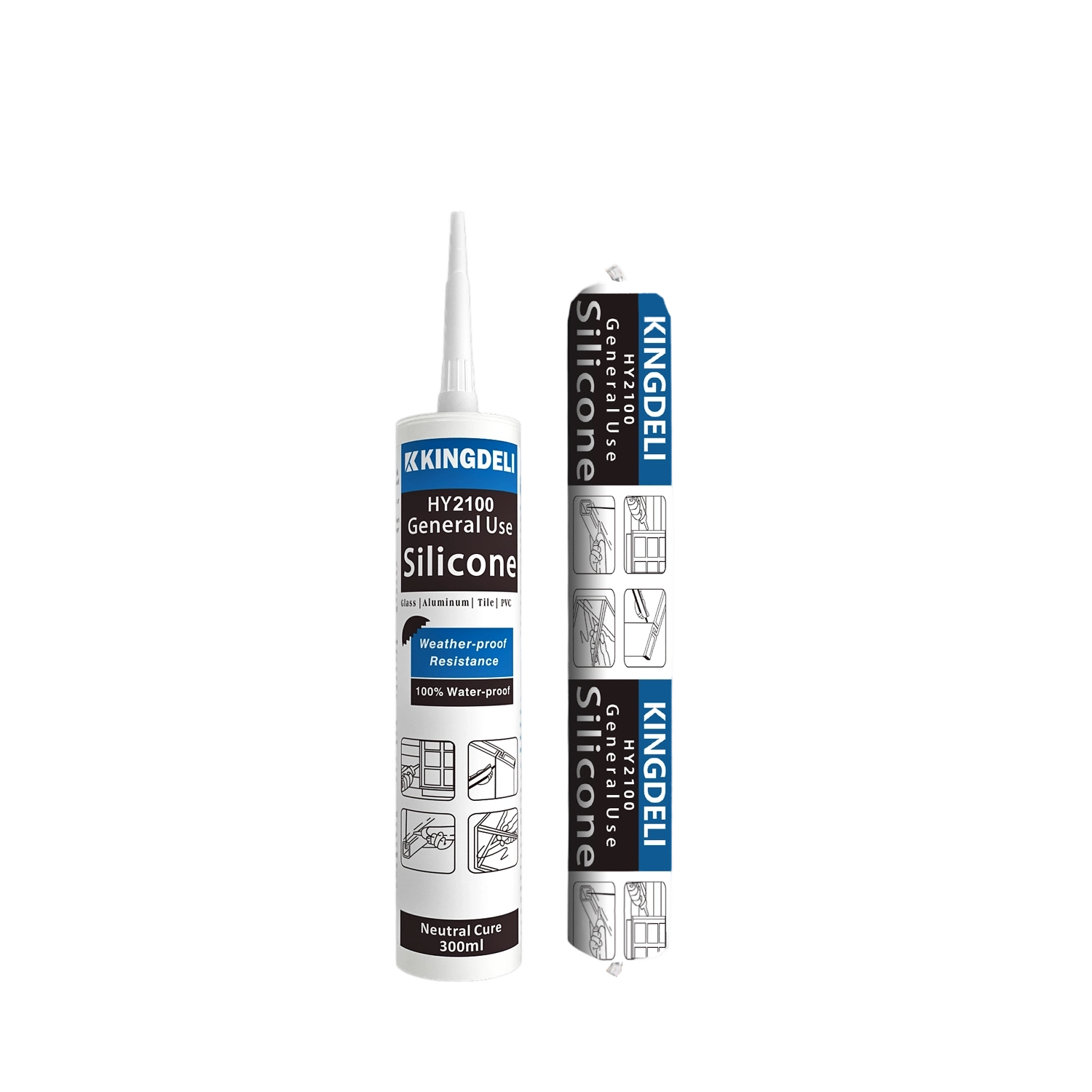
HY-2100 Neutral Silicone Sealant — High-Performance General-Purpose Sealant from KINGDELI
Self-Leveling vs. Non-Sag Sealants: Selecting Best for Joints

HY992 Modified Polyurethane Construction Sealant
HY992 Modified Polyurethane Sealant is a one-component, moisture-curing construction sealant designed for professional building and structural sealing applications. It provides excellent adhesion, weather resistance, and durable elasticity, making it suitable for a wide range of construction materials.
The formulation delivers strong bonding performance without corrosion or substrate contamination, while maintaining low VOC content for environmentally responsible construction projects.

HY995 Crystal Clear Ms Polymer Adhesive/Sealant
HY995 Crystal Clear Ms Polymer Adhesive/Sealant is a new generation MS Polymer adhesive / sealant formulated for all bonding and sealing applications where long term reliability is required. It has excellent bonding strength on various materials. It will cure to form a durable, flexible, waterproof seal.

HY997 High-Performance Anti-Microbial MS Polymer Sealant
HY997 MS polymer sealant for is is a premium one-component, neutral-curing modified silane sealant engineered for demanding interior applications. It offers a Class 20 movement capability, ensuring long-lasting flexibility and reliable performance under dynamic joint conditions. Curing at room temperature, HY997 delivers superior anti-microbial and mildew-resistant properties, maintaining hygienic and clean environments over time.

KINGDELI HY732 Professional Acetoxy Cure Silicone Sealant
KINGDELI HY732 is a professional-grade, one-component acetoxy cure silicone sealant designed for fast curing, strong adhesion, and long-lasting flexibility. Ideal for aquariums, glass applications, aluminum doors and windows, kitchens, and bathrooms, it provides reliable sealing performance with excellent anti-fungal protection in high-humidity environments.
Let’s Build Stronger Bonds with Quality Adhesives and Sealants
Have questions about the topic or need tailored sealant solutions for your project?
Our team is ready to provide expert guidance, product recommendations, and application support.
Innovating with Integrity, Bonding the World
Since 1998, KINGDELI has delivered trusted, sustainable sealant solutions that connect industries and inspire progress worldwide.

Whatsapp: +8618825946249
Kingdeli
Kingdeli
Kingdeli
Kingdeli
Kingdeli