


Construction Sealant Supplier Comparison: Factory, Trader, or OEM?

- How to Evaluate a Construction Sealant Supply Partner
- Start with application risk rather than unit price
- Verify quality systems and technical evidence
- Assess operational resilience
- Factory, Trader, and OEM Models Compared
- Direct factory sourcing
- Trading company procurement
- OEM and private-label collaboration
- Technical and Commercial Due Diligence Before Approval
- Match chemistry to substrates and exposure
- Audit the specification and approval process
- Consider sustainability and regulatory requirements
- Why KINGDELI Fits Scaled Sealant and Adhesive Procurement
- Manufacturing capacity with process control
- Broad product coverage for construction applications
- International standards, OEM support, and technical service
- Frequently Asked Questions
Construction sealant procurement is not simply a price comparison between cartridges. The selected supply model influences formulation consistency, substrate compatibility, delivery reliability, private-label flexibility, regulatory documentation, and the cost of application failure. A direct factory generally offers stronger process control and technical access, a trader may provide broader product aggregation and convenient purchasing, while an OEM partner can combine manufacturing capability with customized branding and formulation support. Buyers should evaluate the supplier’s laboratory resources, quality system, production scale, batch traceability, export experience, packaging capability, and after-sales engineering support before approving a source. For projects involving façade joints, glazing, bathrooms, flooring, precast concrete, or industrial assembly, the correct partner must match the chemistry to movement, moisture, temperature, adhesion, curing conditions, and expected service life.
How to Evaluate a Construction Sealant Supply Partner
Start with application risk rather than unit price
Sealants and adhesives perform different functions across the built environment. A silicone glazing sealant may be selected for weather resistance, UV stability, and durable adhesion around glass and aluminum, whereas an acrylic sealant may be more suitable for interior joints that will be painted and exposed to limited movement. Polyurethane sealant is often considered where elastic performance and adhesion to porous construction materials are important. MS polymer sealant can support low-odor, low-VOC, and moisture-curing requirements while providing a versatile alternative for selected façade, interior, and industrial applications.
The purchasing decision should begin with a documented application profile. This should identify the substrates, joint width and depth, expected movement, exposure to water or sunlight, application temperature, curing conditions, paint requirements, cleaning procedures, and required service life. A low-cost product that fails on a difficult substrate can create removal, replacement, labor, water-ingress, and reputational costs that exceed the original material saving. Procurement teams should therefore compare installed cost and failure risk, not only the price per cartridge or kilogram.
Verify quality systems and technical evidence
A credible supplier should provide a technical data sheet, safety data sheet, certificate of analysis or batch documentation where applicable, storage guidance, shelf-life information, and clear application instructions. Product claims should be connected to relevant test methods and standards rather than broad marketing language. ISO 9001 provides a framework for quality management systems, but certification alone does not prove that a particular sealant is suitable for every substrate or climate. Buyers should still review incoming-material controls, in-process testing, finished-product release procedures, complaint handling, and corrective-action records.
Where performance claims relate to elastomeric joint sealants, buyers can consult the relevant ASTM C920 standard and confirm which properties have actually been tested. Depending on the market and application, evaluation may include adhesion and peel behavior, tensile properties, movement capability, hardness, tack-free time, slump, curing rate, weathering resistance, and compatibility with adjacent materials. A responsible technical partner will explain test boundaries and will not treat a laboratory result as a universal guarantee for every project condition.
Assess operational resilience
Supply continuity matters when sealant is consumed on a construction schedule. Buyers should examine monthly output, critical raw-material sourcing, filling-line capacity, packaging options, warehouse conditions, export documentation, and contingency planning. A supplier with only one production line or limited access to key polymers may struggle during peak demand or logistics disruption. Conversely, a large operation without responsive technical service may be difficult for distributors and project contractors to manage.
Important questions include whether the supplier can reserve capacity, maintain color and viscosity consistency between batches, support staggered deliveries, provide samples quickly, and communicate changes in formulation or packaging. For international business, the evaluation should also cover pallet configuration, container loading, language-specific labels, dangerous-goods procedures where relevant, customs documents, and the ability to meet destination-market requirements.
Factory, Trader, and OEM Models Compared
Direct factory sourcing
Buying directly from a sealant production plant can shorten the communication chain between the formulation team and the buyer. This model is normally strongest when the project requires stable repeat orders, technical customization, large volumes, private packaging, or a detailed quality agreement. Buyers may gain access to production planning, laboratory testing, packaging engineering, and root-cause analysis without relying on an intermediary to translate technical requirements.
The factory model is not automatically the best choice for every buyer. Smaller distributors may face minimum order quantities, longer approval procedures, or less flexibility when purchasing mixed products. A direct producer must therefore demonstrate commercial responsiveness as well as manufacturing scale. The most reliable plants combine controlled production with sample support, clear communication, and a practical process for handling product approval and field feedback.
Trading company procurement
A trading company can be useful when a buyer needs multiple brands, mixed containers, regional sourcing, or a single contact for a broad construction-material portfolio. Traders may understand local distribution channels, import procedures, and customer preferences. They can also reduce the administrative burden of evaluating numerous factories.
However, the buyer should determine whether the intermediary has authority over technical decisions. Questions should address the identity of the actual producer, whether the product specification can change without notice, how batch complaints are investigated, and who is responsible for field trials. If the trader cannot provide current technical documents, traceability information, or direct access to qualified factory personnel, the apparent convenience may create hidden quality and accountability risks.
OEM and private-label collaboration
An OEM arrangement is appropriate when a distributor, importer, or building-material brand wants its own packaging, color range, product hierarchy, or market positioning. Strong OEM programs can cover label design, cartridge and sausage formats, carton configuration, multilingual documentation, barcode support, formulation adjustment, and pilot-batch approval. ODM support may go further by helping develop a differentiated product specification for a defined application.
OEM buyers should distinguish between relabeling an existing formula and genuine product development. Relabeling can be efficient for standard products, but it may not solve a specific adhesion, cure-speed, low-temperature, color, or emissions requirement. A capable private-label partner should document the approved formulation, packaging artwork, quality parameters, change-control process, and retention-sample policy. This protects brand owners from inconsistent product supplied under the same label.
| Evaluation factor | Direct factory | Trading company | OEM or ODM partner |
|---|---|---|---|
| Manufacturing visibility | Usually direct access to production and laboratory teams | Depends on the intermediary’s relationship with the producer | Direct access should be included in the development process |
| Customization | Often available for volume-based projects | Usually limited unless the trader controls a dedicated factory | Core value proposition, including branding and selected formulation changes |
| Minimum order flexibility | May be higher because production is planned in batches | Can be more flexible through mixed sourcing | Varies by packaging, formula, and artwork requirements |
| Technical accountability | Held by the producer’s technical organization | Must be clearly assigned between trader and factory | Should be defined through specifications, samples, and change control |
| Best fit | Large projects, distributors, and recurring industrial demand | Mixed procurement and buyers prioritizing sourcing convenience | Private labels, market-specific products, and differentiated portfolios |
Technical and Commercial Due Diligence Before Approval
Match chemistry to substrates and exposure
Neutral silicone sealant is commonly considered where broad substrate compatibility, weathering resistance, and reduced odor compared with some acid-cure systems are required. Acetic silicone sealant can offer rapid cure and strong performance on compatible non-porous surfaces, but the substrate list must be checked carefully because acidic by-products may not suit certain metals, masonry, or sensitive materials. Silicone selection should always be based on the manufacturer’s compatibility guidance and project testing.
Acrylic Sealant is often evaluated for interior finishing, crack treatment, and joints that may need painting, although movement and water exposure limitations must be understood. No More Nails adhesive products address bonding applications where mechanical fastening is undesirable or impractical, while RTV Gasket Maker is designed for forming or replacing selected gaskets in equipment and maintenance settings. These products should not be treated as interchangeable simply because they are all dispensed from tubes or cartridges.
For tile and flooring work, Epoxy Tile Grout can provide a chemically resistant, low-absorption jointing option when installation conditions and cleaning procedures are properly controlled. Self-Leveling Sealant may be specified for defined horizontal joint or crack-filling applications, subject to substrate preparation and movement requirements. Each chemistry has a different cure mechanism, tooling window, hardness profile, and compatibility range, so a product family should be organized by function rather than packaging appearance.
Audit the specification and approval process
Before placing a commercial order, buyers should request representative samples, conduct controlled adhesion trials, and retain approved reference samples. Testing should use actual project substrates whenever possible, including coatings, anodized aluminum, concrete, stone, glass, PVC, and treated wood. The evaluation should record surface preparation, primer use, bead dimensions, ambient conditions, cure duration, and test observations.
Color matching deserves particular attention in façade, glazing, and interior finishing work. A supplier should define acceptable color tolerance, reference standards, packaging identification, and batch-release checks. For private-label programs, the buyer should approve not only the formula but also the nozzle design, cartridge dimensions, label adhesive, carton strength, and pallet stability. Packaging failures can damage the product, delay site work, and increase customer-service costs even when the sealant itself meets specification.
Consider sustainability and regulatory requirements
Environmental requirements are becoming more relevant in public construction, green building, interior fit-out, and corporate procurement. Buyers should request evidence for VOC claims, emissions testing where required, waste-handling guidance, and packaging composition. ISO 14001 addresses environmental management systems and can indicate that an organization has structured environmental processes, although it does not certify the environmental performance of every individual product.
For products sold into Europe, CE-related obligations should be assessed against the applicable product rules and harmonized technical requirements rather than assumed from a logo alone. The European Commission CE marking guidance explains that manufacturers are responsible for determining applicable requirements and preparing the relevant conformity documentation. Importers and distributors should confirm that labeling, technical files, declarations, and responsible-party information are appropriate for the destination market.
Why KINGDELI Fits Scaled Sealant and Adhesive Procurement
Manufacturing capacity with process control
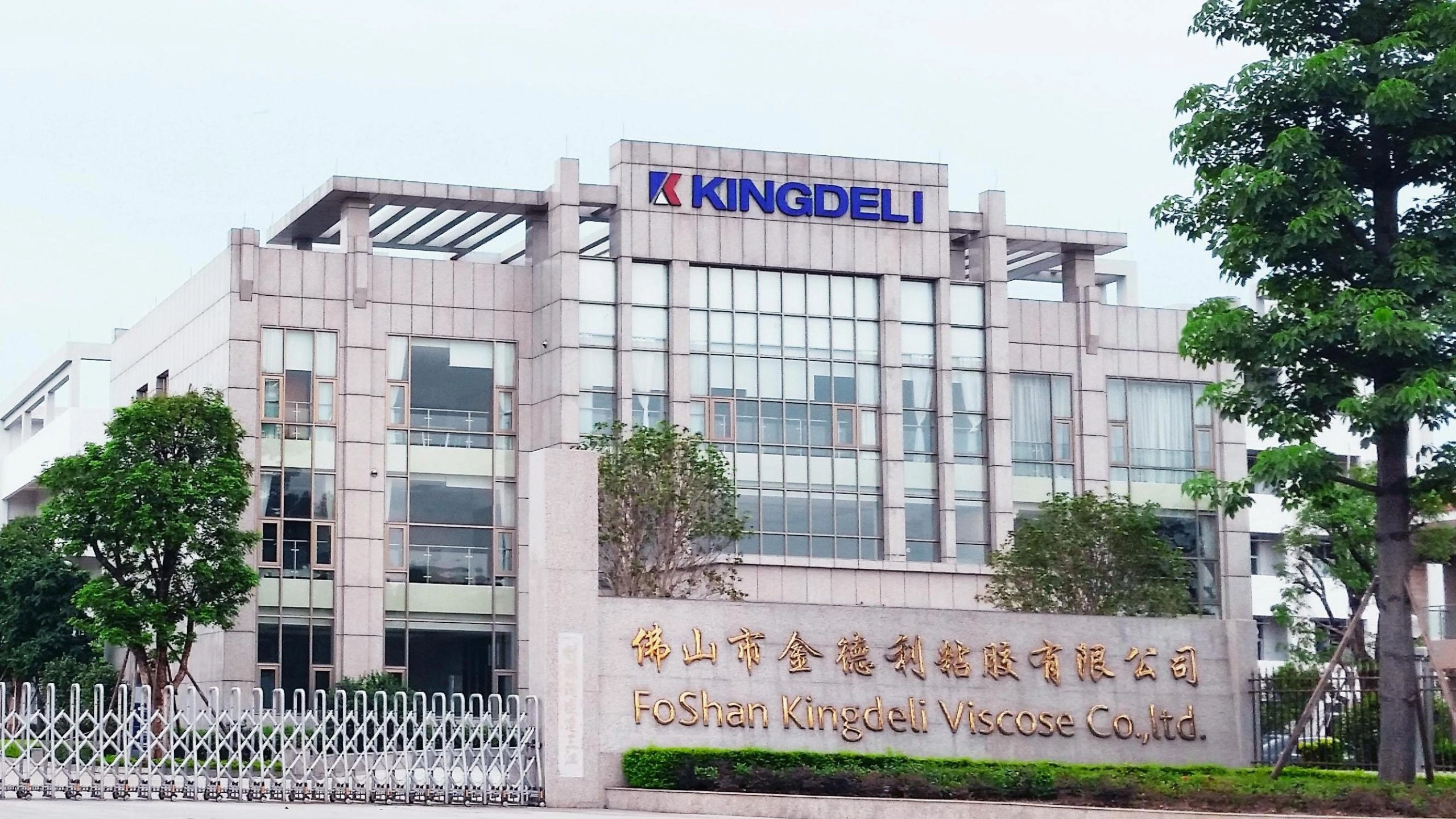
KINGDELI has operated in the high-performance sealant, adhesive, and coating industry since 1998. Our headquarters and manufacturing base in Foshan, China, include a 66,000 m² facility equipped with fully automated production lines. Annual capacity exceeding 100,000 tons supports stable supply for distributors, project owners, and brand partners that require planned replenishment and consistent batch output.
Our manufacturing approach is designed to connect raw-material control, automated filling, laboratory evaluation, production release, and supply planning. This structure helps buyers manage recurring demand across multiple product categories while reducing the operational uncertainty associated with fragmented sourcing. Capacity is valuable not only for large orders; it also supports continuity when customers expand distribution or introduce additional product formats.
Broad product coverage for construction applications
Our portfolio includes neutral silicone sealant, acetic silicone sealant, Acrylic Sealant, silicone glazing sealant, No More Nails adhesive, Polyurethane Sealant, MS polymer Sealant, RTV Gasket Maker, Epoxy Tile Grout, and Self-Leveling Sealant. This range allows buyers to consolidate compatible product families with one technical and commercial partner while still selecting chemistry according to substrate, movement, exposure, and installation method.
For brand owners, this breadth can support a structured portfolio that separates interior finishing, glazing, façade, maintenance, tile, flooring, and general assembly applications. For distributors, it can simplify training, catalog development, container planning, and technical documentation. Product selection remains application-specific, and our technical team can help define the appropriate grade, packaging, and performance targets rather than recommending a single universal material.
International standards, OEM support, and technical service
KINGDELI is recognized as a National High-Tech Enterprise and contributed to the development of National Standard GB/T 29755-2013. Our quality and environmental systems, together with product documentation aligned with requirements such as ISO 9001, ISO 14001, CE, and ASTM, help customers build a more controlled approval process. Buyers should review the exact certificate scope and product applicability for each project, but a standards-oriented operating model provides a stronger foundation for international procurement.
With more than 27 years of industry expertise and customers in over 50 countries, our team supports OEM and ODM programs from product selection through packaging implementation and technical service. We provide low-VOC formulation options where the application and regulatory requirements support them, along with professional guidance on substrate preparation, curing, storage, and troubleshooting. This end-to-end approach helps brand owners protect market reputation and helps distributors offer products with credible technical support.
The practical decision is therefore not simply factory versus trader versus OEM. The right choice is the partner that can prove chemistry suitability, process consistency, documentation quality, capacity, responsiveness, and accountability at the buyer’s required scale. KINGDELI combines direct manufacturing, broad sealant and adhesive expertise, automated production, international quality orientation, and private-label support to help customers reduce sourcing complexity while building dependable product programs.
Frequently Asked Questions
Is buying directly from a sealant factory better than using a trader?
A direct factory is generally stronger for recurring volume, technical customization, batch traceability, and direct access to production and laboratory teams. A trader may be more convenient for mixed procurement, smaller orders, or broader product aggregation, but buyers should verify the actual producer and technical accountability.
What should buyers request when evaluating a construction sealant supplier?
Buyers should request technical and safety data sheets, applicable test evidence, quality certificates, storage and shelf-life information, batch documentation, production capacity details, packaging specifications, and a clear process for complaints, corrective actions, and formulation change control.
When is an OEM sealant partnership appropriate?
An OEM partnership is appropriate when a distributor, importer, or brand owner needs private packaging, customized colors, market-specific documentation, product portfolio development, or selected formulation adjustments. The buyer should distinguish genuine development from simple relabeling and approve the formula, packaging, specifications, and change-control process.
How should buyers choose between neutral and acetic silicone sealant?
The choice should be based on substrate compatibility, cure requirements, odor tolerance, exposure, and project testing. Neutral silicone sealant is often considered for broader substrate compatibility, while acetic silicone sealant can suit compatible non-porous surfaces. The supplier’s compatibility guidance should be followed for metals, masonry, glass, coatings, and sensitive materials.
Why are certifications important when selecting a sealant manufacturer?
Certifications and standards-based documentation provide evidence of structured quality or environmental management and can support market or project compliance. However, buyers must confirm the certificate scope, product applicability, and actual test evidence because a company-level certification does not guarantee suitability for every substrate or application.
What makes KINGDELI suitable for international sealant procurement?
KINGDELI has operated since 1998, maintains a 66,000 m² facility in Foshan with annual capacity exceeding 100,000 tons, serves customers in more than 50 countries, and offers neutral and acetic silicone, polyurethane, MS polymer, acrylic, glazing, adhesive, grout, gasket-maker, and self-leveling products with OEM, ODM, low-VOC, and technical-service support.
OEM/ODM silicone rtv sealant Manufacturers and Suppliers
Private Label Neutral Silicone: OEM and Supplier Opportunities
Benefits of MS Silicone Sealant for Commercial Construction
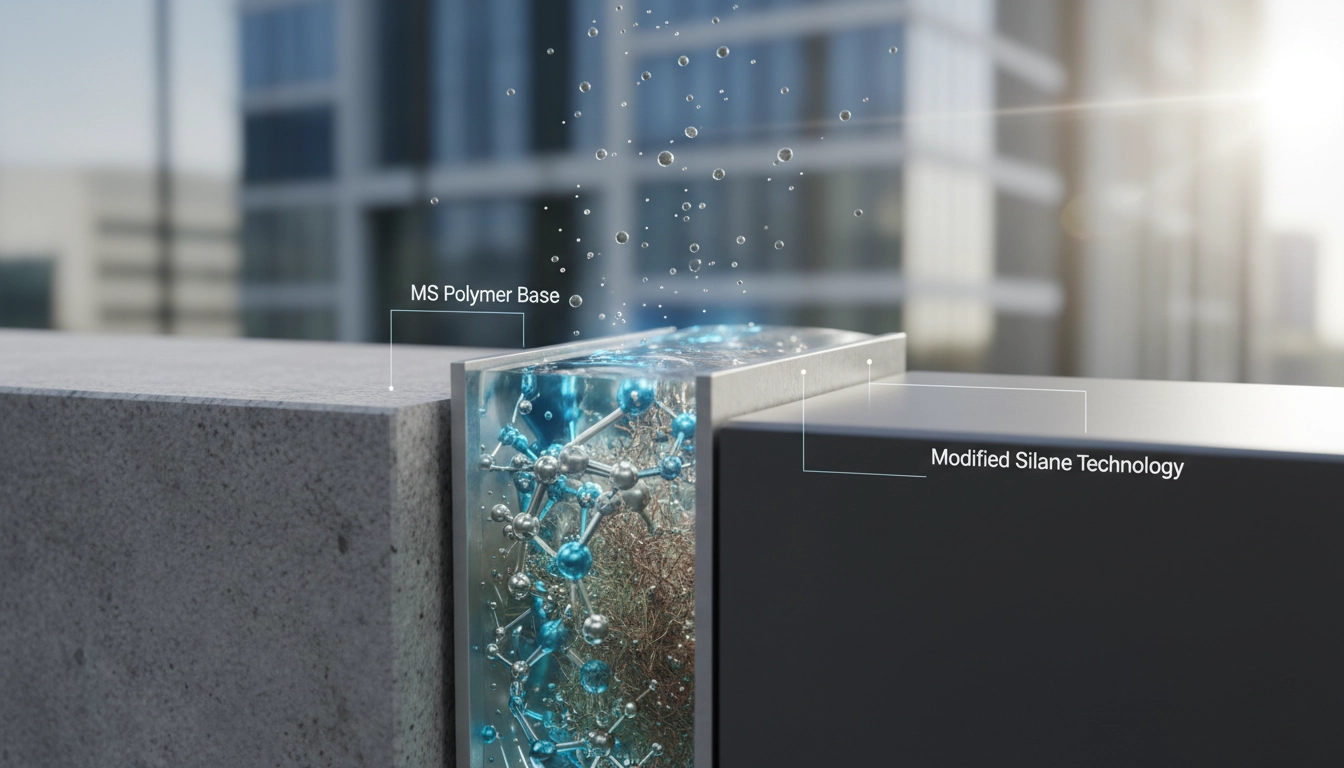
How to Choose the Right MS Sealant for Construction: A Professional Contractor's Checklist for 2026
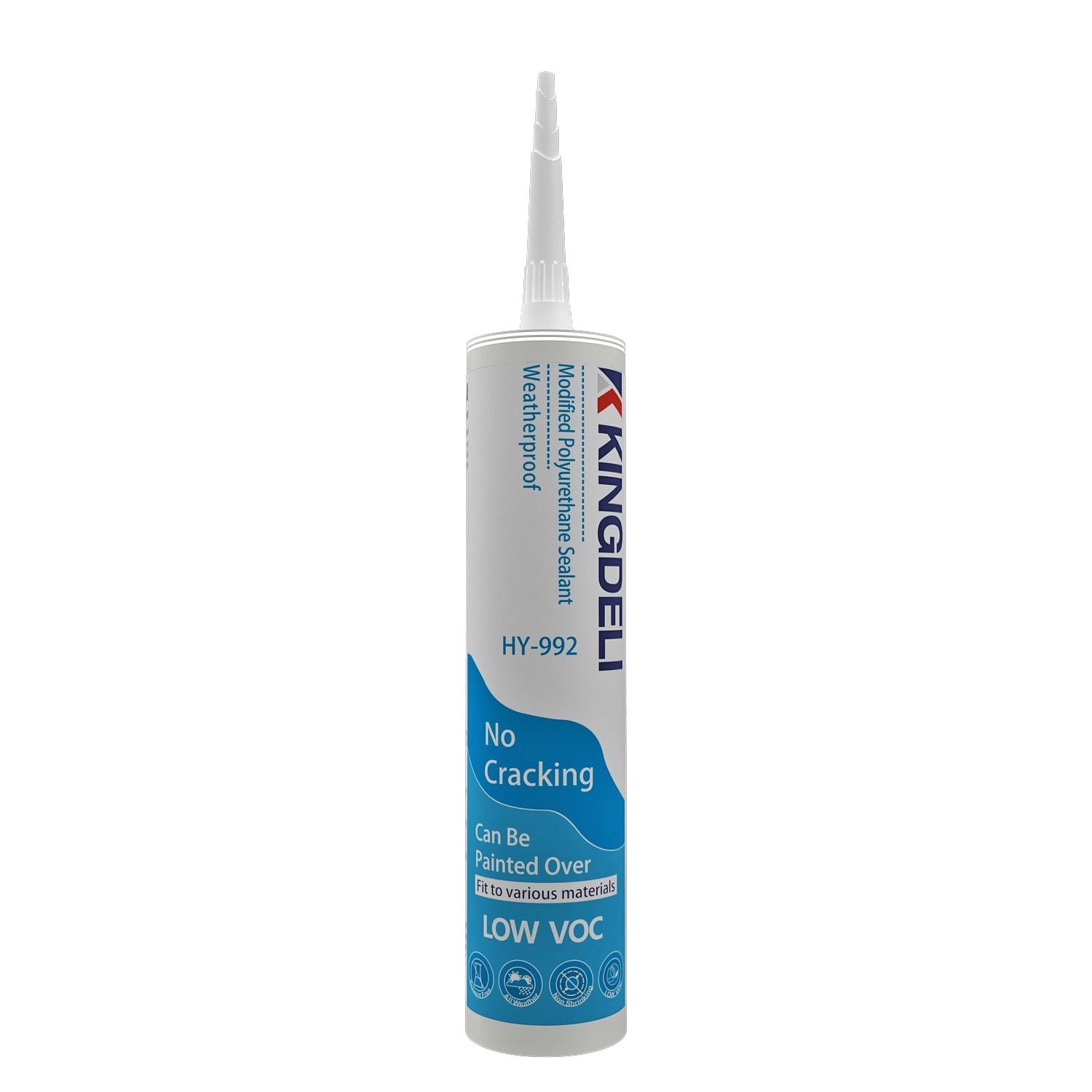
HY992 Modified Polyurethane Construction Sealant
HY992 Modified Polyurethane Sealant is a one-component, moisture-curing construction sealant designed for professional building and structural sealing applications. It provides excellent adhesion, weather resistance, and durable elasticity, making it suitable for a wide range of construction materials.
The formulation delivers strong bonding performance without corrosion or substrate contamination, while maintaining low VOC content for environmentally responsible construction projects.

HY995 Crystal Clear Ms Polymer Adhesive/Sealant
HY995 Crystal Clear Ms Polymer Adhesive/Sealant is a new generation MS Polymer adhesive / sealant formulated for all bonding and sealing applications where long term reliability is required. It has excellent bonding strength on various materials. It will cure to form a durable, flexible, waterproof seal.

HY997 High-Performance Anti-Microbial MS Polymer Sealant
HY997 MS polymer sealant for is is a premium one-component, neutral-curing modified silane sealant engineered for demanding interior applications. It offers a Class 20 movement capability, ensuring long-lasting flexibility and reliable performance under dynamic joint conditions. Curing at room temperature, HY997 delivers superior anti-microbial and mildew-resistant properties, maintaining hygienic and clean environments over time.
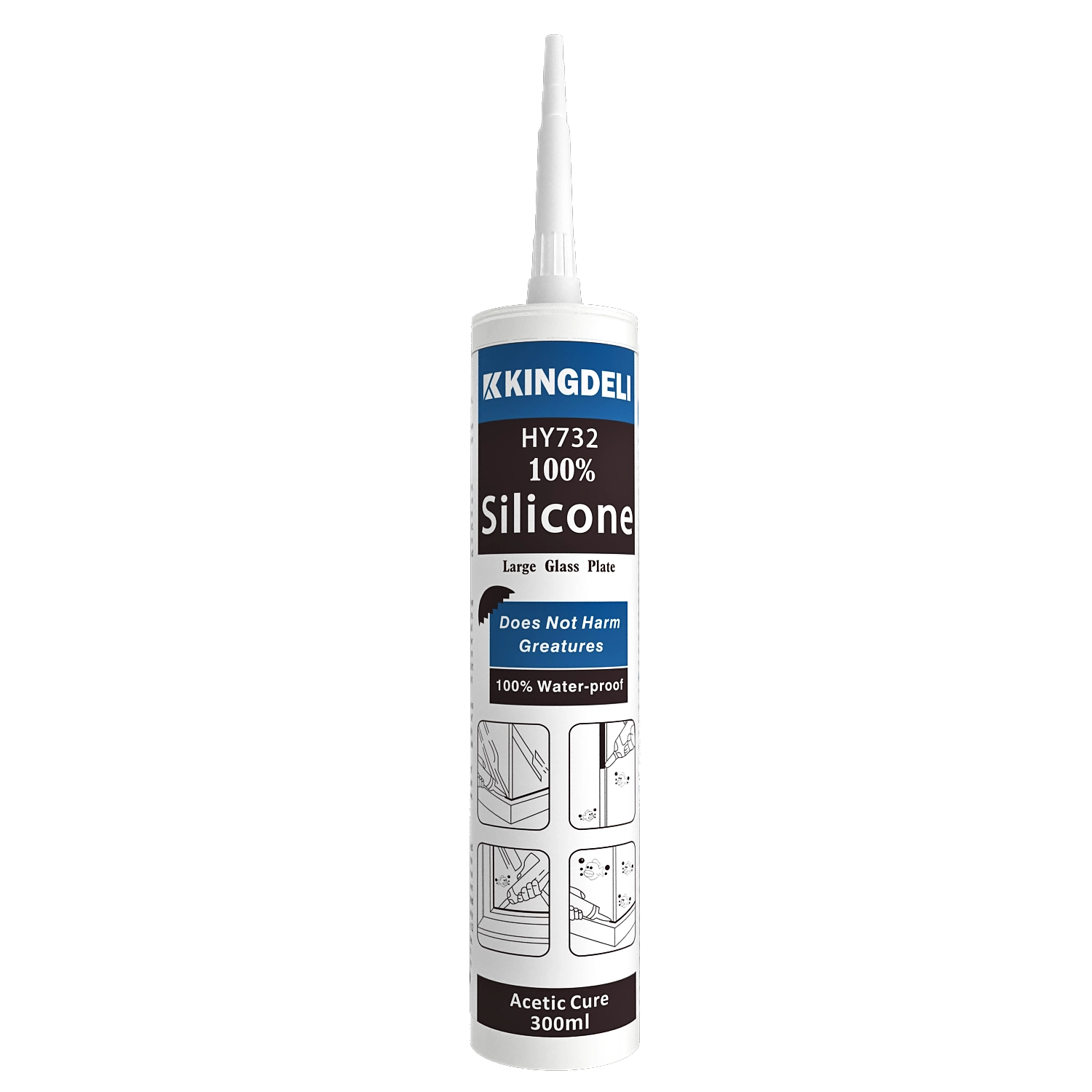
KINGDELI HY732 Professional Acetoxy Cure Silicone Sealant
KINGDELI HY732 is a professional-grade, one-component acetoxy cure silicone sealant designed for fast curing, strong adhesion, and long-lasting flexibility. Ideal for aquariums, glass applications, aluminum doors and windows, kitchens, and bathrooms, it provides reliable sealing performance with excellent anti-fungal protection in high-humidity environments.
Let’s Build Stronger Bonds with Quality Adhesives and Sealants
Have questions about the topic or need tailored sealant solutions for your project?
Our team is ready to provide expert guidance, product recommendations, and application support.
Innovating with Integrity, Bonding the World
Since 1998, KINGDELI has delivered trusted, sustainable sealant solutions that connect industries and inspire progress worldwide.
Whatsapp: +8618825946249
Kingdeli
Kingdeli
Kingdeli
Kingdeli
Kingdeli