


Construction Sealant Market Trends: High-Demand Products for 2026

- Market Forces Shaping Building Sealant Demand in 2026
- Energy-efficient façades and high-performance glazing
- Renovation, repair, and prefabricated construction
- Low-emission materials and documented compliance
- High-Demand Sealant and Adhesive Categories for 2026
- Neutral and acetic silicone technologies
- Polyurethane, MS polymer, and acrylic formulations
- Specialty products that reduce installation steps
- How Buyers Should Evaluate a Sealant Supply Partner
- Technical qualification before commercial negotiation
- Manufacturing capacity, quality control, and continuity
- Lifecycle value and installation economics
- Why KINGDELI Fits the 2026 Procurement Priorities
- Scaled production backed by technical infrastructure
- Broad portfolio for specification and channel needs
- Compliance, OEM/ODM support, and international service
- Frequently Asked Questions
Construction sealant demand in 2026 is being shaped by stricter building performance expectations, faster installation schedules, sustainability requirements, and the growing complexity of façades, glazing systems, modular buildings, and renovation projects. The strongest opportunities are expected in neutral silicone, silicone glazing sealant, polyurethane, MS polymer, acrylic, self-leveling, and hybrid adhesive technologies that combine reliable adhesion with weather resistance, elasticity, low emissions, and predictable curing. For project owners, distributors, and private-label brands, selecting a qualified production partner requires more than comparing price per cartridge: formulation stability, batch traceability, application guidance, compliance evidence, packaging capacity, and long-term supply resilience directly affect lifecycle cost and project risk.
Market Forces Shaping Building Sealant Demand in 2026
Energy-efficient façades and high-performance glazing
Energy-efficient buildings are increasing the importance of airtight envelopes, insulated glazing, curtain walls, window perimeters, and façade interfaces. Sealants used in these assemblies must tolerate ultraviolet exposure, rain, temperature cycling, wind movement, and differential expansion between glass, aluminum, concrete, stone, and coated substrates. Silicone glazing sealant remains highly relevant where long-term weatherability and elastic movement are critical, while neutral-cure grades are often preferred when contact with sensitive metals, concrete, mirrors, or alkaline substrates must be carefully managed.
Buyers should request technical data covering tensile strength, elongation, modulus, movement capability, skin formation, curing rate, primer requirements, and resistance to aging. Product selection should also follow the design engineer’s joint dimensions and the system supplier’s compatibility guidance. The ISO 11600 building construction sealants standard provides an important reference point for classification and performance expectations, although project specifications may require additional regional or system-specific testing.
Renovation, repair, and prefabricated construction
Renovation activity is generating demand for products that can bond or seal dissimilar materials without extensive mechanical preparation. Window replacement, bathroom refurbishment, façade repair, kitchen installation, flooring transitions, and modular construction all require materials that support efficient labor and reduce rework. No More Nails adhesive products, MS polymer sealants, acrylic sealants, and polyurethane sealants can serve different parts of this demand, provided the formulation matches the substrate, moisture conditions, joint movement, and required load.
Prefabricated and modular projects place additional pressure on production consistency. Components may be manufactured in controlled facilities but assembled under changing site conditions. A reliable supplier should therefore provide clear application windows, storage requirements, substrate preparation instructions, and packaging that protects the product during transport. Buyers should avoid treating a general-purpose adhesive as a universal structural solution; the adhesive’s intended load path, curing mechanism, and compatibility must be verified before specification.
Low-emission materials and documented compliance
Green building programs, indoor air quality objectives, and occupational safety policies are moving demand toward low-VOC and lower-odor products. This trend does not eliminate the need for performance; it raises the requirement for balanced formulation design. Interior sealants must cure reliably, maintain adhesion, and minimize odor without sacrificing tooling time or durability. Procurement teams should ask for VOC declarations, safety data sheets, technical data sheets, restricted-substance statements, and test reports that apply to the exact product and color being purchased.
ISO 9001 provides a recognized framework for quality management systems, while ISO 14001 addresses environmental management systems. These certifications do not automatically prove that a specific sealant is suitable for every application, but they can help buyers assess whether a supplier operates structured processes for documentation, corrective action, environmental controls, and continual improvement. Product-level evidence remains essential.
High-Demand Sealant and Adhesive Categories for 2026
Neutral and acetic silicone technologies
Neutral silicone sealant is expected to remain a core choice for exterior weather sealing, façade joints, windows, doors, metal systems, and applications involving substrates that may be sensitive to acidic curing by-products. Its market value comes from a combination of elasticity, weather resistance, and broad use across construction interfaces. Buyers should distinguish between general-purpose grades and products engineered for glazing, façade, sanitary, or high-movement applications.
Acetic silicone sealant continues to serve many glass, ceramic, sanitary, and non-sensitive nonporous substrate applications because of its rapid skin formation and familiar processing characteristics. However, acetic curing may not be appropriate for certain metals, alkaline surfaces, porous materials, or sensitive coatings. Product literature should clearly identify suitable and unsuitable substrates rather than relying on a broad “all-purpose” description.
Polyurethane, MS polymer, and acrylic formulations
Polyurethane sealant remains important where strong adhesion, abrasion resistance, paintability in selected grades, and durable movement accommodation are required. It is widely considered for construction joints, concrete interfaces, flooring, precast elements, and transportation-related applications. Moisture, temperature, substrate condition, and curing depth can influence performance, so installation teams need practical guidance rather than only laboratory values.
MS polymer sealant is gaining attention as a hybrid option combining flexible sealing, adhesion to multiple substrates, low odor, and reduced dependence on primers in some applications. It can be attractive for façade interfaces, interior finishing, flooring, panel systems, and general assembly work where buyers seek a solvent-free or low-emission profile. Acrylic sealant remains useful for interior joints, trim, drywall, masonry detailing, and paintable finishing, particularly where movement is limited and a clean decorative result is more important than extreme exterior exposure resistance.
Specialty products that reduce installation steps
Self-leveling sealant is suited to horizontal joints and gaps where controlled flow can improve finishing efficiency, but its use requires attention to joint geometry, backer materials, slope, cure conditions, and edge containment. RTV Gasket Maker products address formed-in-place gasket requirements in equipment, maintenance, and mechanical sealing contexts, where resistance to heat, oils, vibration, or fluids must be matched to the service environment.
Epoxy Tile Grout is positioned differently from elastic joint sealants. It is selected for hard-wearing, stain-resistant, and chemically resistant tile joints, especially in demanding commercial, hospitality, healthcare, food-service, and industrial areas. No More Nails adhesive products support fast bonding and finishing tasks, but the project specification should define whether the application is decorative, non-structural, load-bearing, moisture-exposed, or subject to movement. Clear categorization prevents misuse and reduces warranty disputes.
| Product category | Typical demand driver in 2026 | Key buyer checks | Common limitation |
|---|---|---|---|
| Neutral silicone | Façades, windows, exterior joints, sensitive substrates | Movement capability, weathering, adhesion, compatibility | Usually difficult to paint after curing |
| Acetic silicone | Glass, ceramic, sanitary finishing | Substrate suitability, cure speed, odor, mildew resistance | Acidic cure may affect certain metals and porous surfaces |
| Polyurethane | Concrete joints, flooring, precast and high-adhesion work | Moisture tolerance, elongation, modulus, paintability | Requires controlled preparation and curing conditions |
| MS polymer | Hybrid bonding and sealing with low odor | Primer need, surface adhesion, UV resistance, VOC profile | Performance varies significantly by formulation |
| Acrylic | Interior finishing and paintable joints | Paint compatibility, shrinkage, movement rating | Not ideal for continuously wet or high-movement areas |
| Epoxy tile grout | Stain-, chemical-, and abrasion-resistant tile joints | Working time, color stability, chemical resistance | More demanding mixing and installation process |
How Buyers Should Evaluate a Sealant Supply Partner
Technical qualification before commercial negotiation
Procurement teams should begin with an application matrix rather than a product price list. The matrix should identify substrates, joint width and depth, expected movement, interior or exterior exposure, temperature range, water contact, UV exposure, paint requirements, cure conditions, packaging format, and expected service life. This approach allows the supplier’s technical team to recommend a suitable chemistry and identify risks before samples reach the jobsite.
Testing should include adhesion after relevant environmental conditioning, cohesive failure behavior, appearance, skin formation, cure depth, extrusion force, sag, hardness, elongation, and compatibility with adjacent materials. For glazing and façade work, compatibility testing with gaskets, spacers, coatings, films, and insulating glass components is particularly important. Where a product is marketed for regulated or specialized use, buyers should verify whether declarations and reports apply to the destination market.
Manufacturing capacity, quality control, and continuity
A supplier’s manufacturing footprint affects more than volume. Automated dosing, controlled mixing, raw-material inspection, in-process testing, color management, cartridge filling accuracy, and final batch release all contribute to stable field performance. Buyers should examine lead times, minimum order quantities, packaging options, private-label capabilities, contingency planning, and the supplier’s ability to maintain the same formulation across repeat orders.
Quality agreements can define approval samples, change-notification procedures, retained samples, complaint response times, batch coding, inspection standards, and acceptance criteria. These controls are valuable for distributors and brand owners because a small variation in viscosity, cure speed, or adhesion can produce installer complaints and expensive channel returns. A dependable sealants and adhesives partner should also support practical troubleshooting rather than limit communication to a sales quotation.
Lifecycle value and installation economics
The lowest unit price may not represent the lowest installed cost. A product that extrudes smoothly, skins at a predictable rate, adheres without repeated priming, and minimizes waste can reduce labor expense. Conversely, a low-priced formulation that causes rework, staining, adhesion failure, or premature cracking can damage project schedules and brand reputation. Buyers should compare coverage, application speed, packaging waste, shelf life, storage losses, warranty exposure, and technical service alongside purchase price.
Environmental criteria should be evaluated with the same discipline. Low-VOC claims should be supported by appropriate documentation, while packaging, transport efficiency, waste reduction, and production-site environmental controls can also affect the project’s sustainability profile. The U.S. Environmental Protection Agency’s overview of volatile organic compounds and indoor air quality explains why emissions management matters, particularly for enclosed spaces and occupied buildings.
Why KINGDELI Fits the 2026 Procurement Priorities
Scaled production backed by technical infrastructure
Since its establishment in 1998, KINGDELI has developed into a global supplier of high-performance sealants, adhesives, and coatings. Headquartered in Foshan, China, our 66,000 m² facility uses fully automated production lines and has annual capacity exceeding 100,000 tons. This scale supports consistent supply for distributors, construction brands, project contractors, and OEM customers managing recurring demand across multiple markets.
Our manufacturing model is designed to combine production efficiency with process control. For buyers, the practical benefit is greater confidence in repeat batches, packaging continuity, and order planning. Capacity must always be assessed against the specific product, color, package, destination, and forecast, but a substantial automated facility provides a strong foundation for large-volume and private-label programs.
Broad portfolio for specification and channel needs
KINGDELI’s portfolio covers neutral silicone sealant, acetic silicone sealant, silicone glazing sealant, Acrylic Sealant, Polyurethane Sealant, MS polymer Sealant, No More Nails adhesive, RTV Gasket Maker, Epoxy Tile Grout, and Self-Leveling Sealant. This range enables buyers to consolidate related categories while still matching chemistry to application conditions.
Our team can support product selection for glazing, façade sealing, sanitary installation, interior finishing, concrete joints, tile systems, maintenance, assembly, and renovation. The objective is not to substitute one formulation for every use case; it is to help customers build a rational product architecture with clearly defined performance positions, packaging formats, market claims, and installation instructions.
Compliance, OEM/ODM support, and international service
KINGDELI is recognized as a National High-Tech Enterprise and contributed to the National Standard GB/T 29755-2013. Our products are engineered to meet applicable international requirements, including ISO 9001, ISO 14001, CE, and ASTM-related expectations where relevant to the product and market. Buyers should confirm the exact certificate scope, test method, and product reference during qualification because compliance is always application- and destination-specific.
With more than 27 years of industry expertise and a presence in over 50 countries, our team provides OEM and ODM support, low-VOC formulation options, packaging development, technical documentation, and professional service. This support can help brand owners shorten product-launch cycles, help distributors create better category coverage, and help project suppliers respond to changing sustainability and performance requirements.
For 2026 procurement planning, the most resilient strategy is to combine demand forecasting with technical qualification, documented compliance, controlled manufacturing, and responsive after-sales support. KINGDELI’s manufacturing capacity, broad chemistry portfolio, quality systems, and international service model position the company as a practical partner for buyers seeking reliable solutions across the evolving construction sealant market.
Contact KINGDELI to discuss project requirements or explore the product range for your 2026 construction, renovation, glazing, and industrial sealing programs.
Frequently Asked Questions
Which construction sealant products are expected to be in high demand in 2026?
Demand is expected to remain strong for neutral silicone, acetic silicone, silicone glazing sealant, polyurethane, MS polymer, acrylic, self-leveling, and specialty adhesive products serving façades, glazing, renovation, modular construction, interiors, and maintenance.
What should buyers check before selecting a sealant supplier?
Buyers should evaluate substrates, joint movement, exposure, cure conditions, VOC documentation, technical data, compatibility testing, quality systems, batch consistency, lead times, packaging capacity, OEM/ODM support, and technical service.
When should a project use neutral silicone instead of acetic silicone?
Neutral silicone is generally preferred when the application involves sensitive metals, concrete, mirrors, coated materials, or broad exterior weather-sealing requirements. Acetic silicone is commonly used for glass, ceramic, sanitary, and other suitable nonporous substrates, but the supplier’s compatibility guidance should be followed.
Why is MS polymer sealant gaining attention in construction?
MS polymer sealant can provide flexible sealing, adhesion to multiple substrates, low odor, and a lower-emission profile in selected formulations, making it attractive for façade interfaces, interior finishing, panels, flooring, and general assembly.
How can a buyer compare sealant suppliers beyond unit price?
The comparison should include installed cost, coverage, extrusion behavior, labor efficiency, waste, shelf life, storage losses, warranty exposure, batch consistency, documentation, lead time, technical support, and the supplier’s ability to maintain repeat-order quality.
What documentation should be requested for a construction sealant?
A buyer should request the technical data sheet, safety data sheet, VOC or emissions documentation where relevant, certificate scope, test reports, substrate compatibility information, storage instructions, batch identification details, and any market-specific compliance declarations.
Custom Formulations and OEM Options for Acetic Silicone
Benefits of MS Silicone Sealant for Commercial Construction
Self-Leveling Sealant Buyer's Guide: Choosing the Right Type
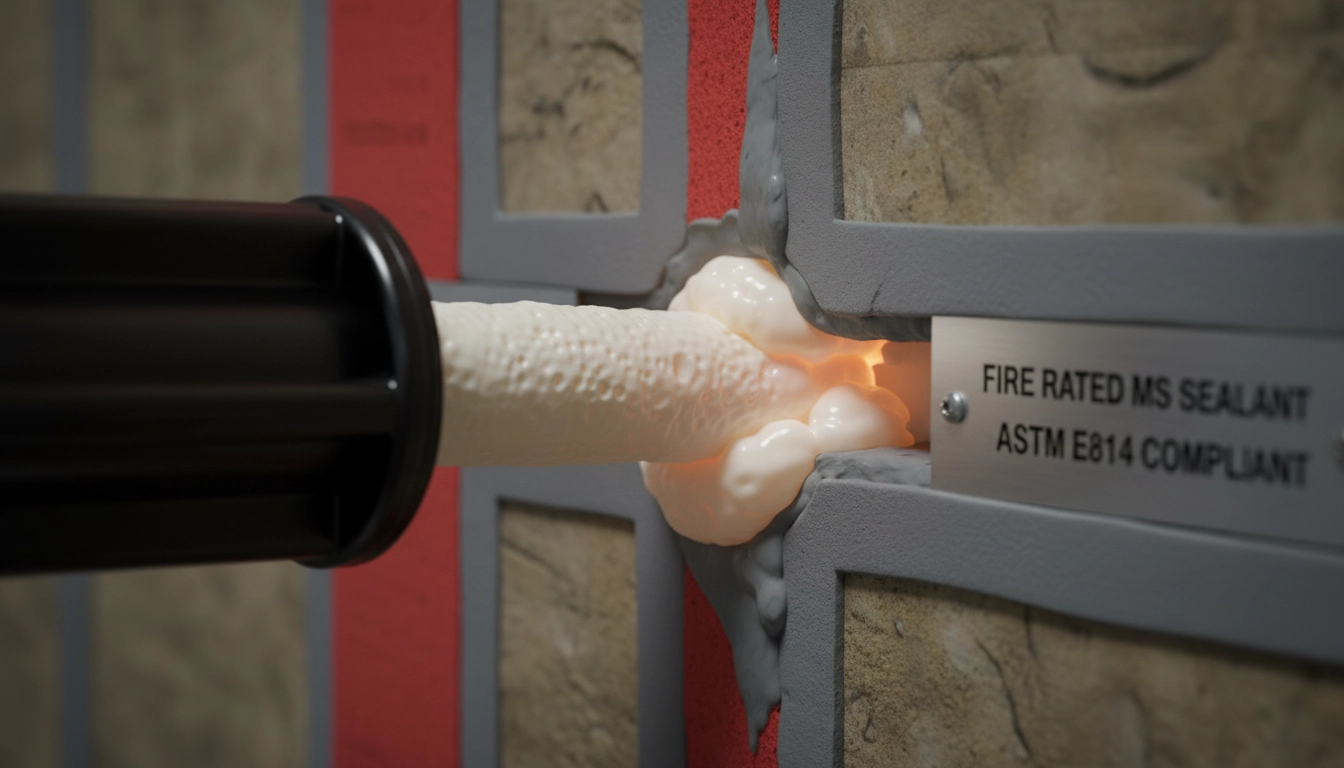
The Ultimate Guide to Fire-Rated MS Sealants: Everything You Need to Know for 2026

HY992 Modified Polyurethane Construction Sealant
HY992 Modified Polyurethane Sealant is a one-component, moisture-curing construction sealant designed for professional building and structural sealing applications. It provides excellent adhesion, weather resistance, and durable elasticity, making it suitable for a wide range of construction materials.
The formulation delivers strong bonding performance without corrosion or substrate contamination, while maintaining low VOC content for environmentally responsible construction projects.

HY995 Crystal Clear Ms Polymer Adhesive/Sealant
HY995 Crystal Clear Ms Polymer Adhesive/Sealant is a new generation MS Polymer adhesive / sealant formulated for all bonding and sealing applications where long term reliability is required. It has excellent bonding strength on various materials. It will cure to form a durable, flexible, waterproof seal.

HY997 High-Performance Anti-Microbial MS Polymer Sealant
HY997 MS polymer sealant for is is a premium one-component, neutral-curing modified silane sealant engineered for demanding interior applications. It offers a Class 20 movement capability, ensuring long-lasting flexibility and reliable performance under dynamic joint conditions. Curing at room temperature, HY997 delivers superior anti-microbial and mildew-resistant properties, maintaining hygienic and clean environments over time.

KINGDELI HY732 Professional Acetoxy Cure Silicone Sealant
KINGDELI HY732 is a professional-grade, one-component acetoxy cure silicone sealant designed for fast curing, strong adhesion, and long-lasting flexibility. Ideal for aquariums, glass applications, aluminum doors and windows, kitchens, and bathrooms, it provides reliable sealing performance with excellent anti-fungal protection in high-humidity environments.
Let’s Build Stronger Bonds with Quality Adhesives and Sealants
Have questions about the topic or need tailored sealant solutions for your project?
Our team is ready to provide expert guidance, product recommendations, and application support.
Innovating with Integrity, Bonding the World
Since 1998, KINGDELI has delivered trusted, sustainable sealant solutions that connect industries and inspire progress worldwide.

Whatsapp: +8618825946249
Kingdeli
Kingdeli
Kingdeli
Kingdeli
Kingdeli