


Color Matching and Custom Pigmented Neutral Sealants

- Color Science and Material Chemistry Behind Tinting Elastomeric Sealants
- Pigment Types and Their Compatibility with Neutral-Cure Chemistries
- Formulation Constraints: Cure Mechanism, Additives, and Colorant Load
- Color Measurement and Tolerance Controls for Batch Consistency
- Performance, Durability, and Testing Protocols for Pigmented Sealants
- Accelerated Weathering and UV Stability Assessments
- Mechanical Testing: Elasticity, Adhesion, and Shore Hardness
- Standards and Regulatory Compliance for Commercial Use
- Procurement, Quality Control, and Supply Chain Considerations
- Specifying Minimum Order Quantities, Lead Times, and Batch Traceability
- Sampling Protocols and On-Site Mockups
- Logistics: Storage, Shelf Life, and Temperature Sensitivity
- Comparative Data: Standard Stock Colors vs. Custom-Pigmented Neutral-Cure Systems
- KINGDELI’s Capability Brief: Scalable Custom Pigmentation and Quality Assurance
- Manufacturing Capacity and Automated Quality Controls
- Standards, Certifications, and Technical Services
- Relevant Product Range for Color-Matched Sealing Systems
- Project Support: Design Review, Mockups, and After-Sales Service
- Frequently Asked Questions
High-precision exterior and interior glazing, façade cladding, and architectural joint systems increasingly require bespoke color-matched elastomeric sealants; this strategic guide explains pigment selection, formulation controls, durability testing, substrate compatibility, and supply-chain considerations for custom-tinted neutral-curing silicone and alternative elastomer systems used in professional building envelope and industrial sealing applications.
Color Science and Material Chemistry Behind Tinting Elastomeric Sealants
Pigment Types and Their Compatibility with Neutral-Cure Chemistries
Selection of inorganic pigments (e.g., iron oxides, titanium dioxide) versus organic colorants (e.g., quinacridone, phthalocyanine) has direct impact on weathering, UV stability, and chemical compatibility. Inorganic mineral pigments typically offer superior lightfastness for exterior joints, while high-performance organic dispersions can provide more precise color matching for interior trim. Pigment particle size, surface treatment, and carrier systems must be optimized to avoid inhibition of neutral-curing reactions and to maintain rheology for gun-apply and tooling.
Formulation Constraints: Cure Mechanism, Additives, and Colorant Load
Neutral-curing silicones cure via non-acidic mechanisms that are less likely to react with metallic substrates or coated materials; however, excessive pigment loading or incompatible dispersants can alter cure rate, tack-free time, and final elastomeric properties. Formulators balance pigment concentration with coupling agents and UV stabilizers to preserve elongation, tear resistance, and adhesion. Low-VOC solvent carriers are preferred for compliance with regional regulations and to minimize substrate staining.
Color Measurement and Tolerance Controls for Batch Consistency
Using spectrophotometric profiling with CIELAB metrics (L*a*b*) and Delta E tolerances is essential for repeatable production runs. Industry procurement teams should specify maximum Delta E values for visible and near-infrared applications and require certificates of conformity showing colorimetric results per batch. Automated pigment dosing and inline QC cameras reduce variance during high-volume manufacturing.
Performance, Durability, and Testing Protocols for Pigmented Sealants
Accelerated Weathering and UV Stability Assessments
Color-fastness studies employ QUV or xenon arc chambers to simulate multi-year exposure; pigments should be validated to resist chalking, yellowing, and color shift under cyclic UV, condensation, and temperature extremes. Test acceptance criteria often reference a maximum Delta E change after 1,000–2,000 hours of exposure depending on project risk categorization.
Mechanical Testing: Elasticity, Adhesion, and Shore Hardness
Pigmentation can influence modulus and elongation at break. Adhesion testing to common substrates—anodized aluminum, painted steel, PVC, glass, and stone—should follow tensile and peel methods to confirm that pigmentation does not compromise bond strength. Specification teams should request Shore A hardness, tensile strength, and elongation curves for both unpigmented and pigmented lots.
Standards and Regulatory Compliance for Commercial Use
Specify sealants that comply with widely recognized frameworks to minimize project risk. Relevant authorities and resources include Wikipedia - Sealant for general definitions, ISO for quality management and relevant material standards, and ASTM International for specific test procedures such as adhesion and weathering protocols. For occupational safety and emissions, consult OSHA guidance and local VOC regulations.
Procurement, Quality Control, and Supply Chain Considerations
Specifying Minimum Order Quantities, Lead Times, and Batch Traceability
Custom pigmentation commonly requires defined minimum order quantities to justify tooling, pigment inventory, and batching setups. Buyers should require lot numbers, pigment recipes, and batch records to ensure traceability and to facilitate recall or re-order matching. For large façade programs, pre-qualification runs and retained samples are recommended to avoid color drift between manufacturing runs.
Sampling Protocols and On-Site Mockups
Approved sample panels and wet film mockups under final project lighting conditions reduce risk. Mockups should include the intended substrate and human-scale visual checks at different times of day. Acceptance criteria must be documented (e.g., maximum Delta E under daylight) and incorporated into contract close-out procedures.
Logistics: Storage, Shelf Life, and Temperature Sensitivity
Pigmented elastomers can have slightly reduced shelf life compared with uncolored stock if pigments or dispersants are chemically active. Storage conditions—temperature range, humidity control, and pallet handling—should be specified. Cold chain or temperate warehousing may be required for certain high-pigment formulations to preserve viscosity and prevent pigment settling.
Comparative Data: Standard Stock Colors vs. Custom-Pigmented Neutral-Cure Systems
| Attribute | Factory Stock Colors | Custom Pigmented Neutral-Cure Systems |
|---|---|---|
| Color Match Precision | Good for standard palettes; limited customization | High precision using spectrophotometry, Delta E ≤ specified tolerance |
| UV / Weathering Resistance | Dependent on pigment selection; common formulations validated | Optimized pigments and stabilizers for prolonged exterior performance |
| Minimum Order & Lead Time | Low MOQ; immediate availability | Higher MOQ; lead time 2–6 weeks depending on volume and testing |
| VOC & Regulatory Compliance | Standard low-VOC options available | Formulated to meet local VOC limits; testing and documentation provided |
| Cost Per Unit | Lower unit cost due to scale | Higher initial cost due to pigment batching and QC; lower lifecycle cost from reduced rework |
| Batch Consistency | High consistency for stocked colors | Controlled via automated dosing and colorimetric verification |
Note: Typical lead-time ranges and performance characteristics vary by manufacturer and test regimes; clients should request test reports and reference installations. For general background on material classifications and functions, consult Silicone (Wikipedia) and standards bodies such as ASTM International.
KINGDELI’s Capability Brief: Scalable Custom Pigmentation and Quality Assurance
Manufacturing Capacity and Automated Quality Controls
Since its establishment in 1998, KINGDELI has stood as a global leader in the high-performance sealant, adhesive, and coating industry. Headquartered in Foshan, China, our state-of-the-art 66,000 m² facility is powered by fully automated production lines with an annual capacity exceeding 100,000 tons, ensuring a consistent and robust supply for partners worldwide. Our automated pigment dosing, inline spectrophotometric verification, and batch traceability systems reduce color variance and support large-volume façade and industrial projects.
Standards, Certifications, and Technical Services
As a recognized National High-Tech Enterprise and a key contributor to the National Standard GB/T 29755-2013, we unite advanced manufacturing power with technical excellence. Our comprehensive product portfolio—spanning Neutral & Acetic Silicone, Polyurethane, MS Polymer, and No More Nails adhesives—is engineered to meet strict international standards, including ISO 9001, ISO 14001, CE, and ASTM test methods. KINGDELI provides OEM/ODM support, shelf-life validation, and full documentation packages for procurement and compliance teams.
Relevant Product Range for Color-Matched Sealing Systems
Our main product lines applicable to color-matching projects include neutral-curing silicone systems, acetic-curing silicone for specific substrate compatibility, acrylic joint fillers for paintable joints, glazing silicones for structural and non-structural glass systems, No More Nails adhesives for panel retention, high-performance polyurethane sealants for movement joints, MS polymer elastomers for low-odor installations, RTV gasket makers for custom component sealing, epoxy tile grout systems for colored joint finishes, and self-leveling sealants for horizontal applications. Clients can request bespoke formulations—low-VOC, low-odor, and specific Shore profiles—tailored to project specifications.
Project Support: Design Review, Mockups, and After-Sales Service
We offer pre-project consultation for pigment selection, mockup coordination, and on-site technical support during application and cure. Documentation packages include batch reports, spectrophotometric certificates, and mechanistic test data to support warranty and acceptance processes. For complex façade programs, our engineering team supports qualification trials and long-term performance tracking.
Contact KINGDELI for detailed technical sheets, sample panels, and turnkey solutions tailored to large-scale or bespoke color-matching projects.
Frequently Asked Questions
How does pigment selection affect the curing and adhesion of neutral-curing silicone systems?
Pigment chemistry, particle size, and carrier dispersant can alter cure kinetics and surface reactivity; inorganic pigments generally provide better UV stability and lower reactivity risk, while organic colorants require validation to ensure they do not inhibit cure or reduce adhesion to substrates such as anodized aluminum, glass, or painted steel.
What minimum color tolerance should be specified for architectural joint systems?
For façade and visible trim applications, specify spectrophotometric tolerances (CIELAB Delta E) appropriate to project risk—common practice is Delta E ≤ 1.5 for critical color matches and Delta E ≤ 3.0 for general architectural applications; exact acceptance criteria should be agreed during mockup sign-off.
What lead times and minimum order quantities are typical for custom-tinted batches?
Custom pigmentation typically requires higher MOQ than stock colors due to pigment inventory and setup; lead times vary by volume and testing needs but commonly range from 2 to 6 weeks. Buyers should request batch traceability and sample panels prior to large production runs.
Are custom-pigmented neutral systems compliant with VOC regulations and international standards?
Yes—custom formulations can be produced to meet local VOC limits and international standards; suppliers should provide test certificates and declarations showing compliance with ISO quality systems and ASTM test methods, as well as material safety data sheets for chemical safety and emissions information.
How should clients verify batch-to-batch color consistency on long-term projects?
Implement a QC protocol requiring spectrophotometric certificates for each batch, retain physical sample swatches, and require supplier-controlled pigment recipes and dosing records. Consider periodic on-site visual checks under project lighting conditions to complement instrumental data.
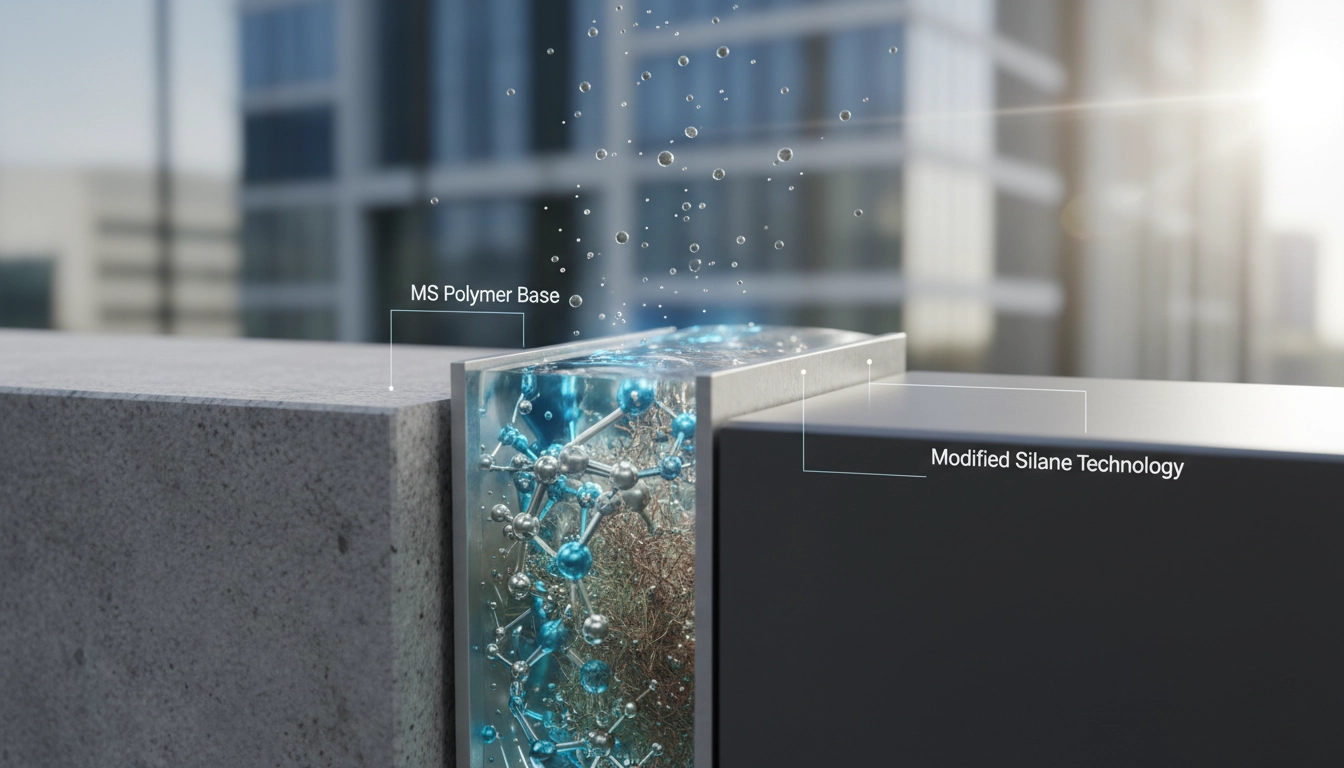
How to Choose the Right MS Sealant for Construction: A Professional Contractor's Checklist for 2026
Private Label Neutral Silicone: OEM and Supplier Opportunities
Custom Formulations: OEM Silicone Sealants for Glazing
Top acetic acid silicone sealant Manufacturers and Suppliers

HY992 Modified Polyurethane Construction Sealant
HY992 Modified Polyurethane Sealant is a one-component, moisture-curing construction sealant designed for professional building and structural sealing applications. It provides excellent adhesion, weather resistance, and durable elasticity, making it suitable for a wide range of construction materials.
The formulation delivers strong bonding performance without corrosion or substrate contamination, while maintaining low VOC content for environmentally responsible construction projects.

HY995 Crystal Clear Ms Polymer Adhesive/Sealant
HY995 Crystal Clear Ms Polymer Adhesive/Sealant is a new generation MS Polymer adhesive / sealant formulated for all bonding and sealing applications where long term reliability is required. It has excellent bonding strength on various materials. It will cure to form a durable, flexible, waterproof seal.

HY997 High-Performance Anti-Microbial MS Polymer Sealant
HY997 MS polymer sealant for is is a premium one-component, neutral-curing modified silane sealant engineered for demanding interior applications. It offers a Class 20 movement capability, ensuring long-lasting flexibility and reliable performance under dynamic joint conditions. Curing at room temperature, HY997 delivers superior anti-microbial and mildew-resistant properties, maintaining hygienic and clean environments over time.

KINGDELI HY732 Professional Acetoxy Cure Silicone Sealant
KINGDELI HY732 is a professional-grade, one-component acetoxy cure silicone sealant designed for fast curing, strong adhesion, and long-lasting flexibility. Ideal for aquariums, glass applications, aluminum doors and windows, kitchens, and bathrooms, it provides reliable sealing performance with excellent anti-fungal protection in high-humidity environments.
Let’s Build Stronger Bonds with Quality Adhesives and Sealants
Have questions about the topic or need tailored sealant solutions for your project?
Our team is ready to provide expert guidance, product recommendations, and application support.
Innovating with Integrity, Bonding the World
Since 1998, KINGDELI has delivered trusted, sustainable sealant solutions that connect industries and inspire progress worldwide.

Whatsapp: +8618825946249
Kingdeli
Kingdeli
Kingdeli
Kingdeli
Kingdeli