











Calculating the Perfect Seal: A Deep Dive into MS Sealant Joint Geometry and Movement (2026 Guide)

- What is MS Sealant Joint Design?
- Key Takeaways: Quick Summary of Joint Geometry
- The Physics of the Perfect Seal: The Hourglass Geometry
- Calculating Anticipated Movement and Joint Width
- MS Polymer vs. Traditional Sealants: A Performance Analysis
- Preventing Failure: Bond Breakers and Three-Sided Adhesion
- Expert Tips and Common Application Mistakes
- Future Trends: Predictive Modeling and MS Sealant Innovations in 2026+
- Conclusion
- How do you calculate sealant joint size?
- What is the recommended width-to-depth ratio for MS sealants?
- Why is three-sided adhesion bad in joint sealants?
- What is the difference between MS polymer and silicone sealant?
- How does thermal movement affect expansion joint design?
- What is the purpose of a backer rod in sealant joints?
- Does MS sealant require a primer before application?
- How long does MS polymer sealant take to cure?
What is MS Sealant Joint Design?
MS sealant joint design is the precise engineering process of sizing and shaping a joint to accommodate structural movement using Modified Silicone (MS) polymers, which involves calculating thermal expansion, establishing correct dimensions, and preventing structural degradation through strategic material application.
Understanding the intricacies of joint engineering is crucial for the longevity of modern commercial building envelopes. This calculated design methodology prevents both cohesive failures (where the rubber sealant tears itself apart internally) and adhesive failures (where the sealant forcefully pulls away from the substrate). By relying on accurate mathematics and advanced polymer chemistry, architects and engineers can ensure their structures remain completely watertight despite volatile, shifting environmental conditions. In the field, a properly designed joint forms an impenetrable, reliable barrier against moisture, air infiltration, and thermal loss.
The critical components of successful MS sealant joint design include:
- Calculating thermal expansion: Anticipating exactly how various building materials will grow and shrink across different seasons.
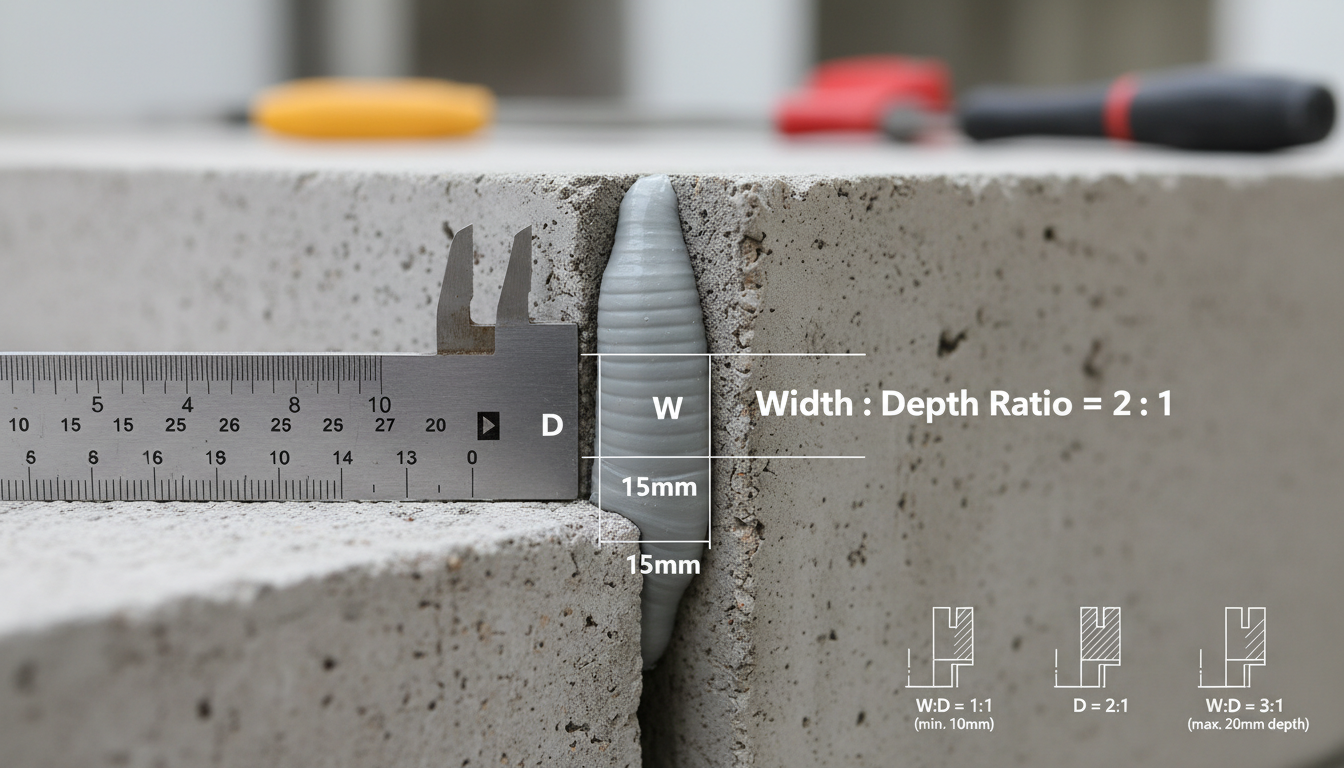
- Selecting the correct ratio: Maintaining an optimal 2:1 sealant width to depth ratio to allow for maximum elasticity.
- Installing backer rods: Creating an ideal hourglass shape that distributes mechanical stress evenly.
- Ensuring adhesion: Preparing the substrate properly so the sealant can stretch and compress seamlessly over decades.
Key Takeaways: Quick Summary of Joint Geometry
The fundamental rule of joint geometry dictates that you must maintain a precise sealant width to depth ratio (typically 2:1) to guarantee the sealant can withstand thermal movement without tearing, serving as the foundational practice for any durable commercial weatherseal.
Before diving deep into the mathematical formulations and chemical properties of a silyl modified polymer expansion joint, it is helpful to establish the ground rules of sealant application. These foundational practices are accepted across the commercial construction industry as the gold standard for preventing costly water intrusion and structural damage. When these rules are ignored, even the most expensive hybrid sealants will inevitably fail under the pressure of dynamic building movement.
Here are the essential best practices for joint geometry:
- Maintain Proportions: Always enforce a 2:1 width-to-depth ratio to preserve optimal elasticity and ensure proper moisture curing.
- Prevent Restrictive Bonding: Focus heavily on preventing three-sided adhesion; sealants must only bond to two parallel structural surfaces to remain flexible.
- Calculate Accurately: Thermal movement calculations must dictate the final physical joint width before any sealant application begins.
- Utilize Advanced Materials: Modern ASTM C920 hybrid sealants provide superior flexibility, UV stability, and weather resistance when compared to traditional, rigid polyurethanes.
The Physics of the Perfect Seal: The Hourglass Geometry
The hourglass geometry is an engineered sealant profile featuring a deliberately thinner center and thicker bonded edges, designed specifically to maximize stretching capabilities while minimizing mechanical stress along the critical bond line to allow the material to elongate efficiently.
Why does the hourglass shape matter so much in construction physics? When a joint expands due to a drop in temperature, the sealant is physically forced to stretch. If the joint is completely square or rectangular (meaning it is too thick in the middle), the cohesive strength of the thick rubber center will actually overpower the adhesive strength of the edges, violently ripping the sealant away from the wall. A thinner center acts as the path of least resistance, safely stretching like a rubber band while leaving the bonded edges securely anchored to the substrate.
To achieve this perfect physical profile, contractors rely on specific techniques and materials:
- Implementing Backer Rods: The critical role of backer rods is to control the depth of the sealant cavity and provide a convex bottom, which forces the sealant into its concave, hourglass shape.
- Tooling the Sealant: Properly tooling (smoothing) the wet sealant against the backer rod creates the top concave curve, finalizing the required geometry.
- Distributing Stress: Comparing stress distributions, a properly tooled concave joint experiences significantly less bond-line stress than a completely flat or overfilled joint.
- Minimizing Material Fatigue: The thinner center reduces internal resistance during continuous compression and expansion cycles, significantly extending the lifespan of the weatherseal.
Calculating Anticipated Movement and Joint Width
Calculating anticipated movement requires using the joint movement calculation formula (ΔL = L x ΔT x α) to determine exactly how much a substrate will expand or shrink under extreme temperature fluctuations, mathematically dictating the minimum necessary joint width.
To properly size a silyl modified polymer expansion joint, you cannot guess; you must calculate. Building materials expand when heated and contract when cooled. The coefficient of thermal expansion describes how the size of an object changes with a change in temperature, as reported by Wikipedia. Different facade materials like precast concrete, extruded aluminum, and structural glass all expand at completely different rates under the same sun.
Follow this step-by-step guide to calculating thermal movement and joint sizing:
- Identify the Variables: Determine the panel length (L), the maximum expected temperature change (ΔT), and the Coefficient of Thermal Expansion (α or CTE) for the specific substrate material.
- Calculate Total Movement: Multiply these three variables (ΔL = L x ΔT x α) to find the maximum physical movement the joint will experience over a calendar year.
- Factor in Sealant MAF: Identify the Movement Accommodation Factor (MAF) of the chosen MS sealant (for example, +/- 50%).
- Determine Final Width: Divide the total anticipated movement by the MAF to find the minimum allowable joint width. For instance, sizing an expansion joint for a 10-foot aluminum facade panel undergoing a 100°F temperature swing requires calculating the aluminum's specific CTE to ensure the joint never exceeds the sealant's 50% stretch capacity.
MS Polymer vs. Traditional Sealants: A Performance Analysis
Silyl Modified Polymers (SMP) are advanced hybrid adhesives featuring a polyether backbone terminating with a reactive silyl group, combining the rugged durability of polyurethane with the extreme weather resistance of pure silicone to create the dominant choice for modern weathersealing.
Sealant products manufactured with silyl-modified polymers generally have most of the desirable properties of polyurethane-based products alongside the key properties of silicone-based products, including adhesion to a wider range of substrate materials, as reported by Wikipedia. Because they are entirely free of isocyanates and solvents, they are not only safer for installers and the surrounding environment, but they also cure without bubbling or off-gassing, even when applied in highly humid conditions.
The performance advantages of MS polymers over traditional sealants include:
- Isocyanate-Free Chemistry: They offer profound environmental and curing advantages, completely eliminating the blistering and bubbling often seen in traditional polyurethanes when exposed to ambient moisture.
- Superior Modulus and Elasticity: MS polymers handle extreme, rapid temperature fluctuations remarkably well, maintaining high flexibility in sub-zero conditions without becoming brittle.
- Standardized Quality: High-quality SMPs perform as exceptional ASTM C920 hybrid sealants, a standard specification covering the properties of a cured cold-applied elastomeric joint sealant, as reported by ASTM International.
- Broad Substrate Compatibility: They aggressively adhere to damp, porous, or notoriously difficult surfaces without the need for expensive, time-consuming primers.
Preventing Failure: Bond Breakers and Three-Sided Adhesion
Preventing three-sided adhesion involves isolating the back of the joint cavity so the sealant only bonds to two parallel, opposing surfaces, allowing the material to stretch dynamically without becoming physically locked and losing its essential elasticity.
When a sealant inadvertently adheres to three sides (the two side walls and the back of the joint), the structural physics of the weatherseal completely fail. Because the material is glued to the back of the cavity, it cannot elongate when the joint widens. This rigid restriction creates immense internal stress that invariably leads to either cohesive tearing (the rubber splitting straight down the middle) or adhesive peeling (the rubber detaching from the expensive facade substrate).
Strategies for avoiding this catastrophic failure mechanism include:
- Defining the Danger: Recognizing early in the design phase that three-sided adhesion guarantees joint failure by converting a flexible band into a rigid block.
- Understanding Failure Modes: Comprehending the physics of cohesive tearing versus adhesive peeling when joints are artificially restricted by improper installation.
- Deploying Backer Rods: Selecting the correct backer rod (closed-cell for exterior weather panels, open-cell for interior environments, or bi-cellular for versatility) to act as a physical bond breaker.
- Using Bond Breaker Tape: Applying self-adhesive polyethylene bond breaker tape in highly shallow joints where a traditional backer rod simply cannot fit, ensuring the sealant remains completely unattached to the back wall.
Expert Tips and Common Application Mistakes
The most critical application mistakes involve inadequate surface preparation, incorrect tooling pressure, and failing to account for ambient temperature swings during the curing phase, all of which will swiftly compromise even the most perfectly calculated joint geometry.
Even if you perfectly apply the joint movement calculation formula and select the finest silyl modified polymer expansion joint material on the market, poor workmanship will still result in immediate failure. Precision in the field is just as vital as mathematical precision on the architectural blueprints.
To maximize the efficacy of your joint sealing projects, carefully avoid these frequent pitfalls:
- Surface Preparation Failures: Never underestimate the hidden dangers of dust, concrete laitance, lingering oils, and excess moisture. Always wipe joints clean with an approved solvent before caulking.
- Improper Tooling: Over-tooling pushes too much material out of the joint, making the center dangerously thin, while under-tooling fails to force the sealant into the porous substrate to create a strong mechanical lock.
- Ignoring Curing Temperatures: Applying sealant when it is too hot causes it to cure too rapidly, potentially reducing long-term flexibility, while freezing temperatures can halt the moisture-curing mechanism entirely.
- Overlooking Construction Tolerances: Failing to account for normal building settling and inherent construction material tolerances when calculating the initial movement parameters will lead to undersized joints that quickly tear under pressure.
Future Trends: Predictive Modeling and MS Sealant Innovations in 2026+
Future trends in expansion joint design utilize AI-driven predictive modeling software to dynamically calculate structural movement and adapt building envelopes for extreme, climate-altered temperature differentials, driving the development of next-generation MS sealants with unprecedented elasticity.
As the global climate shifts, modern buildings are experiencing drastically wider temperature swings and more violent weather events. This directly alters extreme temperature differentials, forcing architects to design wider, more resilient joint systems. The commercial construction industry is rapidly moving away from static spreadsheets and toward dynamic environmental modeling to protect investments.
The most impactful trends shaping the sealant industry in 2026 and beyond include:
- Climate-Adaptive Design: Modifying standard width-to-depth ratios to accommodate the fact that climate change is forcing extreme temperature variations on exterior facades.
- AI-Driven Calculations: The rapid rise of predictive modeling software that automates dynamic joint movement calculations based on hyper-local weather forecasting and historical data.
- Next-Generation Polymers: The continuous chemical refinement of MS sealants, yielding products with autonomous self-healing properties and extreme high-movement capabilities (frequently exceeding +/- 100% MAF).
- Smart Sensor Integration: The installation of micro-sensors within critical expansion joints to monitor sealant stress, thermal movement, and moisture penetration in real-time, instantly alerting facility managers before a physical breach occurs.
Conclusion
To summarize, calculating the perfect seal requires strict adherence to standardized width-to-depth ratios, perfectly accurate thermal movement mathematics, and utilizing high-performance MS polymer technology. By avoiding three-sided adhesion and mastering the hourglass geometry, architects and contractors can ensure decades of reliable, watertight performance from their building envelopes. Investing in these rigorous engineering practices prevents costly remediations, mitigates the risk of interior water damage, and preserves overall structural integrity against the harshest environmental conditions.
Contact us today for expert assistance with project-specific joint calculations, material selection, and MS sealant recommendations.
How do you calculate sealant joint size?
To accurately calculate sealant joint size, you must first determine the maximum expected temperature change in the environment and identify the coefficient of thermal expansion for the substrate material. Next, calculate the total movement by multiplying the panel length by the temperature change and the expansion coefficient. Finally, divide this anticipated movement by the movement capability (MAF) of your chosen sealant to find the absolute minimum joint width required.
What is the recommended width-to-depth ratio for MS sealants?
The industry standard rule of thumb for MS sealants is a 2:1 width-to-depth ratio. For example, a joint that is 1/2 inch wide should have a precisely tooled sealant depth of 1/4 inch at its center. For very wide joints (over 1 inch), the depth should generally not exceed 1/2 inch to ensure proper curing and maintain high flexibility.
Why is three-sided adhesion bad in joint sealants?
Three-sided adhesion is highly detrimental because it restricts the sealant's ability to stretch and compress naturally. When the building joint moves, a sealant glued to the back wall cannot elongate, leading to immense and localized stress on the bond lines. This inevitably causes the sealant to either tear in the middle (cohesive failure) or rip completely away from the substrate (adhesive failure).
What is the difference between MS polymer and silicone sealant?
MS (Modified Silicone) polymers natively combine the rugged durability of polyurethane with the exceptional weather resistance of pure silicone. Unlike standard silicone, MS sealants are highly paintable and do not leave behind unsightly streaking or dirt-pickup on exterior facades. Furthermore, MS polymers are generally easier to apply in damp conditions and are completely free of isocyanates and harsh solvents.
How does thermal movement affect expansion joint design?
Because building materials expand in heat and contract in cold, the width of the joint is constantly changing. The joint must be designed wide enough so that the maximum possible contraction of the panels does not stretch the sealant beyond its rated movement capability. Failure to correctly account for thermal movement leads directly to split joints, rapid material degradation, and interior water intrusion.
What is the purpose of a backer rod in sealant joints?
A backer rod primarily controls the depth of the sealant application, ensuring the installer can achieve the proper 2:1 ratio. Additionally, it provides a firm, curved surface to tool the sealant against, helping to form the ideal stress-relieving hourglass shape. Crucially, it acts as a reliable bond breaker, preventing the sealant from sticking to the back of the joint and causing destructive three-sided adhesion.
Does MS sealant require a primer before application?
One of the major advantages of MS sealants is their excellent primerless adhesion to a remarkably wide variety of standard construction substrates. However, highly porous substrates, extremely smooth synthetic surfaces, or joints that will be permanently submerged in water may still require a specific primer to ensure a perfect bond. Always consult the manufacturer's technical data sheet for specific substrate testing recommendations before beginning application.
How long does MS polymer sealant take to cure?
MS sealants are moisture-curing adhesives, meaning they rely entirely on the ambient humidity in the air to solidify and cure. They typically form a tack-free skin within 30 to 60 minutes, depending heavily on local temperature and humidity levels. Full structural cure generally occurs at a rate of 2 to 3 millimeters per 24 hours, meaning deep or exceptionally wide joints may take several days to fully polymerize.
Top 10 rtv gasket maker Manufacturers and Supplier Brands in Hardware and Building Materials
Neutral Cure Silicone Sealant: Buyer’s Guide for Manufacturers
Cost Saving Tips for Bulk Procurement of MS Silicone Sealant
Benefits of MS Silicone Sealant for Commercial Construction
HY939A
Is this sealant suitable for industrial and commercial use?
Absolutely. The product is designed to meet the performance requirements of industrial, commercial, and professional applications.
HY994
What are the recommended application temperatures?
HY994 should be applied when the substrate temperature is between 4°C and 40°C. Outside this range, workability and adhesion may be affected.
HY-4300
What is the service temperature range after curing?
After full curing, HY-4300 maintains excellent adhesion and elasticity between -50°C and +250°C.
HY722B
Is this sealant suitable for sanitary applications?
Yes. It is specifically formulated with excellent anti-fungus properties, making it ideal for bathrooms, kitchens, and other humid environments.
HY668
Can HY-668 be used outdoors?
HY-668 can be used for general sealing applications, but users should confirm substrate compatibility, weather exposure requirements, and project conditions before outdoor use.
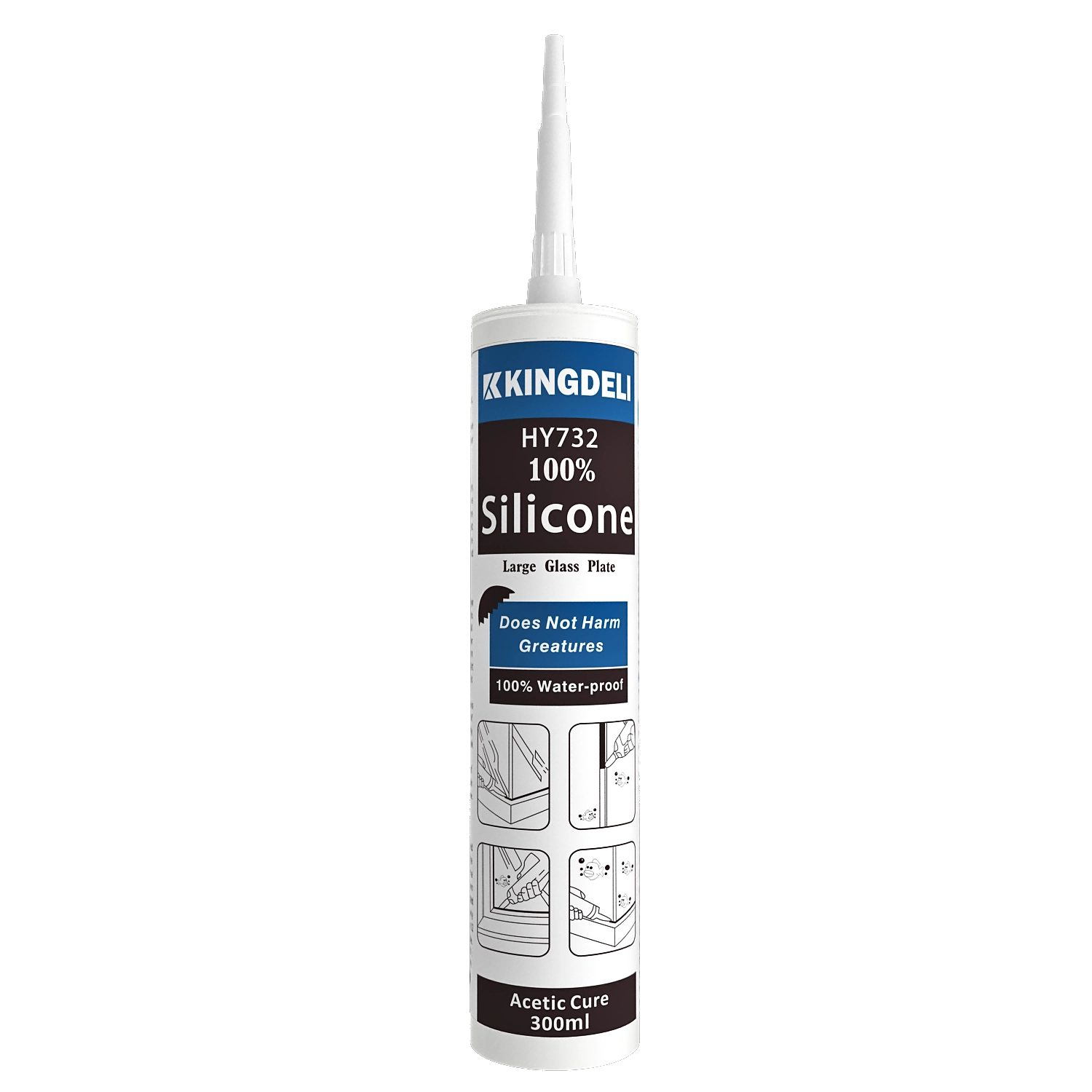
KINGDELI HY732 Professional Acetoxy Cure Silicone Sealant
KINGDELI HY732 is a professional-grade, one-component acetoxy cure silicone sealant designed for fast curing, strong adhesion, and long-lasting flexibility. Ideal for aquariums, glass applications, aluminum doors and windows, kitchens, and bathrooms, it provides reliable sealing performance with excellent anti-fungal protection in high-humidity environments.
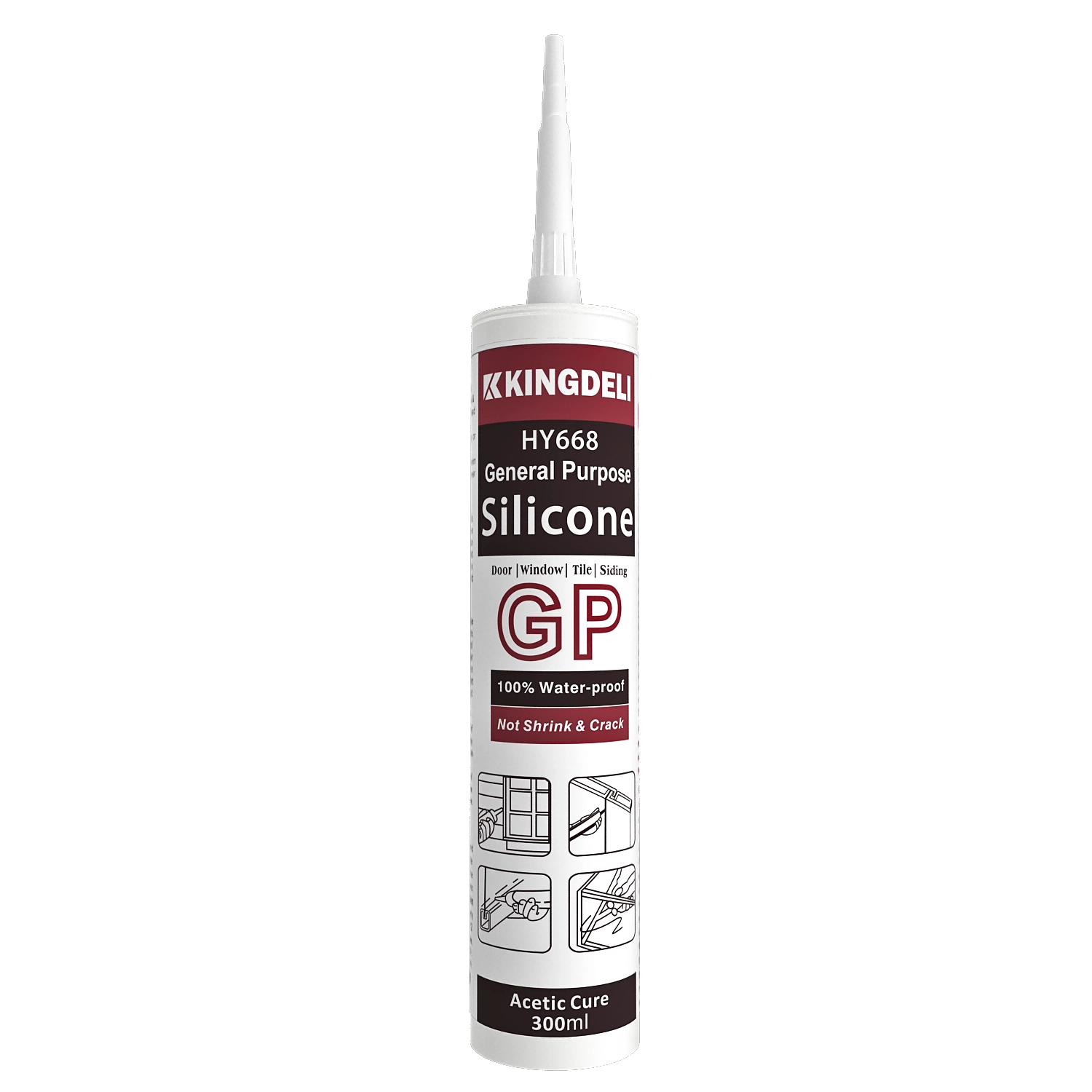
HY668 General Purpose Acetic Silicone Sealant
HY-668 General-Purpose Acetic Silicone Sealant is a easy-to-use sealant for everyday sealing and glazing applications. It offers good adhesion, fast curing, and a durable flexible seal, making it ideal for windows, doors, interior joints, and general construction use
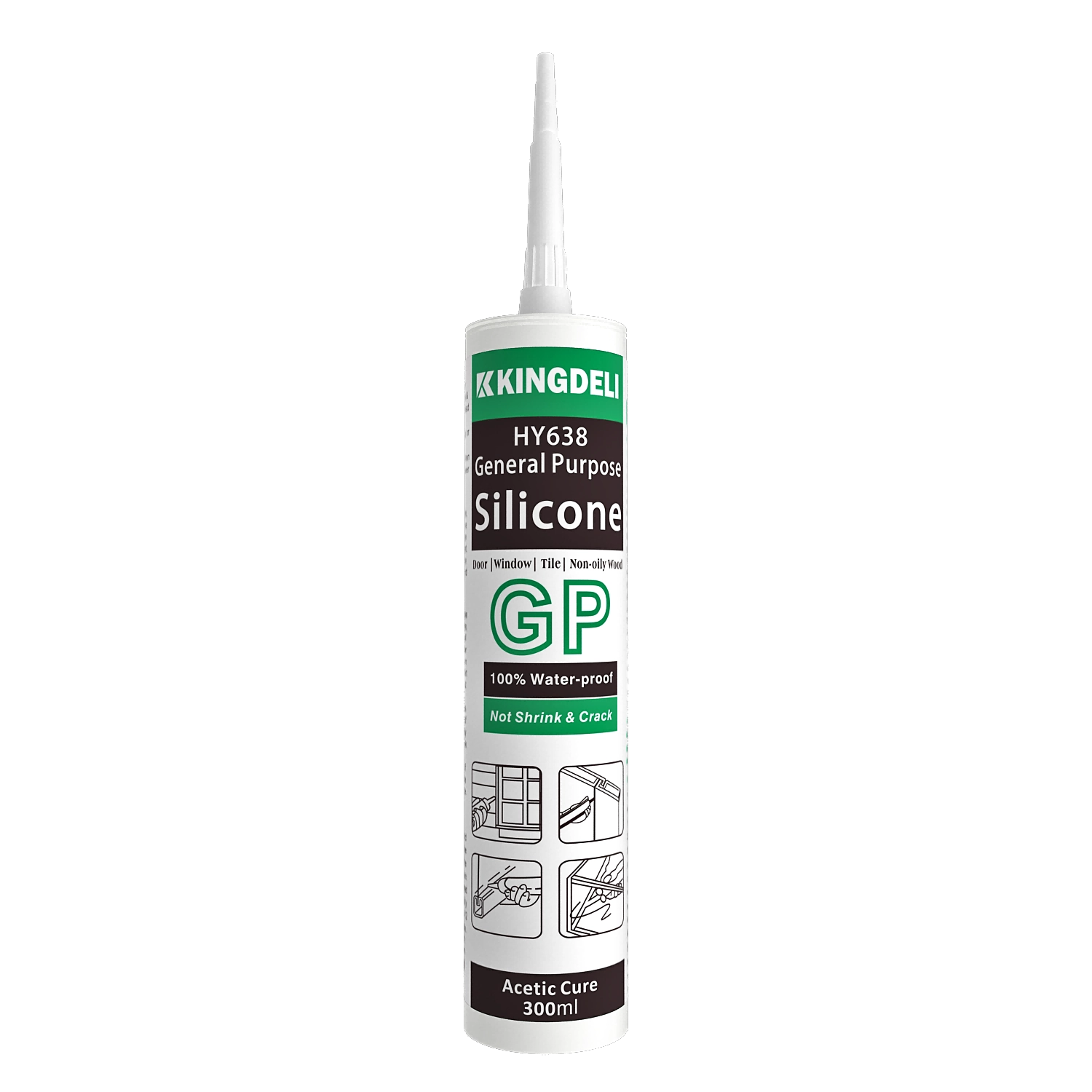
HY638 Economic General Purpose Acetic Silicone Sealant
HY-638 Economic General-Purpose Acetic Silicone Sealant is a cost-effective, one-component, shelf-stable, acetoxy-curing silicone sealant designed for general-purpose sealing and bonding applications. After curing, it forms a durable, elastomeric seal with the following characteristics:
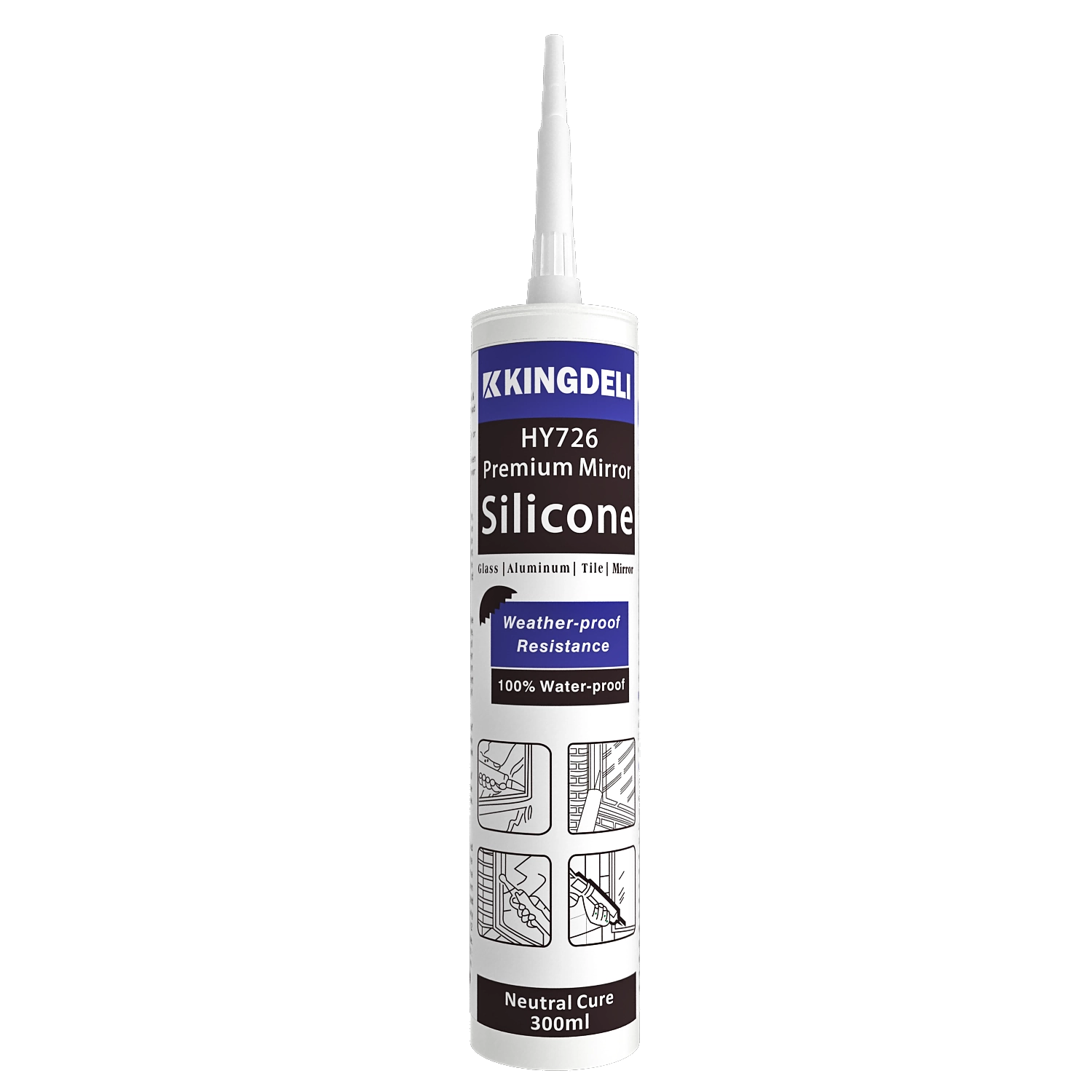
HY-726 Premium Clear Neutral Silicone Sealant
HY726 one-component, shelf-stable, 100% silicone elastomeric adhesive using alkoxy technology. It is specifically designed for sealing sensitive surfaces such as copper, gold, and metal-coated mirrors.
Let’s Build Stronger Bonds with Quality Adhesives and Sealants
Have questions about the topic or need tailored sealant solutions for your project?
Our team is ready to provide expert guidance, product recommendations, and application support.
Innovating with Integrity, Bonding the World
Since 1998, KINGDELI has delivered trusted, sustainable sealant solutions that connect industries and inspire progress worldwide.
Whatsapp: +8618825946249
Kingdeli
Kingdeli
Kingdeli
Kingdeli
Kingdeli