


Avoiding Delays and Batch Inconsistency in Sealant Bulk Orders

- How to Stabilize Large-Volume Sealant Procurement
- Convert project requirements into a controlled specification
- Approve a golden sample and measurable acceptance criteria
- Control change management across the supply chain
- Operational Causes of Delayed Bulk Deliveries
- Forecasting, capacity, and production-slot conflicts
- Packaging and documentation bottlenecks
- Use risk buffers without creating excessive inventory
- Quality Systems That Prevent Batch-to-Batch Variation
- Verify the supplier’s management and testing framework
- Build a batch-release protocol
- Investigate deviations with structured corrective action
- Why KINGDELI Supports Reliable Global Sealant Supply
- Integrated manufacturing capacity and process consistency
- Broad product coverage for project and distribution portfolios
- International standards, OEM/ODM, and technical support
- Frequently Asked Questions
Bulk sealant procurement affects more than material cost: an inconsistent cartridge, delayed container, or formulation that behaves differently on site can interrupt installation, increase labor expenditure, create warranty exposure, and damage a distributor’s reputation. The most reliable way to avoid these outcomes is to treat every order as a controlled project involving technical specification, approved samples, raw-material verification, production scheduling, laboratory release, packaging inspection, and logistics coordination. Buyers sourcing from a construction sealant manufacturer or other industrial sealant producer should evaluate not only price and nominal capacity, but also process repeatability, documented standards, communication discipline, and the supplier’s ability to maintain the same performance across multiple batches.
How to Stabilize Large-Volume Sealant Procurement
Convert project requirements into a controlled specification
Many bulk-order problems begin before a purchase order is issued. A broad description such as “white silicone for windows” does not define the chemistry, modulus, curing system, movement capability, adhesion substrates, skin time, cure rate, packaging format, shelf life, or applicable test method. A professional procurement brief should identify the intended application, substrates, joint dimensions, indoor or outdoor exposure, temperature range, color, packaging, storage conditions, regulatory requirements, and target delivery date.
Technical language should also distinguish between products that appear similar but behave differently. Neutral silicone sealant is commonly selected where substrate compatibility and low odor are important, while acetic silicone sealant may suit compatible non-porous surfaces but can be unsuitable around certain metals, masonry, or sensitive substrates. Silicone glazing sealant requires careful review of glass, coated aluminum, spacers, primers, and compatibility with adjacent materials. Polyurethane sealant, MS polymer sealant, Acrylic Sealant, and Self-Leveling Sealant each have different moisture, movement, curing, and application requirements. A clear specification prevents a low-cost substitution from becoming a site failure.
Approve a golden sample and measurable acceptance criteria
A retained reference sample creates a physical and visual benchmark for future batches. The approval file should include the product code, color standard, packaging artwork, lot identification, technical data sheet, safety data sheet, and agreed performance values. Depending on the application, relevant controls may include density, viscosity or extrusion force, slump, skin formation time, tack-free time, hardness, tensile strength, elongation, adhesion, movement capability, and accelerated aging behavior.
Acceptance criteria should be measurable rather than subjective. “Smooth application” can be supported by an extrusion-force range under a defined nozzle size and temperature. “Fast curing” should be expressed through skin time and cure depth under stated humidity and temperature conditions. For a distributor selling private-label products, the approved sample should also cover label dimensions, color accuracy, nozzle type, cap fit, carton configuration, pallet pattern, and barcode readability. This approach reduces disputes because both parties can identify whether a deviation is technical, visual, packaging-related, or logistical.
Control change management across the supply chain
Sealant performance can shift when a supplier changes a polymer grade, plasticizer, filler, pigment, catalyst, packaging component, or manufacturing site. A robust change-control process requires advance notification, risk assessment, comparative testing, and written buyer approval before implementation. The same discipline should apply to a new raw-material source or a revised filling temperature.
Buyers should request confirmation that production lots remain traceable from incoming raw materials to finished cartons. Lot codes should connect the batch to mixing records, laboratory results, filling records, operator checks, and release authorization. Traceability is particularly important when products are distributed across several countries, because a targeted hold or withdrawal is more efficient than a broad market recall.
Operational Causes of Delayed Bulk Deliveries
Forecasting, capacity, and production-slot conflicts
Manufacturers often serve construction, glazing, industrial assembly, home improvement, and private-label customers simultaneously. Delays arise when a buyer communicates the required shipment date only after the project has already entered installation, or when a color and package configuration requires an unplanned production changeover. A reliable procurement plan should provide rolling forecasts, firm quantities, acceptable split-shipment options, packaging approvals, and a latest acceptable arrival date.
Production capacity is not the same as immediately available capacity. A facility may have high annual output but still require time for raw-material procurement, color matching, laboratory approval, filling, carton production, palletization, export documentation, and vessel booking. Buyers should ask for a written lead-time model that separates formulation confirmation, material preparation, manufacturing, quality release, and transit. This makes schedule risk visible and enables earlier decisions about safety stock or partial deliveries.
Packaging and documentation bottlenecks
Cartridges, sausages, pails, labels, cartons, pallets, and protective films can become critical-path items. A finished sealant batch cannot ship if the correct packaging is late or if artwork has not been approved. Private-label buyers should freeze artwork before production and define who is responsible for language review, warning statements, batch coding, shelf-life presentation, and country-specific documentation.
Export delays may also result from incomplete commercial invoices, packing lists, certificates of origin, product declarations, safety data sheets, or transport classifications. The supplier and buyer should agree on a document checklist before the first shipment. Where projects depend on just-in-time delivery, electronic copies should be reviewed before cargo release rather than after the container reaches the destination port.
Use risk buffers without creating excessive inventory
Safety stock should be calculated from demand variability, manufacturing lead time, transit variability, customs exposure, and the cost of a site shutdown. A blanket increase in inventory is not always efficient, particularly for products with a finite shelf life. Better options include reserving production capacity, pre-booking packaging, holding approved raw materials, scheduling staggered shipments, or maintaining regional stock for high-volume standard colors.
Inventory rotation must follow the manufacturer’s stated storage conditions and shelf-life limits. Warehouses should monitor temperature, humidity where relevant, pallet integrity, and first-expire-first-out movement. A batch that arrives on time but has been stored improperly may still create extrusion, curing, or adhesion complaints.
| Control point | Weak purchasing practice | Controlled purchasing practice | Operational benefit |
|---|---|---|---|
| Specification | Generic product name and color only | Defined chemistry, substrates, performance range, packaging, and standards | Reduces unsuitable substitutions and approval disputes |
| Sampling | Single visual check without retention | Golden sample with documented test values and retained lot reference | Creates a repeatable comparison for future batches |
| Production planning | Shipment date requested after order confirmation | Forecast, firm order, production slot, and milestone schedule | Improves capacity allocation and delivery reliability |
| Quality release | Certificate supplied after shipment | Batch testing and release completed before loading | Prevents nonconforming goods from entering transit |
| Traceability | Carton markings are difficult to interpret | Lot code linked to manufacturing and laboratory records | Enables targeted investigation and corrective action |
Quality Systems That Prevent Batch-to-Batch Variation
Verify the supplier’s management and testing framework
ISO 9001 provides a recognized framework for quality management systems, while ISO 14001 addresses environmental management. Certification alone does not guarantee that every formulation is suitable, but it indicates that the organization operates within an audited management structure. Buyers can review certification scope, validity, issuing body, manufacturing location, complaint procedures, internal audits, and corrective-action records. The official ISO 9001 quality management information explains the standard’s role in consistent processes and customer-focused control.
Product claims should be connected to appropriate test methods and technical documentation. For sealants used in construction, buyers may compare relevant national, regional, or project standards, including ASTM methods, EN requirements, or specified building codes. The ASTM International standards platform is a useful starting point for identifying recognized test methods, but the final compliance decision should match the project specification and local regulatory requirements.
Build a batch-release protocol
Every production lot should pass a defined release protocol before shipment. Typical checks can include appearance, color, density, extrusion behavior, skin formation, cure profile, hardness, adhesion, and packaging integrity. The exact test panel depends on chemistry and application. A neutral silicone used for façade joints should not be released using only a visual inspection, just as an epoxy tile grout should not be evaluated using criteria designed for a one-component sealant.
Certificates of analysis should identify the product, batch number, production date, test values, specification limits, and release status. Buyers should compare certificates across several lots instead of reviewing only one document. Stable results within a controlled range provide stronger evidence of process capability than a single passing result. Where a project is high-risk, independent laboratory confirmation or pre-shipment witness testing may be appropriate.
Investigate deviations with structured corrective action
When a batch appears different, quarantine is preferable to immediate field use. The investigation should preserve unopened samples, record storage and transport conditions, photograph packaging and product behavior, and compare the affected lot with the approved reference. Potential causes include incorrect mixing sequence, raw-material variation, moisture exposure, inaccurate dosing, filling contamination, blocked nozzles, or application outside the recommended temperature range.
A corrective-action report should identify the root cause, containment step, responsible owner, completion date, and verification method. This is more effective than replacing material without understanding the failure mechanism. It also helps the supplier determine whether a complaint is a true formulation deviation, a packaging defect, a substrate incompatibility, or an installation-condition issue.
Why KINGDELI Supports Reliable Global Sealant Supply
Integrated manufacturing capacity and process consistency
KINGDELI has operated in the high-performance sealant, adhesive, and coating industry since 1998. Our 66,000 m² facility in Foshan, China, uses fully automated production lines and has annual capacity exceeding 100,000 tons. This scale supports planned production slots, repeatable batching, and robust supply for distributors, project owners, contractors, and private-label partners in international markets.
Our manufacturing approach is designed around consistency from raw-material handling through filling and final inspection. Automated production does not replace technical judgment; it strengthens dosing accuracy, process repeatability, documentation, and control over high-volume orders. Buyers can align product selection with the required substrate, movement, curing profile, packaging format, and destination-market expectations rather than relying on a one-size-fits-all material.
Broad product coverage for project and distribution portfolios
Our product range includes neutral silicone sealant, acetic silicone sealant, Acrylic Sealant, silicone glazing sealant, No More Nails adhesive, Polyurethane Sealant, MS polymer Sealant, RTV Gasket Maker, Epoxy Tile Grout, and Self-Leveling Sealant. This breadth allows procurement teams to consolidate compatible product categories with one technical partner while still selecting chemistry according to the application.
For example, glazing and façade programs may require silicone products with carefully assessed adhesion and weathering performance, while interior finishing channels may prioritize acrylic products, tile grout, or high-grab adhesive solutions. Industrial maintenance programs may require RTV Gasket Maker or polyurethane technology. A portfolio-based supply strategy can simplify technical communication, packaging coordination, quality documentation, and replenishment planning.
International standards, OEM/ODM, and technical support
KINGDELI is recognized as a National High-Tech Enterprise and contributed to the National Standard GB/T 29755-2013. Our systems and products are engineered to meet strict international requirements, including ISO 9001, ISO 14001, CE, and ASTM-related expectations where applicable to the product and market. Buyers should always verify the exact certificate, declaration, and product scope for the intended application rather than assuming that one approval covers an entire range.
With more than 27 years of industry expertise and a presence in over 50 countries, our team supports OEM/ODM development, label customization, low-VOC formulation objectives, technical documentation, and application guidance. This end-to-end support helps buyers shorten qualification cycles, protect product identity, and establish a controlled replenishment process. For major projects, technical discussions should begin before the purchase order so that sample approval, testing, packaging, capacity reservation, and shipment milestones are aligned from the start.
For dependable bulk sealant supply, contact KINGDELI to review your technical specification, production schedule, packaging requirements, and suitable product portfolio.
Frequently Asked Questions
What information should buyers provide when ordering sealant in bulk?
The procurement brief should identify the intended application, substrates, joint dimensions, indoor or outdoor exposure, temperature range, chemistry, color, packaging, storage conditions, regulatory requirements, and target delivery date.
How can buyers confirm that different sealant batches are consistent?
Buyers should approve a retained golden sample, define measurable acceptance criteria, review certificates of analysis across several lots, and confirm that each batch is traceable to raw materials, manufacturing records, laboratory results, and release authorization.
Why do large sealant orders experience delivery delays?
Common causes include late forecasts, unavailable production slots, raw-material or packaging shortages, unapproved artwork, laboratory-release delays, incomplete export documents, and vessel or customs disruptions.
What should a sealant certificate of analysis contain?
A certificate should identify the product, batch number, production date, test values, specification limits, and release status; the specific tests depend on the sealant chemistry and intended application.
How should a buyer respond to a suspected inconsistent sealant batch?
The affected material should be quarantined, with unopened samples and storage records preserved. The supplier should compare the lot with the approved reference, investigate possible formulation, packaging, transport, or application causes, and issue a structured corrective-action report.
Does ISO 9001 guarantee that every sealant batch will perform identically?
No. ISO 9001 indicates a recognized quality management framework, but buyers must still verify product-specific specifications, batch testing, traceability, certification scope, and application suitability.
Choosing Neutral Cure Silicone for Structural Glazing Projects
Structural Silicone Sealants for Curtain Wall Glazing Systems
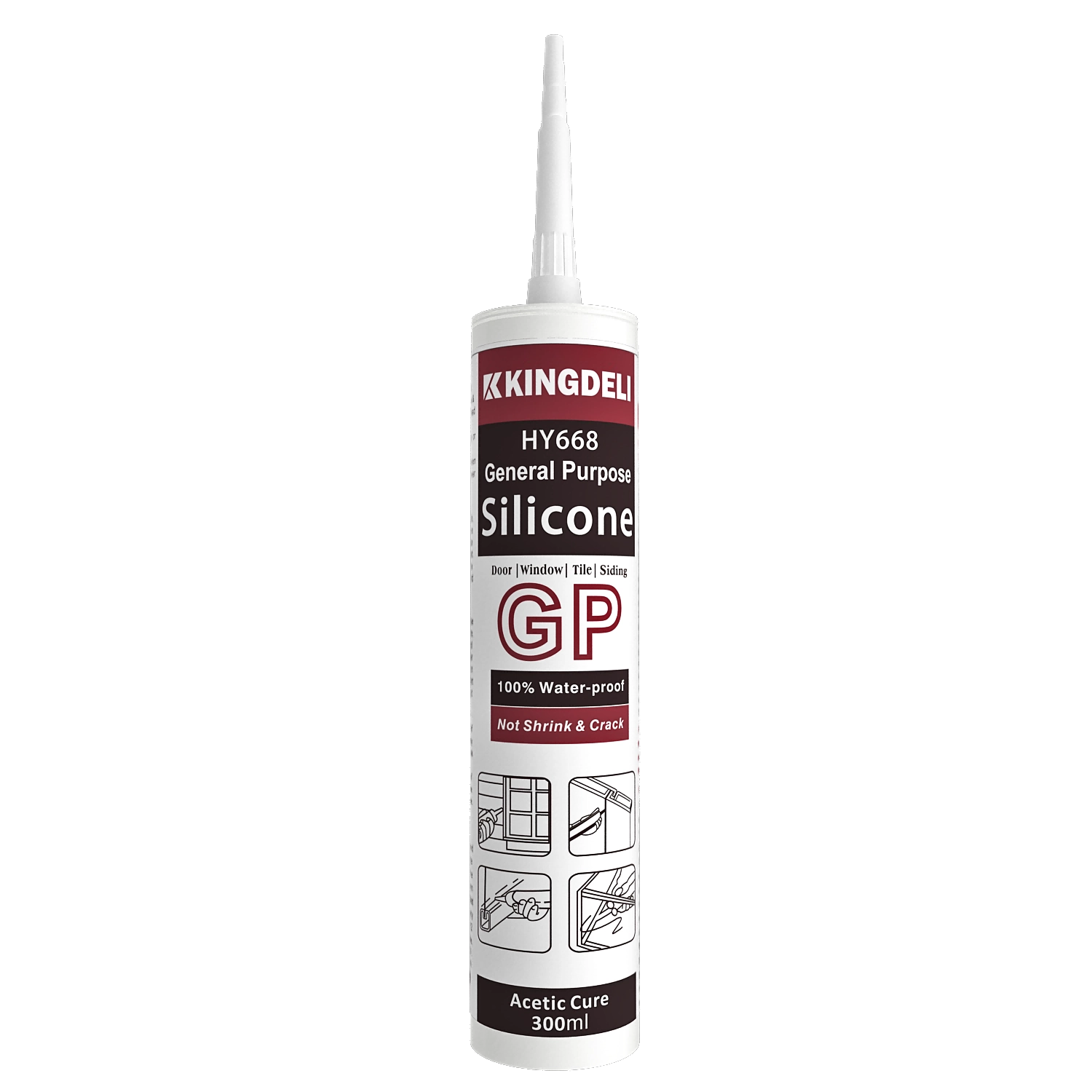
HY668 General Purpose Acetic Silicone Sealant | KINGDELI
Scaling Orders: From Pilot Runs to Mass Supply of PU Adhesive

HY992 Modified Polyurethane Construction Sealant
HY992 Modified Polyurethane Sealant is a one-component, moisture-curing construction sealant designed for professional building and structural sealing applications. It provides excellent adhesion, weather resistance, and durable elasticity, making it suitable for a wide range of construction materials.
The formulation delivers strong bonding performance without corrosion or substrate contamination, while maintaining low VOC content for environmentally responsible construction projects.

HY995 Crystal Clear Ms Polymer Adhesive/Sealant
HY995 Crystal Clear Ms Polymer Adhesive/Sealant is a new generation MS Polymer adhesive / sealant formulated for all bonding and sealing applications where long term reliability is required. It has excellent bonding strength on various materials. It will cure to form a durable, flexible, waterproof seal.

HY997 High-Performance Anti-Microbial MS Polymer Sealant
HY997 MS polymer sealant for is is a premium one-component, neutral-curing modified silane sealant engineered for demanding interior applications. It offers a Class 20 movement capability, ensuring long-lasting flexibility and reliable performance under dynamic joint conditions. Curing at room temperature, HY997 delivers superior anti-microbial and mildew-resistant properties, maintaining hygienic and clean environments over time.

KINGDELI HY732 Professional Acetoxy Cure Silicone Sealant
KINGDELI HY732 is a professional-grade, one-component acetoxy cure silicone sealant designed for fast curing, strong adhesion, and long-lasting flexibility. Ideal for aquariums, glass applications, aluminum doors and windows, kitchens, and bathrooms, it provides reliable sealing performance with excellent anti-fungal protection in high-humidity environments.
Let’s Build Stronger Bonds with Quality Adhesives and Sealants
Have questions about the topic or need tailored sealant solutions for your project?
Our team is ready to provide expert guidance, product recommendations, and application support.
Innovating with Integrity, Bonding the World
Since 1998, KINGDELI has delivered trusted, sustainable sealant solutions that connect industries and inspire progress worldwide.

Whatsapp: +8618825946249
Kingdeli
Kingdeli
Kingdeli
Kingdeli
Kingdeli