











Avoid These 7 Common MS Sealant Mistakes: The Secret to Long-Lasting, Leak-Proof Joints

- What is MS Sealant?
- Key Takeaways: Why Perfecting MS Sealant Application Matters
- Mistake 1: Ignoring Proper Surface Preparation
- Mistake 2: Incorrect Joint Design and Sizing
- Mistake 3: Using MS Sealant on Incompatible Substrates
- Mistake 4: Disregarding Curing Times and Environmental Conditions
- Mistake 5: Smoothing and Tooling Errors
- Mistake 6: Overlooking Paintability Windows
- Mistake 7: Choosing the Wrong MS Polymer Formulation
- Future Trends: MS Sealant Innovations for 2026 and Beyond
- Conclusion
- How long does MS sealant take to cure?
- Is MS sealant better than silicone?
- Can I use MS sealant outside?
- Is MS sealant completely waterproof?
- Why is my MS sealant not drying?
- Can MS sealant be painted over?
- What removes cured MS sealant?
- Does MS sealant shrink over time?
What is MS Sealant?
MS sealant, or silyl modified polymers, is an advanced hybrid adhesive combining the durability of polyurethane with the weathering resistance of silicone. It cures using atmospheric moisture to form a highly flexible, leak-proof joint that bonds securely to various substrates.
To truly master hybrid sealant application, you must first understand its chemical composition. These advanced formulations consist of a polyether backbone combined with reactive silane terminal groups. This unique structure allows it to outcompete traditional caulking materials in both residential and industrial settings, as reported by Wikipedia.
Key Features of Silyl Modified Polymers:
- Moisture-Curing Process: It naturally adapts to ambient humidity to form a highly flexible, elastomeric network.
- Safety Profile: Unlike older technologies, MS polymers are completely free of isocyanates and act as voc-free sealants, making them significantly safer for users and the environment, as detailed by Wikipedia.
- Broad Adhesion: It forms a powerful bond without the need for primers on glass, metal, wood, and most plastics.
- Superior Paintability: Because it does not bleed oils, it accepts water-based paints seamlessly.
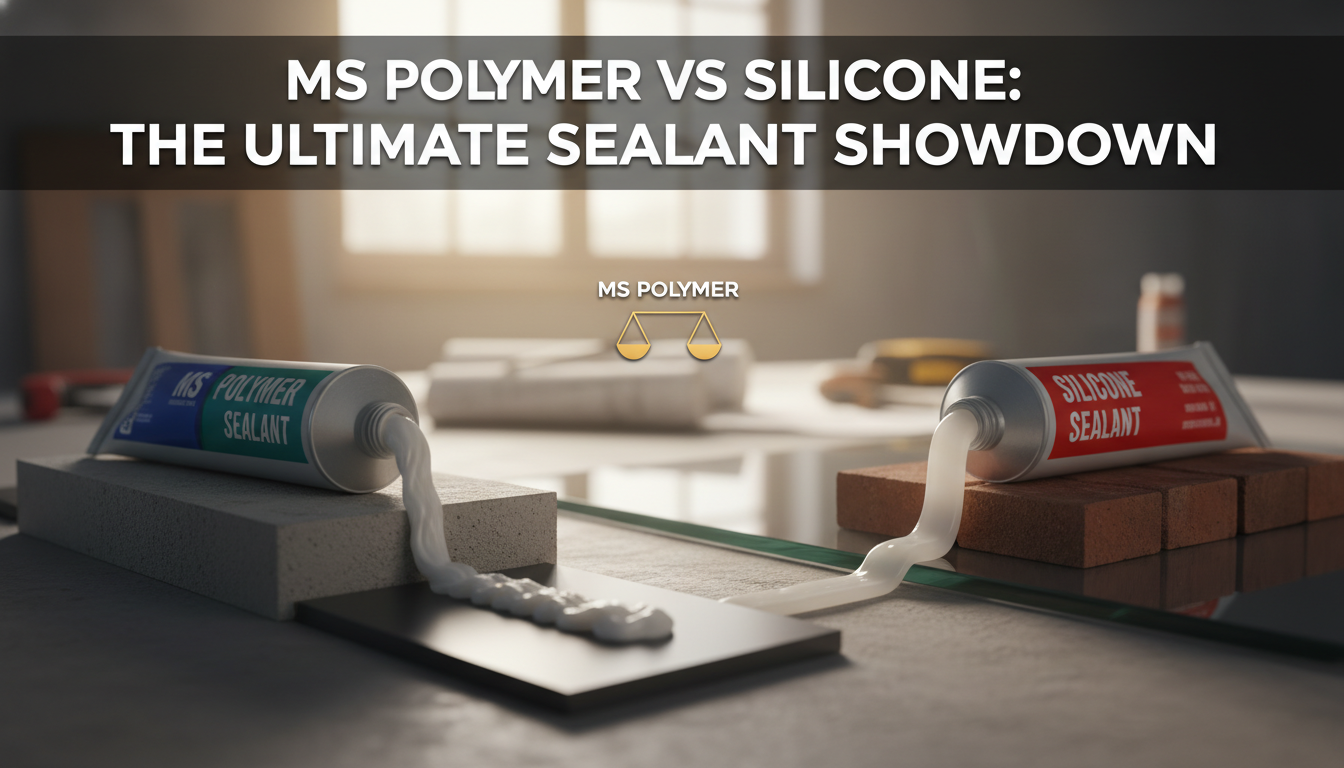
When weighing ms polymer vs silicone, MS sealants consistently provide better paintability and less dirt pickup, bridging the gap between high-strength structural adhesives and flexible weatherproofing caulks.
Key Takeaways: Why Perfecting MS Sealant Application Matters
Perfecting your hybrid sealant application ensures maximum UV resistance and prevents costly water ingress over decades of structural movement. By eliminating common installation errors, contractors save significant time and money on material waste and project callbacks.
Proper sealant application is not just about visual aesthetics; it is a critical component of maintaining a building's envelope integrity.
Why Application Precision is Critical:
- Long-Term Durability: Proper application ensures maximum UV resistance and prevents insidious water ingress over decades.
- Cost Efficiency: Avoiding common installation errors saves contractors massive amounts of money on callbacks and material waste.
- Material Compatibility: Understanding the unique chemistry of hybrid sealants prevents cross-compatibility issues with modern building materials.
- Structural Integrity: A well-applied joint absorbs the daily expansion and contraction caused by temperature fluctuations without breaking its chemical bond.
Mistake 1: Ignoring Proper Surface Preparation
Applying sealant over dust, grease, or standing water is the leading cause of adhesion failure in construction joints. Failing to properly clean and prepare the substrate prevents the polymer from forming a strong, permanent chemical bond with the surface.
Joint failure troubleshooting almost always begins by examining how the surface was treated prior to caulking. If the sealant peels away cleanly like a strip of tape, the surface was not adequately prepared.
Common Surface Prep Errors:
- Contamination: Leaving construction dust, oily fingerprints, or residual moisture inside the joint cavity.
- Lack of Abrasion: Failing to use mechanical abrasion or specialized primers on difficult, non-porous substrates like certain plastics or coated metals.
- Using the Wrong Cleaner: Utilizing soap or oil-based solvents that leave a slick residue, which actively repels the incoming sealant.
Best Practice Guide for Preparation:
- Brush and Vacuum: Remove all loose debris and dust from the joint with a stiff brush.
- Solvent Wipe: Always wipe down surfaces with an alcohol-based cleaner (like isopropyl alcohol) to strip away residual oils.
- Complete Drying: Allow the surfaces to dry completely before caulking to ensure the moisture-curing process occurs correctly from the atmosphere, not from a wet substrate.
Mistake 2: Incorrect Joint Design and Sizing
Disregarding the critical width-to-depth ratio causes the sealant to tear under thermal expansion and structural shifting. Failing to size the joint correctly restricts the natural flexibility of the polymer, leading to premature cohesive or adhesive tearing.
The geometry of the joint dictates how stress is distributed across the cured rubber. When this geometry is flawed, even the highest quality silyl modified polymers will fail under pressure.
Critical Joint Design Failures:
- Improper Ratios: Disregarding the required width-to-depth ratio forces the sealant to stretch beyond its mechanical limits.
- Three-Sided Adhesion: Failing to use closed-cell backer rods in deep joints allows the sealant to bond to the bottom of the gap. This restricts natural movement and concentrates stress at the corners.
- Insufficient Width: Making the joint too narrow for the expected thermal expansion of the adjacent building materials.
Expert Tips for Optimal Joint Sizing:
- The 2:1 Rule: Keep the sealant depth exactly half the width of the joint for optimal flexibility.
- Use Backer Rods: Always install a polyethylene backer rod that is 25% larger than the joint width to create a firm, curved base that prevents three-sided adhesion.
Mistake 3: Using MS Sealant on Incompatible Substrates
Assuming MS polymers stick to every material results in critical failures on difficult surfaces like Teflon, polyethylene, or bituminous coatings. Using non-specialized grades on highly porous natural stone can also lead to unsightly plasticizer migration.
While hybrid sealant application is famous for its primerless adhesion on a vast array of materials, it is not a universal magic bullet. Chemical compatibility must be verified to ensure long-term success.
Risks of Substrate Incompatibility:
- Total Adhesion Failure: Teflon (PTFE), Polyethylene (PE), and Polypropylene (PP) possess extremely low surface energy, meaning standard sealants will peel right off.
- Bitumen Bleeding: Applying standard MS sealant over asphalt or bituminous waterproofing can cause severe discoloration and degradation of the polymer.
- Stone Staining: Experiencing plasticizer migration or bleeding on highly porous natural stone (like marble or granite) when using non-specialized commercial grades.
The Solution:
- Adhesion Testing: Always perform a small adhesion test before full-scale application on untested hybrid materials.
- Specialized Formulations: Use specifically formulated natural stone sealants when working with porous architectural masonry to prevent oil leaching.
Mistake 4: Disregarding Curing Times and Environmental Conditions
Subjecting newly sealed joints to heavy mechanical stress or water pressure before the moisture-curing process is fully complete will destroy the seal. Applying the product in sub-zero temperatures or extremely low humidity drastically slows the necessary chemical cross-linking.
Because silyl modified polymers require ambient moisture to cure, the surrounding environment dictates exactly how quickly the joint achieves maximum strength.
Environmental Pitfalls to Avoid:
- Premature Loading: Allowing foot traffic, structural movement, or heavy rain to hit the joint before a thick, resilient skin has formed.
- Low Humidity Constraints: Applying in extremely low humidity environments, which starves the sealant of the water molecules it needs to cross-link effectively.
- Freezing Temperatures: Working in sub-zero temperatures drastically slows down the chemical reaction and risks trapping microscopic ice crystals beneath the seal.
Curing Guidelines:
- Standard Rate: Always allow 2-3mm of cure depth per 24 hours under standard room conditions (23°C and 50% relative humidity).
- Patience Before Exposure: Wait at least 7 to 14 days before exposing deep joints to harsh chemical cleaning or severe mechanical loads.
Mistake 5: Smoothing and Tooling Errors
Using standard dish soap and water as a tooling liquid can break down the polymer surface and cause severe discoloration. Pressing too aggressively during tooling pushes the sealant out of the joint, leaving thin, weak edges.
Tooling is the final step in any hybrid sealant application, but it is often where even seasoned professionals introduce critical flaws that compromise the joint.
Common Tooling Mistakes:
- Dish Soap Damage: Standard detergents contain degreasers and surfactants that interfere with the polymer's surface tension, causing yellowing and surface cracking.
- Aggressive Pressure: Pressing too hard pushes the sealant out of the cavity, leaving a hollow joint and thin "feathered" edges that will quickly peel away under UV exposure.
- Dry Tooling: Attempting to smooth a fast-curing MS polymer without any lubricant, resulting in a jagged, uneven surface that traps dirt and water.
Proper Tooling Techniques:
- Neutral Agents: Use a dedicated, neutral smoothing agent designed specifically for hybrid polymers.
- The Right Tool: Use a properly sized tooling spatula to ensure a smooth, concave surface that naturally sheds water.
Mistake 6: Overlooking Paintability Windows
Painting over the sealant too early while it is still off-gassing causes the fresh paint to crack or blister. Conversely, waiting too long allows settling dust to ruin the adhesion of the coating to the cured joint.
One of the greatest advantages in the debate of ms polymer vs silicone is paintability. However, the timing and type of paint used dictate the success of the finish.
Paintability Errors:
- Premature Painting: Painting before the initial skin has formed can trap escaping gases, leading to irreversible bubbles and blisters in the paint film.
- Delayed Painting: Waiting weeks to paint allows environmental dirt to settle, ruining the paint's ability to bond properly.
- Chemical Clashes: MS sealants are famous for wet-on-wet paintability, but failing to verify compatibility with alkyd-based (oil-based) paints can result in the paint remaining perpetually tacky.
Best Practices for Painting:
- Water-Based Compatibility: Always default to water-based acrylic paints for the best aesthetic results.
- Optimal Window: Paint the joint within 2 to 4 hours of application, or strictly follow the manufacturer's specified wet-on-wet guidelines.
Mistake 7: Choosing the Wrong MS Polymer Formulation
Using a high-modulus, stiff adhesive grade for an expansion joint that requires low-modulus, high-stretch movement will guarantee structural failure. Selecting a standard indoor formulation for extreme outdoor environments compromises the entire weatherproofing system.
Not all voc-free sealants are created equal. The market offers a wide spectrum of MS polymers designed for completely different mechanical loads and environmental exposures.
Formulation Selection Mistakes:
- Modulus Mismatch: Using a high-modulus (stiff) structural adhesive for a facade expansion joint that requires low-modulus (high stretch) movement. The joint will simply rip apart during summer expansion.
- UV Vulnerability: Selecting a standard indoor grade for high-UV exposure outdoor applications like roofing or marine decking, leading to rapid chalking and degradation.
- Viscosity Errors: Using a self-leveling grade on a vertical wall, resulting in the sealant sagging out of the joint before it cures.
How to Choose Correctly:
- Match the Mechanics: Align the Shore A hardness and specific gravity of the MS sealant to the exact mechanical demands of the project.
- Read the Spec Sheet: Look for certifications that match your industry needs, such as marine-grade approvals, UV stability ratings, or sanitary certifications for bathroom use.
Future Trends: MS Sealant Innovations for 2026 and Beyond
By 2026, the widespread adoption of self-healing MS polymers that autonomously close micro-cracks will revolutionize the construction industry. Ultra-fast curing formulas and carbon-neutral bio-based products will become the new global standard for modern eco-friendly building codes.
The chemical engineering behind hybrid sealants is rapidly advancing. To stay ahead, professionals must monitor the latest technological leaps that will define the next decade of construction.
Innovations to Watch in 2026:
- Self-Healing Polymers: Advanced formulations containing micro-capsules that rupture and fill microscopic cracks, autonomously maintaining joint integrity over decades.
- Bypassing Humidity: Ultra-fast curing formulas that bypass standard atmospheric humidity limitations will become the norm in rapid-assembly manufacturing and modular construction.
- Ultimate Green Building: Stricter global green building codes will push 100% bio-based, carbon-neutral Silyl Modified Polymers into the mainstream, far surpassing the current benchmarks for voc-free sealants.
Conclusion
Avoiding these seven common MS sealant mistakes guarantees long-lasting, highly resilient, and aesthetically pleasing joints. By mastering surface preparation, joint design, and precise formulation selection, contractors can drastically maximize the lifespan and safety of any commercial or residential construction project.
Implementing robust joint failure troubleshooting protocols and understanding the distinct advantages of hybrid sealants will elevate the quality of your work. As the industry moves toward greener, faster-curing technologies, utilizing the right techniques today prepares you for the innovations of tomorrow. Contact us today to speak with an expert and discover our premium range of MS polymer sealants tailored for your specific industry needs.
How long does MS sealant take to cure?
MS sealants cure via environmental moisture rather than chemical hardeners or solvent evaporation. Typically, they cure at a rate of 2 to 3 millimeters per 24 hours at standard room temperature and 50% humidity. Full mechanical strength is usually achieved within 7 to 14 days depending on the joint depth and local climate conditions.
Is MS sealant better than silicone?
For many applications, yes. MS sealant does not stain porous substrates like natural stone and is easily paintable, offering immense versatility for builders. Silicone cannot be painted and often attracts dirt over time due to static charge. However, silicone may still be preferred for extremely high-temperature applications (over 200 degrees Celsius) where hybrid polymers might degrade.
Can I use MS sealant outside?
Absolutely. MS sealants possess outstanding resistance to UV radiation, harsh weather, and extreme temperature fluctuations. They will not crack, shrink, or bubble when exposed to direct sunlight, making them ideal for exterior roofing, windows, and high-movement facade joints in both residential and commercial buildings.
Is MS sealant completely waterproof?
Yes, when applied correctly with proper joint design, MS polymers create an impenetrable, 100% waterproof barrier. They are frequently used in demanding marine applications, including boat deck sealing and underwater structural bonding, due to their incredible saltwater resistance and long-term durability.
Why is my MS sealant not drying?
Because MS polymers are moisture-curing, extremely low humidity is usually the primary culprit behind slow drying times. Cold temperatures can also significantly slow the chemical cross-linking reaction. Ensure the environment has adequate ambient moisture and temperature; sometimes misting the air lightly with water can accelerate the curing process.
Can MS sealant be painted over?
Yes, one of the biggest advantages of MS sealant over traditional silicone is its excellent paintability. Many MS sealants can be painted wet-on-wet immediately after application using water-based acrylic paints. This allows contractors to seamlessly blend the joint into the surrounding architecture without waiting weeks for full curing.
What removes cured MS sealant?
Cured MS polymer is highly chemically resistant and usually requires mechanical removal first. Cut out the bulk of the rubberized sealant with a sharp utility knife or oscillating tool. Afterward, use a specialized sealant remover or industrial solvent to soften and wipe away the remaining microscopic residue from the substrate.
Does MS sealant shrink over time?
No. MS sealants are formulated completely without solvents or water, meaning there is nothing to evaporate out of the joint as it sets. This 100% solid composition ensures zero shrinkage during or after the curing process, maintaining a perfectly flush, aesthetically pleasing seal indefinitely.
Top 10 acrylic sealant Manufacturers and Supplier Brands in Hardware and Building Materials
OEM/ODM double glazing glass sealant Manufacturers and Suppliers
MS Silicone Sealant Joint Design and Movement Capabilities
Best ms polymer sealant manufacturers and supplier brands in Automotive Solutions
HY924
How long does HY924 take to cure?
Curing starts as soon as the material contacts moisture. Tack-free time is typically 30–60 minutes, with full curing depending on humidity, temperature, and bead thickness.
HY638
What are the main features of HY-638?
Key performance features include:
- Non-sag consistency for vertical and overhead applications
- Fast tack-free time
- Good adhesion to glass and many common construction materials
- Flexible, durable cured seal
- Wide service temperature range after curing
On which substrates should HY-638 not be used?
HY-638 is not recommended for use on:
- Masonry
- Cementitious surfaces
- Metals such as zinc, brass, copper, and lead It is also not suitable for certain specialized architectural joint applications.
HY-3300
How long is the shelf life of HY-3300?
Cartridge: 12 months
Aluminum foil: 12 months
Store in a cool, dry, and well-ventilated area below 25℃ for best performance.
HY732
Can it be used for repair work?
Yes, HY732 is suitable for sealing and repair work on glass-related applications, including joints, gaps, and fixture sealing.
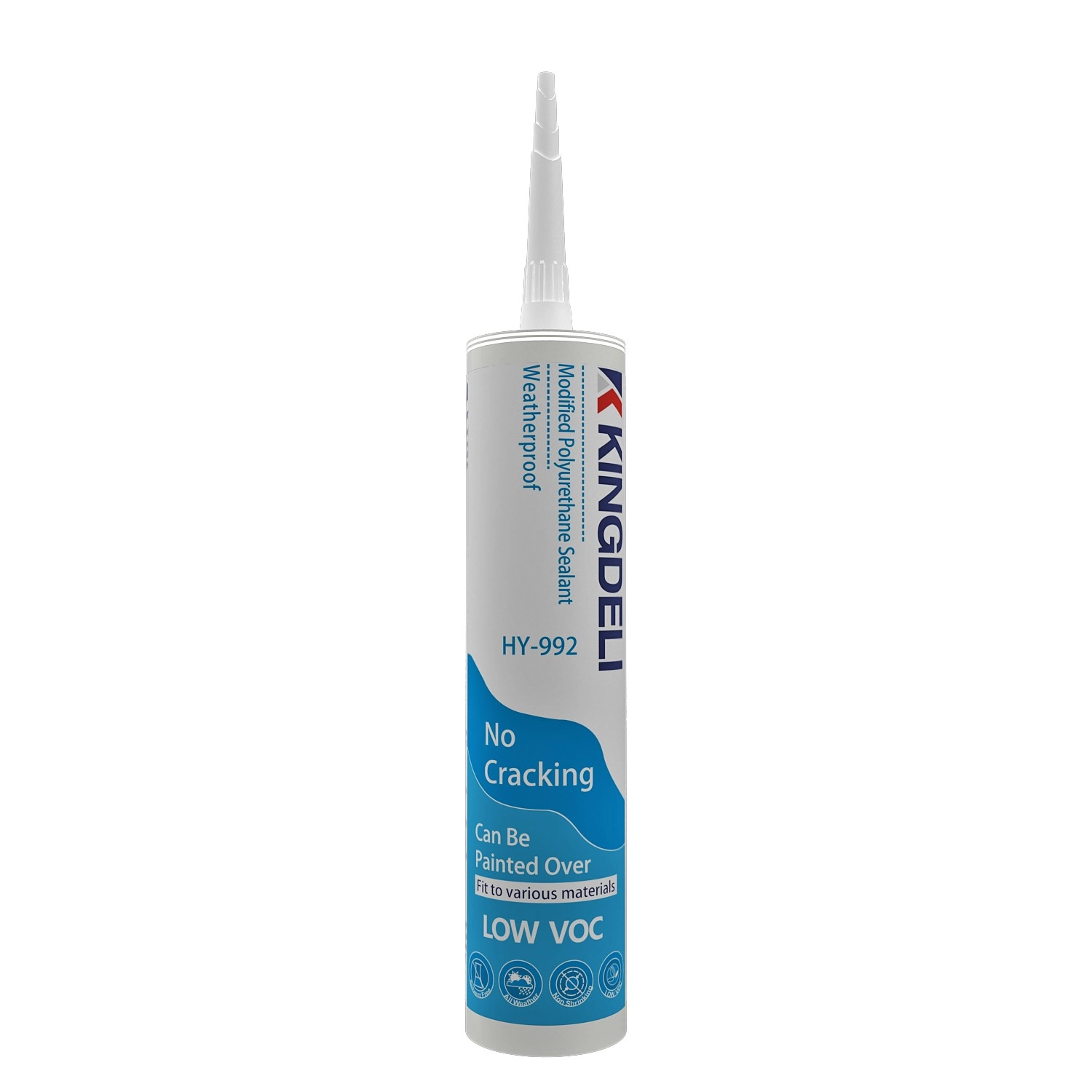
HY992 Modified Polyurethane Construction Sealant
HY992 Modified Polyurethane Sealant is a one-component, moisture-curing construction sealant designed for professional building and structural sealing applications. It provides excellent adhesion, weather resistance, and durable elasticity, making it suitable for a wide range of construction materials.
The formulation delivers strong bonding performance without corrosion or substrate contamination, while maintaining low VOC content for environmentally responsible construction projects.

HY995 Crystal Clear Ms Polymer Adhesive/Sealant
HY995 Crystal Clear Ms Polymer Adhesive/Sealant is a new generation MS Polymer adhesive / sealant formulated for all bonding and sealing applications where long term reliability is required. It has excellent bonding strength on various materials. It will cure to form a durable, flexible, waterproof seal.

HY997 High-Performance Anti-Microbial MS Polymer Sealant
HY997 MS polymer sealant for is is a premium one-component, neutral-curing modified silane sealant engineered for demanding interior applications. It offers a Class 20 movement capability, ensuring long-lasting flexibility and reliable performance under dynamic joint conditions. Curing at room temperature, HY997 delivers superior anti-microbial and mildew-resistant properties, maintaining hygienic and clean environments over time.
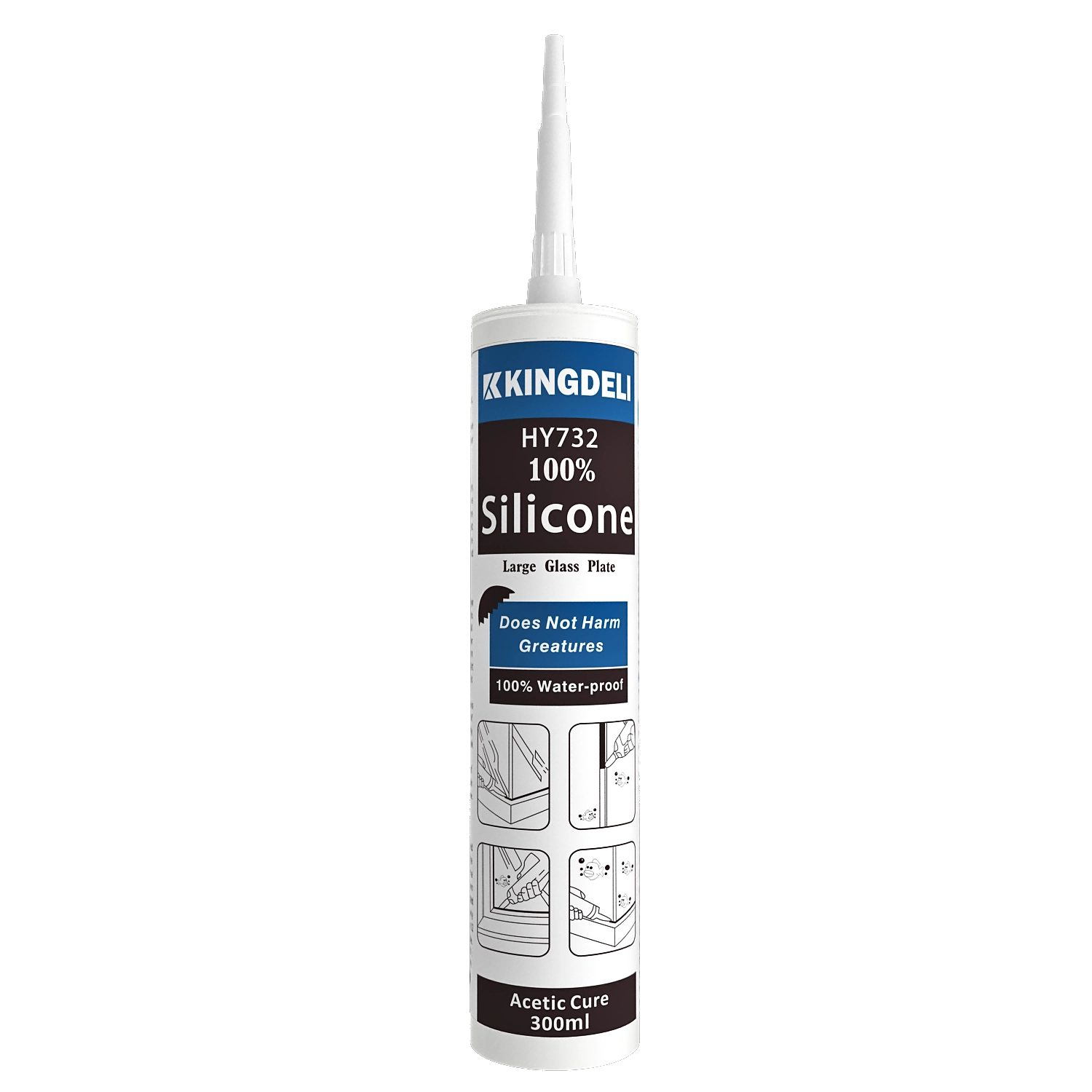
KINGDELI HY732 Professional Acetoxy Cure Silicone Sealant
KINGDELI HY732 is a professional-grade, one-component acetoxy cure silicone sealant designed for fast curing, strong adhesion, and long-lasting flexibility. Ideal for aquariums, glass applications, aluminum doors and windows, kitchens, and bathrooms, it provides reliable sealing performance with excellent anti-fungal protection in high-humidity environments.
Let’s Build Stronger Bonds with Quality Adhesives and Sealants
Have questions about the topic or need tailored sealant solutions for your project?
Our team is ready to provide expert guidance, product recommendations, and application support.
Innovating with Integrity, Bonding the World
Since 1998, KINGDELI has delivered trusted, sustainable sealant solutions that connect industries and inspire progress worldwide.
Whatsapp: +8618825946249
Kingdeli
Kingdeli
Kingdeli
Kingdeli
Kingdeli