











Adhesion Tests and Certifications for MS Silicone Sealant

- Why adhesion matters in construction and manufacturing
- Common failure modes and why tests prevent them
- Substrate compatibility and surface preparation
- Environmental and durability considerations
- Adhesion Tests and Certifications for MS Silicone Sealant
- Key adhesion test methods you should know
- Relevant international standards and certifications
- Laboratory versus field testing: bridging the gap
- Interpreting test results and choosing certified products
- How to read test reports
- Comparative table: common tests and what they tell you
- Specifying pass/fail criteria and acceptance
- KINGDELI: Production strength, certifications and product fit
- KINGDELI at a glance
- Technical credentials and standards
- Product range and application fit
- Practical checklist for qualifying ms silicone sealant
- Before purchase
- During installation and commissioning
- Post-installation verification
- FAQ
- 1. What is the difference between MS polymer sealant and neutral silicone sealant?
- 2. Which adhesion test best predicts field performance for facade joints?
- 3. Is primer always required for ms silicone sealant?
- 4. How do I interpret a report that shows adhesive failure after ageing?
- 5. What certifications should I request from a supplier?
- 6. Can lab test values be used to compare different manufacturers?
- Contact and product inquiries
As a consultant and practitioner working with sealants across global markets, I frequently advise clients in Foshan, Guangdong and elsewhere on how to validate ms silicone sealant performance for facades, glazing, metal bonding and interior joints. Accurate adhesion testing and recognized certifications (ASTM, ISO, EN/CE) are the bridge between a manufacturer’s lab data and reliable in-field performance. This article is a practical guide to the most relevant adhesion tests, how they relate to international standards, and how to interpret results so you can specify or qualify ms silicone sealant with confidence.
Why adhesion matters in construction and manufacturing
Common failure modes and why tests prevent them
Adhesion failure is one of the most common causes of joint or bonded assembly problems: cohesive failure within the sealant, adhesive failure at the substrate interface, or mixed failure modes. When a sealant loses adhesion, problems such as water ingress, loss of structural integrity, and accelerated weathering follow. Performing standardized adhesion tests during product selection, pre-qualification and periodic quality control reduces risk and often saves significant remediation costs.
Substrate compatibility and surface preparation
MS silicone sealants (commonly called MS polymer sealants or silane-modified polymers) are prized for their adhesion to many substrates without primers, but substrate type, surface energy, contamination, and preparation method remain deciding factors. Tests that replicate actual substrates (aluminium, anodized aluminium, glass, painted metal, concrete, PVC, stone) and surface conditions (clean, slightly contaminated, primed) are required to predict field adhesion. I always recommend mock-up tests using the actual substrate and surface preparation intended for the project.
Environmental and durability considerations
Adhesion should not be judged only on initial pull-off values. Durability under UV, thermal cycling, humidity (e.g., 28-day high-humidity conditioning), and chemical exposure matters. Accelerated ageing tests and cyclic mechanical tests simulate decades of weathering within weeks or months and are an essential part of meaningful qualification.
Adhesion Tests and Certifications for MS Silicone Sealant
Key adhesion test methods you should know
The most common laboratory tests for adhesives and sealants assess peel, lap shear, tensile properties, and pull-off adhesion. Typical methods include:
- Peel tests (e.g., 90° or 180° peel; ASTM D903 provides a method for peel testing of flexible adhesives) — useful for flexible joints and tapes.
- Lap shear tests (e.g., ASTM D1002 for single-lap joints on metals) — measure shear strength of bonded assemblies.
- Tensile and elongation tests (e.g., ASTM D412 for elastomeric tensile properties) — show elasticity and cohesive strength important for movement joints.
- Pull-off adhesion (also called tensile adhesion or adhesion strength test; similar to ISO 4624 for coatings) — measures force to detach a disc bonded to the sealant or coating and is commonly used to quantify adhesion to rigid substrates.
Each test gives a different perspective. For ms silicone sealants, I typically require a combination of pull-off or lap shear and cyclic movement tests to understand both static strength and dynamic durability.
Relevant international standards and certifications
Standards define what tests are required for specific applications and supply a common language for specification and compliance. Key references include:
- ASTM C920 — Standard Specification for Elastomeric Joint Sealants (covers properties and test methods relevant to silicone and other elastomeric sealants): ASTM C920.
- ISO (International Organization for Standardization) — multiple standards cover sealant classification and test procedures; ISO provides guidance on quality systems such as ISO 9001: ISO 9001 and general standards information: iso.org.
- EN 15651 — European standard for sealants used in facade and interior joints (relevant for CE marking in EU markets).
- National and regional tests and regulations — building codes, fire regulations and chemical emission standards (for VOCs) will affect product acceptance locally.
These standards reference specific test methods (often pointing to ASTM, ISO or national test methods) and set performance classes such as movement capability, modulus, and degradation limits. Where CE marking or local approvals are required, compliance with the referenced EN standard is mandatory in the EU.
Laboratory versus field testing: bridging the gap
Laboratory tests are controlled and repeatable but may not capture all site variables. Field-testing through on-site mock-ups, accelerated weathering with real substrates, and long-term monitoring provide the additional assurance that lab tests alone cannot. For critical projects I recommend a two-stage approach: qualification in the lab followed by a field mock-up and performance monitoring (e.g., 6–12 months) before full roll-out.
Interpreting test results and choosing certified products
How to read test reports
When reviewing adhesion test reports, pay attention to:
- Test method and standard referenced (ensure it is appropriate for your substrate and duty cycle).
- Specimen preparation details — surface preparation, primer use, cure time and temperature.
- Failure mode — adhesive (interface) vs. cohesive (within the sealant). Cohesive failure often indicates adequate adhesion but inadequate cohesive strength for the application.
- Conditioning and ageing steps — were the specimens thermally cycled, UV-aged, or humidity-conditioned? Results after ageing are more valuable than initial values.
A typical acceptable result is a predominantly cohesive failure with retained adhesion after ageing, but final acceptance criteria must be project-specific.
Comparative table: common tests and what they tell you
| Test | Standard / Method | Measures | When to use |
|---|---|---|---|
| Pull-off adhesion | ISO 4624 / similar | Tensile force to detach sealant from substrate (adhesive strength) | Rigid substrates (metal, concrete, stone) where tensile detachment is critical |
| Lap-shear | ASTM D1002 / D3163 | Shear strength of bonded joint | Structural or shear-loaded bonds (metal-to-metal) |
| Peel (90°/180°) | ASTM D903 | Peel resistance (N/mm) | Flexible substrates, adhesive tapes, facades with peel stresses |
| Tensile / Elongation | ASTM D412 / ISO equivalents | Elongation at break, modulus | Movement joints, sealants subjected to large deformations |
Sources: ASTM International (astm.org), International Organization for Standardization (iso.org).
Specifying pass/fail criteria and acceptance
Pass/fail should be defined in the project specification. A sample approach is:
- Minimum adhesion after 28-day cure: no adhesive failure under pull-off or lap-shear tests.
- After accelerated ageing/cycling: retention of at least 70–80% of initial cohesive strength and predominately cohesive failure mode.
- Movement capability and modulus limits per ASTM C920 or EN 15651 classes when applicable.
Always document the acceptance criteria and ensure both supplier and contractor understand the testing schedule and pass/fail conditions.
KINGDELI: Production strength, certifications and product fit
KINGDELI at a glance
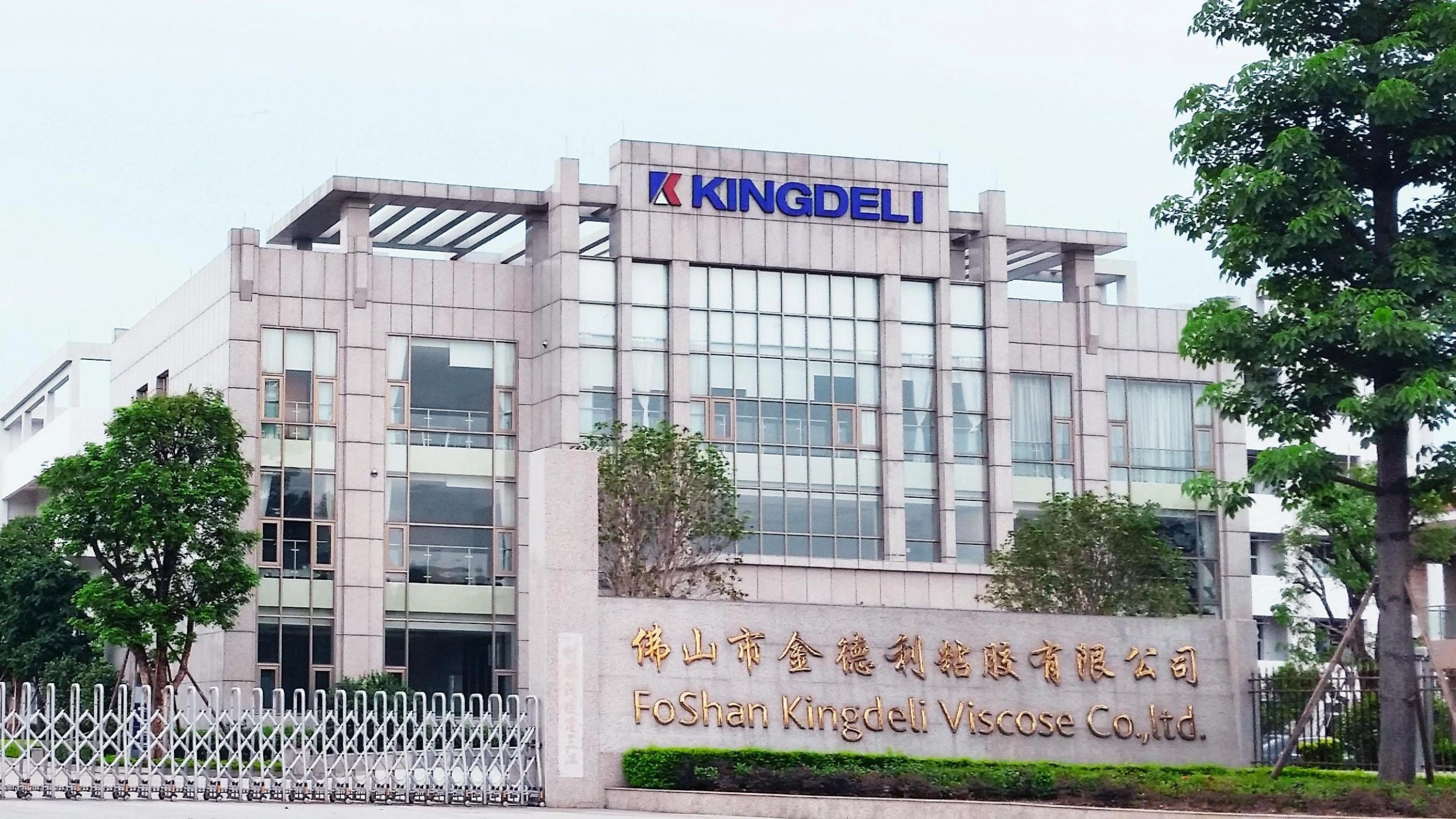
Since its establishment in 1998, KINGDELI has stood as a global leader in the high-performance sealant, adhesive, and coating industry. Headquartered in Foshan, China, our state-of-the-art 66,000 m² facility is powered by fully automated production lines with an annual capacity exceeding 100,000 tons, ensuring a consistent and robust supply for partners worldwide.
Technical credentials and standards
As a recognized National High-Tech Enterprise and a key contributor to the National Standard GB/T 29755-2013, KINGDELI unites advanced manufacturing power with technical excellence. Our portfolio—Neutral & Acetic Silicone, Polyurethane, MS Polymer, and No More Nails adhesives—is engineered to meet strict international standards, including ISO 9001, ISO 14001, CE, and ASTM. These certifications provide buyers with a quality management and environmental assurance framework that aligns with global procurement requirements (see ISO: ISO 9001).
Product range and application fit
KINGDELI products include neutral silicone sealant, acetic silicone sealant, acrylic sealant, silicone glazing sealant, No More Nails adhesive, polyurethane sealant, MS polymer sealant, RTV gasket maker, epoxy tile grout, and self-leveling sealant. For customers specifying ms silicone sealant, KINGDELI offers low-VOC, primerless MS polymer formulations that demonstrate strong adhesion to metals, glass, stone and many plastics, and are supported by laboratory test reports and practical field guidance. With over 27 years of industry expertise and presence in 50+ countries, KINGDELI supplies OEM/ODM support and professional technical service tailored to project specifications.
Practical checklist for qualifying ms silicone sealant
Before purchase
- Require supplier test reports referencing ASTM/ISO/EN standards relevant to your application.
- Ask for substrate-specific adhesion tests (use actual materials and surface conditions).
- Verify supplier quality system certifications (ISO 9001) and any regional approvals (CE for EU, local building authorities).
During installation and commissioning
- Ensure correct surface preparation (cleaning, primer if specified).
- Monitor joint geometry and backer rod use to avoid three-sided adhesion.
- Perform on-site mock-ups and monitor for set time, modulus and initial adhesion.
Post-installation verification
- For critical projects, perform on-site pull-off or adhesion checks after curing.
- Document any substrate anomalies and take samples if long-term failure risk exists.
FAQ
1. What is the difference between MS polymer sealant and neutral silicone sealant?
MS polymer (silane-modified) sealants are hybrid chemistry offering primerless adhesion to many substrates, paintability and lower modulus; neutral silicone sealants cure to elastomeric silicone with excellent UV resistance and elasticity. MS polymers bridge performance between silicones and polyurethanes in many applications.
2. Which adhesion test best predicts field performance for facade joints?
There is no single test. A combination of pull-off adhesion (for tensile detachment), cyclic movement tests (for dynamic sealing performance), and ageing/UV exposure tests provides the best predictive value for facades.
3. Is primer always required for ms silicone sealant?
Not always. Many MS polymer sealants are formulated for primerless adhesion to common substrates, but primer use is still necessary for low-energy plastics, contaminated metals or where higher safety margins are required. Always validate with substrate-specific tests.
4. How do I interpret a report that shows adhesive failure after ageing?
Adhesive failure indicates loss of bond at the interface; this may require substrate changes, primer application, or switching to a formulation with better chemical compatibility. Review surface prep and contamination as primary causes.
5. What certifications should I request from a supplier?
Request ISO 9001 (quality management), ISO 14001 (environmental), CE/EN compliance for EU projects, relevant ASTM/ISO test reports for adhesion and movement class, and product-specific approvals required by local authorities.
6. Can lab test values be used to compare different manufacturers?
Yes, if tests are performed to the same standards, under identical specimen preparation and conditioning. Beware of single-number claims without standard references or substrate details.
Contact and product inquiries
If you need assistance qualifying ms silicone sealant for your project, want substrate-specific adhesion data, or require OEM/ODM support, contact KINGDELI’s technical team for test documentation and tailored recommendations. View our product range and request samples to perform project mock-ups and laboratory verifications. We provide ongoing technical service to help you translate test data into reliable field performance.
Resources and further reading: ASTM International (https://www.astm.org), International Organization for Standardization (https://www.iso.org), CE Marking information (https://ec.europa.eu/growth/single-market/ce-marking/), Silicone overview (https://en.wikipedia.org/wiki/Silicone).
OEM/ODM rtv silicone gasket maker Manufacturers and Suppliers
MS Silicone Sealant Cure Times and Workability on Projects
OEM/ODM silicone rtv sealant Manufacturers and Suppliers
Best rtv gasket maker manufacturers and supplier brands in Automotive Solutions
HY-2300
What is HY-2300 mainly used for?
HY-2300 is designed for outdoor glazing and weatherproof sealing, especially suitable for curtain wall joints, window & door frames, ACP panel seams, and general building decoration sealing.
HY-939
What temperature range can HY939 withstand?
HY939 performs reliably in a wide temperature range from -60 °C to 350 °C, making it suitable for both high-temperature and low-temperature environments.
HY924
How should HY924 be stored and transported?
Keep in a cool, dry, well-ventilated area, away from moisture and heat. Transport as non-dangerous goods.
HY-3300
What are the key features of HY-3300?
HY-3300 is a 100% silicone, neutral-curing, high-modulus sealant with excellent UV, water, and weather resistance. It remains flexible and durable under extreme temperatures from -50℃ to +200℃, and is non-corrosive to metal and coated surfaces.
HY-951
Is HY951 easy to clean and maintain?
Yes. The smooth, non-porous surface resists stains and dirt, making routine cleaning quick and simple.
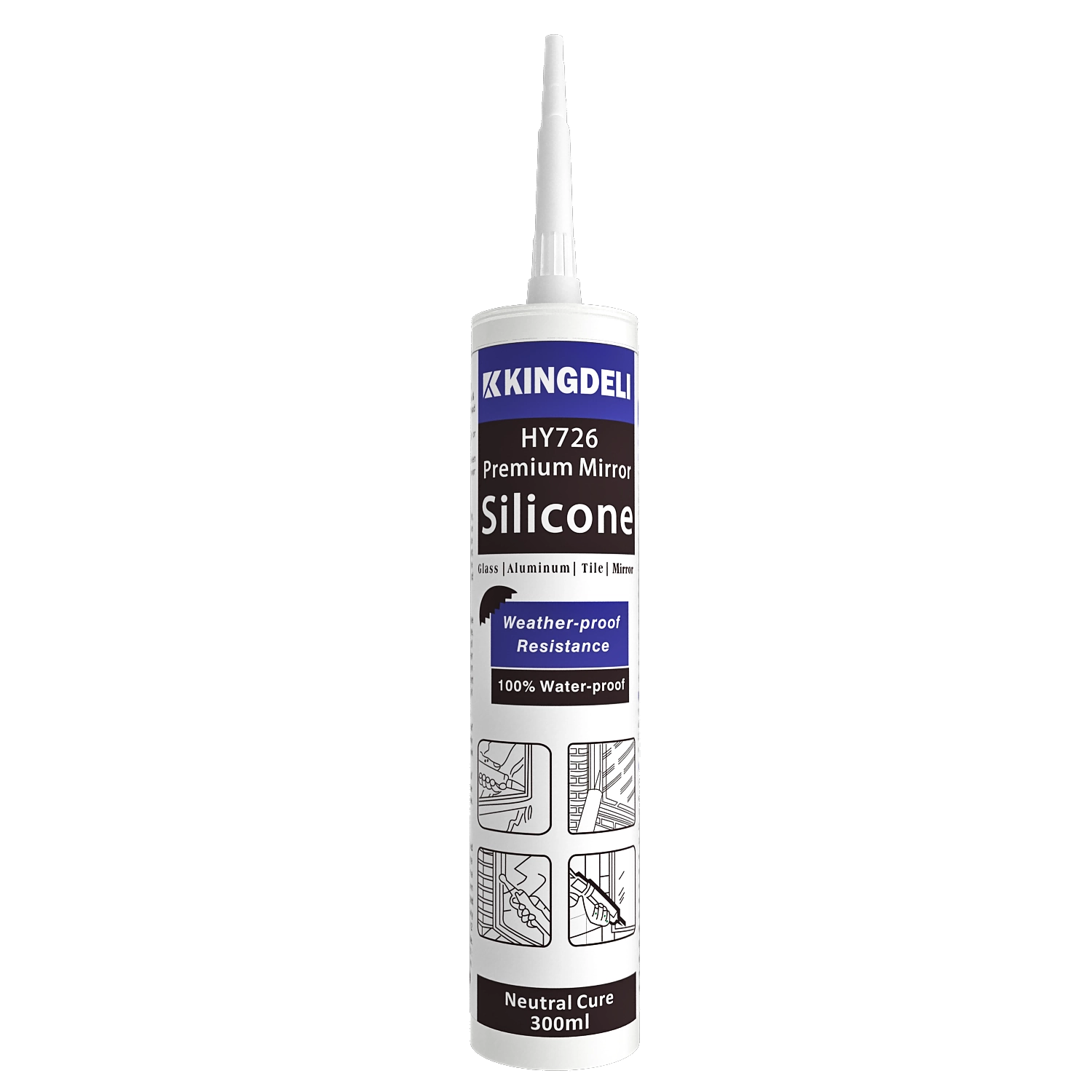
HY-726 Premium Clear Neutral Silicone Sealant
HY726 one-component, shelf-stable, 100% silicone elastomeric adhesive using alkoxy technology. It is specifically designed for sealing sensitive surfaces such as copper, gold, and metal-coated mirrors.
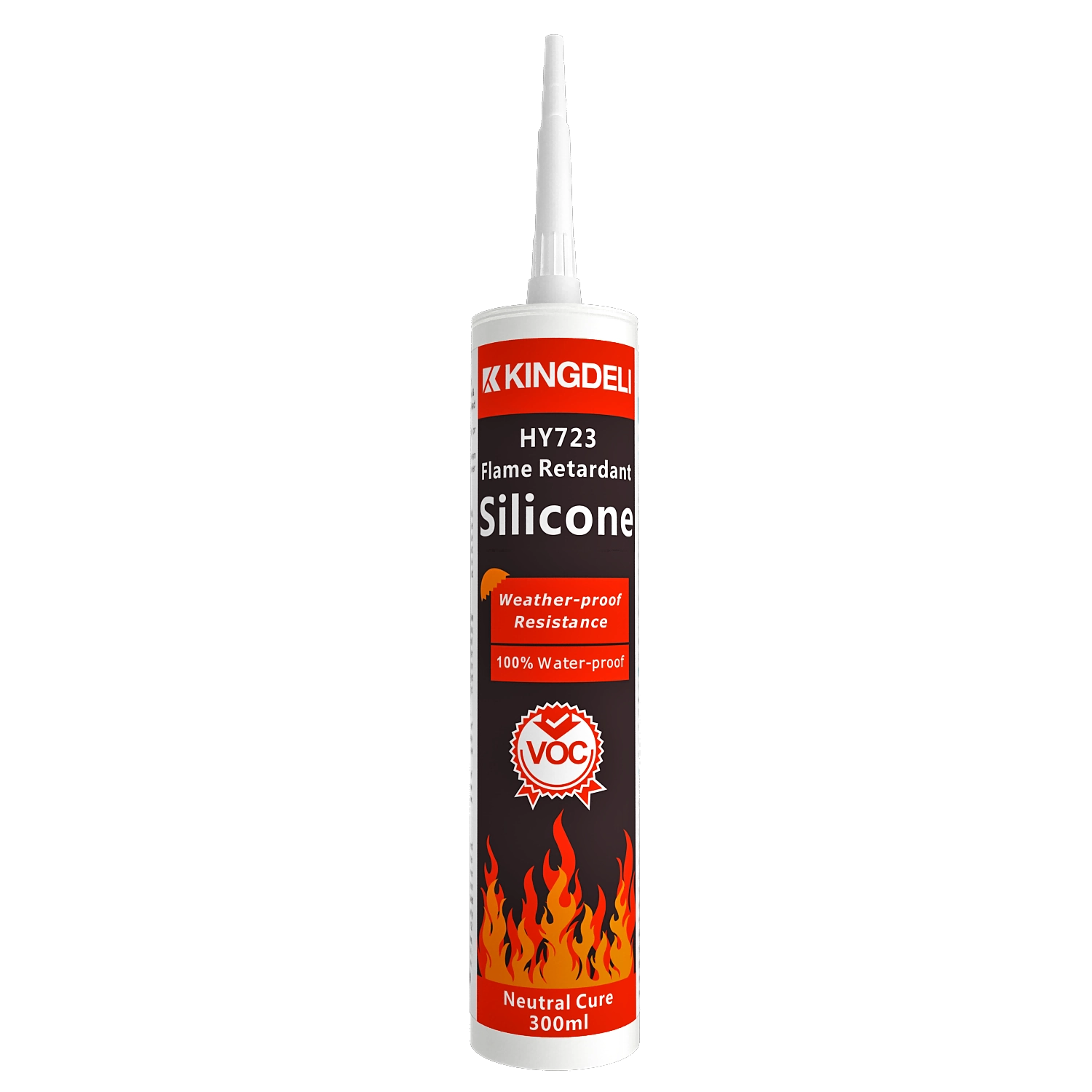
HY-723 Flame Retardant Neutral Silicone Sealant
HY-723 Flame Retardant Neutral Silicone Sealant is a high modulus one-component, shelf-stable, neutral cure, elastomeric adhesive. s. It helps control the spread of fire, smoke, and toxic fumes within a given area surrounded by firewalls for a period of up to four hours, depending on joint configuration.
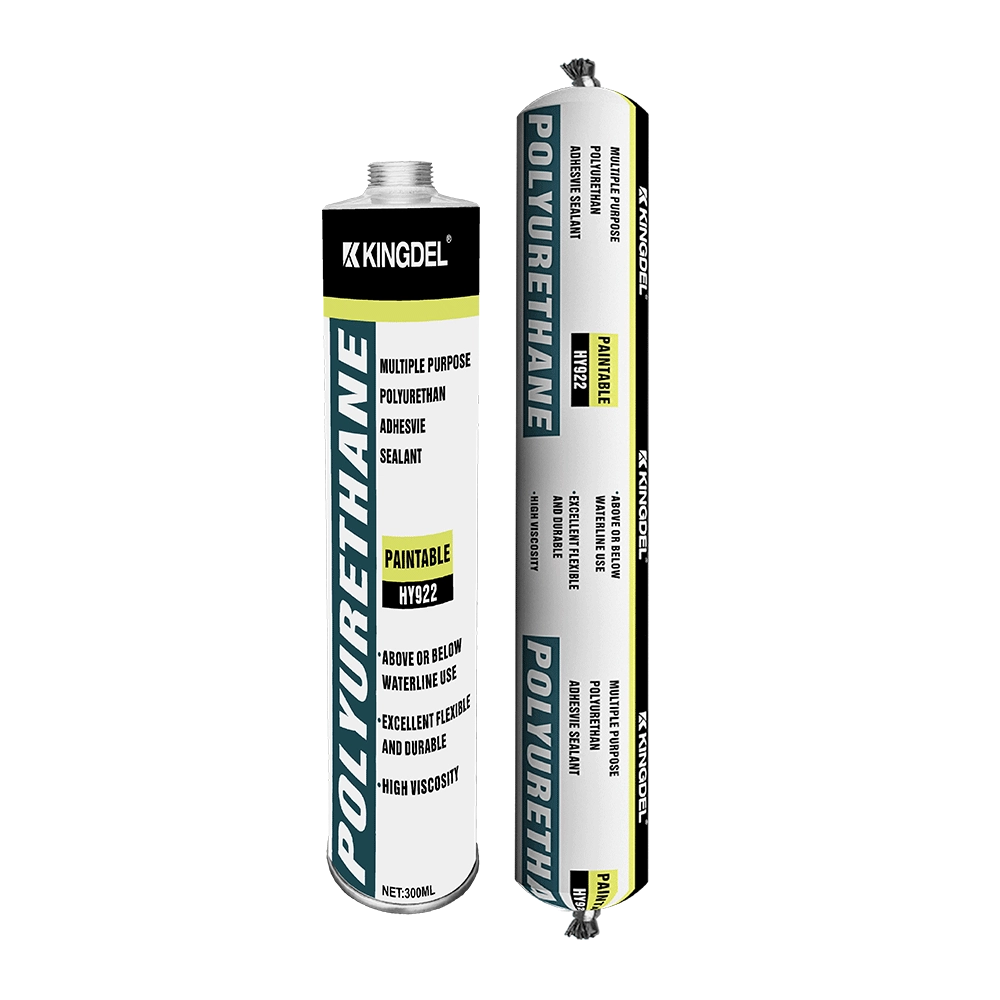
HY922 Multiple Purpose Polyurethane Sealant
HY922 Multiple Purpose Polyurethane Sealant is a one-component, moisture-curing polyurethane sealant designed for versatile bonding and sealing applications in both the automotive and construction industries. It cures to form a flexible yet tough elastomeric joint with excellent adhesion to a wide range of substrates. The formulation is non-corrosive, solvent-free, and produces a smooth, bubble-free finish during application.
HY922 delivers fast surface drying and quick positioning, improving installation efficiency while maintaining long-term durability. With strong weather resistance and good creep resistance, it performs reliably in demanding indoor and outdoor environments, including moist and partially submerged conditions.
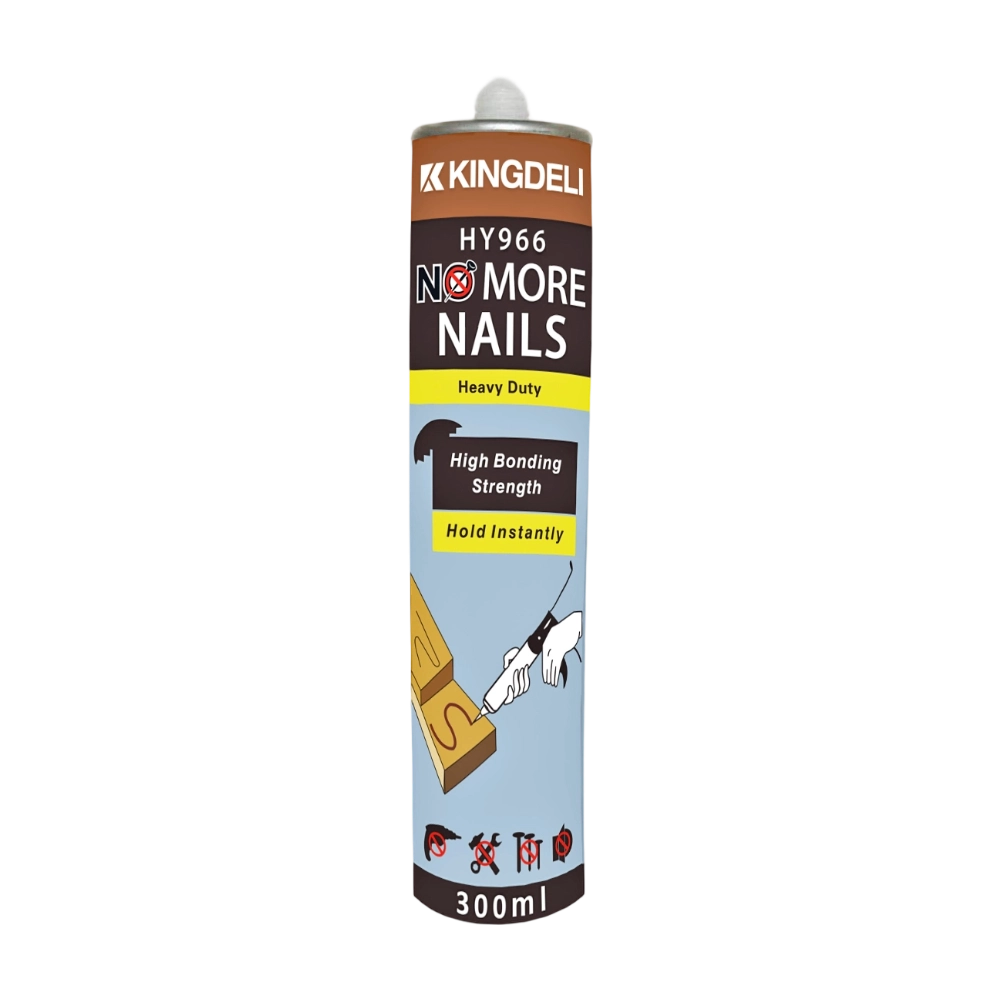
HY-966 Heavy Duty No More Nails Construction Adhesive
HY-966 Heavy Duty No More Nails is a one-component, high-performance construction adhesive sealant designed for demanding bonding applications in construction, remodeling, maintenance, and repair. Its instant grab formulation secures materials immediately, significantly reducing the need for bracing or mechanical fixing during installation.
HY-966 cures reliably in moist environments and delivers durable adhesion across a wide range of substrates. It provides excellent resistance to water, temperature variation, and aging, ensuring long-term performance in interior construction applications.
Let’s Build Stronger Bonds with Quality Adhesives and Sealants
Have questions about the topic or need tailored sealant solutions for your project?
Our team is ready to provide expert guidance, product recommendations, and application support.
Innovating with Integrity, Bonding the World
Since 1998, KINGDELI has delivered trusted, sustainable sealant solutions that connect industries and inspire progress worldwide.
Whatsapp: +8618825946249
Kingdeli
Kingdeli
Kingdeli
Kingdeli
Kingdeli