











Acetic Silicone Sealant: Industrial Applications and Use Cases

- Understanding Acid-Cure (Acetic) Silicone Chemistry
- How acetic silicone cures
- Key material properties and their practical meaning
- Safety, VOC and environmental notes
- Industrial Applications and Use Cases
- Construction, glazing and structural seals
- HVAC, plumbing and equipment sealing
- Electronics, sensors and potting applications
- Performance Comparison and Selection Guide
- When to choose acetic versus neutral silicone or polyurethane
- Compatibility, primers and testing
- Joint design and application best practices
- KINGDELI: Manufacturing Capacity, Standards, and Product Offering
- KINGDELI's manufacturing footprint and compliance
- How KINGDELI supports OEM/ODM and technical service
- Recommended KINGDELI product lines and applications
- Conclusion and Practical Recommendations
- Actionable checklist before specifying acetic silicone
- FAQ (Frequently Asked Questions)
- 1. What is the main difference between acetic silicone sealant and neutral-cure silicone?
- 2. Can acetic silicone be used on metal frames?
- 3. How long does acetic silicone take to cure?
- 4. Is acetic silicone paintable?
- 5. How should I store acetic silicone cartridges?
- 6. Where can I find standards and test methods to specify silicone sealants?
Acetic silicone sealant (often called acid-cure or vinegar-cure silicone) remains one of the most widely used elastomeric sealants in industry because of its fast cure, reliable adhesion to many common substrates, and affordable cost profile. In this article I draw on decades of hands-on experience in sealants and adhesives to explain how acetic silicones work, where they outperform alternatives, their limitations, and how to select, apply, and troubleshoot them in industrial settings. I also provide evidence-based comparisons, link to standards and technical resources, and outline how a large-scale manufacturer such as KINGDELI supports industrial customers with high-performance formulations and global supply.
Understanding Acid-Cure (Acetic) Silicone Chemistry
How acetic silicone cures
Acetic silicone sealants are one-part, moisture-curing silicones that release acetic acid as the crosslinking by-product, which produces the characteristic vinegar smell during cure. The polymer backbone is typically polydimethylsiloxane with reactive alkoxy or acetoxy functional groups; moisture in the ambient air hydrolyzes these groups and drives condensation crosslinking to form an elastomeric network. For a general background on silicone materials and curing mechanisms see the Silicone rubber overview on Wikipedia.
Key material properties and their practical meaning
From an application perspective, acetic silicones are defined by several core properties:
- Fast skin‑over and cure rates at typical shop temperatures/humidities — useful for production throughput.
- Excellent adhesion to glass, glazed surfaces, many ceramics and non-porous metals without primer.
- Low tack and good elastic recovery—helpful in dynamic joints.
- Highly acidic during cure — which limits use on sensitive substrates (e.g., some metals, concrete, stone, or coated surfaces) unless tested or primed.
Manufacturers present detailed physical property data (tensile strength, elongation, shore A hardness, and modulus) in technical data sheets that should be consulted for each product. Standards such as ASTM C920 define performance classes for elastomeric joint sealants and are commonly referenced when specifying silicone products.
Safety, VOC and environmental notes
Acetic silicones emit acetic acid during cure; while exposure at typical building concentrations is generally manageable with ventilation, full safety data should be consulted. For organizations focused on indoor air quality or low-VOC targets, neutral-cure or specially formulated low-VOC silicone grades are alternatives. For ISO quality management context see ISO 9001.
Industrial Applications and Use Cases
Construction, glazing and structural seals
In construction and commercial glazing, acetic silicone sealants are widely used for perimeter glazing beads, fixed window seals, and sealing between glass and metal frames. I recommend them where adhesion to glass is prioritized and the substrate is known to be compatible — for example aluminum frames with appropriate surface preparation. Benefits here include fast skin-over which reduces dust entrapment, and durable elastomeric joints that accommodate thermal movement.
HVAC, plumbing and equipment sealing
For HVAC and plumbing housings, ductwork penetrations, and equipment gasketing where chemical resistance to water and many cleaning agents is needed, acetic silicones are a practical choice. Their long-term resistance to ozone and UV exposure (compared with many organic sealants) supports outdoor and rooftop equipment installations. However, on bare copper or brass they may promote corrosion due to acidity; in those cases I specify neutral cure silicones or a compatible primer.
Electronics, sensors and potting applications
Acetic silicones are sometimes used in non-critical electronics sealing applications for protection against moisture ingress, due to their low shrinkage and flexibility. They are not typically chosen where ionic contamination and corrosion risk are strictly controlled (e.g., sensitive PCBs, gold contacts), because residual acetate and ionic species can be problematic. For such applications, neutral‑cure, non-corrosive silicones or specialized electrically insulating potting materials are preferable.
Performance Comparison and Selection Guide
When to choose acetic versus neutral silicone or polyurethane
Selection should match the substrate, environmental exposure, and production constraints. Below I summarize typical trade-offs and then present a comparison table for quick reference.
| Property | Acetic Silicone Sealant | Neutral Silicone | Polyurethane Sealant |
|---|---|---|---|
| Cure by-product | Acetic acid (vinegar smell) | Alcohol/oxime/alkoxy (low-acidity) | Polyurethane chemistry (isocyanates in cure) |
| Adhesion to glass | Excellent | Excellent | Good |
| Adhesion to metals | Good to some metals; corrosion risk on reactive metals | Good to most metals | Excellent with primers |
| Paintability | Poor | Typically poor | Good |
| UV/Ozone resistance | Excellent | Excellent | Good |
| Movement capability | High | High | Moderate to high |
Sources for general sealant properties and specification considerations include ASTM and manufacturer technical datasheets; see ASTM C920 for joint sealant classification.
Compatibility, primers and testing
Because acetic silicones are acidic during cure, I always advise compatibility testing when unusual or reactive substrates are present: metals with free copper or brass, natural stones that can react, or painted/coated surfaces. Conduct an accelerated adhesion and corrosion test (e.g., humidity cabinet) that mimics expected field conditions before full deployment. If corrosion or adhesion failure appears, select a neutral-cure silicone or a primer recommended by the silicone manufacturer.
Joint design and application best practices
Key field practices that determine long-term performance:
- Proper joint geometry — the industry rule-of-thumb is a width-to-depth ratio of 2:1 for typical elastomeric sealants, with minimum depths to avoid three-sided adhesion.
- Use of backer rods to control depth and provide a neutral compressible substrate for tooling.
- Substrate cleaning — remove oils, release agents, dust; use isopropyl alcohol or a recommended cleaner, and allow surfaces to fully dry before application.
- Tooling and skin time awareness — tooling within surface tack window reduces air entrapment; increase ventilation when high humidity accelerates cure.
KINGDELI: Manufacturing Capacity, Standards, and Product Offering
KINGDELI's manufacturing footprint and compliance
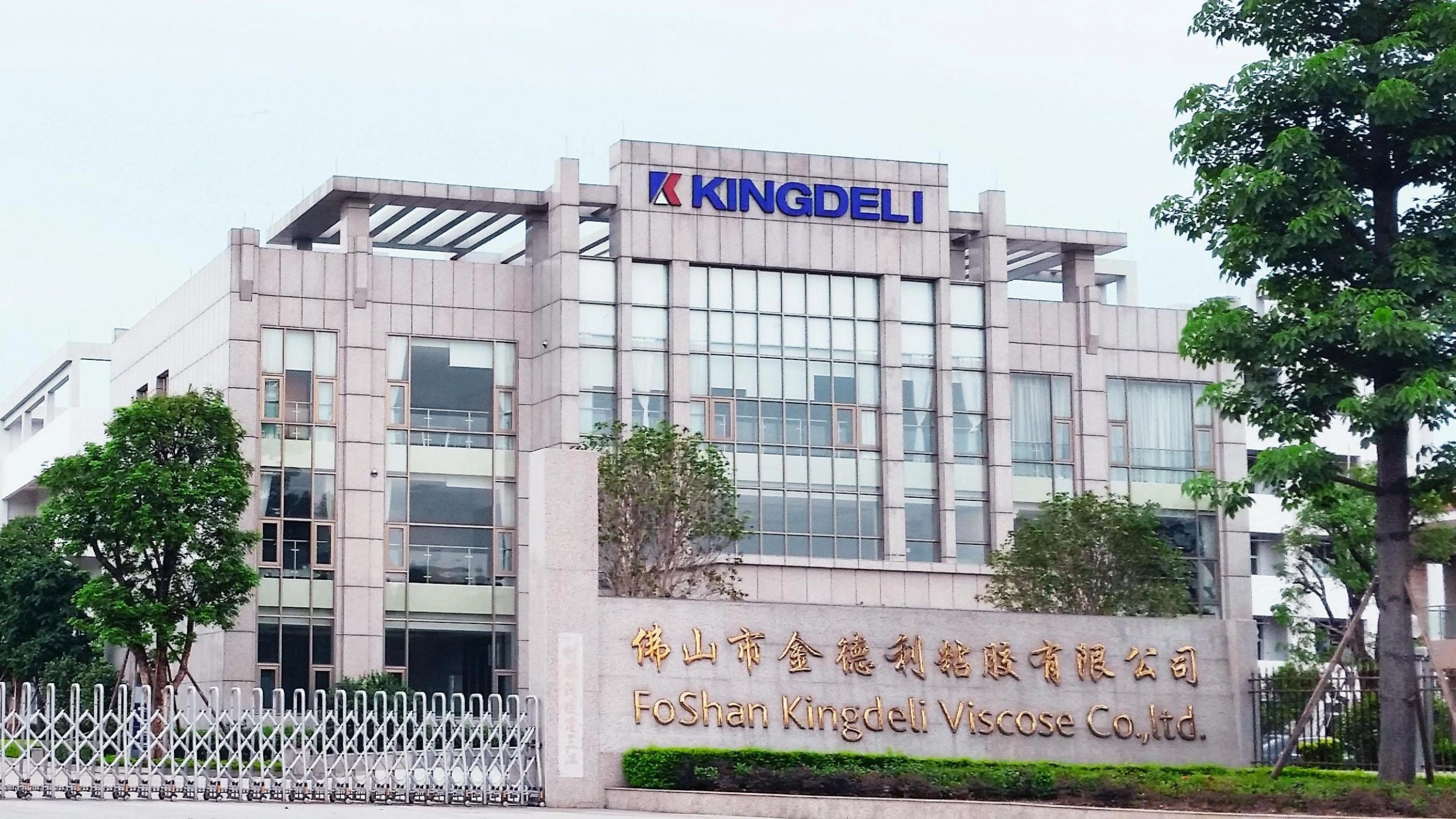
Since its establishment in 1998, KINGDELI has stood as a global leader in the high-performance sealant, adhesive, and coating industry. Headquartered in Foshan, China, our state-of-the-art 66,000 m² facility is powered by fully automated production lines with an annual capacity exceeding 100,000 tons, ensuring a consistent and robust supply for partners worldwide.
As a recognized National High-Tech Enterprise and a key contributor to the National Standard GB/T 29755-2013, we unite advanced manufacturing power with technical excellence. Our comprehensive product portfolio—spanning Neutral & Acetic Silicone, Polyurethane, MS Polymer, and No More Nails adhesives—is engineered to meet strict international standards, including ISO 9001, ISO 14001, CE, and ASTM. For context on ISO quality systems see the ISO 9001 webpage.
How KINGDELI supports OEM/ODM and technical service
With over 27 years of industry expertise and a trusted presence in 50+ countries, KINGDELI is more than a manufacturer; we are a dedicated solution provider. We offer end-to-end OEM/ODM support, sustainable low-VOC formulations, and professional technical service. My experience working with supply partners shows that a committed technical team — offering formulation adaptation, onsite trials, and joint-design support — markedly reduces field failures and shortens product qualification cycles.
Recommended KINGDELI product lines and applications
KINGDELI's portfolio covers:
- Neutral silicone sealants for metal-to-glass glazing and where non-corrosive cure is required.
- Acetic silicone sealant variants for standard glazing, glass sealing, and non-reactive metal applications.
- Polyurethane and MS Polymer sealants for painted surfaces, structural joints, and paintable seams.
- Specialty products such as RTV gasket makers, epoxy tile grout and self-leveling sealants for flooring.
When evaluating formulations for industrial projects, I recommend requesting product technical data sheets, accelerated aging data, and representative batch test certificates. KINGDELI provides these to partners to support compliance and procurement approvals.
Conclusion and Practical Recommendations
Acetic silicone sealant is an efficient, durable, and cost-effective elastomeric solution for many industrial sealing tasks — especially glazing, impermeable non-porous joints, and outdoor applications needing UV resistance. However, its acidic cure requires careful substrate selection and testing. Neutral silicones and polyurethanes remain essential alternatives when corrosion, paintability, or chemical resistance concerns arise.
Actionable checklist before specifying acetic silicone
- Identify all substrates in contact with the sealant and run small-scale adhesion/corrosion tests.
- Confirm movement requirements and choose a grade with the appropriate movement capability per ASTM C920 classes if needed.
- Design joint width/depth to control stress and allow for thermal movement (2:1 width:depth guideline).
- Specify application conditions (temperature, humidity) and ensure appropriate ventilation for acetic fumes during cure.
- Request technical support and batch certificates from your supplier; consider low-VOC alternatives if IAQ is a priority.
FAQ (Frequently Asked Questions)
1. What is the main difference between acetic silicone sealant and neutral-cure silicone?
The main difference is the cure by-product: acetic silicone releases acetic acid (vinegar smell) while neutral-cure silicones release non-acidic by-products (alcohol, oxime, or alkoxy depending on chemistry). This affects substrate compatibility, corrosion risk, and sometimes cure rate and odor.
2. Can acetic silicone be used on metal frames?
It can be used on many prepared metals, but on reactive metals such as copper, brass, or untreated steel there is a risk of corrosion. Always perform adhesion and corrosion testing or use a neutral‑cure product or primer where metals are sensitive.
3. How long does acetic silicone take to cure?
Cure time depends on joint depth, temperature and humidity. Skin-over can occur in minutes to a few hours, while full depth cure for typical joints (5–10 mm) may take 24–72 hours. Higher humidity speeds cure; low humidity slows it.
4. Is acetic silicone paintable?
Generally no — acetic silicones are not paintable with standard paints. If paintability is required, choose a paintable polyurethane or MS polymer sealant, or verify compatibility with specialized coatings and surface preparation.
5. How should I store acetic silicone cartridges?
Store in a cool, dry place away from direct sunlight and sources of heat. Keep cartridges sealed and use before the manufacturer’s stated shelf life; exposure to moisture will cause partial cure in storage containers.
6. Where can I find standards and test methods to specify silicone sealants?
Common references include ASTM C920 for elastomeric joint sealants and product‑specific test methods in manufacturer technical data sheets. For quality management and system-level compliance review ISO 9001.
If you need product recommendations, technical datasheets, or a site-specific assessment, contact KINGDELI's technical team. We provide OEM/ODM formulation support, low-VOC and customized acetic silicone sealant formulations suitable for industrial production. For inquiries and to view our product portfolio (neutral silicone sealant, acetic silicone sealant, acrylic sealant, silicone glazing sealant, No More Nails adhesive, polyurethane sealant, MS polymer sealant, RTV gasket maker, epoxy tile grout, self-leveling sealant), please reach out to our sales and technical support team to arrange samples, data sheets, and trial programs.
Contact KINGDELI for product details and technical support — let us help you select the right sealing solution and ensure long-term field performance.
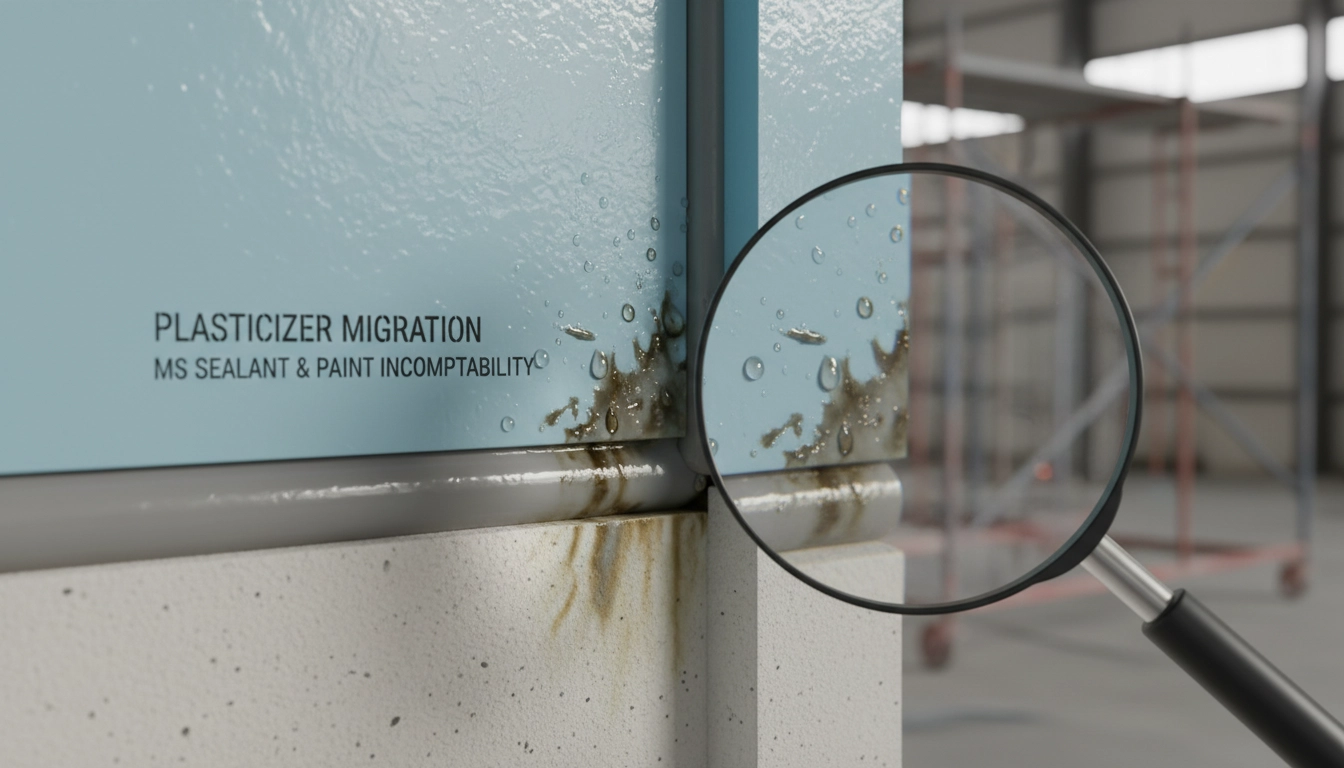
7 Costly Mistakes When Painting Over MS localized Polymer Sealants in 2026 (And How to Fix Them)
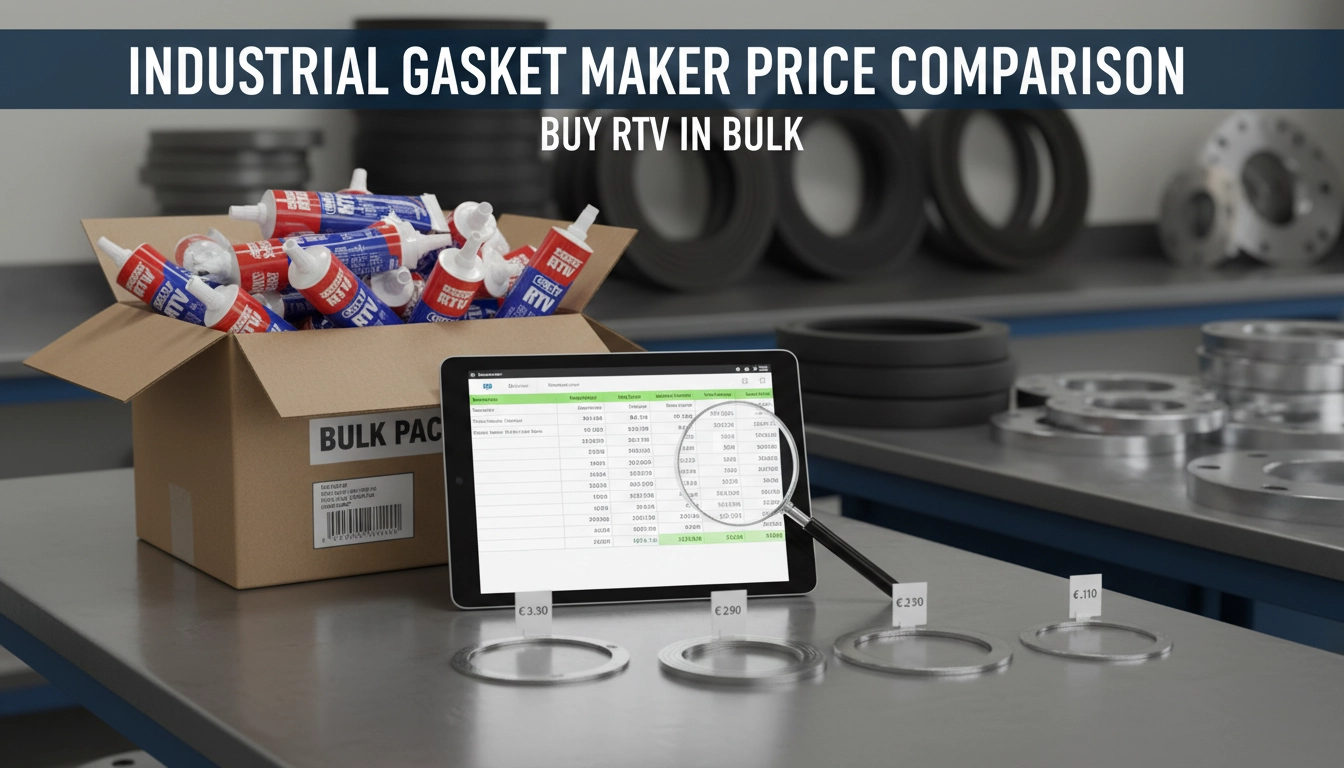
The Ultimate Guide to Buying RTV Gasket Maker Bulk: 7 Secrets to Saving 40% on Industrial Supplies (2026 Edition)
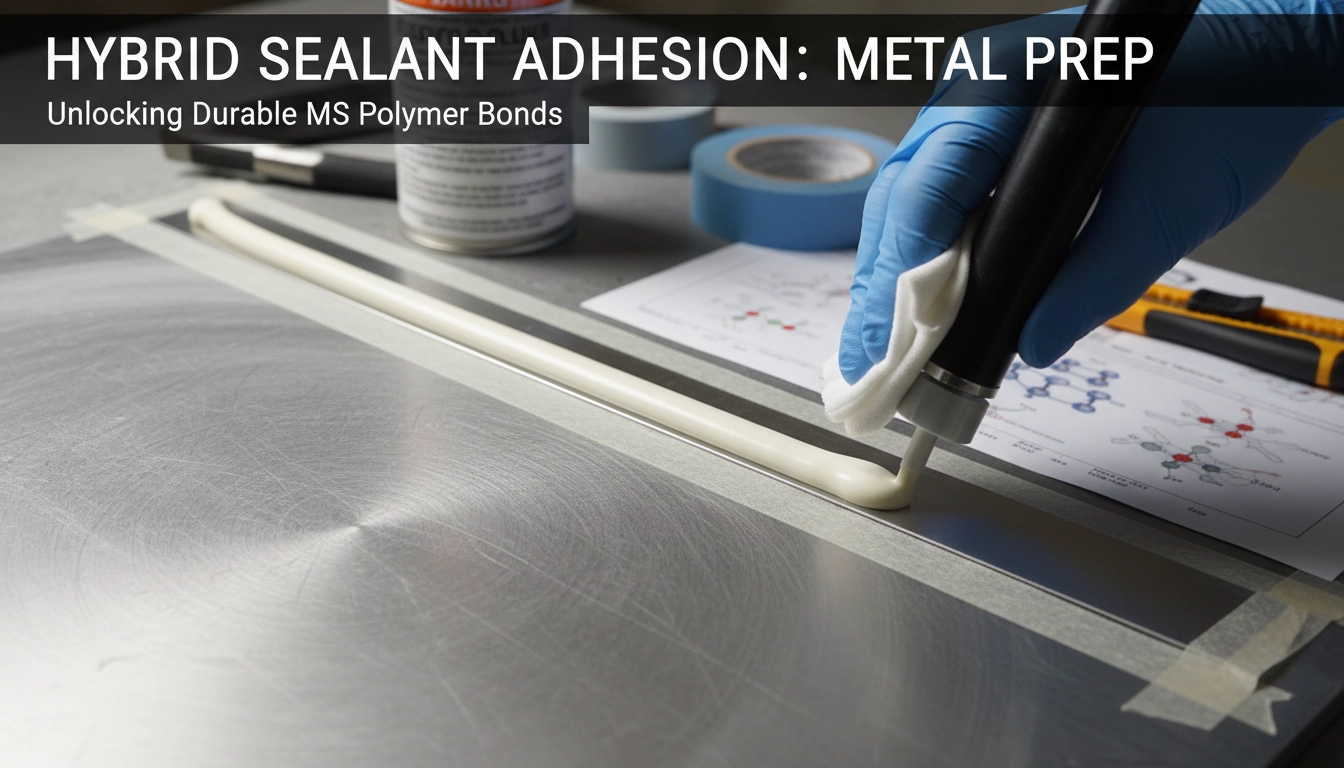
The Ultimate Guide to MS Sealant Adhesion to Metal: Unlocking Maximum Bond Strength
Specifying Low-VOC MS Silicone Sealant for Regulatory Compliance
HY993
Is HY993 suitable for automotive applications?
Yes. It can be used for bonding and sealing in automotive body building and general vehicle applications.
HY925
What is HY925 Polyurethane Sealant?
HY925 is a one-component, moisture-curable polyurethane sealant designed for construction applications. It provides strong bonding, excellent sealing performance, and forms a flexible, durable joint after curing.
HY723
Is it safe to use on sensitive materials like metals or plastics?
Yes, because it is a neutral cure formula, it is non-corrosive and safe for use on sensitive substrates.
HY-3300
Is HY-3300 suitable for outdoor applications?
Yes. Its outstanding weatherproof and UV-resistant properties make it ideal for long-term outdoor sealing and bonding applications.
HY939A
Can this product be used for both bonding and sealing?
Yes. It is engineered for both structural bonding and sealing, offering strong adhesion combined with long-term flexibility.
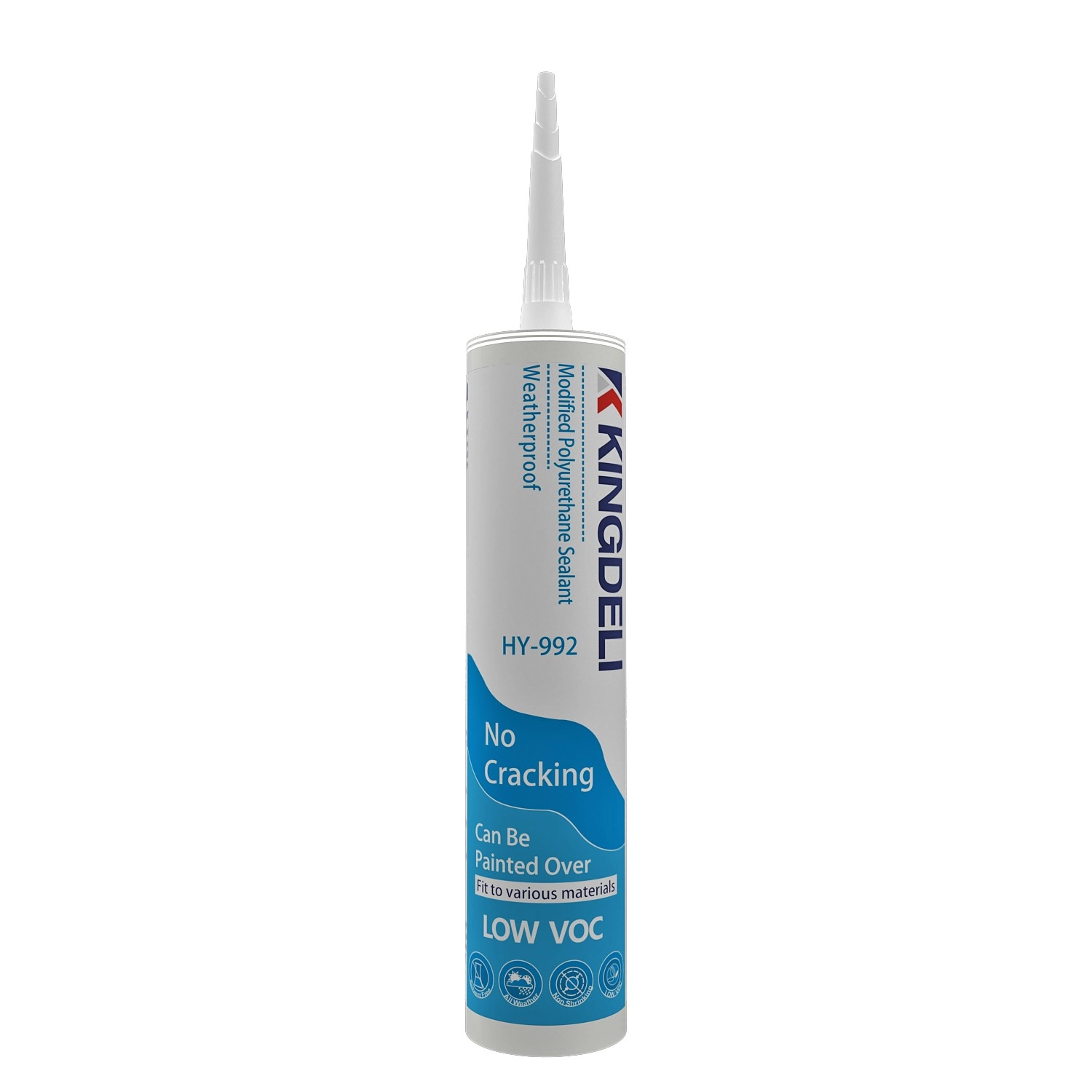
HY992 Modified Polyurethane Construction Sealant
HY992 Modified Polyurethane Sealant is a one-component, moisture-curing construction sealant designed for professional building and structural sealing applications. It provides excellent adhesion, weather resistance, and durable elasticity, making it suitable for a wide range of construction materials.
The formulation delivers strong bonding performance without corrosion or substrate contamination, while maintaining low VOC content for environmentally responsible construction projects.

HY995 Crystal Clear Ms Polymer Adhesive/Sealant
HY995 Crystal Clear Ms Polymer Adhesive/Sealant is a new generation MS Polymer adhesive / sealant formulated for all bonding and sealing applications where long term reliability is required. It has excellent bonding strength on various materials. It will cure to form a durable, flexible, waterproof seal.

HY997 High-Performance Anti-Microbial MS Polymer Sealant
HY997 MS polymer sealant for is is a premium one-component, neutral-curing modified silane sealant engineered for demanding interior applications. It offers a Class 20 movement capability, ensuring long-lasting flexibility and reliable performance under dynamic joint conditions. Curing at room temperature, HY997 delivers superior anti-microbial and mildew-resistant properties, maintaining hygienic and clean environments over time.
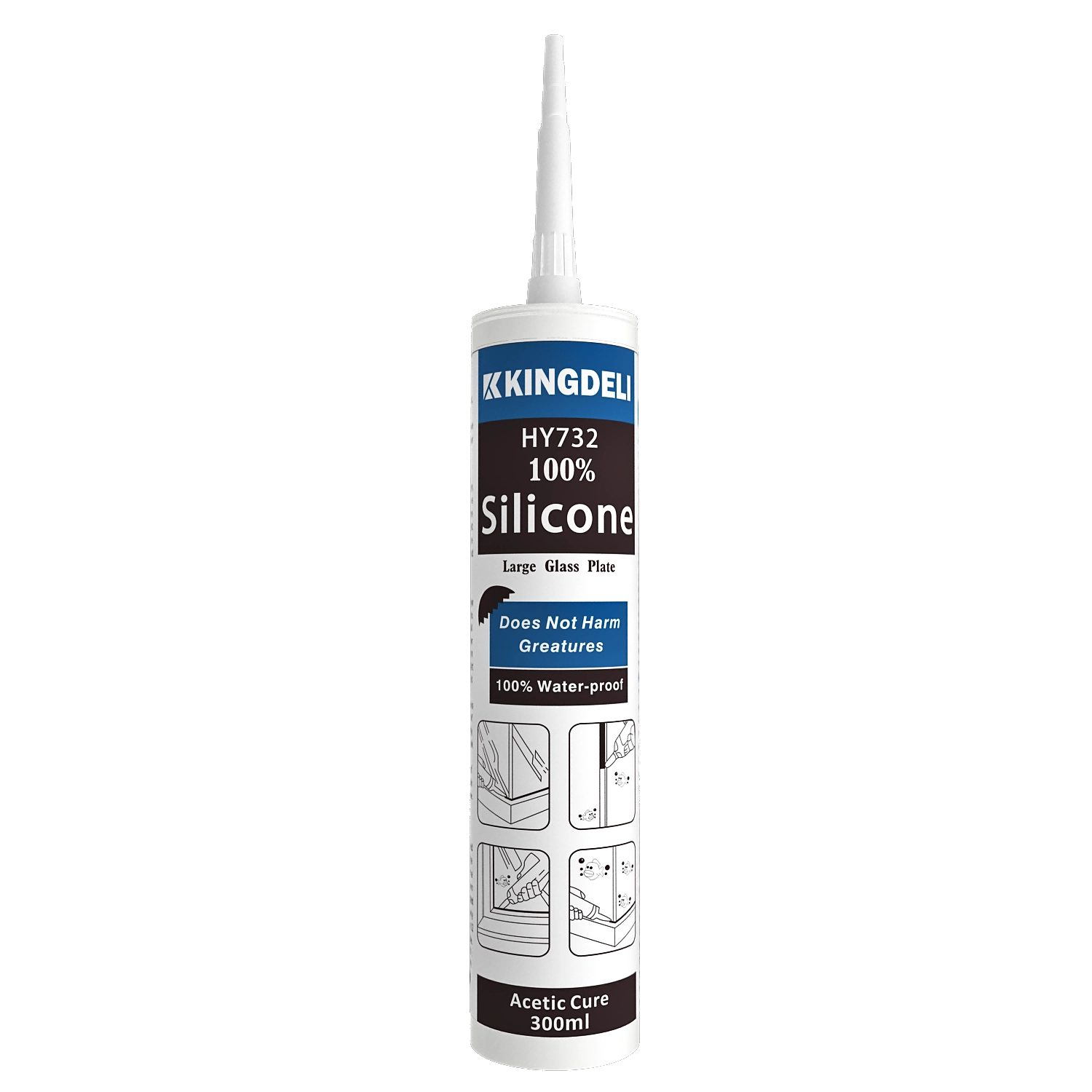
KINGDELI HY732 Professional Acetoxy Cure Silicone Sealant
KINGDELI HY732 is a professional-grade, one-component acetoxy cure silicone sealant designed for fast curing, strong adhesion, and long-lasting flexibility. Ideal for aquariums, glass applications, aluminum doors and windows, kitchens, and bathrooms, it provides reliable sealing performance with excellent anti-fungal protection in high-humidity environments.
Let’s Build Stronger Bonds with Quality Adhesives and Sealants
Have questions about the topic or need tailored sealant solutions for your project?
Our team is ready to provide expert guidance, product recommendations, and application support.
Innovating with Integrity, Bonding the World
Since 1998, KINGDELI has delivered trusted, sustainable sealant solutions that connect industries and inspire progress worldwide.
Whatsapp: +8618825946249
Kingdeli
Kingdeli
Kingdeli
Kingdeli
Kingdeli