











7 Costly Mistakes to Avoid When Matching MS Sealant Colors [2026 Expert Guide]

- What Are MS Sealant Color Options and Why Do They Matter?
- Key Takeaways: Quick Summary of Expert Color Matching
- Mistake 1: Relying Exclusively on Digital Color Charts
- Mistake 2: Ignoring Substrate Porosity and Background Colors
- Mistake 3: Forgetting the Impact of Lighting (Metamerism)
- Mistake 4: Disregarding Post-Cure Color Shifts
- Mistake 5: Overlooking UV Exposure and Long-Term Fading
- Mistake 6: Choosing the Wrong Finish (Matte vs. Glossy)
- Mistake 7: Failing to Utilize Custom RAL/Pantone Services
- Gap Analysis: MS Sealant Color Technologies in 2026 and Beyond
- Conclusion
- Can you paint over MS sealant to change its color?
- How long does it take for MS polymer sealant to show its final cured color?
- What is the difference between RAL and Pantone in sealant color options?
- Do custom colored MS sealants cost more than standard white or clear?
- Why does my colored sealant look different under LED lighting?
- Is clear MS polymer sealant completely invisible?
- How do you perfectly color match a sealant to a brick or stone substrate?
- Can UV light change the color of exterior MS sealants over time?
What Are MS Sealant Color Options and Why Do They Matter?
MS sealant color options refer to the diverse range of pigmented modified silicone polymers used in construction, engineered to blend perfectly with substrates using standardized matching systems. Selecting the exact shade ensures seamless aesthetics across architectural joint sealants.
How do they work, and why are they critical? MS (Modified Silicone) polymers combine the heavy-duty durability of polyurethanes with the outstanding weather resistance of silicones. In modern construction, the visual continuity of a facade is just as important as its waterproofing capabilities. By utilizing precise color formulations, builders avoid visual disruption and elevate the entire architectural presentation.
Here are the primary reasons why getting the color right matters:
- Aesthetic Integration: They perfectly blend with substrates like natural stone, metal cladding, or glass to create uninterrupted sightlines.
- Standardized Systems: They rely on universal frameworks, such as standard RAL and Pantone matching systems, ensuring industry-wide consistency.
- Defect Prevention: Selecting the correct shade prevents glaring visual disruptions across critical building expansion joints.
Key Takeaways: Quick Summary of Expert Color Matching
Expert color matching requires evaluating sealants in their fully cured state, utilizing physical color charts instead of digital screens, testing under actual installation lighting conditions, and investing in custom formulations to permanently prevent costly aesthetic rework on architectural facades.
How can you guarantee success? By adhering to strict, verified protocols rather than guessing on-site. The cost of replacing failed or mismatched joints far exceeds the initial investment of proper planning.
Follow these fundamental expert guidelines before finalizing your materials:
- Wait for the Cure: Always evaluate sealant colors in their fully cured state, as wet products often appear significantly lighter or darker.
- Avoid Screens: Digital screens distort reality; relying on physical charts is mandatory for true architectural precision.
- Check the Light: Lighting conditions, whether natural sunlight or indoor LED, will drastically alter the perception of colored MS polymers.
- Invest in Customization: Custom color-matching saves money in the long run by eliminating the need for constant repainting or rework.
Mistake 1: Relying Exclusively on Digital Color Charts
Relying exclusively on digital color charts is a critical error because computer monitor calibration varies wildly, making it impossible for glowing digital screens to accurately replicate the physical, light-absorbing pigments used in manufacturing professional-grade construction sealants.
Why does this happen? Digital devices display colors using the RGB (Red, Green, Blue) light model, illuminating pixels from behind. Conversely, physical objects absorb and reflect natural light using chemical pigments. When you attempt custom RAL color matching through a glowing computer screen, you are setting your project up for failure. A color that looks perfectly matched on an iPad will almost always look disastrously wrong when extruded from a caulk gun onto a concrete wall. This discrepancy is why seasoned professionals never sign off on digital proofs alone.
To avoid this costly digital trap, take the following steps:
- Acknowledge RGB Limitations: Understand that glowing digital colors will never perfectly match physical, light-absorbing sealants.
- Use Standardized Physical Charts: Always reference physical booklets, such as the RAL Classic system, which acts as a universal language for color, as reported by Wikipedia.
- Request Real Samples: Always ask for physical draw-down samples or cured beads directly from the manufacturer before approving a mass order.
Mistake 2: Ignoring Substrate Porosity and Background Colors
Ignoring substrate porosity and background colors leads to severely mismatched joints, as highly porous surfaces absorb liquid oils from poorly formulated sealants, causing permanent edge-staining that entirely ruins the intended color match and overall visual harmony.
How do backgrounds and textures deceive the eye? A sealant applied in a deep, recessed expansion joint often sits in an optical shadow. This shadowing effect naturally makes the sealant appear much darker than the exact same color applied on a flush, flat surface. Furthermore, the material absorbing the sealant can physically alter the compound. When applied to highly porous unsealed brick, the substrate can wick away the polymer's plasticizers. This wicking effect leaves a dark, stained band around the joint edge, destroying the illusion of a seamless finish.
Protect your design by implementing these safeguards:
- Analyze the Surface: Highly porous surfaces like natural stone or unsealed brick require careful primer application to prevent oil migration.
- Account for Shadowing: The background color and depth of a joint can create optical shadowing, deepening the perceived tint.
- Conduct Mock-Ups: Always use backing rods and test a small area on the actual substrate to evaluate the true visual integration.
Mistake 3: Forgetting the Impact of Lighting (Metamerism)
Forgetting the impact of lighting ignores metamerism, a complex optical phenomenon where two colors appear to match perfectly under one specific light source but look completely mismatched under a different lighting condition, such as natural versus LED light.
Why is lighting so deceptive? The human eye interprets color based on the specific light waves bouncing off an object. Because artificial lights emit different wavelengths than the sun, a sealant perfectly matched in a factory under fluorescent lights might look noticeably wrong outside. This shift is not a manufacturing defect; it is a scientifically documented optical illusion where colors reflect wavelengths differently, as reported by Wikipedia. In architectural design, failing to account for this light-induced color shifting can ruin the aesthetic of an entire exterior facade.
To combat metamerism, strictly follow these evaluation methods:
- Test on Location: Always evaluate color samples at the specific installation location rather than an office.
- Vary the Time of Day: View the cured beads under morning, noon, and evening natural sunlight.
- Check Artificial Lights: If the joint is indoors or illuminated at night, verify the match under the exact LED or halogen fixtures that will be used.
Mistake 4: Disregarding Post-Cure Color Shifts
Disregarding post-cure color shifts is a guaranteed way to make a costly visual error, because MS sealants undergo a chemical cross-linking process as they dry, which naturally and permanently alters their final hue compared to their wet state.
How does the curing process affect aesthetics? When the polymer is freshly extruded from the cartridge, it contains moisture and uncured chemical agents that reflect light differently than a solid elastomer. As the sealant reacts with atmospheric moisture, it cross-links into a durable rubber. Experiencing a sealant color shift after curing is entirely normal, but it means that the wet appearance is fundamentally different from the final appearance. Judging a sealant color while it is still wet is the leading cause of premature material rejection on commercial job sites.
Ensure accuracy by practicing patience:
- Never Judge Wet Sealant: Judging a color match while the polymer is still wet in the cartridge is a guaranteed way to make a costly error.
- Allow Full Cross-Linking: MS sealants undergo a chemical cross-linking process as they cure, which slightly alters their tint.
- Wait the Full Duration: Allow test beads to cure for at least 48 to 72 hours before making any final aesthetic judgment.
Mistake 5: Overlooking UV Exposure and Long-Term Fading
Overlooking UV exposure and long-term fading compromises building facades, as failing to specify high-grade, UV-stable pigments for exterior joints will quickly lead to a patchy, washed-out appearance within just a few years of direct, intense sunlight exposure.
Why do certain colors fade faster? While MS polymers generally boast superior baseline UV resistance compared to traditional polyurethanes, the specific colorant pigments added to them react differently to solar radiation. Darker pigments, such as deep reds, blacks, and navy blues, absorb significantly more light and heat, making them highly susceptible to molecular degradation. Over time, UV rays break down these non-stable pigments, leaving a chalky residue that highlights the joint rather than hiding it.
Secure long-term color fastness by applying these strategies:
- Specify UV-Stable Pigments: Demand UV resistant colored sealants specifically formulated for intense exterior facade exposure.
- Verify Accelerated Weathering: Consult the manufacturer about accelerated weathering test results for your specific color, as reported by ASTM International.
- Beware of Dark Colors: Recognize that certain dark pigments are inherently more prone to fading over time without specialized chemical stabilizers.
Mistake 6: Choosing the Wrong Finish (Matte vs. Glossy)
Choosing the wrong finish ruins visual integration, because color represents only half the aesthetic battle; applying a highly glossy colored sealant against a matte substrate will create a glaring, reflective stripe regardless of a mathematically perfect color match.
How does sheen affect perception? The gloss level dictates how light reflects off the surface. If you have a matte, textured concrete wall and apply a high-gloss sealant, the joint will catch the sun and look like a wet plastic strip. Conversely, a matte sealant on a polished marble wall will look dull and dusty. The physical texture and light reflectivity of the sealant must perfectly mimic the surrounding materials, otherwise the human eye will immediately detect the artificial joint boundary.
Avoid texture clashes by taking these precautions:
- Match the Sheen: The sheen or gloss level of the sealant heavily dictates how well it visually blends with the substrate.
- Avoid High Contrast: Applying a highly glossy colored MS sealant against a matte architectural substrate will create a glaring, reflective stripe.
- Unify the Formula: Ensure the formulation matches both the exact pigment code and the aesthetic physical finish of your surrounding building materials.
Mistake 7: Failing to Utilize Custom RAL/Pantone Services
Failing to utilize custom RAL or Pantone services forces professionals to settle for generic off-the-shelf shades, a mistake that frequently undermines high-end architectural designs and inevitably leads to massive expenses when the mismatched joint requires complete replacement.
Why do contractors avoid customization? Many professionals mistakenly believe that bespoke color matching is too expensive, excessively slow, or requires massive minimum order quantities that do not fit smaller projects. In reality, modern manufacturing has streamlined this process. Bespoke matching is an insurance policy that prevents the ultimate architectural cost: tearing out an entire facade's worth of mismatched sealant. Investing in exact matches elevates the project from standard construction to high-end architectural artistry.
Leverage custom services to achieve perfection:
- Stop Settling: Settling for "close enough" standard shades compromises the integrity of sophisticated designs.
- Understand True Costs: Custom matching is not too expensive; it actively prevents costly rework and project delays.
- Reverse-Engineer Materials: Leading manufacturers can now take a physical building material sample and reverse-engineer it to create exact bespoke batches.
Gap Analysis: MS Sealant Color Technologies in 2026 and Beyond
MS sealant color technologies in 2026 are completely redefined by AI-driven spectrophotometry, self-healing smart pigments, and highly affordable micro-batching, which collectively eliminate the traditional barriers to bespoke color formulation and ensure lifelong vibrancy for modern architectural structures.
How is the industry evolving? The construction sealant industry is rapidly adopting smart manufacturing and advanced chemical engineering. Not only are modern sealants highly adaptable—boasting excellent MS polymer paintability if future building renovations are needed—but the way we mix and deploy them has become remarkably precise. These technological leaps are actively removing the guesswork from aesthetic joint sealing.
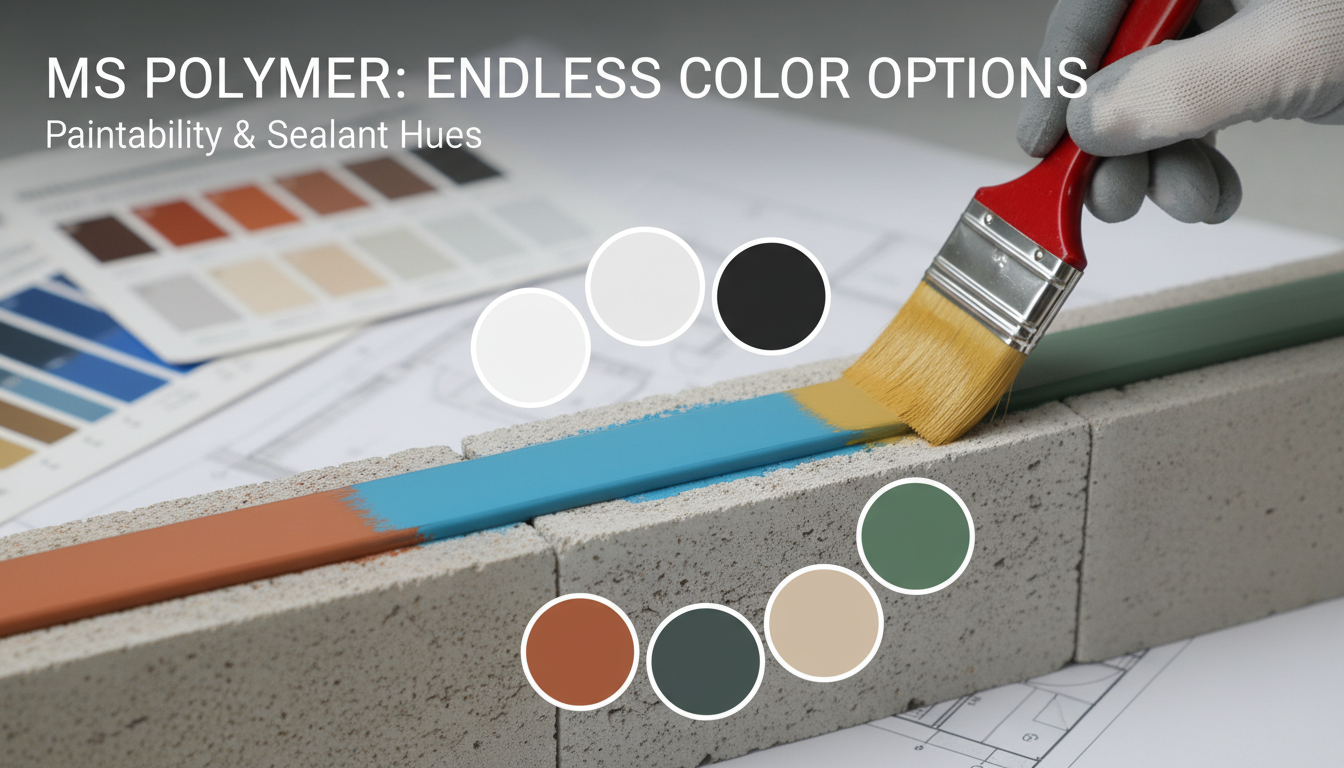
Look out for these emerging 2026 trends:
- AI-Driven Color Matching: The rise of AI spectrophotometers allows manufacturers to instantly formulate exact pigment ratios on-site.
- Self-Healing Pigments: Emerging 2026 formulations contain micro-capsules in the MS polymer that release fresh pigment if the surface is scratched or heavily weathered.
- Cost Transparency & Micro-Batching: Custom matching used to require massive minimum order quantities (MOQs); advanced manufacturing now allows for affordable micro-batching for smaller projects.
Conclusion
Choosing the perfect MS sealant color requires careful consideration of physical curing times, lighting metamerism, and precise physical RAL matching protocols, allowing builders to avoid visual disruptions and ensure a durable, seamless finish that enhances architectural integrity. By understanding how the polymer reacts to substrates and long-term UV exposure, professionals can definitively prevent the glaring visual errors that frequently plague modern facades. Avoiding these seven costly mistakes ensures a professional finish that permanently protects and elevates your architectural vision.
Contact us today to optimize your architectural joint sealants strategy.
Can you paint over MS sealant to change its color?
Yes, one of the biggest advantages of MS polymer sealants over traditional silicones is their excellent paintability. However, for high-movement joints, it is always better to color-match the sealant directly, as paint is less flexible and may crack.
How long does it take for MS polymer sealant to show its final cured color?
It typically takes 48 to 72 hours for an MS sealant to fully cure and reveal its true, permanent color. Do not judge the match while the sealant is freshly gunned and wet.
What is the difference between RAL and Pantone in sealant color options?
The RAL system is the standard for industrial and architectural construction materials, including coatings and sealants. Pantone is primarily used in graphic design and printing, though high-end sealant manufacturers can translate Pantone codes into physical pigments.
Do custom colored MS sealants cost more than standard white or clear?
Custom colors may carry a slight premium and require minimum order quantities, but the cost gap has shrunk significantly. The slight upfront cost is often offset by the savings of not having to paint over the sealant.
Why does my colored sealant look different under LED lighting?
This is due to metamerism, where colors shift depending on the light source's color temperature. A color matched in natural daylight might appear cooler or warmer under indoor LED lighting.
Is clear MS polymer sealant completely invisible?
While 'crystal clear' MS sealants are highly transparent, they can have a slight refractive index that catches light. Over many years of intense UV exposure, lower-quality clear sealants might show minor yellowing.
How do you perfectly color match a sealant to a brick or stone substrate?
The best method is to send a physical fragment of the brick or stone directly to the sealant manufacturer. They use digital spectrophotometers to analyze the specific hues and create a bespoke pigment mix.
Can UV light change the color of exterior MS sealants over time?
MS polymers naturally boast excellent UV resistance, meaning color fading is minimal. However, prolonged exposure in harsh climates can slightly dull certain intense or dark pigments over the span of decades.
OEM/ODM double glazing glass sealant Manufacturers and Suppliers
Specifying Low-VOC MS Silicone Sealant for Regulatory Compliance
Top polyurethan sealant adheres to metal Manufacturers and Suppliers
MS Silicone Sealant Joint Design and Movement Capabilities
HY982
How is the product applied?
HY982 is supplied in bucket packaging and should be applied using a trowel, spatula, or serrated spreader. Stir well before use and spread evenly to ensure full surface contact.
HY722B
Is the sealant resistant to aging?
Yes. HY-722B offers excellent aging resistance, ensuring long-term durability and elasticity.
HY- 972
What type of surfaces does it adhere to best?
HY-972 provides excellent adhesion to porous substrates such as concrete, wood, gypsum board, and cement-based materials.
HY997
Is the product environmentally friendly?
Yes. The sealant is solvent-free, ultra-low VOC, non-toxic, and odorless, making it safe for indoor applications and environmentally friendly.
HY-3300
What are the key features of HY-3300?
HY-3300 is a 100% silicone, neutral-curing, high-modulus sealant with excellent UV, water, and weather resistance. It remains flexible and durable under extreme temperatures from -50℃ to +200℃, and is non-corrosive to metal and coated surfaces.
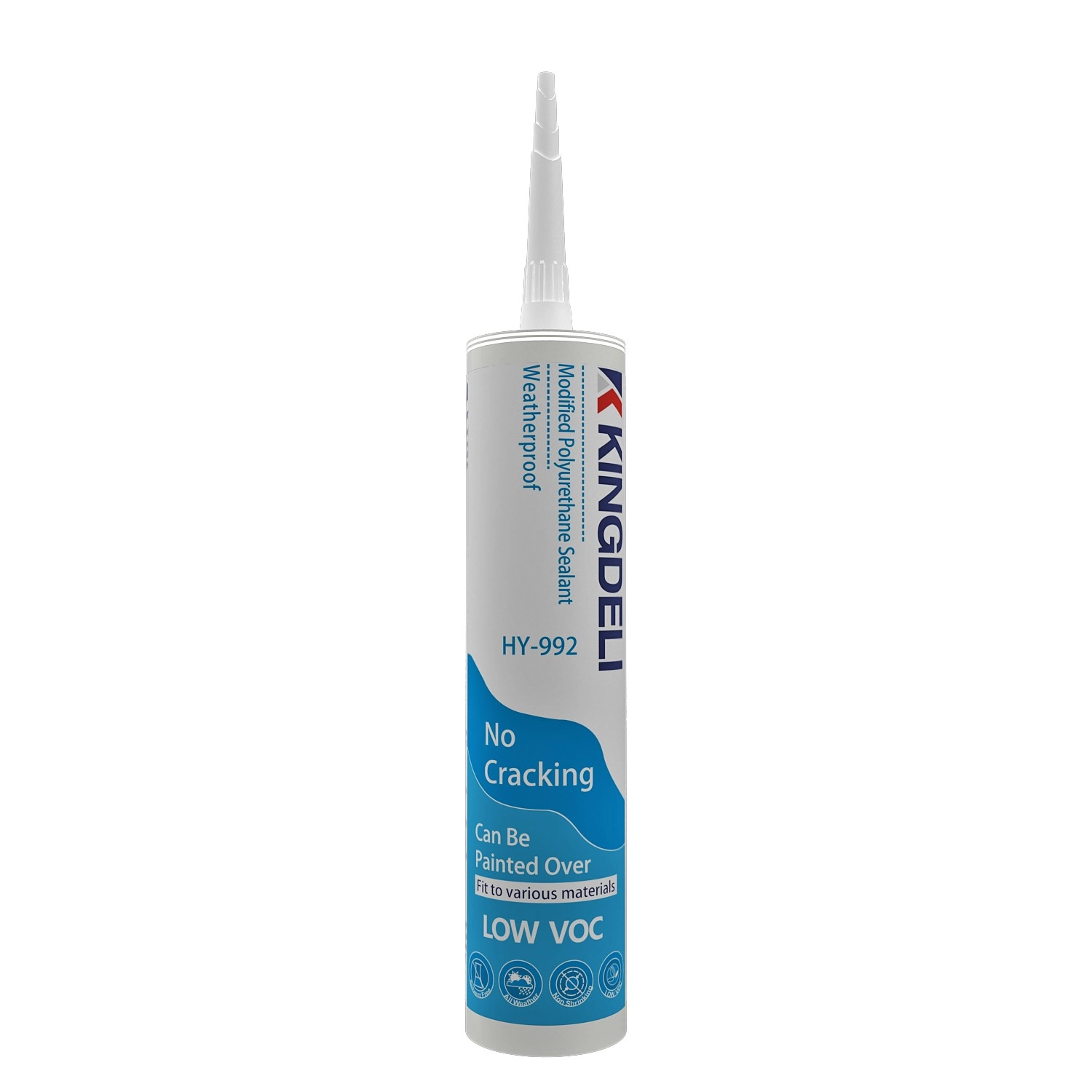
HY992 Modified Polyurethane Construction Sealant
HY992 Modified Polyurethane Sealant is a one-component, moisture-curing construction sealant designed for professional building and structural sealing applications. It provides excellent adhesion, weather resistance, and durable elasticity, making it suitable for a wide range of construction materials.
The formulation delivers strong bonding performance without corrosion or substrate contamination, while maintaining low VOC content for environmentally responsible construction projects.

HY995 Crystal Clear Ms Polymer Adhesive/Sealant
HY995 Crystal Clear Ms Polymer Adhesive/Sealant is a new generation MS Polymer adhesive / sealant formulated for all bonding and sealing applications where long term reliability is required. It has excellent bonding strength on various materials. It will cure to form a durable, flexible, waterproof seal.

HY997 High-Performance Anti-Microbial MS Polymer Sealant
HY997 MS polymer sealant for is is a premium one-component, neutral-curing modified silane sealant engineered for demanding interior applications. It offers a Class 20 movement capability, ensuring long-lasting flexibility and reliable performance under dynamic joint conditions. Curing at room temperature, HY997 delivers superior anti-microbial and mildew-resistant properties, maintaining hygienic and clean environments over time.
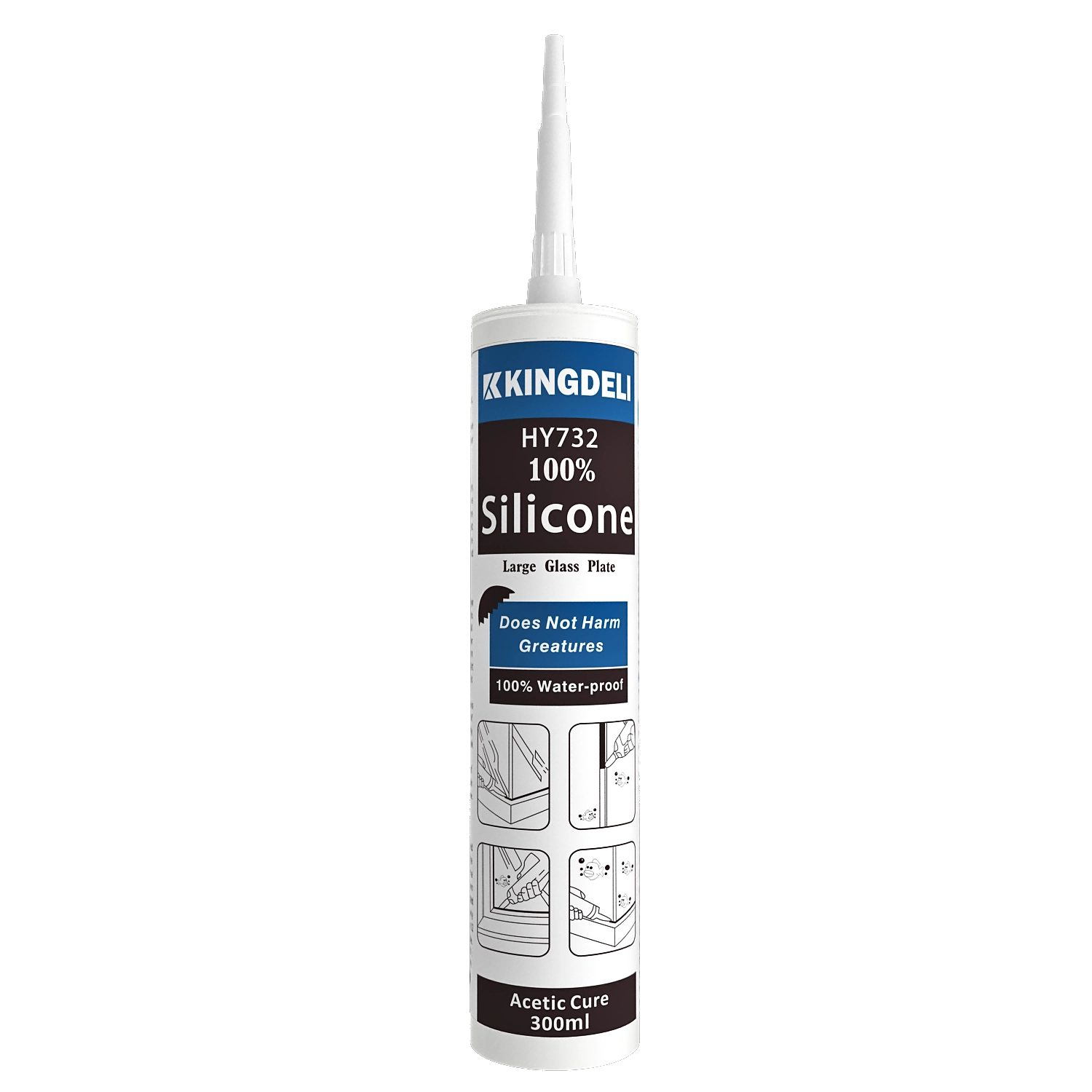
KINGDELI HY732 Professional Acetoxy Cure Silicone Sealant
KINGDELI HY732 is a professional-grade, one-component acetoxy cure silicone sealant designed for fast curing, strong adhesion, and long-lasting flexibility. Ideal for aquariums, glass applications, aluminum doors and windows, kitchens, and bathrooms, it provides reliable sealing performance with excellent anti-fungal protection in high-humidity environments.
Let’s Build Stronger Bonds with Quality Adhesives and Sealants
Have questions about the topic or need tailored sealant solutions for your project?
Our team is ready to provide expert guidance, product recommendations, and application support.
Innovating with Integrity, Bonding the World
Since 1998, KINGDELI has delivered trusted, sustainable sealant solutions that connect industries and inspire progress worldwide.
Whatsapp: +8618825946249
Kingdeli
Kingdeli
Kingdeli
Kingdeli
Kingdeli